Loading...
Emiliano Zapata vs Vladimir Lenin
Vladimir Lenin leads by 14.9 pts · 2 figures compared
…
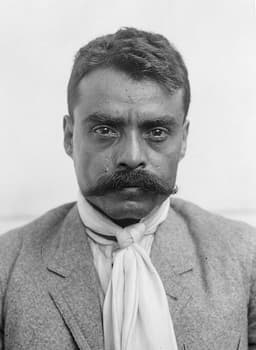
Emiliano Zapata
Revolutionary · Modern
56.3Total
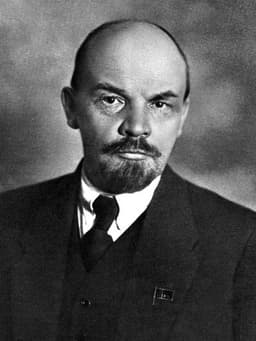
Vladimir Lenin
Revolutionary · Modern
71.2Total
Basic Information
Born
1879
1870
Died
1919
1924
Era
Modern
Modern
Nationality
Mexico
Russia
Occupation
Revolutionary
Revolutionary
Civilization
Western
Western
Score Comparison
Military (10%)
40.0
30.0
Political (20%)
68.0
78.0
Influence (20%)
58.0
82.0
Legacy (20%)
54.0
72.0
Leadership (15%)
54.2
80.0
Strategy (15%)
60.0
60.0
TOTAL
56.3
71.2
Emiliano Zapata — Complete Timeline
1911 AD
Plan of AyalaPolitical Action
Zapata issued the Plan of Ayala, denouncing Francisco I. Madero for failing to implement land reform. The plan called for the return of land to peasants and became the ideological foundation of the Zapatista movement.
Land ReformAgrarian MovementRevolution
Impact: nationalprogressive
1914 AD
Occupation of Mexico CityWar◆ Major
Zapata's forces, allied with Villa's Division of the North, occupied Mexico City. They held the capital for several weeks but failed to establish lasting control, highlighting the limits of their coalition.
Military OccupationRevolutionary AllianceCapital
Impact: national
Convention of AguascalientesPolitical Action◆ Major
Zapata attended the Convention of Aguascalientes, where revolutionary factions attempted to unify. He allied with Pancho Villa against Venustiano Carranza, but the convention failed to produce a stable government.
Revolutionary AlliancePolitical DivisionCivil War
Impact: national
1919 AD
Assassination at ChinamecaPolitical Action
Zapata was lured to the Hacienda de Chinameca by Colonel Jesus Guajardo, who pretended to defect. Guajardo's troops ambushed and killed Zapata, ending his leadership of the agrarian rebellion.
AssassinationBetrayalEnd of Leadership
Impact: nationaltragic
Vladimir Lenin — Complete Timeline
1903 AD
Founding of the Bolshevik PartyPolitical Action
At the Second Congress of the Russian Social Democratic Labour Party in London, Lenin led a split that created the Bolshevik faction. The Bolsheviks advocated for a disciplined vanguard party of professional revolutionaries, a key element of Lenin's political strategy.
Political PartyRevolutionIdeology
Impact: global
1917 AD
April ThesesPolitical Action◆ Major
Lenin returned to Russia from exile and published the April Theses, calling for the overthrow of the Provisional Government, transfer of power to the soviets, and an end to World War I. This document set the Bolshevik agenda for the coming revolution.
RevolutionIdeologyPolitical Strategy
Impact: national
October RevolutionPolitical Action
Lenin led the Bolshevik seizure of power in Petrograd, capturing key government buildings and the Winter Palace. The revolution overthrew the Provisional Government and established the world's first socialist state, the Russian Soviet Federative Socialist Republic.
RevolutionCoupCommunism
Impact: global
1918 AD
Treaty of Brest-LitovskPolitical Action◆ Major
Lenin signed a separate peace treaty with the Central Powers, ceding vast territories including Ukraine, Belarus, and the Baltic states. The treaty ended Russia's involvement in World War I but caused significant territorial losses and internal opposition.
TreatyWorld War ITerritorial Loss
Impact: globaldestructive
1921 AD
New Economic Policy (NEP)Reform◆ Major
Lenin introduced the NEP, allowing limited private enterprise and market mechanisms to revive the war-torn Soviet economy. The policy replaced War Communism, permitting small-scale capitalism while the state retained control of major industries.
Economic ReformPolicyRecovery
Impact: nationalconstructive
1922 AD
Establishment of the Soviet UnionPolitical Action
Lenin oversaw the creation of the Union of Soviet Socialist Republics (USSR), a federation of Soviet republics. The new state consolidated Bolshevik control over much of the former Russian Empire and became a model for communist states worldwide.
State FormationCommunismFederation
Impact: global
Expert Analysis
Vladimir Lenin vs Emiliano Zapata
# The Revolutionary’s Dilemma: Lenin and Zapata
In the winter of 1914, two revolutions were reaching their boiling points, half a world apart. In Petrograd, a balding lawyer in a rumpled suit scribbled feverish notes in a cramped apartment, planning the violent overthrow of a centuries-old empire. In the mountains of Morelos, a mustachioed horseman with a sombrero and a Winchester rifle rallied peasants to reclaim ancestral lands from wealthy hacendados. Both men dreamed of a new world. Both would spill blood to achieve it. But one would build a state that lasted seven decades, while the other would be gunned down in a dusty hacienda courtyard before he turned forty. Why did these two revolutionaries, each driven by an unyielding vision of justice, meet such different fates? The answer lies not just in their circumstances, but in the very nature of their revolutions.
Origins
Lenin was born Vladimir Ilyich Ulyanov in 1870, into the comfortable world of the Russian intelligentsia. His father was a school inspector, his mother the daughter of a physician. The family library was stocked with radical literature. When his older brother Alexander was hanged in 1887 for plotting to assassinate Tsar Alexander III, the eighteen-year-old Lenin is said to have remarked, “No, we will not go that way.” The execution did not crush his revolutionary spirit—it hardened it, turning him into a cold, calculating machine of Marxist theory. He studied law, devoured the works of Karl Marx, and by his early thirties had become a professional revolutionary, living in exile across Europe, writing pamphlets, and plotting the destruction of the Romanov dynasty.
Emiliano Zapata was born nine years later, in 1879, into a family of peasant farmers in the village of Anenecuilco, Mexico. Unlike Lenin, he never attended university. He learned to read and write from a local schoolmaster, but his true education came from the land itself—the cornfields, the sugar plantations, the simmering resentment of villagers who watched their communal ejido lands being stolen by wealthy landowners under the dictatorship of Porfirio Díaz. Zapata’s father died when he was a boy, and young Emiliano grew up working the soil, listening to the elders tell stories of the land that once belonged to their ancestors. When he became a village leader at age thirty, his demands were not abstract theories but concrete ones: “Tierra y Libertad”—Land and Liberty.
Rise to Power
Lenin’s path to power was a study in ideological discipline. In 1903, at the Second Congress of the Russian Social Democratic Labour Party in London, he engineered a split that created the Bolshevik faction—the “majority” that was, in fact, a minority. Lenin insisted on a party of professional revolutionaries, a vanguard that would lead the proletariat by force of will and organization. For the next fourteen years, he waited, writing, arguing, and watching for the moment when the Tsar’s empire would crack. That moment came in February 1917, when bread riots in Petrograd spiraled into a revolution that toppled Nicholas II. Lenin, then in Swiss exile, rushed home in a sealed train provided by the Germans—who hoped he would destabilize Russia. On April 3, 1917, he stepped off the train at the Finland Station and delivered his April Theses, demanding the overthrow of the Provisional Government. “The specific feature of the present situation in Russia is that it represents a *transition* from the first stage of the revolution—which, owing to the insufficient class-consciousness and organization of the proletariat, placed the power in the hands of the bourgeoisie—to its second stage, which must place the power in the hands of the proletariat and the poorest strata of the peasantry.”
Zapata’s rise was more organic, rooted in the rhythms of village life. In 1909, he was elected president of the village council of Anenecuilco, and he began using legal means to reclaim stolen lands. When that failed, he turned to arms. In 1910, when Francisco I. Madero raised a rebellion against Díaz, Zapata joined him, raising a small army of peasants in Morelos. But Zapata soon discovered that Madero, a wealthy landowner himself, had no intention of redistributing land. In November 1911, Zapata issued the Plan of Ayala, a radical manifesto that denounced Madero and called for the return of all land stolen from villages. “The lands, forests, and waters which have been usurped by the hacendados, científicos, or caciques, through the most iniquitous tyranny and venal justice, shall be restored to the pueblos or citizens who have the proper titles to them.” The plan made Zapata a hero to the dispossessed and an outlaw to the government.
Leadership & Governance
Lenin governed through the barrel of a gun and the weight of a theory. After the October Revolution in 1917, he established the Council of People’s Commissars, with himself as chairman. He nationalized banks, factories, and land; he dissolved the Constituent Assembly when it refused to submit to Bolshevik control; he unleashed the Cheka, the secret police, to crush opposition. In 1918, facing a German army at the gates, he signed the Treaty of Brest-Litovsk, ceding vast territories including Ukraine, Belarus, and the Baltic states—a humiliating peace that bought time for the revolution to survive. “The revolutionary class,” he wrote, “must know how to retreat.” His military score of 30.0 reflects his lack of personal battlefield command, but his political score of 80.0 reveals his true genius: he understood that power was not a matter of popular support but of organized coercion. By 1921, when the Russian economy lay in ruins after the Civil War, Lenin showed a surprising pragmatism, introducing the New Economic Policy (NEP) that allowed limited private enterprise and market mechanisms. The revolutionary who had once demanded the abolition of money now permitted peasants to sell their grain for profit. It was a retreat, but a calculated one—a strategic pause to consolidate power.
Zapata governed through example and trust. In the territories he controlled in Morelos, he implemented the Plan of Ayala’s land reforms, redistributing hacienda lands to peasant communities. He established a simple administration based on village councils, with no bureaucracy, no secret police, no central bank. His army, the Liberation Army of the South, was a ragtag force of campesinos who fought for their homes and returned to their fields when the fighting paused. Zapata did not seek to rule Mexico; he sought to liberate the land. In 1914, when his forces, allied with Pancho Villa’s Division of the North, occupied Mexico City, they held the capital for several weeks but quickly withdrew. Zapata had no interest in palaces or presidential chairs. “I want to die a slave to the principles, not to men,” he said. His military score of 55.8 and political score of 57.6 reflect a man who was a skilled guerrilla leader but an indifferent state-builder.
Triumph & Tragedy
Lenin’s greatest triumph was the establishment of the Soviet Union in 1922, a federation of Soviet republics that would become a superpower. His greatest tragedy came in the same year: a series of strokes that gradually paralyzed him. By the time he died in January 1924, at the age of fifty-three, his mind was failing, and he had begun to doubt his own creation. In his “Testament,” he warned against the growing power of Joseph Stalin, urging the party to remove him from his position as General Secretary. “Stalin is too rude,” Lenin wrote, “and this defect, although quite tolerable in our midst and in dealings among us Communists, becomes intolerable in a General Secretary.” The warning was ignored. Stalin would soon turn Lenin’s revolution into a bloodbath of purges and famines.
Zapata’s triumph was more modest but more pure: he kept the flame of agrarian reform alive through years of war. His tragedy was his death. On April 10, 1919, he was lured to the Hacienda de Chinameca by Colonel Jesus Guajardo, a federal officer who pretended to defect. As Zapata stepped through the doorway, Guajardo’s troops raised their rifles and fired. The man who had fought for the land fell dead in the dust, his body riddled with bullets. He was thirty-nine years old.
Character & Destiny
Lenin was a man of iron will and icy intellect. He believed that history was on his side, that the laws of Marxist dialectics guaranteed the victory of the proletariat—but only if the vanguard party acted with ruthless efficiency. He could be charming in private, playing chess and listening to Beethoven, but in politics he was merciless. “We must be able to withstand,” he wrote, “not only the open attacks of the enemy, but also the whining of the weak, the timid, the half-hearted.” His personality shaped his decisions: the decision to seize power in October 1917, the decision to dissolve the Constituent Assembly, the decision to introduce the NEP. Each was a calculated gamble, a cold weighing of costs and benefits.
Zapata was a man of passion and principle. He was not a theorist; he was a man of action who trusted his instincts and the loyalty of his people. He refused to compromise on land reform, even when it meant losing allies. “It is better to die on your feet than to live on your knees,” he said—and he meant it. His personality shaped his decisions: the decision to break with Madero, the decision to ally with Villa, the decision to walk into the trap at Chinameca. Each was an act of faith, a trust in the goodness of others that ultimately cost him his life.
Legacy
Lenin’s legacy is the Soviet Union, a state that spanned eleven time zones and lasted seventy-four years. His body lies embalmed in a mausoleum on Red Square, a pilgrimage site for communists and a symbol of a failed utopia. His ideas—Marxism-Leninism—inspired revolutions from China to Cuba, but also justified the Gulag, the Great Purge, and the suppression of human rights. He is remembered as both a visionary and a tyrant, a man who changed the world but could not control what he unleashed.
Zapata’s legacy is more diffuse but more enduring. He never built a state, but he built a myth. His face appears on murals, banners, and protest signs across Latin America. The Zapatista Army of National Liberation, which rose up in Chiapas in 1994, invoked his name and his demands for land and dignity. He is remembered as a symbol of resistance, a man who fought for the poor and died for his principles. “Zapata lives,” the chant goes, and in a sense, he does—not in the halls of power, but in the hearts of those who still believe that the land should belong to those who work it.
Conclusion
Lenin and Zapata were both revolutionaries, but they were revolutionaries of different worlds. Lenin sought to remake society from the top down, using the state as an instrument of total transformation. Zapata sought to remake society from the bottom up, returning power to the villages and the soil. Lenin built a machine that crushed its enemies and its own people; Zapata built a movement that inspired generations but could not survive its leader. One became a monument, the other a martyr. Perhaps the difference lies in this: Lenin believed that the end justified the means, while Zapata believed that the means were the end. In the end, Lenin’s revolution consumed itself, while Zapata’s revolution—smaller, humbler, more human—still flickers in the darkness, waiting for the next generation to pick up the rifle and the plow.
Rankings
🥇
Vladimir LeninLeader
Mil: 30.0Pol: 78.0Inf: 82.0
71.2
🥈
Emiliano Zapata
Mil: 40.0Pol: 68.0Inf: 58.0
56.3
+14.9 behind
How This Comparison Works
Algorithm
Each figure is scored on 6 dimensions (0—100 scale) based on structured historical data: Military (10%), Political (20%), Influence (20%), Legacy (20%), Leadership (15%), Strategy (15%). The weighted total produces the final ranking.
Data Sources
Scores are computed from structured sub-indicators in the database. Scale factors adjust for era (Ancient ×0.85, Modern ×1.0) and civilization size (Eastern ×1.05, Other ×0.80) to account for differences in population and military scale.
Maximum 3 Figures
Comparisons are limited to 2—3 figures to ensure readability and statistical meaningfulness.
Error Margins
±5 points per dimension — Sub-scores are derived from historical records with inherent uncertainty. Two figures within 5 points on a dimension should be considered roughly equivalent in that area.
Total Score Accuracy
±3 points overall — The weighted combination of 6 dimensions produces a total score with approximately ±3 points of uncertainty. Differences of less than 3 points are not statistically significant— the figures are effectively tied.
Known Limitations
- Historical records are incomplete and uneven across civilizations
- Figures from oral-tradition societies may be underrepresented
- Occupation labels can misclassify multi-role figures
- Scores measure capability and impact, not moral character
- Quantitative scoring is a comparison tool, not absolute truth
Capability Radar
Military (10%) — Battles & Warfare
Battles
45
20
Win Rate
50
35
Expansion
35
70
Political (20%) — Governance & Reform
Reform
70
95
Diplomacy
40
75
Economy
35
60
Influence (20%) — Cultural & Global Reach
Cultural
65
80
Global
55
90
Legacy (20%) — Historical Impact
Historical
70
95
Longevity
65
85
Leadership (15%) — Power & Stability
Tenure
30
55
Stability
25
40
Strategy (15%) — Tactics & Innovation
Strategy
50
55
Tactics
55
30
Reform
60
85
Similar Comparisons
Comments & Discussion
BOOT-AND-OATH6/16/2026
Lenin was a bureaucrat who swapped a tsar's crown for a party badge. His "vanguard" theory just meant replacing one ruling clique with another. Zapata fought so peasants could keep their land, not so a new elite could tell them how to farm. Lenin built a state that outlasted him, sure, but at the cost of freedom. Zapata's legacy is alive in every land-rights movement today. Give me a man with a rifle for his soil over a desk-jockey with a dogma any day.
铁血理论家6/16/2026
说到底,列宁的所谓“先锋队”不过是精英主义的翻版。他的布尔什维克党在1918年解散了立宪会议,因为选举结果不如意。这叫革命?这叫抢权。萨帕塔呢?在1911年签署《阿亚拉计划》,要求把地主的地分给农民,不搞什么中央集权大计划。一个靠枪杆子保住农民饭碗,一个靠小圈子搞独裁。我选荞麦田里的萨帕塔。
SILVER-CLIPPER6/16/2026
Fanboys love the "pure peasant hero" myth, but Zapata was politically astute. He allied with Pancho Villa in the Convention of Aguascalientes, and his land reform wasn't some rustic dream—it was documented in the Plan de Ayala, specifically demanding expropriation of one-third of hacienda lands. Meanwhile, Lenin's New Economic Policy was a tactical retreat from his own radical rhetoric. Both were pragmatists in different sandboxes. But Zapata's execution in 1919, betrayed by a fellow revolutiona
历史拆迁队6/16/2026
别跟我说什么“土地与自由”很浪漫。萨帕塔的蒙雷洛斯公社在1915年就被卡兰萨的军队打垮了,他那些土地法令在县里都执行不下去。列宁呢?他的革命有铁路网、城市工人和德国人的资助托底。萨帕塔只有驴子、玉米地和叛徒。现实主义点——没有中央后勤,农民军队就是地方武装。萨帕塔的失败不是悲剧,而是军事逻辑的必然。
POETIC-FUSE6/16/2026
What makes Zapata more compelling isn't his success but his failure. He died for a vision so local that it couldn't scale, and that makes him a martyr in a way Lenin never was. Lenin's state machinery chugged along, but it crushed individuality. Zapata's "Tierra y Libertad" wasn't about power—it was about dignity. That's why museums in Morelos still have his photo in every school, while Lenin's statues rot in Kyiv. A dead revolutionary with a real human heart beats a living machine any century.