Loading...
Bhagat Singh vs Emiliano Zapata
Emiliano Zapata leads by 9.5 pts · 2 figures compared
…
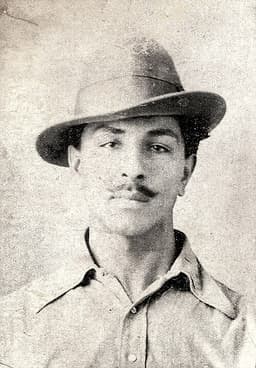
Bhagat Singh
Revolutionary · Modern
46.8Total
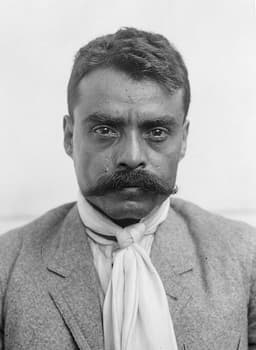
Emiliano Zapata
Revolutionary · Modern
56.3Total
Basic Information
Born
1907
1879
Died
1931
1919
Era
Modern
Modern
Nationality
India
Mexico
Occupation
Revolutionary
Revolutionary
Civilization
Indian
Western
Score Comparison
Military (10%)
30.0
40.0
Political (20%)
25.0
68.0
Influence (20%)
61.0
58.0
Legacy (20%)
50.0
54.0
Leadership (15%)
65.0
54.2
Strategy (15%)
25.0
60.0
TOTAL
46.8
56.3
Bhagat Singh — Complete Timeline
1928 AD
Killing of John SaundersPolitical Action◆ Major
Bhagat Singh and his associates killed British police officer John Saunders in Lahore, mistaking him for James Scott, who had ordered the lathi charge that killed Lala Lajpat Rai. This act of revenge escalated the revolutionary movement.
AssassinationRevolutionary Action
Impact: national
1929 AD
Central Legislative Assembly BombingPolitical Action◆ Major
Bhagat Singh and Batukeshwar Dutt threw bombs in the Central Legislative Assembly in Delhi to protest the Public Safety Bill and Trade Disputes Act. They were arrested and used the trial to propagate revolutionary ideas.
ProtestRevolutionary Action
Impact: national
Hunger Strike in JailPolitical Action◆ Major
Bhagat Singh and fellow prisoners went on a 116-day hunger strike in Lahore jail demanding better treatment for political prisoners. The strike drew national attention and forced the British to make concessions.
ProtestPrison Reform
Impact: national
1931 AD
Execution by HangingPolitical Action◆ Major
Bhagat Singh was executed by hanging at Lahore jail at age 23, along with Rajguru and Sukhdev. His execution sparked widespread protests and made him a martyr for the Indian independence movement.
ExecutionMartyrdom
Impact: nationaltragic
Emiliano Zapata — Complete Timeline
1911 AD
Plan of AyalaPolitical Action
Zapata issued the Plan of Ayala, denouncing Francisco I. Madero for failing to implement land reform. The plan called for the return of land to peasants and became the ideological foundation of the Zapatista movement.
Land ReformAgrarian MovementRevolution
Impact: nationalprogressive
1914 AD
Occupation of Mexico CityWar◆ Major
Zapata's forces, allied with Villa's Division of the North, occupied Mexico City. They held the capital for several weeks but failed to establish lasting control, highlighting the limits of their coalition.
Military OccupationRevolutionary AllianceCapital
Impact: national
Convention of AguascalientesPolitical Action◆ Major
Zapata attended the Convention of Aguascalientes, where revolutionary factions attempted to unify. He allied with Pancho Villa against Venustiano Carranza, but the convention failed to produce a stable government.
Revolutionary AlliancePolitical DivisionCivil War
Impact: national
1919 AD
Assassination at ChinamecaPolitical Action
Zapata was lured to the Hacienda de Chinameca by Colonel Jesus Guajardo, who pretended to defect. Guajardo's troops ambushed and killed Zapata, ending his leadership of the agrarian rebellion.
AssassinationBetrayalEnd of Leadership
Impact: nationaltragic
Expert Analysis
Bhagat Singh vs Emiliano Zapata
### The Revolutionary’s Dilemma: Why Bhagat Singh and Emiliano Zapata Took Different Paths
On a sweltering April afternoon in 1919, a peasant army under Emiliano Zapata marched into Mexico City, their sombreros casting long shadows over the Zócalo. They came not to seize power, but to prove a point: that land belonged to those who worked it. Eleven years later, on a cold December day in 1930, a young man named Bhagat Singh sat in a Lahore jail cell, reading Lenin and writing his last letter to his brother. He had thrown a bomb in the British Parliament—not to kill, but to make the deaf hear. Two revolutionaries, two worlds apart, united by a shared belief that violence could redeem an unjust society. Yet their stories diverged in ways that reveal the profound influence of time, place, and personality on the course of history.
### Origins
Bhagat Singh was born in 1907 in a small Punjabi village, into a family of Sikh intellectuals who had long chafed under British rule. His uncle, Ajit Singh, was a fiery nationalist who had fled to Iran. From childhood, Bhagat breathed the air of rebellion. The Jallianwala Bagh massacre of 1919, when British troops fired on unarmed civilians, seared his soul. He was twelve. In contrast, Emiliano Zapata entered the world in 1879 in Anenecuilco, a village in Morelos, Mexico, where his family had once owned land but lost it to the sprawling sugar haciendas of the Porfiriato. Zapata’s father was a peasant who taught him to read and write, but the boy learned his deepest lessons watching his neighbors evicted from plots they had farmed for generations. While Bhagat Singh’s enemy was an empire, Zapata’s was a system: the latifundio, the feudal estate that crushed the rural poor.
### Rise to Power
Bhagat Singh’s ascent was swift and intellectual. He joined the Hindustan Socialist Republican Association (HSRA) as a teenager, drawn to Marxist ideas and the romance of the gun. His key turning point came in 1928, when he and his comrades killed John Saunders, a British police officer, mistaking him for James Scott, the man who had ordered the lathi charge that killed the veteran leader Lala Lajpat Rai. The act was impulsive, tragic in its error, but it catapulted Singh into notoriety. Zapata’s rise was slower and more organic. By 1909, he was already a respected community leader, elected president of his village’s defense committee. The Mexican Revolution erupted in 1910, and Zapata quickly emerged as the voice of the dispossessed. His turning point came in 1911 with the Plan of Ayala, a document that denounced Francisco I. Madero for betraying land reform and called for the expropriation of haciendas. It was a declaration of war against the entire political class.
### Leadership & Governance
As a leader, Bhagat Singh was more a symbol than a commander. His military score of 34.3 reflects his role: he was a bomb-thrower, not a general. His genius lay in political theater. The 1929 Central Legislative Assembly bombing, where he and Batukeshwar Dutt threw bombs and then courted arrest, was designed to expose British hypocrisy. “The bomb was necessary to awaken England to the reality of her atrocities,” he later wrote. His 116-day hunger strike in jail, demanding better treatment for political prisoners, turned him into a martyr even before his death. Zapata, by contrast, was a military leader of real skill (score: 55.8). He commanded the Liberation Army of the South, a guerrilla force that knew every ravine and cornfield of Morelos. His political score of 57.6 reflects his pragmatic alliances—with Pancho Villa at the Convention of Aguascalientes in 1914, and even with the anarchist Ricardo Flores Magón. But Zapata never governed beyond his rural base. When his army occupied Mexico City in 1914, they held it for weeks but had no plan for running a nation. They wanted land, not power.
### Triumph & Tragedy
Bhagat Singh’s greatest triumph was his death. On March 23, 1931, he was hanged at Lahore jail, along with Rajguru and Sukhdev. He went to the gallows singing “Down with British imperialism!” His execution sparked riots across India and made him a legend. His tragedy was that he never saw the freedom he died for. Zapata’s triumph was the Plan of Ayala, which became the moral compass of the Mexican Revolution. His tragedy was more brutal: on April 10, 1919, he was lured to the Hacienda de Chinameca by a false defector, Colonel Jesús Guajardo, and shot dead. He was 39. Unlike Singh, Zapata died betrayed by his own countrymen, a victim not of the enemy but of the revolution’s internal rot.
### Character & Destiny
Bhagat Singh was a romantic intellectual. He devoured Bakunin, Marx, and Lenin, and wrote essays on the philosophy of violence. He was, in many ways, a product of the global anti-colonial moment—a young man who believed that a single act of sacrifice could ignite a nation. His leadership score of 44.8 suggests he was more an icon than an organizer. Zapata was a peasant, deeply rooted in his community. He was suspicious of grand theories and urban intellectuals. “I want to die a slave to principles, not to men,” he said. His strategy score of 58.9 indicates a tactical mind, but his refusal to compromise—his insistence on “Tierra y Libertad” (Land and Liberty)—made him both invincible and isolated. Where Singh’s destiny was shaped by the British Raj’s need to make an example, Zapata’s was sealed by the Mexican elite’s fear of his radicalism.
### Legacy
Bhagat Singh’s legacy score of 68.4 is high for a man who lived only 23 years. In India, he is a household name, a symbol of youthful defiance. Yet his Marxist ideals are often sanitized, his violence downplayed. Zapata’s legacy score of 67.6 is equally powerful. In Mexico, his face appears on murals, his name on Zapatista movements. But his agrarian dream was only partially realized—land reform came, but slowly and corruptly. Both men are remembered as martyrs, but their deaths served different purposes: Singh’s galvanized a movement, Zapata’s ended one.
### Conclusion
Bhagat Singh and Emiliano Zapata were both revolutionaries, but they moved in different orbits. Singh’s revolution was a strike against an empire; Zapata’s was a war against a class. Singh believed in the power of the idea; Zapata in the power of the soil. One died as a symbol, the other as a man. Their stories remind us that revolution is never a single path—it is a thousand trails, each shaped by the terrain, the time, and the heart of the traveler. And in the end, both trails led to the same place: a grave, and a memory that refuses to die.
Rankings
🥇
Emiliano ZapataLeader
Mil: 40.0Pol: 68.0Inf: 58.0
56.3
🥈
Bhagat Singh
Mil: 30.0Pol: 25.0Inf: 61.0
46.8
+9.5 behind
How This Comparison Works
Algorithm
Each figure is scored on 6 dimensions (0—100 scale) based on structured historical data: Military (10%), Political (20%), Influence (20%), Legacy (20%), Leadership (15%), Strategy (15%). The weighted total produces the final ranking.
Data Sources
Scores are computed from structured sub-indicators in the database. Scale factors adjust for era (Ancient ×0.85, Modern ×1.0) and civilization size (Eastern ×1.05, Other ×0.80) to account for differences in population and military scale.
Maximum 3 Figures
Comparisons are limited to 2—3 figures to ensure readability and statistical meaningfulness.
Error Margins
±5 points per dimension — Sub-scores are derived from historical records with inherent uncertainty. Two figures within 5 points on a dimension should be considered roughly equivalent in that area.
Total Score Accuracy
±3 points overall — The weighted combination of 6 dimensions produces a total score with approximately ±3 points of uncertainty. Differences of less than 3 points are not statistically significant— the figures are effectively tied.
Known Limitations
- Historical records are incomplete and uneven across civilizations
- Figures from oral-tradition societies may be underrepresented
- Occupation labels can misclassify multi-role figures
- Scores measure capability and impact, not moral character
- Quantitative scoring is a comparison tool, not absolute truth
Capability Radar
Military (10%) — Battles & Warfare
Battles
0
45
Win Rate
0
50
Expansion
0
35
Political (20%) — Governance & Reform
Reform
15
70
Diplomacy
5
40
Economy
0
35
Influence (20%) — Cultural & Global Reach
Cultural
55
65
Global
50
55
Legacy (20%) — Historical Impact
Historical
60
70
Longevity
55
65
Leadership (15%) — Power & Stability
Tenure
0
30
Stability
0
25
Strategy (15%) — Tactics & Innovation
Strategy
5
50
Tactics
10
55
Reform
0
60
Similar Comparisons
Comments & Discussion
ThePunjabiLens6/16/2026
This comparison glosses over a key tactical divergence. Bhagat Singh wasn't just an anarchist throwing bombs—he was a Marxist who saw imperialism as a global system. His hunger strike in jail was a calculated political act, demanding political prisoner status, not just martyrdom. Zapata, while radical, never left Mexico or engaged with internationalist theory. Singh's worldview was transnational; Zapata's was profoundly local. Ignoring this makes their "shared belief in violence" seem like the w
青铜史官6/16/2026
拿二十世纪的印度革命者对比墨西哥农民领袖,时间维度错位严重。萨帕塔是十九世纪末的农民起义代表,其核心诉求是土地归还村社,目标具体到田契和庄园。而巴格特·辛格身处殖民地的民族革命浪潮,手段已进入现代恐怖主义与民族解放运动的交叉地带。把两人强行塞进“暴力救赎”的框里,忽略了萨帕塔的战争是土地战争,辛格的战争是国家独立战争,根本不在同一个维度讨论。
RevisionistQuetzal6/16/2026
The analysis romanticizes violence as "redeeming" society, which is historically sloppy. Zapata's army committed atrocities against Chinese-Mexican populations in Sonora, and Singh's bombing injured civilians, however symbolic the intent. Neither "redeemed" anything—they reshaped power structures through fear and force. Comparing their "heroic" origins sanitizes the messiness of real revolution. Read Alan Knight on Zapata's pragmatism or J. Nehru on Singh's contradictions. This isn't about perso
墨城铁匠6/16/2026
关键问题在于两者对“国家机器”的态度截然不同。萨帕塔打的是地方自治之战——他的阿亚拉计划核心是村镇政府收回土地管理权,本质上拒绝中央集权政府。而巴格特·辛格最终走向了彻底的中央集权构想,他在法庭上声称要建立社会主义共和国。一个是无政府主义的土地起义,一个是马克思主义的民族建国运动。把两者统一在“暴力”标签下,是在用哲学概念消灭具体的历史矛盾。
DataSkeptic6/16/2026
Missing the crucial asymmetry in scale. Zapata commanded up to 25,000 troops at his peak and controlled a territory the size of Belgium for several years. Bhagat Singh's revolutionary outfit peaked at maybe a hundred active members and controlled nothing beyond a few hideouts. Comparing their "paths" implies they had similar options, but Singh operated under a sophisticated colonial surveillance state with telegraphs, railways, and a professional police force. Zapata's adversary, Porfirio Díaz,