Loading...
Emiliano Zapata vs Qin Shi Huang
Qin Shi Huang leads by 28.9 pts · 2 figures compared
…
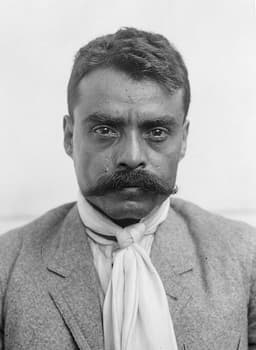
Emiliano Zapata
Revolutionary · Modern
56.3Total
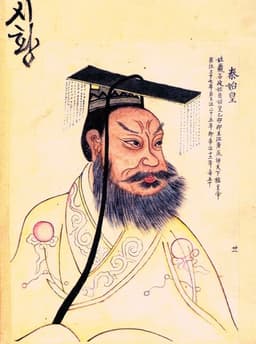
Qin Shi Huang
Emperor · Ancient
85.2Total
Basic Information
Born
1879
-259
Died
1919
-210
Era
Modern
Ancient
Nationality
Mexico
China
Occupation
Revolutionary
Emperor
Civilization
Western
Eastern
Score Comparison
Military (10%)
40.0
80.0
Political (20%)
68.0
90.0
Influence (20%)
58.0
85.0
Legacy (20%)
54.0
90.0
Leadership (15%)
54.2
78.0
Strategy (15%)
60.0
82.0
TOTAL
56.3
85.2
Emiliano Zapata — Complete Timeline
1911 AD
Plan of AyalaPolitical Action
Zapata issued the Plan of Ayala, denouncing Francisco I. Madero for failing to implement land reform. The plan called for the return of land to peasants and became the ideological foundation of the Zapatista movement.
Land ReformAgrarian MovementRevolution
Impact: nationalprogressive
1914 AD
Occupation of Mexico CityWar◆ Major
Zapata's forces, allied with Villa's Division of the North, occupied Mexico City. They held the capital for several weeks but failed to establish lasting control, highlighting the limits of their coalition.
Military OccupationRevolutionary AllianceCapital
Impact: national
Convention of AguascalientesPolitical Action◆ Major
Zapata attended the Convention of Aguascalientes, where revolutionary factions attempted to unify. He allied with Pancho Villa against Venustiano Carranza, but the convention failed to produce a stable government.
Revolutionary AlliancePolitical DivisionCivil War
Impact: national
1919 AD
Assassination at ChinamecaPolitical Action
Zapata was lured to the Hacienda de Chinameca by Colonel Jesus Guajardo, who pretended to defect. Guajardo's troops ambushed and killed Zapata, ending his leadership of the agrarian rebellion.
AssassinationBetrayalEnd of Leadership
Impact: nationaltragic
Qin Shi Huang — Complete Timeline
246 BC
Construction of the Mausoleum and Terracotta ArmyOther◆ Major
Qin Shi Huang commissioned a vast mausoleum complex near Xi'an, guarded by thousands of life-sized terracotta soldiers, horses, and chariots. The project employed hundreds of thousands of workers and reflected his obsession with immortality and imperial power.
Impact: global
230 BC
Conquest of the Six Warring StatesWar
From 230 to 221 BCE, Ying Zheng led the Qin state in a series of campaigns that conquered the Han, Zhao, Wei, Chu, Yan, and Qi states. This unified China under a single ruler for the first time, ending the Warring States period.
Impact: global
221 BC
Standardization of Writing, Currency, and MeasurementsReform◆ Major
Qin Shi Huang ordered the standardization of Chinese script, currency, and weights and measures across the unified empire. This facilitated administration, trade, and cultural integration, laying a foundation for future dynasties.
Impact: globalconstructive
Proclamation of the Qin DynastyPolitical Action
After conquering the last independent state, Ying Zheng declared himself Shi Huangdi (First Emperor), founding the Qin Dynasty. He adopted a new title to signify his supreme authority and initiated centralized imperial rule.
Impact: global
214 BC
Initiation of the Great Wall ConstructionOther◆ Major
Qin Shi Huang ordered the connection and extension of existing northern fortifications to create a unified defensive wall against nomadic Xiongnu raids. This project involved massive conscripted labor and became the precursor to the later Great Wall.
Impact: regional
213 BC
Burning of Books and Burying of ScholarsPolitical Action◆ Major
On the advice of Li Si, Qin Shi Huang ordered the burning of historical records and philosophical texts not aligned with Legalist doctrine. He also had 460 Confucian scholars buried alive to suppress dissent and consolidate ideological control.
Impact: nationaldestructive
Expert Analysis
emiliano-zapata-vs-qin-shi-huang
# The Emperor and the Rebel: Two Visions of Power
In the spring of 1919, a man in a white suit rode slowly toward the Hacienda de Chinameca in Morelos, Mexico. He was Emiliano Zapata, and he believed he was meeting a colonel who had finally decided to join his revolution. Instead, a bugle sounded three times, and rifles fired from the rooftops. The champion of Mexico’s landless peasants crumpled to the dust, betrayed by a man who had pretended to defect.
Twenty-one centuries earlier and half a world away, another ruler faced a different kind of betrayal. Ying Zheng, who had renamed himself Qin Shi Huang—the First Emperor—had spent his final years desperately seeking immortality. He swallowed mercury pills prescribed by his alchemists, believing they would grant eternal life. Instead, they slowly poisoned him. He died in 210 BC, at the age of forty-nine, his dream of forever undone by his own paranoia.
Two men, separated by two thousand years and an ocean of culture, each driven by an unshakable vision of how the world should be. One sought to build an empire that would last ten thousand generations. The other sought to return the land to the people who worked it. Both failed in their lifetimes. Both reshaped history forever.
Origins
Qin Shi Huang was born into war. The year was 259 BC, and China was splintered into seven kingdoms locked in a brutal struggle for supremacy known as the Warring States period. Ying Zheng’s father was a king of Qin, the westernmost state, a realm of harsh terrain and hardened soldiers. The boy grew up in a court thick with intrigue; his mother’s lover, a eunuch named Lao Ai, nearly overthrew him. By the time he seized power at age thirteen, he had learned that trust was a weakness and that the world could be remade only through iron will.
Emiliano Zapata was also born into a world of violence, but of a different kind. The year was 1879, and Mexico groaned under the dictatorship of Porfirio Díaz, who had turned the country into a playground for foreign investors. Zapata’s family were modest farmers in the village of Anenecuilco, in the state of Morelos. They had lost their ancestral lands to the sugar haciendas that swallowed the countryside. Young Emiliano watched his father and neighbors plead for justice before courts that belonged to the rich. He learned early that the law was a lie, and that only force could restore what had been stolen.
Rise to Power
Ying Zheng’s path was one of conquest. At twenty-two, he had already crushed a rebellion by his half-brother. By twenty-six, he had eliminated his chief minister, Lü Buwei, and taken full control of the Qin state. Then, from 230 to 221 BC, he unleashed his armies in a series of campaigns that historian Sima Qian later described with chilling brevity: “The Qin army swept through the six kingdoms like a scythe through wheat.” Han fell first, then Zhao, Wei, Chu, Yan, and finally Qi. Each conquest was methodical, brutal, and final. In 221 BC, Ying Zheng declared himself Shi Huangdi—the First Emperor—and announced a new age.
Zapata’s rise was slower and more organic. In 1909, he was elected president of his village’s land defense committee. When the revolutionary Francisco I. Madero called for an uprising against Díaz in 1910, Zapata answered. But he soon discovered that Madero cared more about political reforms than about returning land to peasants. In 1911, Zapata issued the Plan of Ayala, a document that denounced Madero as a traitor and demanded that haciendas be expropriated and given to the people. It was a radical vision, and it made him a hero to millions—and a target to every man who owned land.
Leadership & Governance
Here the two men diverged completely. Qin Shi Huang governed through standardization. He ordered that all writing be unified under a single script, that currency be cast in identical round coins with square holes, that carts be built with axles of the same length so they could roll in the same ruts. He imposed a uniform legal code, harsh and unforgiving, and divided his empire into commanderies administered by appointed officials rather than hereditary nobles. It was the birth of Chinese bureaucracy, and it worked. The empire held together, even after his death.
Zapata governed through trust and local autonomy. He never sought to create a centralized state. Instead, he organized the villages of Morelos into a loose confederation, each community managing its own land and affairs. His army was not a professional force but a peasant militia that returned to the fields after every battle. He issued land titles, encouraged cooperative farming, and refused to impose himself as a dictator. “It is better to die on your feet than to live on your knees,” he said. His governance was a moral vision, not an administrative one.
Triumph & Tragedy
Qin Shi Huang’s greatest triumph was the Great Wall. In 214 BC, he ordered the connection of existing northern fortifications into a single defensive line, a project that consumed the labor of hundreds of thousands of conscripts. It was a monument to his ambition—and a tomb for the workers who died building it. His greatest tragedy was his obsession with immortality. He sent expeditions to find the elixir of life, built a vast mausoleum guarded by the Terracotta Army, and swallowed mercury until it killed him. His empire, which he had forged with such care, collapsed within four years of his death.
Zapata’s greatest triumph was the occupation of Mexico City in 1914. Allied with Pancho Villa’s Division of the North, his peasant army rode into the capital and held it for weeks. For a brief moment, the landless ruled the land. But Zapata had no interest in governing a nation. He returned to Morelos, where his power was real, and left the political maneuvering to others. His tragedy came on April 10, 1919, when Colonel Jesús Guajardo, pretending to defect, lured him to the Hacienda de Chinameca. Zapata died with his hands in the air, calling out, “I am Zapata!”
Character & Destiny
Qin Shi Huang was a man of absolute certainty. He believed that history itself was dangerous—that the past, with its competing philosophies and alternative truths, could undermine his unified order. So in 213 BC, on the advice of his chancellor Li Si, he ordered the burning of all books except those on medicine, agriculture, and divination. He buried scholars alive who refused to submit. His paranoia was his engine and his poison. It drove him to conquer, to build, to unify—and to destroy himself.
Zapata was a man of absolute faith—faith in the peasant, in the village, in the idea that land was a right, not a commodity. He was not a strategist or a politician. His military score of 55.8 and political score of 57.6 reflect a man who led by example, not by calculation. He trusted too easily, and it killed him. But his faith was also his strength. It made him incorruptible, a symbol that no betrayal could erase.
Legacy
Qin Shi Huang left an empire. The Qin Dynasty lasted only fifteen years, but the structure he built—unified script, standardized measures, centralized administration—became the template for every dynasty that followed. The name “China” derives from “Qin.” His Terracotta Army, unearthed in 1974, stands as a silent witness to his ambition. His legacy score of 85.0 is a testament to the fact that he shaped the very bones of Chinese civilization.
Zapata left an idea. The land reform he demanded was not achieved in his lifetime, but it became the central demand of the Mexican Revolution. In the decades that followed, successive governments redistributed millions of acres to peasant communities. His face appears on murals, on pesos, on the banners of every agrarian movement in Latin America. “Tierra y Libertad”—Land and Liberty—became a cry that echoed far beyond Mexico. His influence score of 72.8 understates the power of his symbol.
Conclusion
Qin Shi Huang and Emiliano Zapata never met. They could not have understood each other. One believed that order must be imposed from above, the other that justice must rise from below. One built a wall; the other tore down fences. One saw people as tools to be shaped; the other saw them as the only source of legitimate power.
Yet both were men of absolute conviction, and both paid the ultimate price for it. The First Emperor died poisoned by his own fear. The peasant leader died betrayed by his own hope. And both, in their different ways, changed the world forever. The lesson is not that one was right and the other wrong. It is that history belongs to those who dare to imagine a different world—and who refuse to stop fighting for it, even when the bugle sounds.
Rankings
🥇
Qin Shi HuangLeader
Mil: 80.0Pol: 90.0Inf: 85.0
85.2
🥈
Emiliano Zapata
Mil: 40.0Pol: 68.0Inf: 58.0
56.3
+28.9 behind
How This Comparison Works
Algorithm
Each figure is scored on 6 dimensions (0—100 scale) based on structured historical data: Military (10%), Political (20%), Influence (20%), Legacy (20%), Leadership (15%), Strategy (15%). The weighted total produces the final ranking.
Data Sources
Scores are computed from structured sub-indicators in the database. Scale factors adjust for era (Ancient ×0.85, Modern ×1.0) and civilization size (Eastern ×1.05, Other ×0.80) to account for differences in population and military scale.
Maximum 3 Figures
Comparisons are limited to 2—3 figures to ensure readability and statistical meaningfulness.
Error Margins
±5 points per dimension — Sub-scores are derived from historical records with inherent uncertainty. Two figures within 5 points on a dimension should be considered roughly equivalent in that area.
Total Score Accuracy
±3 points overall — The weighted combination of 6 dimensions produces a total score with approximately ±3 points of uncertainty. Differences of less than 3 points are not statistically significant— the figures are effectively tied.
Known Limitations
- Historical records are incomplete and uneven across civilizations
- Figures from oral-tradition societies may be underrepresented
- Occupation labels can misclassify multi-role figures
- Scores measure capability and impact, not moral character
- Quantitative scoring is a comparison tool, not absolute truth
Capability Radar
Military (10%) — Battles & Warfare
Battles
45
85
Win Rate
50
90
Expansion
35
90
Political (20%) — Governance & Reform
Reform
70
95
Diplomacy
40
75
Economy
35
90
Influence (20%) — Cultural & Global Reach
Cultural
65
95
Global
55
85
Legacy (20%) — Historical Impact
Historical
70
95
Longevity
65
95
Leadership (15%) — Power & Stability
Tenure
30
70
Stability
25
65
Strategy (15%) — Tactics & Innovation
Strategy
50
85
Tactics
55
80
Reform
60
95
Similar Comparisons
Comments & Discussion
TerracottaTactician6/17/2026
Zapata's agrarian revolution vs Qin's iron-fisted unification? Please. Qin Shi Huang crushed six kingdoms, standardized writing, and built the Great Wall—all within 11 years. Zapata couldn't even hold Morelos for a decade without being shot by his own "ally." The First Emperor personally inspected the Terracotta Army, a 8,000-man force that outnumbers Zapata's entire Liberation Army of the South. One forged an empire, the other died on a hacienda doorstep. No contest.
历史唯物论者6/17/2026
把农民领袖跟专制皇帝放一起比较?逻辑崩坏!查帕塔要的就是推翻类似秦始皇那样的大一统压迫体系。墨西哥1910年的土地分配制度,87%土地在1%地主手里——这不就是秦朝的“黔首”困局么?只不过查帕塔用1911年革命,嬴政用商鞅变法。而且查帕塔的《阿亚拉计划》明明白白写“土地归公社”,比秦始皇的“车同轨书同文”更接地气。高度不同,理想也有高低。
DroneStrikeHistorian6/17/2026
Can we talk about the timelines? Qin Shi Huang conquered seven kingdoms with bronze weapons and horse-drawn chariots—slower logistics, but more time to consolidate power. His 36 Great Wall forts still stand. Zapata had telegraphs, railways, and machine guns, yet couldn't extend control beyond a single state in 9 years. The First Emperor died at 49 from his own mercury addiction; Zapata died at 39 from a bullet. Both young, but only one left an empire that lasted 2,000 years (sort of). Let's be r
底层火焰6/17/2026
查帕塔不是效率低的散兵游勇,他是被背叛的!1916年他与奥夫雷贡谈判时明确要求土地改革,结果对方表面答应,暗地派4万兵力围剿。秦始皇呢?焚书坑儒杀了460个儒生就吓得别人闭嘴。查帕塔的农民军最多只有1.5万人,面对的是25万联邦军。双方资源不对等,但不能抹杀查帕塔的根本逻辑:土地是活命的来源,不是皇帝的私有财产。秦始皇想永世统治,查帕塔想让百姓永远有地种。谁更“成功”?看谁被记住吧。
AncestralMoundRebel6/17/2026
Classics perspective: Both men were obsessed with legacy, just different types. Qin Shi Huang built a literal 8,000-strong army to guard his tomb; Zapata arguably built a spiritual one—the Zapatista movement survives 100+ years later in Chiapas. The First Emperor's mercury-paranoia story is a textbook example of hubris: trying to cheat death with