Loading...
Emiliano Zapata vs Pushpa Kamal Dahal
Emiliano Zapata leads by 6.3 pts · 2 figures compared
…
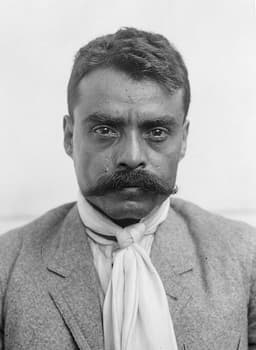
Emiliano Zapata
Revolutionary · Modern
56.3Total
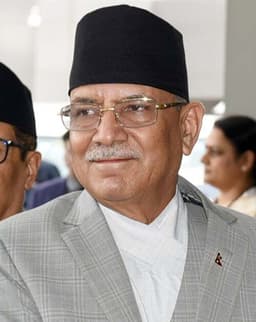
Pushpa Kamal Dahal
Revolutionary · Modern
50.0Total
Basic Information
Born
1879
1954
Died
1919
—
Era
Modern
Modern
Nationality
Mexico
Nepal
Occupation
Revolutionary
Revolutionary
Civilization
Western
Indian
Score Comparison
Military (10%)
40.0
35.0
Political (20%)
68.0
54.7
Influence (20%)
58.0
51.0
Legacy (20%)
54.0
40.8
Leadership (15%)
54.2
62.0
Strategy (15%)
60.0
60.0
TOTAL
56.3
50.0
Emiliano Zapata — Complete Timeline
1911 AD
Plan of AyalaPolitical Action
Zapata issued the Plan of Ayala, denouncing Francisco I. Madero for failing to implement land reform. The plan called for the return of land to peasants and became the ideological foundation of the Zapatista movement.
Land ReformAgrarian MovementRevolution
Impact: nationalprogressive
1914 AD
Occupation of Mexico CityWar◆ Major
Zapata's forces, allied with Villa's Division of the North, occupied Mexico City. They held the capital for several weeks but failed to establish lasting control, highlighting the limits of their coalition.
Military OccupationRevolutionary AllianceCapital
Impact: national
Convention of AguascalientesPolitical Action◆ Major
Zapata attended the Convention of Aguascalientes, where revolutionary factions attempted to unify. He allied with Pancho Villa against Venustiano Carranza, but the convention failed to produce a stable government.
Revolutionary AlliancePolitical DivisionCivil War
Impact: national
1919 AD
Assassination at ChinamecaPolitical Action
Zapata was lured to the Hacienda de Chinameca by Colonel Jesus Guajardo, who pretended to defect. Guajardo's troops ambushed and killed Zapata, ending his leadership of the agrarian rebellion.
AssassinationBetrayalEnd of Leadership
Impact: nationaltragic
Pushpa Kamal Dahal — Complete Timeline
1996 AD
Launch of People's WarWar
Prachanda, as leader of the Communist Party of Nepal (Maoist), initiated a armed insurgency against the Nepalese state. The People's War began with attacks on police posts and government offices, escalating into a decade-long civil war.
InsurgencyCivil WarMaoist
Impact: nationaldestructive
2006 AD
Signing of Comprehensive Peace AccordPolitical Action◆ Major
Prachanda signed the Comprehensive Peace Accord with Prime Minister Girija Prasad Koirala, ending the civil war. The agreement committed the Maoists to lay down arms and join mainstream politics in exchange for integration into state institutions.
Peace TreatyCivil WarNepal
Impact: nationalconstructive
2008 AD
Election as Prime MinisterPolitical Action◆ Major
Following the Maoist victory in the Constituent Assembly elections, Prachanda became the first prime minister of the Federal Democratic Republic of Nepal. His tenure focused on integrating former Maoist combatants into the national army.
ElectionGovernmentRepublic
Impact: national
2009 AD
Resignation as Prime MinisterPolitical Action
Prachanda resigned as prime minister after a dispute with President Ram Baran Yadav over the dismissal of the army chief. The crisis highlighted tensions between the Maoists and the established political order.
ResignationPoliticsCrisis
Impact: national
Expert Analysis
Emiliano Zapata vs Pushpa Kamal Dahal
# The Rebel’s Two Paths
In the spring of 1919, a dusty hacienda in Morelos, Mexico, became the stage for one of history’s most infamous betrayals. Colonel Jesús Guajardo, a man who had sworn allegiance to the revolution, raised his hand in salute—and then gave the signal. Emiliano Zapata, the Agrarian Messiah, crumpled to the ground, his body riddled with bullets. Nearly a century later, in a very different corner of the world, another revolutionary leader sat in a Kathmandu office, signing a peace accord that would make him prime minister. Pushpa Kamal Dahal, known as Prachanda, had traded his rifle for a necktie. Two revolutionaries, one dead at forty, the other still wielding power in his seventies. What made the difference? The answer lies not in their ideals, but in the soil and century they sought to uproot.
Origins
Emiliano Zapata was born in 1879 in Anenecuilco, a village where land was not just property but identity. His family were modest farmers, part of a peasant class that had watched the hacienda system devour communal lands for generations. When Zapata was nine, he saw his father lose a court battle over water rights to a powerful landowner. The lesson was seared into him: the law was a tool of the rich. He grew up in a world where the Porfiriato—the dictatorship of Porfirio Díaz—had turned Mexico into a paradise for foreign investors and a prison for the poor. Zapata’s education was in the fields, not in books, but he learned the language of grievance fluently.
Prachanda, born in 1954 in Kaski, Nepal, came of age in a different kind of feudalism. Nepal was a Hindu monarchy, isolated and impoverished, where the Shah kings ruled with divine right and the Rana family had hoarded power for a century. Unlike Zapata, Prachanda was a student. He studied agriculture at the Ram Saran Dham Campus, then taught at a high school in Chitwan. But the 1970s were a time of global ferment—Mao’s Cultural Revolution, the Vietnam War, and the rise of the Naxalites in India. Prachanda read Marx and Mao, and by 1975, he had joined the Communist Party of Nepal. Where Zapata was a peasant who became a revolutionary, Prachanda was an intellectual who chose the path of the gun.
Rise to Power
Zapata’s entrance onto the national stage came in 1910, when Francisco I. Madero called for revolution against Díaz. Zapata raised an army of peasants in Morelos, men who fought with machetes and captured rifles. By 1911, Madero was president, but he proved a disappointment. Land reform? Madero believed in democracy, not redistribution. Zapata issued the Plan of Ayala in November 1911, a document that declared “Land and Liberty” and denounced Madero as a traitor. It was a turning point: Zapata refused to compromise on the central demand of the peasantry. He would not be co-opted.
Prachanda’s rise was slower, more deliberate. In 1994, he became the general secretary of the Communist Party of Nepal (Maoist), a faction that had split from mainstream communism. For two years, he organized the rural poor in the hills of western Nepal, building a parallel government. Then, on February 13, 1996, he launched the “People’s War” with a series of coordinated attacks on police posts. The timing was deliberate: Nepal’s democracy was fragile, the monarchy still powerful, and corruption rampant. Prachanda’s strategy was Maoist—encircle the cities from the countryside. Unlike Zapata, who was swept into revolution by events, Prachanda calculated his moment.
Leadership & Governance
Zapata’s leadership was charismatic but local. He never sought to govern all of Mexico; he wanted to liberate Morelos. His military genius lay in guerrilla warfare—hit-and-run attacks, knowledge of the terrain, and the loyalty of his men. When his forces, allied with Pancho Villa’s Division of the North, occupied Mexico City in 1914, they did not seize power. Instead, Zapata sat in the presidential chair for a photograph and then returned to his land. He attended the Convention of Aguascalientes that year, but the alliance was fragile. Zapata’s political wisdom was pure but narrow: he trusted no one who was not a peasant.
Prachanda, by contrast, was a political animal. His military score is low—25.6—but his leadership score of 75.7 reflects a man who understood that war was a means, not an end. The decade-long civil war killed over 17,000 people and displaced thousands more, but Prachanda never aimed for total military victory. He aimed for the negotiating table. In 2006, he signed the Comprehensive Peace Accord, which ended the monarchy and brought the Maoists into mainstream politics. In 2008, he became prime minister. Where Zapata’s governance was a dream of village autonomy, Prachanda’s was a blueprint for power-sharing.
Triumph & Tragedy
Zapata’s greatest moment was the Plan of Ayala, which became the moral compass of the Mexican Revolution. His worst was his death—a betrayal that felt inevitable. He was lured to the Hacienda de Chinameca under a false flag of defection, and his body was displayed in Cuautla as a warning. The tragedy was not just his death, but the fact that his dream of land reform would take decades to partially realize.
Prachanda’s triumph was the peace accord. He walked into the prime minister’s office in 2008, a former guerrilla leader now wearing a suit. But his tragedy was the same: power corrupted the ideal. His first term ended in 2009 after a dispute over the army chief, and his later terms were marked by coalition politics, infighting, and accusations of authoritarianism. The revolutionary who had promised to smash the state became its manager.
Character & Destiny
Zapata’s personality was forged in the soil of Morelos. He was stubborn, suspicious, and profoundly honest—a man who could not lie about land because land was truth. His decisions were driven by a single question: does this help the campesino? This moral clarity made him a martyr but a poor politician. He could not compromise, and in revolutionary Mexico, compromise was survival.
Prachanda was more flexible. He changed his name from Pushpa Kamal Dahal to Prachanda (“the fierce one”) as a revolutionary alias, but he also changed his tactics. He could denounce the monarchy one year and dine with the king the next. His character was that of a survivor, not a martyr. He understood that history rewards those who live to write it.
Legacy
Zapata’s legacy is immortal. The Zapatista Army of National Liberation (EZLN) rose in Chiapas in 1994, invoking his name. His face is on murals, his words in songs. He is remembered as the purest voice of the Mexican Revolution, a man who died for a promise he never saw fulfilled.
Prachanda’s legacy is more ambiguous. He is remembered as the man who ended Nepal’s civil war and abolished the monarchy, but also as a politician who failed to deliver the radical change he promised. His influence score of 68.8 is high, but his legacy score of 54.7 suggests that history is still judging him.
Conclusion
Zapata and Prachanda were both revolutionaries of the land, but they lived in different centuries. Zapata’s world was one of machetes and horses, where revolution meant death or glory. Prachanda’s was one of cell phones and peace accords, where revolution could be a career. Zapata’s tragedy was that he could not adapt; Prachanda’s tragedy was that he adapted too well. In the end, the rebel who refused to change became an icon, and the rebel who changed became a prime minister. Which is the greater victory? History, as always, leaves the question open.
Rankings
🥇
Emiliano ZapataLeader
Mil: 40.0Pol: 68.0Inf: 58.0
56.3
🥈
Pushpa Kamal Dahal
Mil: 35.0Pol: 54.7Inf: 51.0
50.0
+6.3 behind
How This Comparison Works
Algorithm
Each figure is scored on 6 dimensions (0—100 scale) based on structured historical data: Military (10%), Political (20%), Influence (20%), Legacy (20%), Leadership (15%), Strategy (15%). The weighted total produces the final ranking.
Data Sources
Scores are computed from structured sub-indicators in the database. Scale factors adjust for era (Ancient ×0.85, Modern ×1.0) and civilization size (Eastern ×1.05, Other ×0.80) to account for differences in population and military scale.
Maximum 3 Figures
Comparisons are limited to 2—3 figures to ensure readability and statistical meaningfulness.
Error Margins
±5 points per dimension — Sub-scores are derived from historical records with inherent uncertainty. Two figures within 5 points on a dimension should be considered roughly equivalent in that area.
Total Score Accuracy
±3 points overall — The weighted combination of 6 dimensions produces a total score with approximately ±3 points of uncertainty. Differences of less than 3 points are not statistically significant— the figures are effectively tied.
Known Limitations
- Historical records are incomplete and uneven across civilizations
- Figures from oral-tradition societies may be underrepresented
- Occupation labels can misclassify multi-role figures
- Scores measure capability and impact, not moral character
- Quantitative scoring is a comparison tool, not absolute truth
Capability Radar
Military (10%) — Battles & Warfare
Battles
45
35
Win Rate
50
40
Expansion
35
25
Political (20%) — Governance & Reform
Reform
70
40
Diplomacy
40
50
Economy
35
35
Influence (20%) — Cultural & Global Reach
Cultural
65
40
Global
55
35
Legacy (20%) — Historical Impact
Historical
70
45
Longevity
65
30
Leadership (15%) — Power & Stability
Tenure
30
55
Stability
25
30
Strategy (15%) — Tactics & Innovation
Strategy
50
50
Tactics
55
45
Reform
60
30
Similar Comparisons
Comments & Discussion
PanchoVilla6/16/2026
Two men, two paths, one outcome: Zapata died with his boots on, Prachanda lives in a luxury Kathmandu villa. Prachanda’s Maoist revolution was a Nepali soap opera—barricades one day, parliament the next. Zapata never shook hands with oligarchs. He knew that land reform isn’t a negotiation; it’s a blood contract. Prachanda’s “People’s War” ended in a business deal. Zapata’s ended in a hail of bullets at Chinameca. I know which legacy I respect.