Loading...
Emiliano Zapata vs Francisco I. Madero
Emiliano Zapata leads by 6.0 pts · 2 figures compared
…
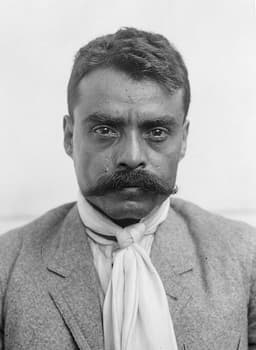
Emiliano Zapata
Revolutionary · Modern
56.3Total
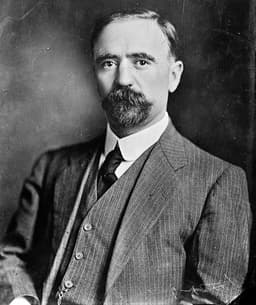
Francisco I. Madero
Revolutionary · Modern
50.3Total
Basic Information
Born
1879
1873
Died
1919
1913
Era
Modern
Modern
Nationality
Mexico
Mexico
Occupation
Revolutionary
Revolutionary
Civilization
Western
Western
Score Comparison
Military (10%)
40.0
50.0
Political (20%)
68.0
54.7
Influence (20%)
58.0
52.5
Legacy (20%)
54.0
47.5
Leadership (15%)
54.2
54.2
Strategy (15%)
60.0
39.6
TOTAL
56.3
50.3
Emiliano Zapata — Complete Timeline
1911 AD
Plan of AyalaPolitical Action
Zapata issued the Plan of Ayala, denouncing Francisco I. Madero for failing to implement land reform. The plan called for the return of land to peasants and became the ideological foundation of the Zapatista movement.
Land ReformAgrarian MovementRevolution
Impact: nationalprogressive
1914 AD
Occupation of Mexico CityWar◆ Major
Zapata's forces, allied with Villa's Division of the North, occupied Mexico City. They held the capital for several weeks but failed to establish lasting control, highlighting the limits of their coalition.
Military OccupationRevolutionary AllianceCapital
Impact: national
Convention of AguascalientesPolitical Action◆ Major
Zapata attended the Convention of Aguascalientes, where revolutionary factions attempted to unify. He allied with Pancho Villa against Venustiano Carranza, but the convention failed to produce a stable government.
Revolutionary AlliancePolitical DivisionCivil War
Impact: national
1919 AD
Assassination at ChinamecaPolitical Action
Zapata was lured to the Hacienda de Chinameca by Colonel Jesus Guajardo, who pretended to defect. Guajardo's troops ambushed and killed Zapata, ending his leadership of the agrarian rebellion.
AssassinationBetrayalEnd of Leadership
Impact: nationaltragic
Francisco I. Madero — Complete Timeline
1908 AD
Madero publishes 'The Presidential Succession in 1910'Cultural◆ Major
Francisco I. Madero published a book criticizing the long dictatorship of Porfirio D
Mexican RevolutionPolitical WritingDemocracy
Impact: nationalprogressive
1910 AD
Madero launches the Mexican RevolutionPolitical Action
After being fraudulently defeated in the 1910 presidential election, Madero issued the Plan of San Luis Potos
Mexican RevolutionArmed RebellionPlan of San Luis
Impact: national
1911 AD
Madero becomes President of MexicoPolitical Action◆ Major
Following the resignation of Porfirio D
PresidencyDemocracyReform
Impact: nationalconstructive
1913 AD
Madero's assassination during the Decena TrágicaPolitical Action
During a coup known as the Decena Tr
AssassinationCoupDecena Trágica
Impact: nationaltragic
Expert Analysis
Emiliano Zapata vs Francisco I. Madero
### The Revolutionary and the Reformer: Zapata and Madero, Two Paths to a Broken Mexico
In the uneasy quiet of a November morning in 1911, two men stood on opposite sides of a chasm that would define Mexico’s future. One was Francisco I. Madero, a slight, spiritual man with a high forehead and a belief in the power of the ballot box. The other was Emiliano Zapata, a stern, dark-eyed horseman whose world was measured in cornfields and the dust of his native Morelos. They had just toppled a dictator together, but now they faced each other as strangers. Zapata demanded land—now, for the peasants who had fought. Madero offered patience, reform, and the slow machinery of law. The meeting ended in failure. Within eight years, both men would be dead, their bodies riddled with bullets, their dreams mangled by the very forces they had unleashed. How did two men who wanted to save Mexico end up destroying each other?
### Origins
Their differences began in the soil they were born from. Madero came from a wealthy landowning family in Coahuila, educated in France and the United States. He was a man of ideas, steeped in the liberal philosophy of democracy and the occult mysticism of spiritism. His world was one of books, political pamphlets, and the belief that human reason could perfect society. He had never known hunger. Zapata, by contrast, was born in 1879 in the village of Anenecuilco, where his family had once owned land but had lost it to the voracious haciendas of the Porfiriato. His education was the land itself: the rhythm of planting, the bitterness of dispossession, the memory of a village elder who told him, “The land belongs to those who work it.” His world was one of machetes, horses, and the unyielding arithmetic of survival. The Mexican Revolution was not a philosophy for Zapata; it was a debt that had to be collected.
### Rise to Power
Madero entered the historical stage through the printed word. In 1908, he published *The Presidential Succession in 1910*, a calm, reasoned critique of Porfirio Díaz’s thirty-five-year dictatorship. It was a call for free elections, not a call for revolution. When Díaz rigged the 1910 election, Madero fled to Texas and issued the Plan of San Luis Potosí, a document that ignited a nationwide uprising. He was the spark, but not the fire. The real fire came from men like Zapata, who had been fighting land seizures in Morelos for years. When Díaz fell in May 1911, Madero rode into Mexico City as the “Apostle of Democracy,” believing the revolution was over. Zapata knew it had only just begun.
### Leadership & Governance
As president, Madero proved tragically naive. He was a reformer who refused to reform. He kept the old Porfirian army intact, believing in legal process over justice. When Zapata demanded immediate land distribution, Madero offered a slow, bureaucratic program that would take years. Zapata responded in November 1911 with the Plan of Ayala, a fiery document that denounced Madero as a traitor and demanded “Land and Liberty.” The plan called for the expropriation of haciendas and the return of land to villages. It was a declaration of war.
Zapata’s leadership was the opposite of Madero’s. He governed through the *junta* system of his home state, leading a peasant army that was fiercely loyal but local in vision. He was a military commander of cunning tactics—ambushes, night raids, the use of the terrain—but never a strategist for all of Mexico. His political wisdom was narrow but deep: he understood that the peasant wanted land, not speeches. Madero, with a Military score of 34.0, was no soldier at all. He relied on others to fight his battles, and they often failed him. The Decena Trágica in February 1913, a ten-day coup in Mexico City, saw Madero betrayed by his own general, Victoriano Huerta. Arrested and forced to resign, Madero was shot dead on February 22, 1913, along with his vice president. He died still believing in the power of the ballot.
### Triumph & Tragedy
Zapata’s greatest moment came in December 1914, when his forces, allied with Pancho Villa’s Division of the North, occupied Mexico City. For several weeks, the peasant army held the capital. They did not loot or burn. They walked the streets in their white cotton clothes, bewildered by the grand buildings, and they printed the Plan of Ayala on the government presses. It was a triumph of the forgotten. But it was also a tragedy of disunity. The Convention of Aguascalientes, held earlier that year, had tried to unite the revolutionary factions, but it fractured into civil war between Villa and the Constitutionalists under Venustiano Carranza. Zapata, with a Political score of 57.6, could not bridge the gap. He retreated to Morelos, his fortress, and fought a losing war of attrition.
The end came in 1919. Carranza, now president, sent a colonel named Jesús Guajardo to feign defection. On April 10, Zapata rode to the Hacienda de Chinameca, expecting a meeting. As he crossed the threshold, a bugle sounded three times—a signal. Guajardo’s men raised their rifles and fired. Zapata fell, his body riddled with bullets. He was 39 years old. The man who had demanded land for the poor died on the land of a hacienda, betrayed by the very politics he had despised.
### Character & Destiny
What drove these men apart was not just policy but personality. Madero was a moralist who believed in the goodness of systems. He thought that if he wrote the right laws, the world would follow. Zapata was a realist who believed in the goodness of the village. He thought that if he seized the land, justice would follow. Madero’s fatal flaw was trust—trust in a system that had no interest in justice. Zapata’s fatal flaw was suspicion—suspicion of anyone who did not come from the soil. Madero died because he could not see the knife. Zapata died because he saw it too clearly. Their total scores—Madero at 54.5, Zapata at 60.2—reflect not their value as men but the tragic arithmetic of history: both were insufficient for the task.
### Legacy
Today, Madero is remembered as the “Apostle of Democracy,” a martyr to the cause of free elections. His name is on streets and plazas, but his ideas are often distant. Zapata is a living ghost. His image is everywhere—on murals, on T-shirts, in the chants of landless movements from Chiapas to the Americas. The Zapatista Army of National Liberation, which rose in 1994, took his name and his demand: land and liberty. Madero’s legacy is a lesson in the fragility of idealism. Zapata’s legacy is a warning that some debts cannot be paid with words.
### Conclusion
They lie in different graves, but the same earth covers them. The chasm between Madero and Zapata was not one of good versus evil; it was the chasm between the printed page and the plowed field, between the promise of a law and the memory of a stolen acre. The Mexican Revolution devoured both men because it was not a single revolution at all. It was a thousand rebellions, each with its own hunger. In the end, the land did not change hands fast enough, and the democracy did not come soon enough. Their deaths were not the failure of two men, but the failure of a nation to listen to both at once. And that is the tragedy that still haunts Mexico: the revolutionary and the reformer, both necessary, both betrayed, both dead before the sun could rise.
Rankings
🥇
Emiliano ZapataLeader
Mil: 40.0Pol: 68.0Inf: 58.0
56.3
🥈
Francisco I. Madero
Mil: 50.0Pol: 54.7Inf: 52.5
50.3
+6.0 behind
How This Comparison Works
Algorithm
Each figure is scored on 6 dimensions (0—100 scale) based on structured historical data: Military (10%), Political (20%), Influence (20%), Legacy (20%), Leadership (15%), Strategy (15%). The weighted total produces the final ranking.
Data Sources
Scores are computed from structured sub-indicators in the database. Scale factors adjust for era (Ancient ×0.85, Modern ×1.0) and civilization size (Eastern ×1.05, Other ×0.80) to account for differences in population and military scale.
Maximum 3 Figures
Comparisons are limited to 2—3 figures to ensure readability and statistical meaningfulness.
Error Margins
±5 points per dimension — Sub-scores are derived from historical records with inherent uncertainty. Two figures within 5 points on a dimension should be considered roughly equivalent in that area.
Total Score Accuracy
±3 points overall — The weighted combination of 6 dimensions produces a total score with approximately ±3 points of uncertainty. Differences of less than 3 points are not statistically significant— the figures are effectively tied.
Known Limitations
- Historical records are incomplete and uneven across civilizations
- Figures from oral-tradition societies may be underrepresented
- Occupation labels can misclassify multi-role figures
- Scores measure capability and impact, not moral character
- Quantitative scoring is a comparison tool, not absolute truth
Capability Radar
Military (10%) — Battles & Warfare
Battles
45
25
Win Rate
50
30
Expansion
35
10
Political (20%) — Governance & Reform
Reform
70
60
Diplomacy
40
35
Economy
35
30
Influence (20%) — Cultural & Global Reach
Cultural
65
45
Global
55
40
Legacy (20%) — Historical Impact
Historical
70
55
Longevity
65
50
Leadership (15%) — Power & Stability
Tenure
30
40
Stability
25
15
Strategy (15%) — Tactics & Innovation
Strategy
50
25
Tactics
55
20
Reform
60
10
Similar Comparisons
Comments & Discussion
MEXICAN-STANDOFF PROFESSOR6/16/2026
Madero never understood that land isn't a legal abstraction—it's blood and maize. He offered Zapata committees while his own family's hacienda grew fat on stolen ejido lands. The masterclass in failure: Madero's 1911 decree for land restitution was so loophole-ridden that hacendados simply bribed local judges. Zapata's Plan de Ayala wasn't radical; it was a last resort after a polite man with a burgundy sash kept saying "wait." History remembers Madero as a martyr. I remember him as the man who
土地革命老兵6/16/2026
萨帕塔在莫雷洛斯烧掉的第一张地契,就是马德罗堂兄弟的庄园。你跟我说民主?1911年11月的查尔科会议,萨帕塔跪在泥地里恳求土地,马德罗却坐在镀金椅子上背诵宪法条款。最讽刺的是马德罗死后九年,卡兰萨才搞出土地改革——而萨帕塔早就用鲜血写好了方案。自由派总把马德罗当圣人,可圣人救不了饿死的孩子。
VELVET-GLOVE SKEPTIC6/16/2026
Let's talk numbers: by 1910, 1% of Mexico's population held 97% of the land. Madero's entire presidency—15 months—redistributed exactly zero hectares. Zapata didn't need a political science degree to know that when your neighbor's children die of starvation while the hacendado ships beef to Chicago, "democratic transition" is a fairy tale for the full-bellied. The tragedy isn't that Zapata rejected Madero—it's that Madero gave him nothing to accept except promises seasoned with condescension.
原住民记忆守护者6/16/2026
阿内内科伊尔科村的土地证是1576年西班牙国王签发的,萨帕塔能把每块田地的历史背出来。而马德罗连莫雷洛斯在哪里都要看地图。这不是两套政治纲领的冲突,是两种时间观的撕裂:一个是看得见玉米成长周期的农民,一个是相信四年选举周期的富家子。萨帕塔死后,农民把土地证缝进寿衣里下葬——他们知道,真正的革命从来不在投票箱里。