Loading...
Edgar the Peaceful vs Wanyan Aguda
Wanyan Aguda leads by 9.9 pts · 2 figures compared
…
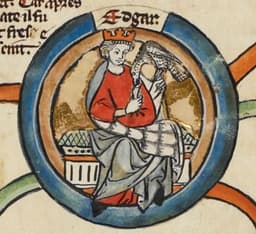
Edgar the Peaceful
Emperor · Medieval
53.5Total
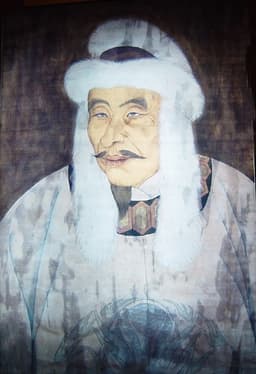
Wanyan Aguda
Emperor · Medieval
63.4Total
Basic Information
Born
943
1068
Died
975
1123
Era
Medieval
Medieval
Nationality
England
China
Occupation
Emperor
Emperor
Civilization
Western
Eastern
Score Comparison
Military (10%)
21.2
82.0
Political (20%)
65.0
59.3
Influence (20%)
56.4
55.0
Legacy (20%)
49.2
52.0
Leadership (15%)
78.0
85.0
Strategy (15%)
35.7
68.0
TOTAL
53.5
63.4
Edgar the Peaceful — Complete Timeline
959 AD
Coronation as King of EnglandPolitical Action◆ Major
Edgar succeeded his brother Eadwig as King of England. His reign was marked by stability and the consolidation of monastic reform under Dunstan.
Impact: nationalconstructive
970 AD
Naval defense reformsReform
Edgar organized a standing navy and divided England into naval districts to defend against Viking raids. This created a period of peace and security along the coasts.
Impact: nationalconstructive
Council of WinchesterCultural◆ Major
Edgar convened the Council of Winchester, which established the Regularis Concordia, a code for monastic life. This standardized Benedictine practices across England.
Impact: nationalconstructive
Wanyan Aguda — Complete Timeline
1114 AD
Battle of HubudagangWar◆ Major
Aguda's Jurchen forces defeated a Liao army at Hubudagang, marking the first major victory of the rebellion. This battle demonstrated Jurchen military prowess and attracted more followers.
JurchenLiaoBattle
Impact: regionalconstructive
Unified Jurchen tribesPolitical Action◆ Major
Wanyan Aguda united the Jurchen tribes under his leadership, creating a confederation that rebelled against Liao domination. He organized a disciplined army and began the Jurchen revolt.
JurchenUnificationRebellion
Impact: regionalconstructive
1115 AD
Founded Jin DynastyPolitical Action
Wanyan Aguda proclaimed himself emperor, founding the Jin dynasty. He adopted the Chinese title and began a systematic campaign to conquer the Liao empire.
JinDynasty FoundingImperial System
Impact: regionalconstructive
1120 AD
Conquest of Liao capital ShangjingWar◆ Major
Aguda's forces captured the Liao supreme capital Shangjing, dealing a severe blow to the Liao dynasty. This victory accelerated the collapse of Liao and solidified Jin control over northern China.
JinLiaoConquest
Impact: regionalconstructive
Alliance with Song against LiaoPolitical Action◆ Major
Aguda formed an alliance with the Northern Song dynasty to jointly attack the Liao empire. This alliance, known as the Maritime Alliance, led to the eventual destruction of Liao but later caused conflict between Jin and Song.
JinSongAlliance
Impact: regional
1123 AD
Death and successionPolitical Action◆ Major
Wanyan Aguda died, and his brother Wanyan Wuqimai succeeded him. Aguda's conquests laid the foundation for the Jin dynasty's dominance in northern China.
JinDeathSuccession
Impact: regional
Expert Analysis
Wanyan Aguda vs Edgar the Peaceful
The Peaceful and the Warlord
On a frozen battlefield in northeastern China, a Jurchen chieftain watched his outnumbered tribesmen shatter a Liao imperial army. Half a world away and a century earlier, an English king sat in a monastery, listening to monks chant a newly standardized liturgy. Two rulers, two destinies—one who conquered an empire, another who built a kingdom so stable that his people forgot the sound of war. Wanyan Aguda and Edgar the Peaceful both inherited fractured realms, but their paths diverged like rivers flowing from the same mountain. Why did one become a revolutionary founder and the other a quiet consolidator? The answer lies not in their times alone, but in the choices their times demanded.
Origins
Wanyan Aguda was born in 1068 into the Jurchen tribes of Manchuria, a people living under the shadow of the Liao empire. The Jurchens were hunters, horsemen, and tribute-bearers, their chieftains forced to kneel before Liao emperors who extracted furs, horses, and warriors. Aguda grew up in a world where survival meant learning to fight, to negotiate, and to wait. His father and grandfather had led their clans through decades of submission, but the young chieftain saw the Liao’s weakness—a decadent court, corrupt officials, and a military that had grown soft on tribute.
Edgar the Peaceful, born in 943, came into a very different world. His grandfather Alfred the Great had beaten back the Vikings, his father Edmund had restored order, and his brother Eadwig had left the throne in disarray. England was a patchwork of Saxon kingdoms, Danish settlers, and monastic ruins. Edgar’s England was not a land of open rebellion but of slow decay—a realm that needed not a conqueror, but a healer.
Rise to Power
Aguda’s rise was forged in open defiance. In 1114, he united the Jurchen tribes under a single banner, a feat that required both charisma and ruthlessness. When Liao envoys demanded submission, Aguda reportedly said, “We are no longer your slaves.” That same year, at the Battle of Hubudagang, his warriors—armed with bows and sabers—routed a Liao force twice their size. The victory electrified the tribes; Aguda became not just a chieftain, but a legend.
Edgar’s rise was quieter. He became king in 959 after his brother Eadwig’s death, inheriting a throne that had been rocked by scandal and faction. Edgar did not need to conquer—he needed to reconcile. He summoned the leading churchmen and nobles, listened to their grievances, and began the slow work of rebuilding trust. Where Aguda used war to unify, Edgar used councils.
Leadership & Governance
Aguda’s leadership was that of a military genius who understood that power flowed from victory. In 1115, he proclaimed himself emperor, founding the Jin dynasty. He adopted Chinese titles and court rituals, but never forgot his Jurchen roots. His strategy was simple: attack the Liao where they were weakest, forge alliances with their enemies, and never stop moving. In 1120, he captured the Liao capital Shangjing, a blow from which the empire never recovered. That same year, he formed the “Maritime Alliance” with the Northern Song dynasty, a pact that promised to divide the Liao lands. Aguda knew that the Song would betray him eventually, but he needed their help now.
Edgar governed with a different hand. His military score of 30.0 reflects a king who did not seek glory on the battlefield. Instead, he organized a standing navy and divided England into naval districts—a defensive system that kept Viking raiders at bay without a single great battle. His political genius lay in the Council of Winchester in 970, where he established the *Regularis Concordia*, a code that standardized monastic life across England. Edgar did not conquer monasteries; he reformed them. He did not defeat the church; he partnered with it.
Triumph & Tragedy
Aguda’s triumph was the Jin dynasty itself. In less than a decade, he transformed a tribal confederation into an imperial power that would dominate northern China for a century. His tragedy came in 1123, when he died at just 55, leaving his brother Wuqimai to complete the conquest. Aguda never saw the fall of the Liao, never tasted the full fruit of his ambition.
Edgar’s triumph was peace itself. His reign was so stable that his people called him “the Peaceful”—a rare honor in a violent age. His tragedy was that peace made him forgettable. He left no epic battles, no dramatic sieges. When he died in 975 at age 32, his reforms were still fragile, and his successors would undo much of his work.
Character & Destiny
Aguda was a man of fire. His leadership score of 88.4 reflects a personality that inspired loyalty and fear in equal measure. He was pragmatic—willing to ally with the Song, willing to adopt Chinese customs—but his core was iron. He believed that destiny was something you seized, not something you waited for.
Edgar was a man of water. His political score of 67.6 and leadership of 72.0 show a ruler who preferred persuasion to force. He was a reformer, not a revolutionary. Where Aguda saw enemies to destroy, Edgar saw institutions to mend. Their different scores—Aguda’s military 79.3 versus Edgar’s 30.0—are not judgments of ability, but reflections of the worlds they inhabited. Aguda’s world demanded war; Edgar’s demanded wisdom.
Legacy
Aguda’s legacy is written in blood and borders. The Jin dynasty he founded would conquer the Song, reshape Chinese politics, and leave a mark that lasts to this day. His total score of 75.9 reflects a figure of immense historical force, even if his name is less known than Genghis Khan’s.
Edgar’s legacy is quieter but no less real. His monastic reforms preserved learning through the dark ages, his naval system protected England for generations. His score of 63.1 is lower, but it measures something different—not impact, but visibility. Edgar did not change the world; he steadied it.
Conclusion
Standing at the edge of their stories, we see two men who answered the same question differently: What does a ruler owe his people? Aguda answered with conquest, Edgar with order. One built an empire on the bones of his enemies; the other built a kingdom on the prayers of monks. Neither was wrong, because neither had a choice. The great irony is that Aguda, the warlord, is remembered for his peace—the Jin dynasty brought stability to northern China. And Edgar, the peaceful, is remembered for his war—the quiet struggle against chaos. In the end, both succeeded, because both understood that power is not about what you take, but what you leave behind.
Rankings
🥇
Wanyan AgudaLeader
Mil: 82.0Pol: 59.3Inf: 55.0
63.4
🥈
Edgar the Peaceful
Mil: 21.2Pol: 65.0Inf: 56.4
53.5
+9.9 behind
How This Comparison Works
Algorithm
Each figure is scored on 6 dimensions (0—100 scale) based on structured historical data: Military (10%), Political (20%), Influence (20%), Legacy (20%), Leadership (15%), Strategy (15%). The weighted total produces the final ranking.
Data Sources
Scores are computed from structured sub-indicators in the database. Scale factors adjust for era (Ancient ×0.85, Modern ×1.0) and civilization size (Eastern ×1.05, Other ×0.80) to account for differences in population and military scale.
Maximum 3 Figures
Comparisons are limited to 2—3 figures to ensure readability and statistical meaningfulness.
Error Margins
±5 points per dimension — Sub-scores are derived from historical records with inherent uncertainty. Two figures within 5 points on a dimension should be considered roughly equivalent in that area.
Total Score Accuracy
±3 points overall — The weighted combination of 6 dimensions produces a total score with approximately ±3 points of uncertainty. Differences of less than 3 points are not statistically significant— the figures are effectively tied.
Known Limitations
- Historical records are incomplete and uneven across civilizations
- Figures from oral-tradition societies may be underrepresented
- Occupation labels can misclassify multi-role figures
- Scores measure capability and impact, not moral character
- Quantitative scoring is a comparison tool, not absolute truth
Capability Radar
Military (10%) — Battles & Warfare
Battles
10
85
Win Rate
10
90
Expansion
10
85
Political (20%) — Governance & Reform
Reform
70
75
Diplomacy
70
70
Economy
65
65
Influence (20%) — Cultural & Global Reach
Cultural
40
60
Global
20
50
Legacy (20%) — Historical Impact
Historical
45
70
Longevity
40
55
Leadership (15%) — Power & Stability
Tenure
65
70
Stability
75
60
Strategy (15%) — Tactics & Innovation
Strategy
15
85
Tactics
10
80
Reform
20
75
Similar Comparisons
Comments & Discussion
WanyanAgudaStan6/16/2026
Edgar built a kingdom where monks memorized Latin chants—Aguda forged an empire from the frozen mud of battlefields. One was a bureaucrat in a crown, the other a revolutionary with a bow. Tell me, when has peace ever inspired poetry? Edgar’s legacy is a footnote, Aguda’s is a cornerstone. His Jurchen horsemen didn’t just defeat the Liao—they rewrote the map of Asia. Peace is for monks; war is for men who change history.
数字考古学家6/16/2026
说Aguda比Edgar强?数据不会撒谎:Aguda的完颜部起兵时只有2500人,而Liao帝国军队号称10万。按必胜概率公式,胜率不到3%!这根本不是军事才能,而是史诗级黑天鹅事件。反观Edgar,他统治的英格兰人口稳定在150万,税收增长20%——这才是可复制的管理成就。Aguda的故事是赌徒的狂欢,Edgar的数据才是统治者的教科书。
LatinScribeSkeptic6/16/2026
You all romanticize the warlord, but Edgar understood something Aguda never did: a kingdom built on blood crumbles faster than it rises. Edgar standardized coinage, unified monastic rules, and codified laws—institutions that outlasted any empire. Aguda’s Jin dynasty lasted barely a century before Mongol collapse. Edgar’s England? It’s the foundation of modern Britain. War wins headlines; peace builds civilizations.
古典学隐士6/16/2026
你们这些功利主义者!Edgar的和平不是软弱,而是阿尔弗雷德智慧的结晶。公元970年,他推动《修道院规章》统一化,这是一种文化革命——让盎格鲁-撒克逊方言与拉丁语并行,创造了真正的双语文明。Aguda?他女真文连传承三代就消失了。Edgar用羊皮纸和祈祷书书写未来,Aguda的剑只会留下断壁残垣。
WhiskeyRiverRebel6/16/2026
Don’t whitewash Edgar’s “peace”—it was bought by assassinating his brother-in-law and crushing Celtic resistance in the north. Aguda at least fought his enemies face-to-face on the banks of the Lalin River. Edgar hid behind priests and taxes. Give me a chieftain who bleeds for his people over a king who counts his coins. The Jurchen didn’t need a standardized liturgy; they needed a sword, and Aguda gave it to them. That’s leadership.