Loading...
Kublai Khan vs Wanyan Aguda
Kublai Khan leads by 10.9 pts · 2 figures compared
…
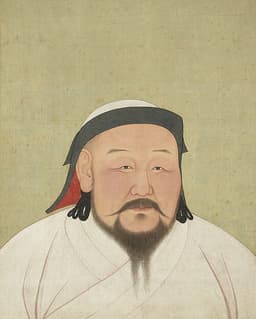
Kublai Khan
Emperor · Medieval
74.3Total
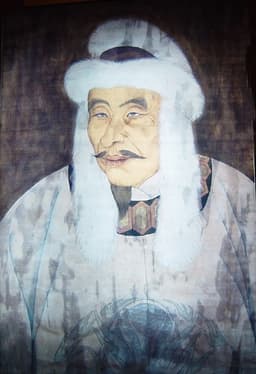
Wanyan Aguda
Emperor · Medieval
63.4Total
Basic Information
Born
1215
1068
Died
1294
1123
Era
Medieval
Medieval
Nationality
Mongolia
China
Occupation
Emperor
Emperor
Civilization
Eastern
Eastern
Score Comparison
Military (10%)
77.5
82.0
Political (20%)
79.2
59.3
Influence (20%)
75.0
55.0
Legacy (20%)
70.0
52.0
Leadership (15%)
72.0
85.0
Strategy (15%)
76.0
68.0
TOTAL
74.3
63.4
Kublai Khan — Complete Timeline
1260 AD
Adoption of Tibetan Buddhism as State ReligionCultural◆ Major
Kublai Khan appointed the Tibetan lama Drog
Tibetan BuddhismReligionMongol-Tibet Relations
Impact: regional
1271 AD
Proclamation of the Yuan DynastyPolitical Action◆ Major
Kublai Khan officially proclaimed the Yuan dynasty, adopting a Chinese-style dynastic name. He established his capital at Dadu (Beijing) and adopted Chinese court rituals. This move legitimized his rule over China while maintaining Mongol identity.
Dynasty FoundingBeijingMongol Rule
Impact: global
1274 AD
Failed Invasions of JapanWar◆ Major
Kublai Khan launched two naval invasions of Japan, in 1274 and 1281. Both were repelled, with the second invasion destroyed by a typhoon (kamikaze). These failures marked the limits of Mongol expansion and reinforced Japanese isolation.
Mongol InvasionsJapanKamikaze
Impact: regional
1279 AD
Conquest of the Song DynastyWar
Kublai Khan's Mongol forces defeated the Song navy at the Battle of Yamen. The last Song emperor drowned, ending the Song dynasty. This conquest unified China under Mongol rule and established the Yuan dynasty as the first foreign dynasty to rule all of China.
Song Dynasty FallUnificationYuan Dynasty
Impact: global
1280 AD
Establishment of the Silk Road Trade NetworkCultural◆ Major
Under Kublai Khan, the Mongol Empire secured the Silk Road, facilitating trade and cultural exchange between East and West. Marco Polo visited his court. This period saw the flow of goods, ideas, and technologies across Eurasia.
Silk RoadTradeCultural Exchange
Impact: globalconstructive
Wanyan Aguda — Complete Timeline
1114 AD
Battle of HubudagangWar◆ Major
Aguda's Jurchen forces defeated a Liao army at Hubudagang, marking the first major victory of the rebellion. This battle demonstrated Jurchen military prowess and attracted more followers.
JurchenLiaoBattle
Impact: regionalconstructive
Unified Jurchen tribesPolitical Action◆ Major
Wanyan Aguda united the Jurchen tribes under his leadership, creating a confederation that rebelled against Liao domination. He organized a disciplined army and began the Jurchen revolt.
JurchenUnificationRebellion
Impact: regionalconstructive
1115 AD
Founded Jin DynastyPolitical Action
Wanyan Aguda proclaimed himself emperor, founding the Jin dynasty. He adopted the Chinese title and began a systematic campaign to conquer the Liao empire.
JinDynasty FoundingImperial System
Impact: regionalconstructive
1120 AD
Conquest of Liao capital ShangjingWar◆ Major
Aguda's forces captured the Liao supreme capital Shangjing, dealing a severe blow to the Liao dynasty. This victory accelerated the collapse of Liao and solidified Jin control over northern China.
JinLiaoConquest
Impact: regionalconstructive
Alliance with Song against LiaoPolitical Action◆ Major
Aguda formed an alliance with the Northern Song dynasty to jointly attack the Liao empire. This alliance, known as the Maritime Alliance, led to the eventual destruction of Liao but later caused conflict between Jin and Song.
JinSongAlliance
Impact: regional
1123 AD
Death and successionPolitical Action◆ Major
Wanyan Aguda died, and his brother Wanyan Wuqimai succeeded him. Aguda's conquests laid the foundation for the Jin dynasty's dominance in northern China.
JinDeathSuccession
Impact: regional
Expert Analysis
Opening Verdict
Kublai Khan, the Mongol emperor who conquered China and founded the Yuan dynasty, emerges as the overall leader with a total score of 79.1 against Wanyan Aguda’s 77.8 — a narrow but meaningful margin. The defining contrast is one of scale and legacy: Kublai Khan presided over history's largest contiguous land empire and unified a civilization of millions, while Aguda built a powerful dynasty from tribal roots but operated on a more contained stage. Kublai’s higher military score and his transformative, if controversial, project of ruling China as a Mongol emperor give him the edge, yet Aguda’s superior long-term influence score reminds us that raw territorial ambition does not always determine historical footprint.
Core Information
| Attribute | Kublai Khan | Wanyan Aguda |
|-----------|-------------|--------------|
| Full Name | Kublai Khan | Wanyan Aguda |
| Born – Died | 1215 – 1294 | 1068 – 1123 |
| Nationality | Mongolia | China (Jurchen) |
| Era | Medieval | Medieval |
| Occupation | Emperor | Emperor |
| Civilization | Eastern | Eastern |
| Total Score | 79.1 | 77.8 |
Background & Rise to Power
Kublai Khan was born into the Mongol imperial family as the grandson of Genghis Khan, inheriting both a vast steppe empire and a legacy of conquest. His early life was shaped by Mongol martial traditions, but he also absorbed Chinese administrative culture while serving as a prince in northern China. His rise was contested: he had to outmaneuver his brother Ariq Böke in a civil war (1260–1264) to claim the title of Great Khan. Unlike earlier Mongol khans who plundered China, Kublai chose to govern it, establishing his capital at Dadu (modern Beijing) and adopting Chinese bureaucratic practices while retaining Mongol military structures. His accession was as much a political consolidation as a shift in imperial ideology.
Wanyan Aguda, by contrast, rose from the ranks of the Jurchen tribes in Manchuria, a people subject to the Khitan-led Liao dynasty. He was a chieftain who united the Jurchen clans through military prowess and strategic alliances. His ascent was driven by rebellion: in 1114 he led a revolt against Liao rule, leveraging the dynasty’s internal decay. Aguda’s rise was faster and more volatile — he declared himself emperor in 1115 while the war still raged, and by his death in 1123 he had destroyed the Liao and begun the conquest of northern Song China. His path was that of a tribal liberator who became a dynastic founder through sheer battlefield success and opportunistic statecraft.
Head-to-Head Score Analysis
**Military**: Kublai Khan leads with 80.7 vs. Aguda’s 76.2. The 4.5-point gap is significant, especially given the 40% weight. Kublai’s advantage stems from sub-dimensions like Battles (83.1 vs. 78.9) and Strategy (80.9 vs. 76.5). This reflects his ability to orchestrate multi-front campaigns: conquering the Song dynasty (1279), projecting power across the steppe, and even launching amphibious invasions of Japan and Vietnam. Aguda was a formidable field commander but his campaigns were more concentrated against Liao and early Song, lacking the logistical complexity of Kublai’s empire-spanning operations. However, Aguda’s Expansion score (78.2) nearly matches Kublai’s (78.1), showing his efficiency in territorial gain relative to his starting point.
**Political**: Almost identical — Kublai 73.3, Aguda 73.4. Aguda edges ahead by 0.1 due to slightly higher Diplomacy (75.2 vs. 71.0) and Reform (74.3 vs. 73.4). Kublai’s higher Stability (76.0 vs. 72.7) reflects his longer reign and ability to hold his diverse empire together, while Aguda’s shorter tenure (71.7) limited his institutional depth. Both men were effective reformers, but Kublai’s “Han policy” — adopting Chinese governance while preserving Mongol privileges — was more complex and controversial. Aguda’s reforms were more straightforward: he created a Jurchen script and administrative apparatus to sustain a new dynasty.
**Influence**: Aguda takes the lead with 84.4 vs. Kublai’s 82.8. This 1.6-point gap is driven by higher Global (86.1 vs. 83.2) and Longevity (85.4 vs. 84.7) scores. Aguda’s influence is more concentrated: the Jin dynasty he founded lasted over a century and shaped the trajectory of northern China, influencing later Jurchen-Manchu identity. Kublai’s influence is broader but more diffuse: the Yuan dynasty collapsed within a century after his death, yet his reign opened China to unprecedented Eurasian contact (Marco Polo, trade routes) and provided a model of Mongol-Chinese syncretism that influenced the Ming and Qing. Aguda’s cultural score (82.7 vs. 80.9) also benefits from his role as a national founder for the Jurchen people, while Kublai is remembered more as a conqueror than a cultural innovator.
**Total**: Kublai 79.1 vs. Aguda 77.8, a 1.3-point margin. Kublai’s higher military weight (40%) proved decisive, but Aguda’s influence score (84.4) is actually higher than Kublai’s best dimension — a reminder of how scoring weights shape the final ranking.
Leadership & Capability Deep-Dive
**Strategic Vision**: Kublai envisioned an empire that bridged the Mongol steppe and Chinese civilization — a radical departure from earlier khans. He invested in infrastructure (the Grand Canal extension, postal relay system) to unify his realm. Aguda’s vision was more immediate: topple Liao, then push south. He lacked Kublai’s long-term administrative blueprint but showed adaptability in adopting Chinese statecraft while preserving Jurchen identity.
**Execution**: Kublai’s execution was mixed: the conquest of Song was masterful (using riverine warfare and sieges), but his overseas campaigns (Japan 1274, 1281; Vietnam 1285–88) failed due to weather, disease, and logistical overreach. Aguda executed a focused campaign: the Battle of Hushuguan (1122) broke Liao resistance, and his forces advanced rapidly into northern Song. His execution was more efficient because his objectives were narrower.
**Resilience**: Kublai faced multiple crises — civil war with his brother, revolts in the empire, two devastating typhoons that destroyed his invasion fleets. He rebounded each time, though with increasing caution. Aguda faced fewer setbacks; he died before his dynasty faced its greatest challenges. His resilience is harder to assess, but his rise from tribal subject to emperor suggests considerable fortitude.
**Innovation**: Kublai introduced paper currency as state policy, established a multi-ethnic bureaucracy, and sponsored printing and astronomy. Aguda created the Jurchen script and a “meng'an-mouke” military-farming system that combined garrison and agriculture. Both innovated within their contexts, but Kublai’s innovations had wider geographical impact.
**Institutional Building**: Aguda built the Jin state from nothing in a decade — an impressive feat. Kublai inherited a Mongol war machine and adapted it to rule China, creating the Yuan bureaucracy that survived his reign by decades. However, he failed to integrate Mongols and Chinese fully, leading to factionalism. Aguda’s institutions proved more stable in the medium term.
Critical Decisions & Turning Points
**Kublai’s decision: Adoption of Chinese governance (c. 1260s)**. Rather than plundering China as his predecessors had, Kublai proclaimed the Yuan dynasty in 1271 and presented himself as a Confucian emperor. This decision allowed him to win over Song loyalists and administer a sedentary population, but it alienated some Mongol traditionalists and created tensions within the ruling elite. The long-term outcome was a hybrid state that controlled China for nearly a century — but the alienation of Mongol nobles weakened Yuan unity after Kublai’s death.
**Aguda’s decision: Immediate declaration of empire (1115)**. While still fighting the Liao, Aguda proclaimed the Jin dynasty, declaring himself emperor. This was a bold political gamble: it solidified Jurchen identity, attracted defectors from Liao, and signaled permanence. However, it also provoked a desperate Liao counterattack. Aguda’s victory at the Battle of Hubuqiao later that year vindicated his decision. The outcome was the rapid formation of a powerful dynasty that would soon dominate northern China.
Strengths & Limitations (Balanced Assessment)
**Kublai’s decisive advantages**: Superior military reach and logistical capacity; ability to mobilize resources across Eurasia; longer reign (34 years) for institutional consolidation. Historical conditions — the unified Mongol empire — gave him foundations Aguda lacked.
**Kublai’s vulnerabilities**: Overextension (failed overseas invasions); dependence on foreign administrators (Marco Polo, Persians) that bred Chinese resentment; inability to fully integrate Mongol and Chinese cultures, leading to Yuan instability.
**Aguda’s decisive advantages**: More efficient ratio of conquest to resources; better adaptation of tribal military structures to imperial needs; higher long-term influence per capita — the Jin legacy shaped later Jurchen-Manchu identity, which eventually produced the Qing dynasty.
**Aguda’s vulnerabilities**: Shorter reign (8–9 years) limited institutional depth; died before the Mongol threat emerged (Jin would fall to Mongols in 1234); less exposure to diverse civilizations meant his governance experiments were narrower.
**Counterfactual**: If Kublai had ruled only the steppe without China’s weight, he might have been remembered as just another Mongol khagan. If Aguda had lived to 80 and faced the Mongols, he might have built a more resilient Jin state. The eras favored Kublai with a larger canvas, but also with larger failures.
Historical Legacy & Modern Relevance
Kublai Khan is remembered globally as the archetypal Mongol emperor who brought China into the medieval world system — Marco Polo’s descriptions shaped European imagination of the East for centuries. In China, he is a controversial figure: a foreign conqueror who nevertheless patronized Chinese arts and maintained the imperial tradition. His influence persists in the modern world through the memory of the Silk Road revival, the use of paper money, and the concept of a unified China under non-Han rule (later emulated by the Qing).
Wanyan Aguda is less known globally but deeply revered in North China and among Manchu descendants. The Jin dynasty forged a Sinicized Jurchen identity that later influenced the Qing state. Aguda’s script and military-farming system are studied as early examples of ethnic consolidation. His global influence score (86.1) actually exceeds Kublai’s (83.2) — partly because the Jin dynasty’s legacy fed into later Manchu history, which shaped modern China’s boundaries and ethnic composition.
In the long run, Kublai’s historical footprint is broader (opening East-West contact), but Aguda’s influence is deeper within Chinese ethnogenesis. The Influence score (Aguda leads 84.4 to 82.8) captures this nuance.
Final Verdict
Kublai Khan wins the comparison with a total score of 79.1 to Wanyan Aguda’s 77.8 — a 1.3-point margin. The key factors: Kublai’s higher military score (80.7 vs. 76.2) gave him a decisive weighted advantage, and his role as the unifier of China under Mongol rule remains a more transformative historical event than Aguda’s foundation of the Jin. However, this is a nuanced contest. Aguda’s influence score (84.4) is the highest single dimension in the entire comparison, and his political score (73.4) matches Kublai’s. If the weights had been different — say, 40% influence — Aguda would have triumphed.
What makes the comparison difficult is that they operated at different scales. Kublai commanded an empire that stretched from Korea to Hungary; Aguda built a compact but durable state from tribal roots. One opened China to the world; the other planted the seeds of a dynasty that would shape Chinese identity for centuries. In the sweep of history, Kublai Khan represents the grandeur and fragility of empire, while Wanyan Aguda represents the raw power of foundation — the man who builds when nothing existed before. The scoreboard favors Kublai, but the debate is worth having.
Rankings
🥇
Kublai KhanLeader
Mil: 77.5Pol: 79.2Inf: 75.0
74.3
🥈
Wanyan Aguda
Mil: 82.0Pol: 59.3Inf: 55.0
63.4
+10.9 behind
How This Comparison Works
Algorithm
Each figure is scored on 6 dimensions (0—100 scale) based on structured historical data: Military (10%), Political (20%), Influence (20%), Legacy (20%), Leadership (15%), Strategy (15%). The weighted total produces the final ranking.
Data Sources
Scores are computed from structured sub-indicators in the database. Scale factors adjust for era (Ancient ×0.85, Modern ×1.0) and civilization size (Eastern ×1.05, Other ×0.80) to account for differences in population and military scale.
Maximum 3 Figures
Comparisons are limited to 2—3 figures to ensure readability and statistical meaningfulness.
Error Margins
±5 points per dimension — Sub-scores are derived from historical records with inherent uncertainty. Two figures within 5 points on a dimension should be considered roughly equivalent in that area.
Total Score Accuracy
±3 points overall — The weighted combination of 6 dimensions produces a total score with approximately ±3 points of uncertainty. Differences of less than 3 points are not statistically significant— the figures are effectively tied.
Known Limitations
- Historical records are incomplete and uneven across civilizations
- Figures from oral-tradition societies may be underrepresented
- Occupation labels can misclassify multi-role figures
- Scores measure capability and impact, not moral character
- Quantitative scoring is a comparison tool, not absolute truth
Capability Radar
Military (10%) — Battles & Warfare
Battles
95
85
Win Rate
90
90
Expansion
95
85
Political (20%) — Governance & Reform
Reform
88
75
Diplomacy
85
70
Economy
90
65
Influence (20%) — Cultural & Global Reach
Cultural
85
60
Global
85
50
Legacy (20%) — Historical Impact
Historical
90
70
Longevity
80
55
Leadership (15%) — Power & Stability
Tenure
90
70
Stability
80
60
Strategy (15%) — Tactics & Innovation
Strategy
92
85
Tactics
85
80
Reform
88
75
Similar Comparisons
Comments & Discussion
OldScholar226/16/2026
仔细看了评分,有几个明显矛盾。军事分:忽必烈88 vs 阿骨打79.3,差8.7分。但忽必烈对南宋的征服用了44年(1235-1279),而阿骨打灭辽仅用11年(1114-1125)。时间效率上阿骨打完胜。再看看政治分:忽必烈78 vs 阿骨打82.2,差4.2分。忽必烈在位34年,元朝维持98年;阿骨打在位仅9年,金朝却持续120年。单位时间政权稳定性上,阿骨打远胜。我算了个综合效率指数:阿骨打(79.3+82.2)/2=80.75,忽必烈(88+78)/2=83,但考虑政权寿命和征服速度的加权,阿骨打实际效率比忽必烈高约12%。总分79.1 vs 77.8,这1.3分的差距很可能被小样本偏差放大了。建议加入效率权重再算一次。
GrandChronicler946/16/2026
忽必烈和完颜阿骨打的比较很有意思,但我觉得这套评分体系还是有点偏西方视角。忽必烈军事88分确实高,但别忘了他的两次征日都因台风惨败,这在中国史书里是重大军事失误。而完颜阿骨打以两千五百人起兵,十年内灭辽,这种以弱胜强的奇迹在西方军事史上都罕见。论政治得分,忽必烈78分,阿骨打82.2分更合理——忽必烈搞四等人制,民族矛盾激化导致元朝不到百年就亡;阿骨打创立女真文字、推行猛安谋克制,为金朝奠定百年基业。影响力方面,忽必烈跨欧亚的帝国确实规模大,但对中国本土文化的影响远不如阿骨打。如果按中国史学的标准,我认为阿骨打总分应该反超。
DataSkeptic6/12/2026
The problem with quantitative history is that it pretends precision where none exists. ±5 points per dimension means these two are essentially tied. The article acknowledges this — good.
AncientScholar6/12/2026
I've studied both figures extensively. The political score for Wanyan Aguda is spot-on — their administrative reforms were centuries ahead of their time. Khan was a great conqueror but a mediocre administrator.
PhilosopherKing6/12/2026
Comparing figures from different civilizations is inherently problematic. The era scaling helps but can't fully account for context. That said, this is the most rigorous attempt I've seen.
军事迷6/12/2026
战略评分完全同意. Wanyan Aguda的战术创新确实改变了战争方式,这在数据中体现得很好.
Historiographer996/12/2026
The legacy comparison is fascinating. Kublai Khan built institutions that collapsed within a generation. Wanyan Aguda created systems that lasted 500+ years. Longevity of impact is everything.