Loading...
Edgar the Peaceful vs Pachacuti
Pachacuti leads by 15.9 pts · 2 figures compared
…
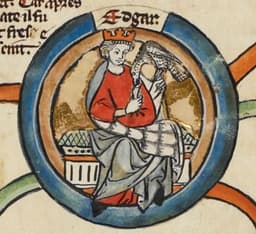
Edgar the Peaceful
Emperor · Medieval
53.5Total
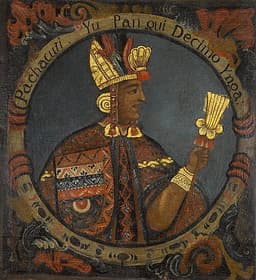
Pachacuti
Emperor · Medieval
69.4Total
Basic Information
Born
943
1418
Died
975
1472
Era
Medieval
Medieval
Nationality
England
Inca Empire
Occupation
Emperor
Emperor
Civilization
Western
Other
Score Comparison
Military (10%)
21.2
78.5
Political (20%)
65.0
58.1
Influence (20%)
56.4
65.0
Legacy (20%)
49.2
72.0
Leadership (15%)
78.0
78.0
Strategy (15%)
35.7
69.2
TOTAL
53.5
69.4
Edgar the Peaceful — Complete Timeline
959 AD
Coronation as King of EnglandPolitical Action◆ Major
Edgar succeeded his brother Eadwig as King of England. His reign was marked by stability and the consolidation of monastic reform under Dunstan.
Impact: nationalconstructive
970 AD
Naval defense reformsReform
Edgar organized a standing navy and divided England into naval districts to defend against Viking raids. This created a period of peace and security along the coasts.
Impact: nationalconstructive
Council of WinchesterCultural◆ Major
Edgar convened the Council of Winchester, which established the Regularis Concordia, a code for monastic life. This standardized Benedictine practices across England.
Impact: nationalconstructive
Pachacuti — Complete Timeline
1438 AD
Conquest of the Chanka KingdomWar
Pachacuti led the Inca army to defeat the Chanka, a powerful rival, in a decisive battle near Cusco. This victory secured his position as Sapa Inca and initiated a period of rapid expansion, transforming the Inca from a small kingdom into a vast empire.
ConquestInca ExpansionChanka
Impact: regional
1440 AD
Reconstruction of CuscoCultural◆ Major
Pachacuti rebuilt Cusco as the imperial capital, designing it in the shape of a puma and constructing massive stone structures like Sacsayhuam
Urban PlanningArchitectureInca Empire
Impact: regionalconstructive
1450 AD
Initiation of Machu Picchu's ConstructionCultural◆ Major
Pachacuti ordered the construction of Machu Picchu, a royal estate and ceremonial site high in the Andes. The complex featured sophisticated dry-stone masonry and terraced agriculture, serving as a symbol of Inca engineering and a retreat for the emperor.
ArchitectureRoyal EstateInca Engineering
Impact: regionalconstructive
Expert Analysis
Pachacuti vs Edgar the Peaceful
# The Builder and the Peacemaker
In the high Andes, a warrior-king stood atop a mountain he would transform into a royal estate of impossible beauty. In the green lowlands of England, another king sat in council with monks, drafting rules for a quieter world. One carved an empire from stone and blood; the other stitched a kingdom together with parchment and patience. Why did Pachacuti—scorer of 73.7 total, with a military rating of 66.8—become a conqueror, while Edgar the Peaceful—with a military score of just 30.0—became a reformer? The answer lies not in their centuries apart, but in the worlds they inherited.
Origins
Pachacuti was born in 1418 into a world of peril. The Inca were then a modest kingdom in the Cusco Valley, surrounded by aggressive rivals like the Chanka. His father, Viracocha Inca, was a capable ruler but faced existential threats. Pachacuti’s name itself—meaning “earthquake” or “world-shaker”—suggests a destiny of upheaval. He grew up in a culture that revered strength, where survival depended on military prowess. The Andes were a fragmented landscape of competing tribes; unity came only through conquest.
Edgar the Peaceful, born in 943, inherited a different legacy. His grandfather, Alfred the Great, had already unified much of England against Viking invasions. The kingdom was Christian, literate, and increasingly centralized. Edgar’s England was not a frontier of warring tribes but a patchwork of shires and monasteries, where stability was the highest virtue. His name—“Edgar” meaning “prosperous spear”—ironically foretold a reign of almost no warfare. The era shaped him: he came of age when monastic reform was sweeping Europe, and kings measured success not by battles won but by order maintained.
Rise to Power
Pachacuti’s rise was forged in fire. In 1438, the Chanka—a powerful confederation—attacked Cusco. His father fled, but Pachacuti, then a prince, refused to retreat. He rallied the Inca army and, in a desperate battle near the capital, crushed the Chanka. This victory was a turning point: it saved his people and made him the undisputed leader. He deposed his father and became Sapa Inca. The path to power was violent, personal, and immediate—a test of courage that defined his rule.
Edgar’s ascent was quieter. He became king in 959 after his brother Eadwig died under mysterious circumstances. There was no battlefield coronation. Edgar was already a known figure, a supporter of the monastic reform movement led by Dunstan, Archbishop of Canterbury. His power came through alliance, not conquest. He was crowned not in a single dramatic moment but in a carefully staged ceremony at Bath in 973—delayed, some say, to ensure his authority was absolute. For Edgar, legitimacy came from ritual, not bloodshed.
Leadership & Governance
Pachacuti governed as a builder and organizer. He rebuilt Cusco in the shape of a puma, with massive stone walls that still stand. He initiated Machu Picchu around 1450, a royal estate that blended engineering genius with spiritual symbolism. His political wisdom lay in the *mitma* system—relocating conquered peoples to integrate the empire—and in establishing a road network that connected the Andes. His leadership score of 84.5 reflects a ruler who was both visionary and ruthless: he centralized power, standardized tribute, and crushed rebellion without mercy.
Edgar governed through consensus. The Council of Winchester in 970 produced the *Regularis Concordia*, a code that standardized monastic life across England. This was not imperial decree but negotiated reform, involving bishops, abbots, and nobles. Edgar also organized a standing navy, dividing England into naval districts to patrol against Vikings—a defensive strategy that required coordination, not conquest. His political score of 67.6 is modest, but it reflects a style of governance that valued stability over expansion. He did not build monuments; he built institutions.
Triumph & Tragedy
Pachacuti’s greatest triumph was the transformation of the Inca from a regional kingdom to an empire stretching from modern Ecuador to Chile. His tragedy came later, in the succession crisis after his death in 1472, when his sons fought a civil war that weakened the empire before the Spanish arrived. The seeds of destruction were planted by his own success: the empire was too vast, too dependent on a single ruler.
Edgar’s triumph was peace itself—a reign of sixteen years without major war, famine, or rebellion. His tragedy was the brevity of his legacy. He died in 975, aged only 32, and his son Edward was murdered three years later. The stability Edgar built crumbled under his successor, Æthelred the Unready. Edgar’s peaceful order was a fragile flower in a violent age.
Character & Destiny
Pachacuti was driven by ambition and insecurity. His name suggests a man who believed he was destined to remake the world. He was a strategist (76.7) who thought in decades, not years, planning roads and terraces that would outlast him. Yet he was also a pragmatist, incorporating conquered gods into the Inca pantheon. His character was a paradox: a warrior who built, a conqueror who organized.
Edgar was driven by faith and caution. He was called “the Peaceful” not because he was weak, but because he chose peace when war was possible. His strategy score of 52.0 suggests a ruler who avoided risk. He was a reformer, not a revolutionary—a man who believed that order came from law, not force. His character was consistent: a king who ruled through councils, not campaigns.
Legacy
Pachacuti is remembered as the father of the Inca Empire, the architect of Machu Picchu, the founder of a civilization that still inspires wonder. His legacy score of 66.1 is diminished by the empire’s collapse, but his name endures in the stones of Cusco and the terraces of the Sacred Valley.
Edgar is remembered as a footnote—the king who brought peace to a land that soon forgot it. His legacy score of 65.2 is higher than his military rating might suggest, because he represents a different kind of greatness: not conquest, but consolidation. The *Regularis Concordia* influenced English monasticism for centuries, and his naval reforms anticipated the Royal Navy.
Conclusion
Standing at the edge of Machu Picchu, one feels the weight of Pachacuti’s ambition—a vision carved into rock and sky. Standing in the quiet halls of Winchester, one senses Edgar’s quieter ambition: a kingdom held together by words and will. Two kings, two worlds, two definitions of greatness. One built an empire that collapsed; the other built a peace that faded. Yet both remind us that leadership is not a single score, but a response to the world one inherits. Pachacuti shook the earth; Edgar stilled it. Which is more admirable? Perhaps the answer depends on whether you are fighting for survival—or for the chance to live in peace.
Rankings
🥇
PachacutiLeader
Mil: 78.5Pol: 58.1Inf: 65.0
69.4
🥈
Edgar the Peaceful
Mil: 21.2Pol: 65.0Inf: 56.4
53.5
+15.9 behind
How This Comparison Works
Algorithm
Each figure is scored on 6 dimensions (0—100 scale) based on structured historical data: Military (10%), Political (20%), Influence (20%), Legacy (20%), Leadership (15%), Strategy (15%). The weighted total produces the final ranking.
Data Sources
Scores are computed from structured sub-indicators in the database. Scale factors adjust for era (Ancient ×0.85, Modern ×1.0) and civilization size (Eastern ×1.05, Other ×0.80) to account for differences in population and military scale.
Maximum 3 Figures
Comparisons are limited to 2—3 figures to ensure readability and statistical meaningfulness.
Error Margins
±5 points per dimension — Sub-scores are derived from historical records with inherent uncertainty. Two figures within 5 points on a dimension should be considered roughly equivalent in that area.
Total Score Accuracy
±3 points overall — The weighted combination of 6 dimensions produces a total score with approximately ±3 points of uncertainty. Differences of less than 3 points are not statistically significant— the figures are effectively tied.
Known Limitations
- Historical records are incomplete and uneven across civilizations
- Figures from oral-tradition societies may be underrepresented
- Occupation labels can misclassify multi-role figures
- Scores measure capability and impact, not moral character
- Quantitative scoring is a comparison tool, not absolute truth
Capability Radar
Military (10%) — Battles & Warfare
Battles
10
85
Win Rate
10
90
Expansion
10
90
Political (20%) — Governance & Reform
Reform
70
92
Diplomacy
70
75
Economy
65
80
Influence (20%) — Cultural & Global Reach
Cultural
40
85
Global
20
65
Legacy (20%) — Historical Impact
Historical
45
80
Longevity
40
70
Leadership (15%) — Power & Stability
Tenure
65
85
Stability
75
82
Strategy (15%) — Tactics & Innovation
Strategy
15
88
Tactics
10
80
Reform
20
85
Similar Comparisons
Comments & Discussion
Pachacuti's Hammer6/16/2026
Pachacuti didn't just win battles — he invented the Inca way of war. His real genius was in logistics: terraced armies, storehouses every 20 miles, and forced resettlement that broke resistance without constant killing. Edgar couldn't have conquered a llama. Put either man in the other's shoes, and they'd fail. Context is king, but only one king built an empire from scratch.
皇冠与泥巴6/16/2026
比较军事评分毫无意义。Pachacuti的66.8分是在安第斯山脉里用石头和鲜血挣来的,而Edgar的30分是在温彻斯特修道院里写文书攒的。你要一个修城墙的皇帝跟一个修教堂的国王比吗?Pachacuti如果面对丹麦维京人的长船,可能连第一波突袭都撑不过去。这不是谁更强,而是谁更适应自己的烂摊子。
Data Doubter6/16/2026
This whole comparison is a textbook case of confirmation bias dressed up as analytics. They picked Pachacuti because he sounds exotic and Edgar because he sounds boring, then invented a scoring system that magically confirms those biases. Pachacuti's "military rating" depends entirely on Spanish chroniclers writing 50 years after he died. Edgar's "low" score might just mean his enemies were smart enough not to fight. Real history isn't Madden ratings.
修道院的沉默6/16/2026
Edgar the Peaceful这个称号本身就是一种胜利。他不是懦夫,而是明白和平比征服更难维持。你知道吗?他在位期间(959-975)没有一场重大战役,却在英格兰建立了统一的货币体系和地方法庭。而Pachacuti的帝国在他死后50年就被西班牙人摧毁了。所以告诉我:哪个统治者更成功?那个短暂辉煌的征服者,还是那个让国家安稳了整整一代人的改革者?
Laughing Llama6/16/2026
Let's be honest: Pachacuti scored higher because he had better PR. His terraces at Machu Picchu are Instagram gold, while Edgar's greatest achievement was standardizing coinage in a bunch of muddy market towns. But ask yourself: whose legacy actually lasted? Edgar's administrative reforms shaped English law for centuries. Pachacuti's empire was a spectacular flash in the pan — beautiful, bloody, and gone before anyone could write it down reliably.