Loading...
Edgar the Peaceful vs Henry the Fowler
Henry the Fowler leads by 7.4 pts · 2 figures compared
…
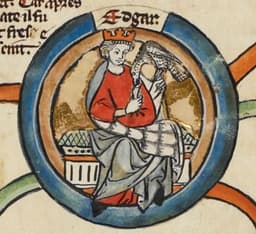
Edgar the Peaceful
Emperor · Medieval
53.5Total
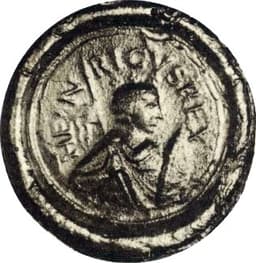
Henry the Fowler
Emperor · Medieval
60.9Total
Basic Information
Born
943
876
Died
975
936
Era
Medieval
Medieval
Nationality
England
East Francia
Occupation
Emperor
Emperor
Civilization
Western
Western
Score Comparison
Military (10%)
21.2
70.0
Political (20%)
65.0
59.3
Influence (20%)
56.4
55.0
Legacy (20%)
49.2
52.0
Leadership (15%)
78.0
85.0
Strategy (15%)
35.7
55.0
TOTAL
53.5
60.9
Edgar the Peaceful — Complete Timeline
959 AD
Coronation as King of EnglandPolitical Action◆ Major
Edgar succeeded his brother Eadwig as King of England. His reign was marked by stability and the consolidation of monastic reform under Dunstan.
Impact: nationalconstructive
970 AD
Naval defense reformsReform
Edgar organized a standing navy and divided England into naval districts to defend against Viking raids. This created a period of peace and security along the coasts.
Impact: nationalconstructive
Council of WinchesterCultural◆ Major
Edgar convened the Council of Winchester, which established the Regularis Concordia, a code for monastic life. This standardized Benedictine practices across England.
Impact: nationalconstructive
Henry the Fowler — Complete Timeline
919 AD
Election as King of East FranciaPolitical Action
Henry the Fowler was elected King of East Francia by the Saxon and Frankish nobles at Fritzlar on May 6, 919. He was the first Saxon king, marking the transition from Carolingian to Ottonian rule. His election was contested by other dukes but he prevailed.
ElectionAccessionOttonian Dynasty
Impact: regionalconstructive
921 AD
Treaty of Bonn (921)Political Action◆ Major
Henry the Fowler signed the Treaty of Bonn with Charles the Simple of West Francia, recognizing each other's royal titles and establishing peaceful relations. This treaty ended Carolingian claims over East Francia and solidified Henry's legitimacy as an independent king.
TreatyRecognitionDiplomacy
Impact: regionalconstructive
924 AD
Nine-Year Truce with the MagyarsPolitical Action◆ Major
Henry the Fowler negotiated a nine-year truce with the Magyars, agreeing to pay tribute in exchange for a halt to their raids. He used this period to fortify towns, reorganize the army, and train cavalry. This strategic pause was crucial for his later military reforms.
TruceMagyarsMilitary Reform
Impact: regionalconstructive
929 AD
Battle of Lenzen (929)War◆ Major
Henry the Fowler's forces defeated a Slavic army at the Battle of Lenzen, securing the eastern frontier of East Francia. This victory allowed Henry to consolidate control over the Elbe region and establish the March of Brandenburg, a key step in German eastward expansion.
BattleSlavic WarsEastern Expansion
Impact: regionalconstructive
933 AD
Battle of Riade (933)War
After the truce with the Magyars expired, Henry the Fowler led a German army to victory at the Battle of Riade (near Merseburg). The defeat of the Magyar cavalry ended their raids into East Francia for a generation and established Henry's reputation as a defender of Christendom.
BattleMagyarsVictory
Impact: regionalconstructive
936 AD
Death of Henry the FowlerOther◆ Major
Henry the Fowler died on July 2, 936, at Memleben. He was succeeded by his son, Otto I, who would become Holy Roman Emperor. Henry's reign laid the foundations for the Ottonian dynasty and the medieval German kingdom.
DeathSuccessionOttonian
Impact: regional
Expert Analysis
Henry the Fowler vs Edgar the Peaceful
### The Peacemaker and the Founder: Edgar of England and Henry of East Francia
On a summer day in 973, two kings, separated by the North Sea and a century of bloodshed, might have recognized something familiar in each other. One, Edgar of England, was rowed by eight tributary kings along the River Dee at Chester, a spectacle of submission that crowned a reign of unprecedented peace. The other, Henry of East Francia, had died nearly four decades earlier, having forged a kingdom from the chaos of invasion and civil war. Both were Saxon kings who built foundations for future empires. Yet one is remembered as a quiet reformer, the other as a warrior-king. Why did their paths diverge so sharply, and what drove their very different outcomes?
### Origins
Edgar was born into a fractured England. His father, King Edmund I, was assassinated in 946, and his older brother Eadwig ruled with a volatile temper that alienated the Church and the nobility. Edgar grew up in the shadow of monastic reform, tutored by men like Dunstan, the future Archbishop of Canterbury. His England was a land recovering from decades of Viking raids, but the threat was never far from the coasts. The boy learned that power came not from the sword alone, but from the blessing of God and the loyalty of thegns.
Henry the Fowler, by contrast, was born into a world of fire and ash. The son of Otto the Illustrious, Duke of Saxony, he came of age during the relentless Magyar invasions that swept across East Francia in the early 900s. His nickname, "the Fowler," supposedly derived from his love of hunting birds while the kingdom burned—a myth that obscures a harder truth: Henry learned to wait, to bargain, and to strike when the moment was right. His East Francia was a patchwork of duchies—Saxony, Bavaria, Swabia, Franconia—each with its own duke and its own ambitions. The Carolingian Empire had collapsed, and the Magyars, Slavs, and Danes circled like wolves.
### Rise to Power
Edgar's rise was swift and almost inevitable. When Eadwig died in 959, Edgar was crowned at Kingston upon Thames at the age of sixteen. He inherited a kingdom weary of conflict. His legitimacy was not seriously challenged; the nobles of Mercia and Northumbria had already accepted him as their overlord. The key turning point was not a battle but a council: in 970, Edgar convened the Council of Winchester, which produced the Regularis Concordia, a code that standardized monastic life across England. It was a political masterstroke, binding the Church to the crown and creating a network of loyal abbots and bishops who preached stability.
Henry's path was harder. In 919, when the Frankish nobles elected him king at Fritzlar, he was not the obvious choice. The dukes of Bavaria and Swabia initially refused to recognize him. Henry had to win them over not by force, but by negotiation and marriage alliances. He signed the Treaty of Bonn in 921 with Charles the Simple of West Francia, a diplomatic recognition that bought him time. But the greatest challenge was the Magyars. In 924, he agreed to a nine-year truce, paying tribute to halt their raids. It was a humiliating bargain, but Henry used those years to fortify towns, train cavalry, and build a new kind of army. When the truce expired in 933, he was ready.
### Leadership & Governance
Edgar ruled like a shepherd, not a soldier. His military score of 30 reflects a king who fought no major battles. Instead, he reformed the navy, dividing England into naval districts and stationing a standing fleet to patrol the coasts. His strategy was defensive and preventive: by keeping the seas safe, he denied the Vikings their easiest prey. His political genius lay in making peace profitable. He issued coins with a consistent weight and purity, standardized weights and measures, and backed the monastic reform that gave the Church a moral monopoly. His was a reign of consolidation, not conquest.
Henry was a builder of kingdoms from raw material. His military score of 60 reflects a king who fought and won. The Battle of Lenzen in 929 crushed the Slavic tribes on the Elbe, securing the eastern frontier. The Battle of Riade in 933 was his masterpiece: when the Magyars returned, Henry met them with a disciplined cavalry force and routed them, ending the tribute and establishing East Francia as a military power. Yet he was no mere brute. He negotiated with his dukes, married his son Otto to the daughter of the King of Wessex, and laid the groundwork for the Ottonian dynasty that would produce the Holy Roman Empire. He governed through a blend of iron and velvet.
### Triumph & Tragedy
Edgar's triumph was the Chester ceremony of 973, where he was rowed by eight kings, including the kings of Scotland, Strathclyde, and Wales. It was a symbolic assertion of overlordship that required no bloodshed. His tragedy was that he died young, at thirty-two, in 975. His son Edward the Martyr was murdered three years later, plunging England into a brief but bloody succession crisis. The peace Edgar built proved fragile in the hands of his heirs.
Henry's triumph was Riade, a victory that transformed him from a tribute-payer into a king who commanded respect. His tragedy was that he never wore the imperial crown. He died in 936 at Memleben, having unified East Francia but never marching on Rome. His son Otto I would complete the work, being crowned Holy Roman Emperor in 962. Henry was the architect, but Otto lived in the house.
### Character & Destiny
Edgar was a man of quiet resolve. He was not a warrior, but he understood that power flows from institutions: the Church, the treasury, the navy. His personality was shaped by the stability he inherited and the advisors he trusted. He was, in many ways, the first English king to rule by bureaucracy rather than by the sword. His destiny was to be a caretaker, not a conqueror.
Henry was a man of patient ambition. He knew when to bend and when to break. The nine-year truce with the Magyars was a gamble that paid off because he used the time wisely. His character was forged in the crucible of invasion and fragmentation. He was a founder because he had to be; there was no stable kingdom to inherit. His destiny was to create order from chaos.
### Legacy
Edgar's legacy is the Regularis Concordia and the idea of a unified English kingdom. He is remembered as "the Peaceful," a rare title in medieval history. His influence score of 74.9 reflects a king who shaped the Church and the state, but his name is less known than Alfred the Great or William the Conqueror. He is a footnote in the story of England's making.
Henry's legacy is the Ottonian dynasty and the Holy Roman Empire. His influence score of 72.7 is similar, but his impact was more structural. He gave East Francia a military and political framework that lasted for centuries. He is remembered as the first Saxon king of Germany, the founder of a line that would produce emperors. His name is carved into the foundation of the Reich.
### Conclusion
Edgar and Henry were both Saxon kings who built for the future, but they built with different materials. Edgar inherited a kingdom and made it peaceful; Henry inherited a battlefield and made it a kingdom. One used law and liturgy; the other used fortresses and cavalry. Their differences are not accidents of personality but reflections of the worlds they faced. Edgar's England was a garden that needed tending; Henry's East Francia was a wilderness that needed clearing. Both men succeeded, but their successes were measured by different scales. Edgar's peace was a gift to his people; Henry's war was a necessity for his people. In the end, history remembers the founder more vividly than the caretaker, but both are essential to the story of how Europe was made.
Rankings
🥇
Henry the FowlerLeader
Mil: 70.0Pol: 59.3Inf: 55.0
60.9
🥈
Edgar the Peaceful
Mil: 21.2Pol: 65.0Inf: 56.4
53.5
+7.4 behind
How This Comparison Works
Algorithm
Each figure is scored on 6 dimensions (0—100 scale) based on structured historical data: Military (10%), Political (20%), Influence (20%), Legacy (20%), Leadership (15%), Strategy (15%). The weighted total produces the final ranking.
Data Sources
Scores are computed from structured sub-indicators in the database. Scale factors adjust for era (Ancient ×0.85, Modern ×1.0) and civilization size (Eastern ×1.05, Other ×0.80) to account for differences in population and military scale.
Maximum 3 Figures
Comparisons are limited to 2—3 figures to ensure readability and statistical meaningfulness.
Error Margins
±5 points per dimension — Sub-scores are derived from historical records with inherent uncertainty. Two figures within 5 points on a dimension should be considered roughly equivalent in that area.
Total Score Accuracy
±3 points overall — The weighted combination of 6 dimensions produces a total score with approximately ±3 points of uncertainty. Differences of less than 3 points are not statistically significant— the figures are effectively tied.
Known Limitations
- Historical records are incomplete and uneven across civilizations
- Figures from oral-tradition societies may be underrepresented
- Occupation labels can misclassify multi-role figures
- Scores measure capability and impact, not moral character
- Quantitative scoring is a comparison tool, not absolute truth
Capability Radar
Military (10%) — Battles & Warfare
Battles
10
55
Win Rate
10
60
Expansion
10
60
Political (20%) — Governance & Reform
Reform
70
75
Diplomacy
70
70
Economy
65
65
Influence (20%) — Cultural & Global Reach
Cultural
40
55
Global
20
40
Legacy (20%) — Historical Impact
Historical
45
65
Longevity
40
60
Leadership (15%) — Power & Stability
Tenure
65
70
Stability
75
70
Strategy (15%) — Tactics & Innovation
Strategy
15
65
Tactics
10
50
Reform
20
70
Similar Comparisons
Comments & Discussion
BattleAxe_Bard6/16/2026
Calling Edgar "the Peaceful" misses the iron fist behind that velvet glove. That Chester submission in 973 wasn't spontaneous respect—it was a staged power play backed by years of building a fleet that could crush any coastal rebellion. Edgar was a bureaucratic warlord who understood that peace is just warfare administered by charter and coin. Henry at least admitted he was a king forged in battle. Edgar pretended his blood-soaked consolidation was divine harmony. Give me honest violence over sa
数字考古学家6/16/2026
拿这两个人做对比根本是关公战秦雄——亨利一世面对的是马扎尔人骑射的生存威胁,英格兰连类似的惨烈程度都体验不到。史书上吹嘘埃德加"和平统治"多好,可实际上他那12岁就被迫退位的儿子埃塞尔雷德直接证明了他留下的根本不是稳固政权。你觉得他比亨利强?建议查查962年那场大瘟疫后英格兰的人口记录,再对比东法兰克的抵抗成本。
Radulf_the_Red6/16/2026
Fair comparison? Only if you ignore that Henry actually faced existential annihilation. Edgar's "peace" came after his uncle Athelstan had already broken the Viking spine at Brunanburh in 937—that victory was 23 years before Edgar took the throne. Henry walked into a kingdom still burning from Magyar raiders who had sacked Basel, St. Gallen, and even reached the Atlantic. Edgar was a competent administrator inheriting a pre-made victory. Henry built the foundation from smoking ruins with no Caro
历史对比控6/16/2026
有趣的是两人都依赖教会改革来巩固王权,但手法截然不同。亨利靠设立边境伯爵制度武卫疆土,把主教当行政工具用;埃德加却让邓斯坦这样的修士直接掌握修道院经济命脉,甚至在969年颁布法令要求所有土地交易必须经修道院认证。一个用刀剑规划边界,一个用羊皮纸定义忠诚。英格兰那条看似温和的路径,实际为后来克努特大帝的北方帝国提供了最贪婪的掠夺目标。
Scribe_of_Speyer6/16/2026
You revisionists always romanticize Henry's "struggle" while downplaying Edgar's institutional genius. Henry's famous fortification program? Straightforward military pragmatism any desperate ruler would adopt. Edgar's coinage reform in 973—standardizing the penny across all England with guaranteed silver content—was an administrative revolution that enabled taxation without soldiers at every door. That's harder than any battlefield victory. Henry conquered with cavalry; Edgar conquered with econ