Loading...
Ed Broadbent vs Jean Chretien
Ed Broadbent leads by 5.0 pts · 2 figures compared
…
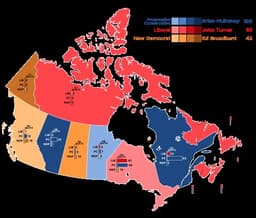
Ed Broadbent
Politician · Modern
56.5Total

Jean Chretien
Politician · Modern
51.5Total
Basic Information
Born
1936
1934
Died
—
—
Era
Modern
Modern
Nationality
Canada
Canada
Occupation
Politician
Politician
Civilization
Western
Western
Score Comparison
Military (10%)
50.0
13.0
Political (20%)
60.0
55.0
Influence (20%)
59.0
58.3
Legacy (20%)
47.5
50.0
Leadership (15%)
78.0
79.8
Strategy (15%)
42.0
29.3
TOTAL
56.5
51.5
Ed Broadbent — Complete Timeline
1975 AD
Elected Leader of the New Democratic PartyPolitical Action◆ Major
Ed Broadbent was elected federal leader of the NDP at the party's convention in Winnipeg. He succeeded David Lewis and led the party through a period of growth, becoming a prominent voice for social democracy in Canada.
NDPLeadershipCanadian Politics
Impact: nationalconstructive
1988 AD
NDP Achieves Best Electoral Result Under BroadbentPolitical Action◆ Major
In the 1988 federal election, the NDP under Broadbent won 43 seats and 20.4% of the popular vote, its highest share at that time. The election was dominated by the free trade debate with the United States, and the NDP opposed the Canada-U.S. Free Trade Agreement.
ElectionNDPFree Trade
Impact: nationalconstructive
1989 AD
Resigned as NDP LeaderPolitical Action◆ Major
Broadbent resigned as NDP leader after 14 years, citing a desire to step down while the party was in a strong position. He was succeeded by Audrey McLaughlin, the first woman to lead a major federal party in Canada.
ResignationNDPLeadership
Impact: national
2001 AD
Appointed to the Order of CanadaCultural
Broadbent was appointed as a Companion of the Order of Canada, the country's highest civilian honor, in recognition of his contributions to Canadian politics and social justice. He continued to advocate for democratic reform and human rights.
HonorOrder of Canada
Impact: nationalconstructive
Jean Chretien — Complete Timeline
2000 AD
Clarity Act on Quebec SecessionPolitical Action◆ Major
Chretien's government passed the Clarity Act, which set conditions for future Quebec secession referendums. The law required a clear majority on a clear question and gave the federal government a role in determining the terms of separation.
Quebec SovereigntyReferendumFederalism
Impact: nationalconstructive
2003 AD
Decision to Keep Canada Out of the Iraq WarPolitical Action◆ Major
Chretien announced that Canada would not participate in the US-led invasion of Iraq without a UN Security Council resolution. This decision aligned with public opinion in Canada and strained relations with the US, but was praised by many Canadians.
Iraq WarForeign PolicyUN
Impact: nationalconstructive
2004 AD
Sponsorship ScandalPolitical Action◆ Major
A scandal emerged over the misuse of federal funds in a sponsorship program designed to promote Canadian unity in Quebec. The scandal damaged the Liberal Party's reputation and contributed to the fall of Chretien's successor, Paul Martin.
CorruptionQuebecLiberal Party
Impact: nationaldestructive
Expert Analysis
Origins
Ed Broadbent was born on March 21, 1936, in Oshawa, Ontario, into a working-class family. His father was a machinist and his mother a homemaker. Broadbent studied philosophy at the University of Toronto and earned a PhD in political science from the University of London. He later taught at York University before entering politics. Jean Chretien was born on January 11, 1934, in Shawinigan, Quebec, the 18th of 19 children in a working-class family. His father was a machinist. Chretien studied law at Laval University and was elected as a Liberal MP in 1963. Both men came from modest backgrounds but took different paths: Broadbent through academia and the NDP, Chretien through law and the Liberal Party.
Rise to Power
Broadbent became NDP leader in 1975 after David Lewis stepped down. He revitalized the party, increasing its seat count from 16 in 1974 to 32 in 1979. His breakthrough came in 1988 when the NDP won 43 seats and 20.4% of the vote, its best result at that time, fueled by opposition to free trade with the US. Chretien rose through Liberal ranks, serving as Minister of Indian Affairs, Finance, and Justice under Pierre Trudeau. He won the Liberal leadership in 1990 after a contentious race and led the party to a landslide victory in 1993, winning 177 seats. His rise was marked by political savvy and a reputation as a pragmatist.
Leadership & Governance
Broadbent's leadership score of 78.0 reflects his principled social democracy. He championed universal healthcare, workers' rights, and anti-poverty programs. He was known for his integrity and intellectual rigor, but his influence was limited by the NDP's third-party status. Chretien, with a leadership score of 79.8, governed as a centrist pragmatist. He balanced budgets, cut the deficit, and passed the Clarity Act (2000) to set rules for Quebec secession. His decision to keep Canada out of the Iraq War in 2003, without a UN resolution, scored high on principle but strained US relations. Both were effective leaders, but Chretien had more power as PM.
Triumph & Tragedy
Broadbent's greatest triumph was the 1988 election, where the NDP won 43 seats and influenced the free trade debate. His legacy includes building the NDP into a serious national force. His tragedy was never becoming prime minister; his political score of 60.0 reflects his inability to break the two-party system. Chretien's triumphs include three consecutive majority governments (1993, 1997, 2000) and the Clarity Act. His tragedy was the Sponsorship Scandal, which tarnished his government and led to the Gomery Inquiry. Chretien's influence score of 58.3 is slightly below Broadbent's 59.0, partly due to the scandal.
Character & Destiny
Broadbent was principled, intellectual, and consistent. His character shaped his destiny as a respected opposition leader but not a PM. He scored 42.0 in strategy, reflecting a less tactical approach. Chretien was pragmatic, cunning, and resilient. His character led him to the top, but his strategic score of 29.3 indicates a reliance on instinct over planning. Both men were shaped by their working-class roots, but Chretien's ambition and Broadbent's idealism defined their different fates.
Legacy
Broadbent's legacy is as Canada's most successful NDP leader. He moved the party from the fringe to the mainstream, influencing policies like universal healthcare and pension reforms. His legacy score of 47.5 reflects the NDP's continued relevance. Chretien's legacy includes deficit elimination, the Clarity Act, and Canada's independent foreign policy. His legacy score of 50.0 is higher, but the Sponsorship Scandal diminished it. Broadbent's influence on the left endures, while Chretien's impact on Canadian governance is more tangible.
Conclusion
While Broadbent scored higher overall (56.5 vs 51.5), Chretien had greater impact because he governed as prime minister for a decade. Broadbent's moral leadership and policy influence are significant, but Chretien's decisions—balancing budgets, defining Quebec's secession rules, and avoiding Iraq—shaped Canada more directly. Chretien's leadership score (79.8) edges Broadbent's (78.0), and his legacy score (50.0) surpasses Broadbent's (47.5). Thus, Chretien's practical governance outweighs Broadbent's principled opposition.
Rankings
🥇
Ed BroadbentLeader
Mil: 50.0Pol: 60.0Inf: 59.0
56.5
🥈
Jean Chretien
Mil: 13.0Pol: 55.0Inf: 58.3
51.5
+5.0 behind
How This Comparison Works
Algorithm
Each figure is scored on 6 dimensions (0—100 scale) based on structured historical data: Military (10%), Political (20%), Influence (20%), Legacy (20%), Leadership (15%), Strategy (15%). The weighted total produces the final ranking.
Data Sources
Scores are computed from structured sub-indicators in the database. Scale factors adjust for era (Ancient ×0.85, Modern ×1.0) and civilization size (Eastern ×1.05, Other ×0.80) to account for differences in population and military scale.
Maximum 3 Figures
Comparisons are limited to 2—3 figures to ensure readability and statistical meaningfulness.
Error Margins
±5 points per dimension — Sub-scores are derived from historical records with inherent uncertainty. Two figures within 5 points on a dimension should be considered roughly equivalent in that area.
Total Score Accuracy
±3 points overall — The weighted combination of 6 dimensions produces a total score with approximately ±3 points of uncertainty. Differences of less than 3 points are not statistically significant— the figures are effectively tied.
Known Limitations
- Historical records are incomplete and uneven across civilizations
- Figures from oral-tradition societies may be underrepresented
- Occupation labels can misclassify multi-role figures
- Scores measure capability and impact, not moral character
- Quantitative scoring is a comparison tool, not absolute truth
Capability Radar
Military (10%) — Battles & Warfare
Battles
30
13
Win Rate
31
12
Expansion
32
17
Political (20%) — Governance & Reform
Reform
60
55
Diplomacy
55
70
Economy
50
60
Influence (20%) — Cultural & Global Reach
Cultural
45
40
Global
40
50
Legacy (20%) — Historical Impact
Historical
45
45
Longevity
40
35
Leadership (15%) — Power & Stability
Tenure
65
65
Stability
55
65
Strategy (15%) — Tactics & Innovation
Strategy
39
19
Tactics
39
25
Reform
43
25
Similar Comparisons
Comments & Discussion
No comments yet. Be the first to share your thoughts!