Loading...
Jean Chretien vs Joseph Kabila
Jean Chretien leads by 4.3 pts · 2 figures compared
…

Jean Chretien
Politician · Modern
51.5Total
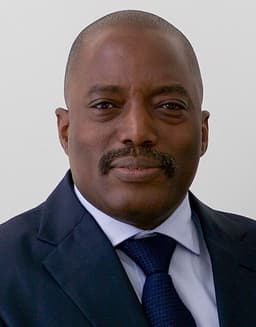
Joseph Kabila
Politician · Modern
47.2Total
Basic Information
Born
1934
1971
Died
—
—
Era
Modern
Modern
Nationality
Canada
Congo
Occupation
Politician
Politician
Civilization
Western
Other
Score Comparison
Military (10%)
13.0
20.0
Political (20%)
55.0
40.8
Influence (20%)
58.3
49.4
Legacy (20%)
50.0
40.8
Leadership (15%)
79.8
74.0
Strategy (15%)
29.3
54.6
TOTAL
51.5
47.2
Jean Chretien — Complete Timeline
2000 AD
Clarity Act on Quebec SecessionPolitical Action◆ Major
Chretien's government passed the Clarity Act, which set conditions for future Quebec secession referendums. The law required a clear majority on a clear question and gave the federal government a role in determining the terms of separation.
Quebec SovereigntyReferendumFederalism
Impact: nationalconstructive
2003 AD
Decision to Keep Canada Out of the Iraq WarPolitical Action◆ Major
Chretien announced that Canada would not participate in the US-led invasion of Iraq without a UN Security Council resolution. This decision aligned with public opinion in Canada and strained relations with the US, but was praised by many Canadians.
Iraq WarForeign PolicyUN
Impact: nationalconstructive
2004 AD
Sponsorship ScandalPolitical Action◆ Major
A scandal emerged over the misuse of federal funds in a sponsorship program designed to promote Canadian unity in Quebec. The scandal damaged the Liberal Party's reputation and contributed to the fall of Chretien's successor, Paul Martin.
CorruptionQuebecLiberal Party
Impact: nationaldestructive
Joseph Kabila — Complete Timeline
2001 AD
Became President of the Democratic Republic of the CongoPolitical Action◆ Major
Joseph Kabila became President of the DRC at age 29 after his father Laurent Kabila's assassination. He inherited a country embroiled in the Second Congo War and faced the challenge of ending the conflict.
PresidencySuccessionDRC
Impact: national
2002 AD
Signed Sun City AgreementPolitical Action
Kabila's government signed the Sun City Agreement, a peace deal that ended the Second Congo War. The agreement established a transitional government and paved the way for democratic elections.
Peace AgreementSecond Congo WarTransition
Impact: regionalconstructive
2006 AD
Won First Democratic Elections in DRCPolitical Action◆ Major
Joseph Kabila won the first democratic presidential elections in the DRC since independence, defeating Jean-Pierre Bemba in a runoff. The elections were largely peaceful but marred by allegations of irregularities.
ElectionsDemocracyDRC
Impact: nationalconstructive
2016 AD
Refused to Step Down After 2016 ElectionsPolitical Action◆ Major
Kabila's refusal to step down after his constitutional term limit expired in 2016 sparked political crisis and protests. He remained in power until 2019, citing delays in organizing elections.
Constitutional CrisisTerm LimitsPolitical Instability
Impact: nationaldestructive
2019 AD
Peacefully Transferred Power to Félix TshisekediPolitical Action
Joseph Kabila peacefully transferred power to opposition leader F
Power TransferDemocracyDRC
Impact: nationalconstructive
Expert Analysis
Origins
Jean Chrétien was born on January 11, 1934, in Shawinigan, Quebec, Canada, into a working-class family. The 18th of 19 children, he grew up in modest circumstances. He studied law at Université Laval and entered politics at a young age, becoming a Member of Parliament in 1963. His early career was shaped by his mentor, Prime Minister Pierre Trudeau, under whom he served in various cabinet roles.
Joseph Kabila was born on June 4, 1971, in Hewa Bora, Congo, to Laurent-Désiré Kabila, a rebel leader who later became president. He spent much of his youth in Tanzania and Uganda, receiving military training. He studied law at the University of Dar es Salaam and later attended military academies in China and the United States. His formative years were marked by conflict and exile.
Rise to Power
Chrétien rose through the ranks of the Liberal Party of Canada, serving as Minister of Indian Affairs, Minister of Finance, and Deputy Prime Minister. He won the Liberal leadership in 1990 and became Prime Minister in 1993 after a landslide election victory. His rise was characterized by his ability to connect with ordinary Canadians and his pragmatic centrism.
Kabila became president at age 29 on January 26, 2001, immediately after the assassination of his father, Laurent Kabila. He inherited a country embroiled in the Second Congo War, with multiple foreign armies and rebel groups active. His rise was sudden and violent, thrusting him into power without electoral mandate.
Leadership & Governance
Chrétien's leadership style was hands-on and decisive. He prioritized fiscal responsibility, balancing the federal budget after years of deficits, and implemented the Clarity Act (2000) to define the terms of Quebec secession. His governance emphasized national unity and economic stability. However, his tenure was marred by the Sponsorship Scandal, where funds meant to promote federalism in Quebec were misused, damaging public trust.
Kabila's leadership focused on ending the war and stabilizing the country. He signed the Sun City Agreement in 2002, which established a transitional government and led to the withdrawal of foreign troops. He won the first democratic elections in 2006, defeating Jean-Pierre Bemba. However, his governance became increasingly authoritarian as he postponed elections and suppressed opposition, leading to a political crisis from 2016 to 2018.
Triumph & Tragedy
Chrétien's greatest triumph was keeping Canada out of the Iraq War in 2003, a decision that aligned with public opinion and international law. His Clarity Act also reinforced the rule of law regarding secession. His biggest failure was the Sponsorship Scandal, which tarnished his legacy and contributed to the Liberal Party's decline.
Kabila's triumph was ending the Second Congo War through the Sun City Agreement and overseeing the first democratic elections in 2006. His peaceful transfer of power to Félix Tshisekedi in 2018 was a historic milestone for the DRC. However, his refusal to step down after his term ended in 2016 led to violence and a prolonged political crisis, damaging his reputation.
Character & Destiny
Chrétien was known for his shrewd political instincts and resilience. Nicknamed "the little guy from Shawinigan," he overcame a facial paralysis that affected his speech. His character was defined by pragmatism and a deep commitment to Canadian unity. His destiny was to lead Canada during a period of economic growth and international respect.
Kabila was reserved and tactical, often described as enigmatic. He inherited a war-torn country and navigated complex peace negotiations. His character combined military discipline with political caution. His destiny was to transition the DRC from war to fragile democracy, but his reluctance to relinquish power in 2016 cast a shadow over his achievements.
Legacy
Chrétien's legacy includes a balanced budget, the Clarity Act, and Canada's independent foreign policy. His decision on Iraq is often cited as a defining moment of his tenure. He scored 79.8 in leadership and 50.0 in legacy, reflecting his effective governance but tarnished by scandal.
Kabila's legacy is mixed: he ended a major war and oversaw the first democratic transfer of power, but his authoritarian tendencies and the 2016 crisis weakened democratic institutions. He scored 74.0 in leadership and 40.8 in legacy. His influence score of 49.4 is slightly lower than Chrétien's 58.3.
Conclusion
Jean Chrétien had a greater impact on his nation and the world. His decision on Iraq resonated globally, and his Clarity Act set a precedent for secessionist movements. While Kabila's achievements in peacemaking were significant, his later failures and the ongoing instability in the DRC diminish his legacy. Chrétien's higher total score of 51.5 versus Kabila's 47.2 reflects his more consistent and principled leadership.
Rankings
🥇
Jean ChretienLeader
Mil: 13.0Pol: 55.0Inf: 58.3
51.5
🥈
Joseph Kabila
Mil: 20.0Pol: 40.8Inf: 49.4
47.2
+4.3 behind
How This Comparison Works
Algorithm
Each figure is scored on 6 dimensions (0—100 scale) based on structured historical data: Military (10%), Political (20%), Influence (20%), Legacy (20%), Leadership (15%), Strategy (15%). The weighted total produces the final ranking.
Data Sources
Scores are computed from structured sub-indicators in the database. Scale factors adjust for era (Ancient ×0.85, Modern ×1.0) and civilization size (Eastern ×1.05, Other ×0.80) to account for differences in population and military scale.
Maximum 3 Figures
Comparisons are limited to 2—3 figures to ensure readability and statistical meaningfulness.
Error Margins
±5 points per dimension — Sub-scores are derived from historical records with inherent uncertainty. Two figures within 5 points on a dimension should be considered roughly equivalent in that area.
Total Score Accuracy
±3 points overall — The weighted combination of 6 dimensions produces a total score with approximately ±3 points of uncertainty. Differences of less than 3 points are not statistically significant— the figures are effectively tied.
Known Limitations
- Historical records are incomplete and uneven across civilizations
- Figures from oral-tradition societies may be underrepresented
- Occupation labels can misclassify multi-role figures
- Scores measure capability and impact, not moral character
- Quantitative scoring is a comparison tool, not absolute truth
Capability Radar
Military (10%) — Battles & Warfare
Battles
13
15
Win Rate
12
20
Expansion
17
10
Political (20%) — Governance & Reform
Reform
55
30
Diplomacy
70
40
Economy
60
25
Influence (20%) — Cultural & Global Reach
Cultural
40
15
Global
50
20
Legacy (20%) — Historical Impact
Historical
45
25
Longevity
35
20
Leadership (15%) — Power & Stability
Tenure
65
65
Stability
65
20
Strategy (15%) — Tactics & Innovation
Strategy
19
15
Tactics
25
10
Reform
25
25
Similar Comparisons
Comments & Discussion
No comments yet. Be the first to share your thoughts!