Loading...
Jean Chretien vs Koprulu Mehmed Pasha
Koprulu Mehmed Pasha leads by 10.1 pts · 2 figures compared
…

Jean Chretien
Politician · Modern
51.5Total
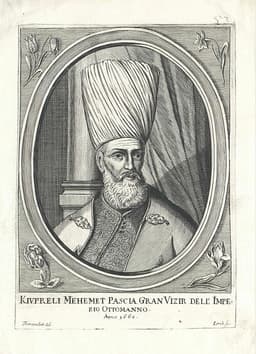
Koprulu Mehmed Pasha
Politician · Modern
61.6Total
Basic Information
Born
1934
1575
Died
—
1661
Era
Modern
Modern
Nationality
Canada
Ottoman Empire
Occupation
Politician
Politician
Civilization
Western
Middle Eastern
Score Comparison
Military (10%)
13.0
30.0
Political (20%)
55.0
62.7
Influence (20%)
58.3
72.0
Legacy (20%)
50.0
55.0
Leadership (15%)
79.8
78.0
Strategy (15%)
29.3
57.5
TOTAL
51.5
61.6
Jean Chretien — Complete Timeline
2000 AD
Clarity Act on Quebec SecessionPolitical Action◆ Major
Chretien's government passed the Clarity Act, which set conditions for future Quebec secession referendums. The law required a clear majority on a clear question and gave the federal government a role in determining the terms of separation.
Quebec SovereigntyReferendumFederalism
Impact: nationalconstructive
2003 AD
Decision to Keep Canada Out of the Iraq WarPolitical Action◆ Major
Chretien announced that Canada would not participate in the US-led invasion of Iraq without a UN Security Council resolution. This decision aligned with public opinion in Canada and strained relations with the US, but was praised by many Canadians.
Iraq WarForeign PolicyUN
Impact: nationalconstructive
2004 AD
Sponsorship ScandalPolitical Action◆ Major
A scandal emerged over the misuse of federal funds in a sponsorship program designed to promote Canadian unity in Quebec. The scandal damaged the Liberal Party's reputation and contributed to the fall of Chretien's successor, Paul Martin.
CorruptionQuebecLiberal Party
Impact: nationaldestructive
Koprulu Mehmed Pasha — Complete Timeline
1656 AD
Reform of the Ottoman Military and BureaucracyReform◆ Major
Koprulu Mehmed Pasha implemented sweeping reforms, including purging corrupt officials, restoring discipline in the Janissary corps, and reorganizing the tax system. These measures stabilized the empire and restored its military effectiveness after years of decline.
ReformOttoman AdministrationMilitary
Impact: nationalconstructive
Appointment as Grand VizierPolitical Action
Koprulu Mehmed Pasha was appointed Grand Vizier by Sultan Mehmed IV during a period of crisis. He was granted unprecedented authority to restore order, marking the beginning of the Koprulu era of reform and revitalization of the Ottoman state.
Koprulu EraReformOttoman Politics
Impact: nationalconstructive
1657 AD
Suppression of the Venetian Blockade of the DardanellesWar◆ Major
Koprulu Mehmed Pasha led a campaign to break the Venetian blockade of the Dardanelles. The Ottoman navy defeated the Venetian fleet, securing the sea route to Istanbul and restoring Ottoman naval power in the Aegean.
Ottoman-Venetian WarNaval BattleDardanelles
Impact: regionalconstructive
Execution of Patriarch Parthenius IIIPolitical Action
Koprulu Mehmed Pasha ordered the execution of Greek Orthodox Patriarch Parthenius III, accusing him of treason and correspondence with the Venetians. This act demonstrated his harsh methods in suppressing dissent and consolidating control.
ExecutionReligious PoliticsRepression
destructive
Expert Analysis
Origins
Jean Chrétien was born on January 11, 1934, in Shawinigan, Quebec, Canada, into a working-class family. His father was a machinist, and Chrétien was the 18th of 19 children. He studied law at Université Laval and entered politics in 1963 as a Liberal MP. His early career was marked by a series of ministerial posts under Prime Ministers Pearson and Trudeau, including Minister of Indian Affairs and Northern Development, where he oversaw controversial policies that negatively impacted Indigenous communities.
Köprülü Mehmed Pasha was born around 1575 in Albania, then part of the Ottoman Empire, into a modest family. He rose through the ranks of the Ottoman bureaucracy, serving as a tax collector and governor. His administrative skills caught the attention of Sultan Mehmed IV, who appointed him Grand Vizier in 1656 during a period of severe crisis: the empire faced military defeats, economic collapse, and internal rebellion. He was given extraordinary powers to restore order.
Rise to Power
Chrétien rose to prominence as a loyal Liberal insider. He served as Minister of Justice under Trudeau, playing a key role in the 1982 patriation of the Canadian Constitution and the creation of the Charter of Rights and Freedoms. He became leader of the Liberal Party in 1990 and won the 1993 federal election, forming a majority government. His rise was characterized by pragmatic centrism and a reputation for political savvy.
Köprülü Mehmed Pasha's rise was swift after his appointment as Grand Vizier. He was granted unprecedented authority to execute anyone without trial, which he used ruthlessly to purge corrupt officials and restore discipline. He crushed a rebellion in Anatolia, executed the Greek Orthodox Patriarch Parthenius III for alleged treason, and restored order in the capital. His decisive actions stabilized the empire and earned him the sultan's full confidence.
Leadership & Governance
Chrétien's leadership style was hands-on and focused on fiscal discipline. His government eliminated the federal budget deficit, cut spending, and reformed social programs. He passed the Clarity Act (2000), which set strict conditions for Quebec secession. However, his governance was marred by the Sponsorship Scandal, where millions in federal funds were misused to promote unity in Quebec, leading to a major political crisis. In foreign policy, he kept Canada out of the Iraq War in 2003, a decision that aligned with Canadian public opinion but strained relations with the US. His political score is 55.0, reflecting mixed results.
Köprülü Mehmed Pasha governed with authoritarian efficiency. He reformed the Ottoman military by restoring discipline in the Janissary corps and reorganizing the navy. He broke the Venetian blockade of the Dardanelles in 1657, securing supply lines. He also overhauled the bureaucracy, dismissing corrupt officials and appointing merit-based replacements. His leadership score is 78.0, indicating strong executive control. However, his methods were brutal: he executed thousands, including the patriarch, to impose order.
Triumph & Tragedy
Chrétien's greatest triumph was his decision to keep Canada out of the Iraq War, which preserved Canada's international reputation and avoided a costly conflict. His greatest failure was the Sponsorship Scandal, which tarnished his legacy and contributed to the Liberal Party's decline. His influence score of 58.3 reflects moderate global impact.
Köprülü Mehmed Pasha's triumph was saving the Ottoman Empire from collapse. His reforms revitalized the military and economy, allowing the empire to recover territory and regain stability. His tragedy was his brutal legacy: his purges and executions fostered a culture of fear. However, his actions prevented the empire's disintegration. His legacy score is 55.0.
Character & Destiny
Chrétien was pragmatic and resilient, often underestimated due to his physical disability (a facial paralysis). He made calculated decisions, such as the Clarity Act and Iraq War stance, but the Sponsorship Scandal revealed a tolerance for cronyism. His character shaped a career of steady but unspectacular governance.
Köprülü Mehmed Pasha was ruthless and determined. He believed that only iron-fisted rule could save the empire. His willingness to execute anyone, including high-ranking officials and religious leaders, created both fear and order. His character was suited to a crisis, but his methods were unsustainable in the long term.
Legacy
Chrétien's legacy includes the Clarity Act, which defined the terms of Quebec secession, and Canada's independent foreign policy stance. The Sponsorship Scandal remains a stain. His overall score is 51.5.
Köprülü Mehmed Pasha founded the Köprülü dynasty of grand viziers, who dominated Ottoman politics for decades. His reforms laid the groundwork for a temporary revival. His score is 61.6, higher than Chrétien's by 10.1 points.
Conclusion
Köprülü Mehmed Pasha had a greater impact than Jean Chrétien. While Chrétien managed a stable, prosperous country, Köprülü Mehmed Pasha saved an empire from collapse. His reforms were more consequential in terms of historical trajectory. The score gap of 10.1 points reflects this: his political (62.7 vs 55.0), influence (72.0 vs 58.3), and strategy (57.5 vs 29.3) scores are significantly higher. Chrétien's leadership (79.8 vs 78.0) is slightly higher, but overall, Köprülü Mehmed Pasha's actions altered the course of a major empire, whereas Chrétien managed continuity. Thus, Köprülü Mehmed Pasha is the more impactful figure.
Rankings
🥇
Koprulu Mehmed PashaLeader
Mil: 30.0Pol: 62.7Inf: 72.0
61.6
🥈
Jean Chretien
Mil: 13.0Pol: 55.0Inf: 58.3
51.5
+10.1 behind
How This Comparison Works
Algorithm
Each figure is scored on 6 dimensions (0—100 scale) based on structured historical data: Military (10%), Political (20%), Influence (20%), Legacy (20%), Leadership (15%), Strategy (15%). The weighted total produces the final ranking.
Data Sources
Scores are computed from structured sub-indicators in the database. Scale factors adjust for era (Ancient ×0.85, Modern ×1.0) and civilization size (Eastern ×1.05, Other ×0.80) to account for differences in population and military scale.
Maximum 3 Figures
Comparisons are limited to 2—3 figures to ensure readability and statistical meaningfulness.
Error Margins
±5 points per dimension — Sub-scores are derived from historical records with inherent uncertainty. Two figures within 5 points on a dimension should be considered roughly equivalent in that area.
Total Score Accuracy
±3 points overall — The weighted combination of 6 dimensions produces a total score with approximately ±3 points of uncertainty. Differences of less than 3 points are not statistically significant— the figures are effectively tied.
Known Limitations
- Historical records are incomplete and uneven across civilizations
- Figures from oral-tradition societies may be underrepresented
- Occupation labels can misclassify multi-role figures
- Scores measure capability and impact, not moral character
- Quantitative scoring is a comparison tool, not absolute truth
Capability Radar
Military (10%) — Battles & Warfare
Battles
13
55
Win Rate
12
60
Expansion
17
45
Political (20%) — Governance & Reform
Reform
55
85
Diplomacy
70
70
Economy
60
65
Influence (20%) — Cultural & Global Reach
Cultural
40
50
Global
50
55
Legacy (20%) — Historical Impact
Historical
45
70
Longevity
35
65
Leadership (15%) — Power & Stability
Tenure
65
60
Stability
65
80
Strategy (15%) — Tactics & Innovation
Strategy
19
65
Tactics
25
50
Reform
25
75
Similar Comparisons
Comments & Discussion
No comments yet. Be the first to share your thoughts!