Loading...
Ed Broadbent vs Julius Caesar
Julius Caesar leads by 26.3 pts · 2 figures compared
…
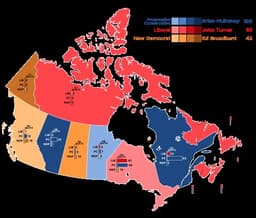
Ed Broadbent
Politician · Modern
56.5Total

Julius Caesar
General · Ancient
82.8Total
Basic Information
Born
1936
-100
Died
—
-44
Era
Modern
Ancient
Nationality
Canada
Roman Republic
Occupation
Politician
General
Civilization
Western
Western
Score Comparison
Military (10%)
50.0
88.0
Political (20%)
60.0
78.0
Influence (20%)
59.0
85.0
Legacy (20%)
47.5
82.0
Leadership (15%)
78.0
80.0
Strategy (15%)
42.0
85.0
TOTAL
56.5
82.8
Ed Broadbent — Complete Timeline
1975 AD
Elected Leader of the New Democratic PartyPolitical Action◆ Major
Ed Broadbent was elected federal leader of the NDP at the party's convention in Winnipeg. He succeeded David Lewis and led the party through a period of growth, becoming a prominent voice for social democracy in Canada.
NDPLeadershipCanadian Politics
Impact: nationalconstructive
1988 AD
NDP Achieves Best Electoral Result Under BroadbentPolitical Action◆ Major
In the 1988 federal election, the NDP under Broadbent won 43 seats and 20.4% of the popular vote, its highest share at that time. The election was dominated by the free trade debate with the United States, and the NDP opposed the Canada-U.S. Free Trade Agreement.
ElectionNDPFree Trade
Impact: nationalconstructive
1989 AD
Resigned as NDP LeaderPolitical Action◆ Major
Broadbent resigned as NDP leader after 14 years, citing a desire to step down while the party was in a strong position. He was succeeded by Audrey McLaughlin, the first woman to lead a major federal party in Canada.
ResignationNDPLeadership
Impact: national
2001 AD
Appointed to the Order of CanadaCultural
Broadbent was appointed as a Companion of the Order of Canada, the country's highest civilian honor, in recognition of his contributions to Canadian politics and social justice. He continued to advocate for democratic reform and human rights.
HonorOrder of Canada
Impact: nationalconstructive
Julius Caesar — Complete Timeline
58 BC
Gallic WarsWar◆ Major
Caesar, as proconsul of Gaul, launched a series of campaigns that conquered all of Gaul (modern France, Belgium, and parts of Switzerland). He fought numerous battles, including against the Helvetii, the Belgae, and the Gallic chieftain Vercingetorix. The wars brought immense wealth and a loyal army to Caesar.
Gallic WarsConquestRoman Expansion
Impact: regional
49 BC
Crossing the RubiconPolitical Action◆ Major
Caesar led Legio XIII across the Rubicon River into Italy, defying the Roman Senate's order to disband his army. This act triggered a civil war against Pompey and the Optimates, ultimately leading to Caesar's dictatorship and the end of the Roman Republic.
Roman Civil WarEnd of RepublicPower Struggle
Impact: global
48 BC
Battle of PharsalusWar◆ Major
Caesar's outnumbered army defeated the larger forces of Pompey the Great at Pharsalus in Greece. Caesar's tactical use of a reserve line to counter Pompey's cavalry charge proved decisive. Pompey fled to Egypt, where he was assassinated, leaving Caesar as the undisputed master of the Roman world.
Roman Civil WarBattleDecisive Victory
Impact: regional
44 BC
Appointment as Dictator for LifePolitical Action◆ Major
The Roman Senate appointed Caesar dictator perpetuo (dictator for life), granting him unprecedented personal power. This move concentrated military, legislative, and judicial authority in one person, effectively ending the Roman Republic's traditional system of checks and balances and alarming many senators.
DictatorshipEnd of RepublicPower Consolidation
Impact: regionaldestructive
Assassination on the Ides of MarchPolitical Action◆ Major
A group of Roman senators, led by Marcus Junius Brutus and Gaius Cassius Longinus, stabbed Caesar to death at a meeting of the Senate in the Theatre of Pompey. The assassination was intended to restore the Republic, but instead triggered another civil war that led to the rise of the Roman Empire.
AssassinationRoman PoliticsEnd of Republic
Impact: globaldestructive
Expert Analysis
ed-broadbent-vs-julius-caesar
# The General and the Democrat: Two Paths to Power
On a cold March morning in 44 BCE, Julius Caesar fell beneath sixty dagger strokes in the Senate chamber, his blood pooling on the marble floor of the very institution he had conquered. Nineteen centuries later, in a Winnipeg convention hall, Ed Broadbent raised his hand to accept the leadership of Canada's New Democratic Party, a man who would spend his career trying to persuade, not command. These two figures, separated by two millennia, represent the polar extremes of Western leadership: the general who seized power through force and the democrat who sought it through votes. Yet both were driven by the same fundamental ambition—to reshape the societies they inherited.
Origins
Caesar was born into the chaos of the late Roman Republic, a world of civil wars, senatorial corruption, and crumbling traditions. His patrician family, the Julii, claimed descent from the goddess Venus, but their fortunes had faded. Young Caesar learned early that in Rome, glory and survival depended on military prowess and political cunning. He watched his uncle Marius purge rivals, then saw Sulla retaliate with proscription lists that named Caesar himself for execution. The lesson was indelible: power was not given—it was taken.
Ed Broadbent emerged from a different world entirely. Born in 1936 in Oshawa, Ontario, a factory town dominated by the auto industry, he grew up in the shadow of the Great Depression and the rise of labor unions. His father was a clerk, his mother a homemaker; there were no goddesses in his lineage, only the quiet dignity of working-class respectability. Where Caesar learned to read battle lines, Broadbent learned to read bargaining contracts. His era was one of institutional stability, where change came through legislation, not legions.
Rise to Power
Caesar's ascent was a masterclass in calculated risk. He climbed the political ladder through the traditional cursus honorum—quaestor, aedile, praetor—but always with an eye on military command. His appointment as governor of Gaul in 58 BCE gave him the weapon he needed: an army. Over eight years, he conquered modern France and Belgium, crossed the Rhine, and invaded Britain. These campaigns made him fabulously wealthy and gave him a veteran army personally loyal to him, not to the Republic.
When the Senate ordered him to disband his forces, Caesar made his fateful choice. On January 10, 49 BCE, he crossed the Rubicon River with a single legion, uttering the words "the die is cast." There was no negotiation, no appeal to democratic process—only the stark logic of civil war.
Broadbent's rise followed a different script. In 1975, when he was elected leader of the NDP at the party's Winnipeg convention, he inherited a movement, not an army. The NDP had never governed nationally; its power was moral and ideological, not coercive. Broadbent's challenge was to build coalitions, not destroy enemies. Where Caesar crossed rivers, Broadbent crossed party lines, forging alliances with labor unions and social movements. His path to power was paved with policy papers, not corpses.
Leadership & Governance
Caesar's governance was revolutionary. As dictator, he reformed the calendar, initiated public works, granted citizenship to provincials, and redistributed land to veterans. But his methods were autocratic: he packed the Senate with his supporters, minted coins with his image, and accepted the title "dictator for life." His military genius—demonstrated at Alesia and Pharsalus—was matched by a political shrewdness that understood that reform required absolute control.
Broadbent's leadership was the antithesis. For fourteen years, he led a party that never won more than 43 seats, yet he transformed Canadian politics by mainstreaming social democracy. In the 1988 federal election, the NDP achieved its best result—20.4% of the popular vote—by advocating universal healthcare, childcare, and progressive taxation. Broadbent governed through persuasion, not decree. His strategy was not strategy in the military sense—his score of 35.3 reflects this—but political endurance. He outlasted opponents, built trust, and made compromise a virtue.
Triumph & Tragedy
Caesar's triumph was absolute: he defeated every rival, from Pompey to the sons of Crassus, and stood alone at the summit of the Roman world. His tragedy was that his success made his death inevitable. The Ides of March was not a random assassination but a logical response to his concentration of power. His final words to Brutus—"Et tu, Brute?"—capture the ultimate betrayal of a man who trusted in personal loyalty over institutional legitimacy.
Broadbent's triumph was quieter but no less real. He made social democracy respectable in North America, a continent hostile to it. His tragedy was that he could never translate influence into power. He resigned in 1989, not by assassination but by choice, stepping down while the party was strong—a voluntary exit that Caesar could never have contemplated. In 2001, he received the Order of Canada, the nation's highest honor, a recognition that came not from conquest but from service.
Character & Destiny
Caesar's character was forged in the crucible of constant competition. He was brilliant, ruthless, and charismatic—a man who slept with enemies' wives and pardoned defeated rivals with equal calculation. His destiny was to destroy the Republic he claimed to save, not because he was evil, but because he could imagine no other way. His personality demanded that he be first, and in Rome, there could only be one first.
Broadbent's character was shaped by consensus. He was patient, principled, and collegial—a man who believed that politics was about improving lives, not dominating them. His destiny was to be respected but never feared. Where Caesar's ambition shattered institutions, Broadbent's ambition strengthened them. The difference was not in talent but in temperament and time.
Legacy
Caesar's legacy is the Roman Empire itself. His name became synonymous with imperial power—Kaiser, Tsar, Caesar—and his reforms laid the foundation for two millennia of Western governance. But his legacy is also a warning: power concentrated destroys the structures that contain it.
Broadbent's legacy is more diffuse but no less enduring. He helped build the social safety net that defines modern Canada—medicare, pensions, public education. His name does not title thrones or empires, but it appears on policy papers and parliamentary records. In 2015, Justin Trudeau explicitly credited Broadbent's work when introducing the Canada Child Benefit.
Conclusion
Standing in the Roman Forum today, tourists walk past Caesar's ashes and the spot where he fell. In Ottawa, a plaque in the House of Commons commemorates Broadbent's service. Both men sought to change the world, but they used different tools—the sword and the ballot, the dictatorship and the democracy. Their stories remind us that leadership is not a single virtue but a relationship between ambition and circumstance. Caesar's tragedy was that he lived in an age where only force could create change. Broadbent's triumph was that he lived in one where persuasion could. The question for our own time is which age we are entering.
Rankings
🥇
Julius CaesarLeader
Mil: 88.0Pol: 78.0Inf: 85.0
82.8
🥈
Ed Broadbent
Mil: 50.0Pol: 60.0Inf: 59.0
56.5
+26.3 behind
How This Comparison Works
Algorithm
Each figure is scored on 6 dimensions (0—100 scale) based on structured historical data: Military (10%), Political (20%), Influence (20%), Legacy (20%), Leadership (15%), Strategy (15%). The weighted total produces the final ranking.
Data Sources
Scores are computed from structured sub-indicators in the database. Scale factors adjust for era (Ancient ×0.85, Modern ×1.0) and civilization size (Eastern ×1.05, Other ×0.80) to account for differences in population and military scale.
Maximum 3 Figures
Comparisons are limited to 2—3 figures to ensure readability and statistical meaningfulness.
Error Margins
±5 points per dimension — Sub-scores are derived from historical records with inherent uncertainty. Two figures within 5 points on a dimension should be considered roughly equivalent in that area.
Total Score Accuracy
±3 points overall — The weighted combination of 6 dimensions produces a total score with approximately ±3 points of uncertainty. Differences of less than 3 points are not statistically significant— the figures are effectively tied.
Known Limitations
- Historical records are incomplete and uneven across civilizations
- Figures from oral-tradition societies may be underrepresented
- Occupation labels can misclassify multi-role figures
- Scores measure capability and impact, not moral character
- Quantitative scoring is a comparison tool, not absolute truth
Capability Radar
Military (10%) — Battles & Warfare
Battles
30
95
Win Rate
31
92
Expansion
32
97
Political (20%) — Governance & Reform
Reform
60
90
Diplomacy
55
85
Economy
50
82
Influence (20%) — Cultural & Global Reach
Cultural
45
88
Global
40
94
Legacy (20%) — Historical Impact
Historical
45
95
Longevity
40
96
Leadership (15%) — Power & Stability
Tenure
65
75
Stability
55
60
Strategy (15%) — Tactics & Innovation
Strategy
39
94
Tactics
39
96
Reform
43
88
Similar Comparisons
Comments & Discussion
No comments yet. Be the first to share your thoughts!