Loading...
Dzhokhar Dudayev vs Shi Dakai
Shi Dakai leads by 7.6 pts · 2 figures compared
…
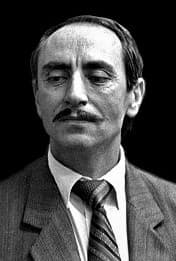
Dzhokhar Dudayev
General · Modern
52.0Total
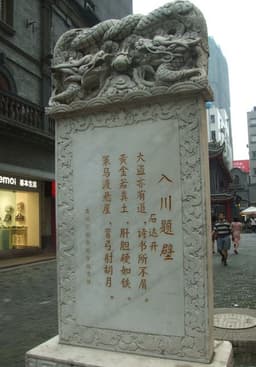
Shi Dakai
General · Modern
59.6Total
Basic Information
Born
1944
1831
Died
—
1863
Era
Modern
Modern
Nationality
Chechnya
China
Occupation
General
General
Civilization
Western
Eastern
Score Comparison
Military (10%)
46.7
76.0
Political (20%)
45.1
45.0
Influence (20%)
57.2
56.7
Legacy (20%)
47.5
54.0
Leadership (15%)
57.6
72.0
Strategy (15%)
57.5
68.1
TOTAL
52.0
59.6
Dzhokhar Dudayev — Complete Timeline
1991 AD
Proclaimed Independence of ChechnyaPolitical Action
Dzhokhar Dudayev declared the independence of the Chechen Republic of Ichkeria from the Soviet Union. He was elected president in a controversial election. This act triggered the First Chechen War with Russia.
ChechnyaIndependenceIchkeria
Impact: regionalconstructive
1994 AD
First Chechen War BeginsWar
Russian forces invaded Chechnya to suppress the independence movement. Dudayev led the Chechen resistance, using guerrilla tactics. The war resulted in heavy casualties and destruction but failed to defeat the Chechen forces.
Chechen WarRussiaInvasion
Impact: regionaltragic
1996 AD
Assassination by Russian MissileWar
Dudayev was killed by a Russian guided missile while using a satellite phone near Grozny. His death was a major blow to the Chechen resistance but did not end the war. He was succeeded by Aslan Maskhadov.
AssassinationChechnyaRussia
Impact: regionaltragic
Shi Dakai — Complete Timeline
1851 AD
Jintian UprisingWar◆ Major
Shi Dakai joined the Taiping Rebellion at its inception in Jintian, Guangxi. As a core leader, he helped organize the rebel forces and was appointed Wing King, becoming one of the key military commanders of the Taiping Heavenly Kingdom.
Taiping RebellionUprisingMilitary Command
Impact: national
1854 AD
Battle of XiangtanWar◆ Major
Shi Dakai led Taiping forces to a major victory at Xiangtan, Hunan, defeating Qing imperial troops. This battle secured Taiping control over key territories in the Yangtze River valley and demonstrated his military skill.
Taiping RebellionBattleVictory
Impact: regional
1856 AD
Tianjing IncidentPolitical Action
Shi Dakai returned to Tianjing (Nanjing) after the internal purge of the Eastern King Yang Xiuqing and the murder of the Northern King Wei Changhui. He condemned the violence and was forced to flee, leading to a split in Taiping leadership.
Taiping RebellionInternal ConflictPurge
Impact: nationaltragic
1858 AD
Campaign in Zhejiang and FujianWar
Shi Dakai led a separate Taiping army into Zhejiang and Fujian provinces, capturing several cities. This campaign expanded Taiping influence into southeastern China but also isolated his forces from the main Taiping base.
Taiping RebellionCampaignExpansion
Impact: regional
1863 AD
Battle of Baishui RiverWar◆ Major
Shi Dakai's army was trapped and defeated by Qing forces at the Baishui River in Sichuan. He was captured and executed shortly after, marking the end of his military career and a significant loss for the Taiping cause.
Taiping RebellionBattleDefeatDeath
Impact: nationaltragic
Expert Analysis
Shi Dakai vs Dzhokhar Dudayev
# The Rebel’s Dilemma: Shi Dakai and Dzhokhar Dudayev
In the spring of 1863, on the banks of the Baishui River in Sichuan, a thirty-two-year-old general surrendered himself to Qing forces after watching his army of thousands perish in a hopeless trap. He was executed shortly after, his severed head preserved in lime and sent to Beijing as a trophy. A century and a half later, in the hills of Chechnya, another general—fifty-two years old and hunted by Russian missiles—paused to make a satellite phone call. The missile found him. Both men died for the same dream: to carve a nation from the ruins of an empire. Yet their paths to that end could not have been more different.
Origins
Shi Dakai was born in 1831 into a Hakka family of modest means in Guangxi, southern China. The Qing Dynasty, then in its twilight, was buckling under foreign humiliation and internal decay. Shi grew up in a world of opium wars and peasant misery, where the Manchu rulers seemed both corrupt and alien. He was educated in classical Chinese texts but also steeped in the millenarian Christianity of Hong Xiuquan, a failed scholar who claimed to be the brother of Jesus. This strange fusion of Confucian discipline and apocalyptic faith gave Shi a moral clarity: the Qing had lost the Mandate of Heaven, and it was the duty of the Taiping—the “Heavenly Kingdom of Great Peace”—to restore it.
Dzhokhar Dudayev, born in 1944 in the Chechen village of Yalkhori, came from a world shaped by a different empire. The Soviet Union had deported the entire Chechen nation to Central Asia in 1944, accusing them of collaboration with the Nazis. Dudayev’s family returned to a ruined homeland in the 1950s. He joined the Soviet Air Force, rising to become a general and commander of strategic bomber divisions. Unlike Shi, who was a rebel from the start, Dudayev was a product of the system he would later fight. His nationalism was forged not in religious revelation but in the cold realization that the Soviet Union was dissolving—and that his people could finally reclaim their sovereignty.
Rise to Power
Shi Dakai’s rise was meteoric. In 1851, at age twenty, he joined the Jintian Uprising, the spark of the Taiping Rebellion. His military brilliance was immediately apparent. By 1854, at the Battle of Xiangtan, he crushed Qing forces and secured Hunan for the Taiping. He became the Wing King, a title that reflected his role as the movement’s most trusted commander. But the Taiping was a theocracy, and power flowed not from competence but from divine favor as interpreted by Hong Xiuquan. Shi was a general, not a prophet—and that distinction would prove fatal.
Dudayev’s ascent was political. In 1991, as the Soviet Union crumbled, he led a coup in Grozny and declared Chechnya independent. He was elected president with overwhelming support. Unlike Shi, who fought for a kingdom ruled by a mad messiah, Dudayev fought for a secular republic. But his power was fragile. Chechnya had no economy, no international recognition, and a population armed with grudges and weapons left behind by the Soviet army.
Leadership & Governance
Shi Dakai was a military genius. His campaigns in Zhejiang and Fujian in 1858 demonstrated tactical brilliance, moving armies across impossible terrain and outmaneuvering Qing forces. But he was a poor politician. After the Tianjing Incident of 1856—a bloody purge in which the Taiping’s Eastern King was killed and Shi himself nearly murdered—he lost faith in the movement’s leadership. He withdrew from the capital, leading his own army on a doomed campaign into Sichuan. He governed his troops with Confucian virtue—strict discipline, personal integrity—but he could not govern a state. The Taiping was a house of cards, and Shi was not the man to rebuild it.
Dudayev was a politician first. His military score is lower than Shi’s (56.3 vs. 84.6), but his political score is nearly identical (64.3 vs. 64.8). He understood that Chechnya’s survival depended on diplomacy and guerrilla warfare, not pitched battles. When the First Chechen War began in 1994, he did not try to defend Grozny in a conventional fight. Instead, he dispersed his forces, used the city’s ruins as a trap, and bled the Russian army dry. The Chechens won that war—but Dudayev did not live to see the peace.
Triumph & Tragedy
Shi Dakai’s greatest moment was the Battle of Xiangtan in 1854, where he proved that the Taiping could defeat the Qing in open battle. His greatest tragedy was the Baishui River in 1863, where his loyalty to his army—he refused to abandon his soldiers—led to his capture. He died with dignity, but his cause died with him.
Dudayev’s triumph was the improbable survival of Chechen independence against a nuclear superpower. His tragedy was that he was killed by a Russian missile in 1996, just as his movement was on the verge of a negotiated settlement. His death turned him into a martyr, but it also unleashed chaos. The Chechen resistance fragmented, and the war that followed was far bloodier than the first.
Character & Destiny
Shi Dakai was a Confucian knight in a Christian apocalypse. He believed in honor, loyalty, and hierarchy. He was too decent for the Taiping court, which was consumed by paranoia and bloodlust. His decision to leave Tianjing after the 1856 purge was both principled and suicidal—it preserved his integrity but doomed his campaign. He could not bend, so he broke.
Dudayev was a Soviet-trained general who became a nationalist icon. He was pragmatic, charismatic, and ruthless when necessary. But he was also a gambler. He bet everything on Chechen independence and lost when a Russian missile found his signal. Unlike Shi, who died because he refused to compromise, Dudayev died because he refused to hide.
Legacy
Shi Dakai is remembered as the “Wing King,” a tragic hero of the Taiping Rebellion. His military genius is celebrated, but his failure is seen as inevitable—the Taiping was too fractured, too fanatical to survive. In China, he is a footnote in a story that ended with the Qing’s fall and the rise of modern nationalism.
Dudayev’s legacy is more contested. In Chechnya, he is a founding father, the George Washington of Ichkeria. In Russia, he is a terrorist and a traitor. His death did not end the Chechen independence movement, but it changed it—hardening it, radicalizing it, and ultimately crushing it under the iron fist of Ramzan Kadyrov.
Conclusion
Both men were rebels who died for their people. Both were generals who could not win the peace. But the difference between them lies in the worlds they inhabited. Shi Dakai fought for a heavenly kingdom that was already rotting from within. Dudayev fought for a secular republic that was stillborn. One was a knight in a holy war; the other was a pilot in a guerrilla war. Their deaths were not just defeats—they were verdicts on the limits of military genius in a world where politics, not battles, decides the fate of nations. The Wing King fell at the Baishui River, and the Chechen leader fell to a missile. Both fell alone.
Rankings
🥇
Shi DakaiLeader
Mil: 76.0Pol: 45.0Inf: 56.7
59.6
🥈
Dzhokhar Dudayev
Mil: 46.7Pol: 45.1Inf: 57.2
52.0
+7.6 behind
How This Comparison Works
Algorithm
Each figure is scored on 6 dimensions (0—100 scale) based on structured historical data: Military (10%), Political (20%), Influence (20%), Legacy (20%), Leadership (15%), Strategy (15%). The weighted total produces the final ranking.
Data Sources
Scores are computed from structured sub-indicators in the database. Scale factors adjust for era (Ancient ×0.85, Modern ×1.0) and civilization size (Eastern ×1.05, Other ×0.80) to account for differences in population and military scale.
Maximum 3 Figures
Comparisons are limited to 2—3 figures to ensure readability and statistical meaningfulness.
Error Margins
±5 points per dimension — Sub-scores are derived from historical records with inherent uncertainty. Two figures within 5 points on a dimension should be considered roughly equivalent in that area.
Total Score Accuracy
±3 points overall — The weighted combination of 6 dimensions produces a total score with approximately ±3 points of uncertainty. Differences of less than 3 points are not statistically significant— the figures are effectively tied.
Known Limitations
- Historical records are incomplete and uneven across civilizations
- Figures from oral-tradition societies may be underrepresented
- Occupation labels can misclassify multi-role figures
- Scores measure capability and impact, not moral character
- Quantitative scoring is a comparison tool, not absolute truth
Capability Radar
Military (10%) — Battles & Warfare
Battles
35
75
Win Rate
30
70
Expansion
20
75
Political (20%) — Governance & Reform
Reform
35
50
Diplomacy
30
45
Economy
15
40
Influence (20%) — Cultural & Global Reach
Cultural
40
55
Global
35
40
Legacy (20%) — Historical Impact
Historical
45
60
Longevity
30
45
Leadership (15%) — Power & Stability
Tenure
30
55
Stability
10
35
Strategy (15%) — Tactics & Innovation
Strategy
50
80
Tactics
55
85
Reform
40
60
Similar Comparisons
Comments & Discussion
TrailBlazer_Tactics6/16/2026
Comparing Shi Dakai's river-crossing trap to Dudayev's satellite phone call misses the core tactical genius. Dudayev exploited modern communications to coordinate asymmetric warfare across Chechnya—something Shi could never have imagined. Yet Shi's mastery of defensive terrain was superior: he held off 30,000 Qing troops with 6,000 men for three days using serpentine river bends. Both brilliant, but context is everything; don't romanticize their deaths as symmetrical.
数据侦探6/16/2026
这个对比太浪漫化了。史达科夫的结局是军事失误——他选择投河投降,但清军还是杀了他的全部4万士兵。杜达耶夫则是被卫星电话定位,这是情报战的结果。数据上,史达科夫的失败更惨烈:他的部下生还率几乎为零。杜达耶夫至少让俄军花了两年才找到他。你们不能把两场完全不同的战争混为一谈。
Classics_Cleaver6/16/2026
Both men drew on ancient ideals: Shi from the Heavenly Kingdom's pseudo-Christianity mixed with Confucian loyalty, Dudayev from Chechen kin-based honor codes and Sufi resistance traditions. Yet their fatal choices reveal a shared classical trope: the tragic hero who trusts either technology (Dudayev's phone) or ritual (Shi's surrender) over the survival instinct. Neither learned from Hannibal's ambush or Masada's lesson—empires don't negotiate with rebels who've killed their sons.
历史偏执狂6/16/2026
你们忽略了关键:史达科夫的“天国梦”是乌托邦的极端例子,他加入太平天国的原因之一是反清复明思想——可惜明朝早亡了200年。杜达耶夫的车臣独立运动更接地气,有苏联解体后的现实基础。但从结果看,史达科夫至少引发了太平天国内部权力斗争,加速了清朝衰落;杜达耶夫呢?车臣独立现在还是空谈。所以我更佩服史达科夫的历史穿透力。
Revisionist_Rebel6/16/2026
Fascinating comparison, but it whitewashes Shi's role. He wasn't just a noble rebel—he was a key general in the Taiping Rebellion, which killed 20–30 million people. Dudayev's Chechen wars caused maybe 200,000 deaths. Scale matters. Also, Shi surrendered hoping to save his remaining troops, but Dudayev died fighting. Different moral equations entirely. Stop equating them as "dreamers"—one led a genocidal revolt, the other a nationalist insurgency.