Loading...
Dzhokhar Dudayev vs Louis Botha
Louis Botha leads by 9.1 pts · 2 figures compared
…
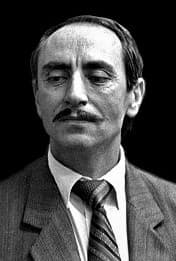
Dzhokhar Dudayev
General · Modern
52.0Total
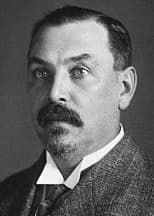
Louis Botha
General · Modern
61.1Total
Basic Information
Born
1944
1862
Died
—
1919
Era
Modern
Modern
Nationality
Chechnya
South Africa
Occupation
General
General
Civilization
Western
Other
Score Comparison
Military (10%)
46.7
61.7
Political (20%)
45.1
70.0
Influence (20%)
57.2
56.7
Legacy (20%)
47.5
50.0
Leadership (15%)
57.6
79.8
Strategy (15%)
57.5
58.0
TOTAL
52.0
61.1
Dzhokhar Dudayev — Complete Timeline
1991 AD
Proclaimed Independence of ChechnyaPolitical Action
Dzhokhar Dudayev declared the independence of the Chechen Republic of Ichkeria from the Soviet Union. He was elected president in a controversial election. This act triggered the First Chechen War with Russia.
ChechnyaIndependenceIchkeria
Impact: regionalconstructive
1994 AD
First Chechen War BeginsWar
Russian forces invaded Chechnya to suppress the independence movement. Dudayev led the Chechen resistance, using guerrilla tactics. The war resulted in heavy casualties and destruction but failed to defeat the Chechen forces.
Chechen WarRussiaInvasion
Impact: regionaltragic
1996 AD
Assassination by Russian MissileWar
Dudayev was killed by a Russian guided missile while using a satellite phone near Grozny. His death was a major blow to the Chechen resistance but did not end the war. He was succeeded by Aslan Maskhadov.
AssassinationChechnyaRussia
Impact: regionaltragic
Louis Botha — Complete Timeline
1899 AD
Battle of ColensoWar◆ Major
Botha commanded Boer forces at the Battle of Colenso during the Second Boer War. His troops repelled a British attack under General Buller, inflicting heavy casualties and boosting Boer morale.
Second Boer WarBattleVictory
Impact: regional
1900 AD
Boer War Guerrilla CommanderWar◆ Major
After the British captured Pretoria, Botha led Boer guerrilla forces in the Transvaal. He conducted hit-and-run attacks against British columns, prolonging the war and becoming a symbol of Afrikaner resistance.
Second Boer WarGuerrillaResistance
Impact: regional
1902 AD
Signed the Treaty of VereenigingPolitical Action
Botha, as a leading Boer general, signed the Treaty of Vereeniging which ended the Second Boer War. The treaty granted the Boer republics self-government under British sovereignty and promised eventual self-rule.
TreatyPeaceSecond Boer War
Impact: regional
1910 AD
First Prime Minister of the Union of South AfricaPolitical Action
Botha became the first Prime Minister of the newly formed Union of South Africa. He led a coalition government that sought to reconcile Afrikaners and English-speaking whites, while implementing segregationist policies.
Prime MinisterUnion of South AfricaFounding
Impact: nationalconstructive
1914 AD
Suppressed the 1914 RebellionWar◆ Major
Botha personally led government forces to suppress the Maritz Rebellion, an Afrikaner uprising against South Africa's entry into World War I. He defeated the rebels, asserting state authority and maintaining support for the British Empire.
RebellionWorld War ISuppression
Impact: national
1915 AD
Conquered German South West AfricaWar◆ Major
Botha commanded South African forces in the invasion and conquest of German South West Africa. The campaign succeeded, and the territory was later administered by South Africa under a League of Nations mandate.
World War IConquestGerman South West Africa
Impact: regional
Expert Analysis
Louis Botha vs Dzhokhar Dudayev
# The General Who Built a Nation, and the General Who Dreamed of One
On a winter morning in 1899, a young Boer farmer named Louis Botha watched from the slopes of a hill in Natal as the full might of the British Empire marched toward him. The red-coated columns advanced with the confidence of men who had never lost a colonial war. By nightfall, the British had suffered over a thousand casualties, and Botha—then only thirty-seven—had announced himself to the world as a military commander of rare instinct. Half a world away and nearly a century later, another general stood before a microphone in Grozny, the bombed-out capital of a tiny republic, and declared his people free from the largest country on earth. Dzhokhar Dudayev, a Soviet Air Force general turned Chechen nationalist, had no hills to defend—only a city that would soon be rubble. Both men fought empires. Both were outnumbered. But their paths diverged as sharply as the fates of the nations they tried to lead.
Origins
Louis Botha was born in 1862 near Greytown in the British colony of Natal, but his family soon trekked inland to the Boer republics—those hard-scrabble territories carved out of African grasslands by Dutch-speaking farmers who valued independence above all else. Botha grew up in the Transvaal, a land of vast horizons and constant insecurity. The Boers were not soldiers by profession; they were farmers who rode horses and shot straight because survival demanded it. Botha learned command on the veld, where authority came not from rank but from respect. His world was one of small communities, Calvinist faith, and a simmering resentment of British interference.
Dzhokhar Dudayev was born in 1944 in the Chechen village of Yalkhori, into a people who had just been deported to Central Asia by Stalin’s order. He was a child of genocide—not metaphorically, but literally: the entire Chechen nation was loaded onto cattle cars and sent to Kazakhstan and Kyrgyzstan in 1944, accused of collaborating with the Nazis. Dudayev grew up in exile, speaking Russian in school and Chechen at home, learning early that his people were considered a problem to be solved by Moscow. He joined the Soviet Air Force, the classic path of assimilation for ambitious minorities, rising to become the only Chechen to reach the rank of Major General. He commanded strategic bomber divisions, lived in Soviet comfort, and seemed the perfect product of the system that had crushed his people.
Rise to Power
Botha’s rise came through war. The Second Boer War (1899–1902) was his forge. After his victory at Colenso, where he repelled General Sir Redvers Buller’s attempt to relieve the besieged town of Ladysmith, Botha became a national hero. When the British captured Pretoria in 1900, the Boers did not surrender. They melted into the countryside, and Botha became the guerrilla commander of the Transvaal—raiding British supply lines, ambushing columns, and keeping the war alive for two more years. He proved that a mounted, mobile force of farmers could humiliate the world’s greatest empire, even if they could not defeat it.
Dudayev’s rise was different. He came to power not on a battlefield but in the chaos of a collapsing superpower. In 1991, as the Soviet Union disintegrated, Dudayev returned to Chechnya and was swept into leadership by a wave of nationalist fervor. He was elected president of the Chechen Republic of Ichkeria with over 80 percent of the vote—a genuine democratic mandate in a region that had never known democracy. He declared independence in November 1991, not as a rebel but as a head of state. Moscow refused to recognize it, but for three years, Chechnya existed as a de facto independent state, a chaotic and impoverished experiment in sovereignty.
Leadership & Governance
Here the two men diverge most sharply. Botha was a builder. After signing the Treaty of Vereeniging in 1902, which ended the Boer War and brought the republics under British control, he did not retreat into bitterness. He entered politics. He became the first Prime Minister of the Union of South Africa in 1910, leading a coalition that sought to reconcile Boer and Briton—the two white populations—while systematically excluding the black majority. His political score of 83.0 reflects a man who understood power not as a weapon but as an instrument of consolidation. He suppressed the 1914 Maritz Rebellion, an Afrikaner uprising against South Africa’s entry into World War I on Britain’s side, and then personally led the conquest of German South West Africa in 1915, expanding South African territory. Botha was a pragmatist: he knew the Boers could not defeat Britain, so he joined them.
Dudayev was a dreamer, and dreams are fragile. His political score of 64.3 reflects a leader who could inspire but could not govern. Chechnya under his presidency was lawless, impoverished, and isolated. He had no administrative experience, no economic plan, and no diplomatic allies willing to risk war with Russia. His military score of 56.3—lower than Botha’s 62.0—is deceptive: Dudayev was not a field commander but a symbol. He led the Chechen resistance in the First Chechen War (1994–1996) mainly through morale and rhetoric. When Russian tanks rolled into Grozny in December 1994, Chechen fighters turned the city into a death trap, destroying the Russian column in street fighting that shocked the world. But Dudayev himself was not directing the battle; he was hiding, moving from safe house to safe house, hunted by Russian intelligence.
Triumph & Tragedy
Botha’s greatest moment was also his most ambiguous: the Treaty of Vereeniging. He chose peace over continued resistance, accepting British sovereignty in exchange for self-government for the Boer republics. It was a bitter pill for many Afrikaners, who saw it as betrayal. But Botha understood that the war was unwinnable—the British had burned farms, herded women and children into concentration camps, and deployed overwhelming force. He saved what could be saved. His tragedy came later: as Prime Minister, he laid the foundations for the apartheid state, the system that would blight South Africa for decades. He unified the white population at the cost of crushing the black one.
Dudayev’s triumph was the very act of resistance. A tiny nation of perhaps a million people fought the Russian army to a standstill. Chechen fighters captured Russian soldiers, destroyed armored columns, and turned Grozny into a symbol of defiance. But his tragedy was personal: on April 21, 1996, he was killed by a Russian missile that homed in on his satellite phone signal. He died in a field, speaking to a Ukrainian politician, leaving his people leaderless at the moment of their greatest victory. Within months, the Russians withdrew, and Chechnya achieved de facto independence—but without Dudayev to guide it, the republic slid into chaos, warlordism, and eventually a second, far more devastating war.
Character & Destiny
Botha was a realist. His leadership score of 89.6 reflects a man who could inspire loyalty while making cold calculations. He had the farmer’s patience and the politician’s flexibility. He knew when to fight and when to negotiate. His personality—stoic, unpretentious, stubborn—suited an era when white South Africans were forging a nation from war and empire.
Dudayev was a romantic nationalist, a man of grand gestures and tragic flaws. He believed in the power of will. He once said, “The Chechen people have been fighting for freedom for three hundred years. We will not stop now.” His leadership score of 73.2 reflects a charisma that could move crowds but could not build institutions. He was a general without an army, a president without a state, a martyr who died before his vision could be tested.
Legacy
Botha is remembered as a founder—the first Prime Minister of the Union of South Africa, a man who helped shape a country that would later tear itself apart over the racial policies he helped entrench. His legacy score of 66.8 is modest because history judges him harshly for apartheid. Yet in Afrikaner memory, he remains a hero: the general who saved his people from annihilation, the statesman who gave them a voice.
Dudayev’s legacy score of 65.3 is similar, but for different reasons. He is a martyr for Chechen independence, a symbol of resistance against Russian domination. His face appears on posters in Grozny, his name is given to streets and squares. But the Chechen Republic of Ichkeria no longer exists; it was crushed in the Second Chechen War, replaced by a Russian-backed autocracy. Dudayev’s dream died with him.
Conclusion
Botha and Dudayev were men of their times—one a builder of nations within the empire, the other a breaker of empires who could not build a nation. Botha accepted the limits of power and worked within them; Dudayev refused to accept those limits and was destroyed. The difference between them is not merely personal but historical: Botha led a people who had a land, a language, and a tradition of self-government; Dudayev led a people who had only memory and rage. One created a state that lasted; the other created a symbol that endures. In the end, Botha’s pragmatism gave his people a future, while Dudayev’s idealism gave his people a legend—and legends, however inspiring, do not feed the hungry or govern the restless.
Rankings
🥇
Louis BothaLeader
Mil: 61.7Pol: 70.0Inf: 56.7
61.1
🥈
Dzhokhar Dudayev
Mil: 46.7Pol: 45.1Inf: 57.2
52.0
+9.1 behind
How This Comparison Works
Algorithm
Each figure is scored on 6 dimensions (0—100 scale) based on structured historical data: Military (10%), Political (20%), Influence (20%), Legacy (20%), Leadership (15%), Strategy (15%). The weighted total produces the final ranking.
Data Sources
Scores are computed from structured sub-indicators in the database. Scale factors adjust for era (Ancient ×0.85, Modern ×1.0) and civilization size (Eastern ×1.05, Other ×0.80) to account for differences in population and military scale.
Maximum 3 Figures
Comparisons are limited to 2—3 figures to ensure readability and statistical meaningfulness.
Error Margins
±5 points per dimension — Sub-scores are derived from historical records with inherent uncertainty. Two figures within 5 points on a dimension should be considered roughly equivalent in that area.
Total Score Accuracy
±3 points overall — The weighted combination of 6 dimensions produces a total score with approximately ±3 points of uncertainty. Differences of less than 3 points are not statistically significant— the figures are effectively tied.
Known Limitations
- Historical records are incomplete and uneven across civilizations
- Figures from oral-tradition societies may be underrepresented
- Occupation labels can misclassify multi-role figures
- Scores measure capability and impact, not moral character
- Quantitative scoring is a comparison tool, not absolute truth
Capability Radar
Military (10%) — Battles & Warfare
Battles
35
65
Win Rate
30
70
Expansion
20
60
Political (20%) — Governance & Reform
Reform
35
65
Diplomacy
30
70
Economy
15
55
Influence (20%) — Cultural & Global Reach
Cultural
40
45
Global
35
50
Legacy (20%) — Historical Impact
Historical
45
55
Longevity
30
40
Leadership (15%) — Power & Stability
Tenure
30
60
Stability
10
50
Strategy (15%) — Tactics & Innovation
Strategy
50
72
Tactics
55
68
Reform
40
55
Similar Comparisons
Comments & Discussion
VeldtComet6/16/2026
Botha actually learned to lose before he learned to win—Colenso, Spion Kop, the whole grinding slog. Dude had Veldkornet discipline drilled into him by failure itself. Dudayev? Jet pilot who’d never led infantry into a real battle before Grozny. That Chechen campaign wasn’t a generalship masterclass; it was a tragic gambit. Botha knew retreat, Dudayev only knew defiance. One built a government; the other built a myth that couldn’t feed a single soldier.
数据铁匠6/16/2026
别拿数据洗白啊:博塔指挥了布尔战争中仅有几次有据可查的大规模维多利亚十字勋章大屠杀对吧,可杜达耶夫的总兵力从来就没超过一万人。这根本不是同一级别的战争,拿资源做比较就是耍流氓。更搞笑的是,两边都输给大帝国,但博塔靠的是投降后殖民谈判,而杜达耶夫到死都在被追捕。一个谈成了布尔人地位,一个只留下车臣废墟。
ClassicsChisel6/16/2026
Botha’s tactical inheritance from the Great Trek and the Vryheidsoorlog is the real story here. He commanded like a farmer who read Caesar’s Commentaries on instinct: feints, retreats, ambushes on the high veld. Dudayev’s air force background gave him zero classics in counterinsurgency. He tried to command a mountain war with symmetrical thinking. The result is inevitable: Botha’s guerrilla phase actually crushed British logistics; Dudayev’s merely delayed Russian armor. One used the land; the o
烟斗旁观者6/16/2026
你们都在吹博塔的战术拐弯,我关心的是杜达耶夫其实是个被高估的苏联航空兵。他搞独立可不是因为民族自觉,而是1991年苏联解体时捞政治资本的空降兵。仔细看,他在车臣的军事决策都是即兴表演:拒绝阅兵式的防御、依赖民族情感、还跟伊奇克里亚的军阀们扯皮。博塔至少有宪法和议会撑腰,杜达耶夫就是个披着将军外衣的诗人。历史会记得谁真会打仗,谁只是运气好碰上了帝国衰弱窗口。
RevizorRebel6/16/2026
Botha’s nation-building is overrated. He collaborated with the British to create the Union of South Africa—a white supremacist state that crushed black rights for decades. Dudayev, for all his chaos, actually tried to build a multi-ethnic Chechnya before the Wahhabis and Russians ruined it. Botha’s legacy is apartheid’s constitutional scaffolding; Dudayev’s is a still-unfinished dream of self-determination. Don’t dress imperialism in khaki and call it statecraft.