Loading...
Dou Gu vs Hannibal Barca
Hannibal Barca leads by 9.9 pts · 2 figures compared
…
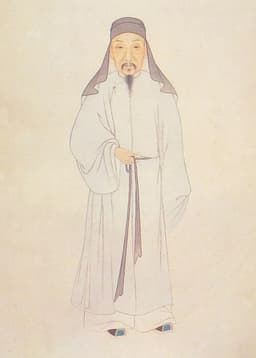
Dou Gu
General · Ancient
47.3Total
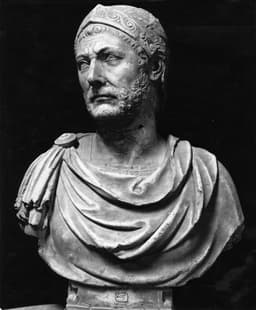
Hannibal Barca
General · Ancient
57.2Total
Basic Information
Born
19
-247
Died
89
-183
Era
Ancient
Ancient
Nationality
China
Carthage
Occupation
General
General
Civilization
Eastern
Middle Eastern
Score Comparison
Military (10%)
61.7
92.0
Political (20%)
35.0
35.0
Influence (20%)
46.3
55.0
Legacy (20%)
40.0
40.0
Leadership (15%)
57.1
68.0
Strategy (15%)
57.5
88.0
TOTAL
47.3
57.2
Dou Gu — Complete Timeline
73 AD
Battle of YiwuluWar◆ Major
Dou Gu led a Han expeditionary force against the Xiongnu at Yiwulu (modern Hami). He defeated the Xiongnu and established a military garrison, securing the strategic gateway to the Western Regions and reopening the Silk Road.
Han DynastyXiongnuSilk Road
Impact: regional
74 AD
Appointed as Protector General of the Western RegionsPolitical Action◆ Major
Dou Gu was appointed Protector General (Duhu) of the Western Regions, overseeing Han interests in Central Asia. He established diplomatic relations with local kingdoms and maintained Han military presence in the region.
Han DynastyWestern RegionsDiplomacy
Impact: regionalconstructive
89 AD
Campaign Against the Northern XiongnuWar
Dou Gu, as a general under Emperor He, launched a major campaign against the Northern Xiongnu. His forces advanced deep into the steppe, defeating the Xiongnu and forcing their remnants to flee westward, ending the Xiongnu threat to Han China.
Han DynastyXiongnuMilitary Campaign
Impact: regional
Death in BattleWar
Dou Gu died in battle during the campaign against the Northern Xiongnu. His death marked the end of a distinguished military career that had secured Han dominance over the northern frontier.
Han DynastyDeathMilitary
Impact: regionaltragic
Hannibal Barca — Complete Timeline
219 BC
Siege of SaguntumWar◆ Major
Hannibal besieged and captured Saguntum, a Roman ally in Spain. This act violated a treaty with Rome and directly triggered the Second Punic War. The eight-month siege demonstrated Hannibal's determination and military skill, but also his willingness to provoke conflict.
SiegeProvocationWar Start
Impact: regionaldestructive
218 BC
Crossing of the AlpsWar
Hannibal led a Carthaginian army, including war elephants, from Spain across the Alps into Italy. The journey was arduous, with significant losses from terrain, weather, and attacks by mountain tribes. This strategic maneuver surprised the Romans and brought the war to their homeland.
Military CampaignAlpsStrategy
Impact: global
216 BC
Battle of CannaeWar
Hannibal's outnumbered army encircled and annihilated a larger Roman force at Cannae in southern Italy. The Romans suffered up to 70,000 casualties in one day. This battle is considered a masterpiece of tactical encirclement and remains studied in military academies.
BattleTacticsRoman Defeat
Impact: globaldestructive
202 BC
Battle of ZamaWar
Hannibal was defeated by Scipio Africanus at Zama in North Africa. Scipio's tactics neutralized Hannibal's elephants and cavalry, leading to a decisive Roman victory. This battle ended the Second Punic War and forced Carthage to accept harsh peace terms.
BattleDefeatEnd of War
Impact: globaltragic
183 BC
Exile and DeathPolitical Action◆ Major
After the war, Hannibal became a politician in Carthage, but Roman pressure forced him into exile. He fled to the Seleucid court, then to Bithynia. When the Romans demanded his extradition, he committed suicide by poison, ending his life as a fugitive.
ExileSuicideRoman Pursuit
Impact: regionaltragic
Expert Analysis
Origins
**Dou Gu** (c. 1st century CE) was born into a powerful Han dynasty family. His older brother Dou Xian was a regent, and Dou Gu himself received a military education typical of the elite. Little is known of his early life, but he rose through the ranks in the imperial guard.
**Hannibal Barca** (247–183 BCE) was born in Carthage to Hamilcar Barca, a leading general in the First Punic War. Hannibal grew up in a military camp in Spain, swearing eternal enmity to Rome. He received rigorous training in strategy, languages, and leadership from his father and brother-in-law Hasdrubal.
Rise to Power
Dou Gu gained prominence under Emperor He of Han. In 73 CE, he was appointed as a general to lead a campaign against the Northern Xiongnu. His success at the Battle of Yiwulu (73 CE) where he defeated the Xiongnu and established a garrison earned him the position of Protector General of the Western Regions, overseeing Han interests in Central Asia.
Hannibal's rise came after his father's death. He was elected commander-in-chief of Carthaginian forces in Spain at age 26. In 219 BCE, he besieged Saguntum, a Roman ally, triggering the Second Punic War. He then executed his famous crossing of the Alps in 218 BCE, surprising Rome and bringing the war to Italy.
Leadership & Governance
Dou Gu's leadership was characterized by effective frontier management. He secured the Silk Road, established diplomatic ties with local kingdoms, and maintained Han authority with a relatively small force. His military score of 61.7 reflects competent but not exceptional generalship. Politically, he scored 35.0, indicating limited influence in the capital.
Hannibal's leadership was transformative. He held together a multi-ethnic army of Carthaginians, Iberians, Gauls, and Numidians through personal charisma and shared plunder. His political score of 35.0 matches Dou Gu's, as he lacked support from Carthaginian oligarchs. His strategy score of 88.0 is among the highest in ancient history, demonstrated by Cannae where he used a double envelopment to destroy a larger Roman army.
Triumph & Tragedy
Dou Gu's greatest triumph was the Battle of Yiwulu and his tenure as Protector General, which secured Han control over the Tarim Basin. His tragedy was his death in battle against the Northern Xiongnu, cutting short his career. He failed to permanently pacify the steppe.
Hannibal's triumph was Cannae (216 BCE), where his 50,000 men killed or captured up to 70,000 Romans. His tragedy was ultimate defeat: he was recalled to Africa and beaten by Scipio Africanus at Zama (202 BCE). He then lived in exile, eventually poisoning himself to avoid capture. His failure to secure adequate reinforcements from Carthage and his inability to break Rome's alliances contributed to his downfall.
Character & Destiny
Dou Gu was a capable frontier general, loyal to the Han dynasty. His character was shaped by the Confucian bureaucracy; his destiny was to serve and die in the field. He scored 57.1 in leadership, reflecting steady command.
Hannibal was a strategic genius driven by a personal oath against Rome. His character was cunning, adaptable, and ruthless. He scored 68.0 in leadership and 92.0 in military, but his destiny was shaped by the limits of Carthaginian power. His inability to win a decisive political settlement after Cannae sealed his fate.
Legacy
Dou Gu's legacy is modest: he helped consolidate Han control over the Western Regions, which facilitated the Silk Road trade. He scored 40.0 in legacy and 46.3 in influence. Today, he is a footnote in Chinese history.
Hannibal's legacy is immense. He is studied in military academies worldwide as a master of tactics. His influence score of 55.0 reflects his impact on military theory. The phrase "Hannibal ad portas" (Hannibal at the gates) remains a metaphor for imminent danger. His legacy score of 40.0 is similar to Dou Gu's, but his cultural footprint is far larger.
Conclusion
Hannibal Barca had greater impact than Dou Gu. While Dou Gu was a competent frontier general, Hannibal was a transformative military genius who nearly destroyed Rome. Hannibal's strategic innovations (Cannae's double envelopment) and his ability to project power across the Alps with war elephants set him apart. His total score of 57.2 vs Dou Gu's 47.3 reflects this gap. Although both lacked political acumen, Hannibal's military achievements (92.0 vs 61.7) and strategic brilliance (88.0 vs 57.5) decisively tilt the comparison. Dou Gu secured a region; Hannibal challenged an empire. The latter's legacy endures in every discussion of great commanders.
Rankings
🥇
Hannibal BarcaLeader
Mil: 92.0Pol: 35.0Inf: 55.0
57.2
🥈
Dou Gu
Mil: 61.7Pol: 35.0Inf: 46.3
47.3
+9.9 behind
How This Comparison Works
Algorithm
Each figure is scored on 6 dimensions (0—100 scale) based on structured historical data: Military (10%), Political (20%), Influence (20%), Legacy (20%), Leadership (15%), Strategy (15%). The weighted total produces the final ranking.
Data Sources
Scores are computed from structured sub-indicators in the database. Scale factors adjust for era (Ancient ×0.85, Modern ×1.0) and civilization size (Eastern ×1.05, Other ×0.80) to account for differences in population and military scale.
Maximum 3 Figures
Comparisons are limited to 2—3 figures to ensure readability and statistical meaningfulness.
Error Margins
±5 points per dimension — Sub-scores are derived from historical records with inherent uncertainty. Two figures within 5 points on a dimension should be considered roughly equivalent in that area.
Total Score Accuracy
±3 points overall — The weighted combination of 6 dimensions produces a total score with approximately ±3 points of uncertainty. Differences of less than 3 points are not statistically significant— the figures are effectively tied.
Known Limitations
- Historical records are incomplete and uneven across civilizations
- Figures from oral-tradition societies may be underrepresented
- Occupation labels can misclassify multi-role figures
- Scores measure capability and impact, not moral character
- Quantitative scoring is a comparison tool, not absolute truth
Capability Radar
Military (10%) — Battles & Warfare
Battles
55
95
Win Rate
60
92
Expansion
50
85
Political (20%) — Governance & Reform
Reform
10
30
Diplomacy
40
60
Economy
10
35
Influence (20%) — Cultural & Global Reach
Cultural
20
85
Global
15
85
Legacy (20%) — Historical Impact
Historical
30
95
Longevity
20
90
Leadership (15%) — Power & Stability
Tenure
20
40
Stability
15
25
Strategy (15%) — Tactics & Innovation
Strategy
55
95
Tactics
50
99
Reform
10
70
Similar Comparisons
Comments & Discussion
No comments yet. Be the first to share your thoughts!