Loading...
Dou Gu vs Julius Caesar
Julius Caesar leads by 35.5 pts · 2 figures compared
…
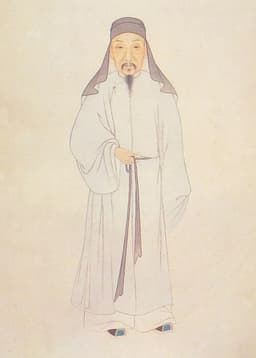
Dou Gu
General · Ancient
47.3Total

Julius Caesar
General · Ancient
82.8Total
Basic Information
Born
19
-100
Died
89
-44
Era
Ancient
Ancient
Nationality
China
Roman Republic
Occupation
General
General
Civilization
Eastern
Western
Score Comparison
Military (10%)
61.7
88.0
Political (20%)
35.0
78.0
Influence (20%)
46.3
85.0
Legacy (20%)
40.0
82.0
Leadership (15%)
57.1
80.0
Strategy (15%)
57.5
85.0
TOTAL
47.3
82.8
Dou Gu — Complete Timeline
73 AD
Battle of YiwuluWar◆ Major
Dou Gu led a Han expeditionary force against the Xiongnu at Yiwulu (modern Hami). He defeated the Xiongnu and established a military garrison, securing the strategic gateway to the Western Regions and reopening the Silk Road.
Han DynastyXiongnuSilk Road
Impact: regional
74 AD
Appointed as Protector General of the Western RegionsPolitical Action◆ Major
Dou Gu was appointed Protector General (Duhu) of the Western Regions, overseeing Han interests in Central Asia. He established diplomatic relations with local kingdoms and maintained Han military presence in the region.
Han DynastyWestern RegionsDiplomacy
Impact: regionalconstructive
89 AD
Campaign Against the Northern XiongnuWar
Dou Gu, as a general under Emperor He, launched a major campaign against the Northern Xiongnu. His forces advanced deep into the steppe, defeating the Xiongnu and forcing their remnants to flee westward, ending the Xiongnu threat to Han China.
Han DynastyXiongnuMilitary Campaign
Impact: regional
Death in BattleWar
Dou Gu died in battle during the campaign against the Northern Xiongnu. His death marked the end of a distinguished military career that had secured Han dominance over the northern frontier.
Han DynastyDeathMilitary
Impact: regionaltragic
Julius Caesar — Complete Timeline
58 BC
Gallic WarsWar◆ Major
Caesar, as proconsul of Gaul, launched a series of campaigns that conquered all of Gaul (modern France, Belgium, and parts of Switzerland). He fought numerous battles, including against the Helvetii, the Belgae, and the Gallic chieftain Vercingetorix. The wars brought immense wealth and a loyal army to Caesar.
Gallic WarsConquestRoman Expansion
Impact: regional
49 BC
Crossing the RubiconPolitical Action◆ Major
Caesar led Legio XIII across the Rubicon River into Italy, defying the Roman Senate's order to disband his army. This act triggered a civil war against Pompey and the Optimates, ultimately leading to Caesar's dictatorship and the end of the Roman Republic.
Roman Civil WarEnd of RepublicPower Struggle
Impact: global
48 BC
Battle of PharsalusWar◆ Major
Caesar's outnumbered army defeated the larger forces of Pompey the Great at Pharsalus in Greece. Caesar's tactical use of a reserve line to counter Pompey's cavalry charge proved decisive. Pompey fled to Egypt, where he was assassinated, leaving Caesar as the undisputed master of the Roman world.
Roman Civil WarBattleDecisive Victory
Impact: regional
44 BC
Appointment as Dictator for LifePolitical Action◆ Major
The Roman Senate appointed Caesar dictator perpetuo (dictator for life), granting him unprecedented personal power. This move concentrated military, legislative, and judicial authority in one person, effectively ending the Roman Republic's traditional system of checks and balances and alarming many senators.
DictatorshipEnd of RepublicPower Consolidation
Impact: regionaldestructive
Assassination on the Ides of MarchPolitical Action◆ Major
A group of Roman senators, led by Marcus Junius Brutus and Gaius Cassius Longinus, stabbed Caesar to death at a meeting of the Senate in the Theatre of Pompey. The assassination was intended to restore the Republic, but instead triggered another civil war that led to the rise of the Roman Empire.
AssassinationRoman PoliticsEnd of Republic
Impact: globaldestructive
Expert Analysis
dou-gu-vs-julius-caesar
# The Rubicon and the Jade Gate
On a winter day in 49 BCE, Julius Caesar stood at the banks of a small river in northern Italy, the Rubicon, and made a decision that would shatter the Roman Republic. He crossed, and the world changed. Half a world away and a century later, another general, Dou Gu, led his Han cavalry through the Jade Gate Pass into the Gobi Desert, chasing the Xiongnu across a landscape so vast that entire armies could vanish without trace. Both men were frontier commanders. Both fought barbarian enemies. Both understood that the fate of an empire rested on their shoulders. Yet one became a name whispered for millennia, the other a footnote in dynastic annals. Why?
Origins
Julius Caesar was born into a patrician family that had seen better days. The year was 100 BCE, and Rome was a republic tearing itself apart—civil wars, street violence, senators hiring gangs. Caesar’s uncle by marriage was Gaius Marius, the populist general who had reformed the army and defied the Senate. From childhood, Caesar breathed the air of ambition and crisis. He was educated in rhetoric, philosophy, and the art of survival. When the dictator Sulla proscribed his family, young Caesar fled Rome, disguised, and learned that politics was a knife fight.
Dou Gu was born in 19 AD, when China’s Han Dynasty was recovering from the usurpation of Wang Mang. The Dou family was a military clan from the northwest frontier, men who had fought the Xiongnu for generations. Dou Gu’s father and uncle had served as generals. He grew up in garrison towns, hearing the war drums of the steppe, learning to ride before he could read. The world he knew was one of walls, watchtowers, and the endless horizon of Central Asia. Unlike Caesar, Dou Gu inherited a stable empire under the Eastern Han, where the emperor was a distant god and the bureaucracy ruled. There was no Senate to manipulate, no civil war to exploit—only the slow, grinding war against the nomads.
Rise to Power
Caesar’s path was a ladder of debts and alliances. He borrowed fortunes to stage games, bought votes, and married into the most powerful families. He served as quaestor in Spain, then aedile, then pontifex maximus. But his true springboard was the governorship of Gaul in 58 BCE. For eight years, he fought—against the Helvetii, the Germans, and the Gallic chieftain Vercingetorix. He wrote his own dispatches, the *Commentaries*, which were masterpieces of propaganda. He made himself a military hero and a political threat.
Dou Gu rose through competence. In 73 AD, Emperor Ming sent him to the Western Regions, the Tarim Basin, where the Xiongnu had been raiding Han trade routes. Dou Gu led a force of 12,000 cavalry and defeated the Xiongnu at Yiwulu—modern Hami, an oasis at the edge of the Taklamakan Desert. It was a hard-fought victory, and for it, he was appointed Protector General of the Western Regions in 74 AD. He now commanded the entire Han frontier from Dunhuang to the Pamirs. But unlike Caesar, Dou Gu was never a master of his own fate. He was a general of the emperor, bound by court politics in Luoyang, where eunuchs and ministers pulled strings.
Leadership & Governance
Caesar governed through personal magnetism and calculated terror. He pardoned enemies, promoted talent regardless of class, and distributed land to his veterans. In Gaul, he executed entire tribes that resisted and enslaved hundreds of thousands. His military genius lay in speed and logistics—he built bridges across the Rhine in ten days, besieged Alesia with double fortifications, and always kept his legions loyal through pay and plunder. Politically, he was a revolutionary who understood that the old Republic was dead. He centralized power, reformed the calendar, and began public works that would define imperial Rome.
Dou Gu was a different kind of commander. His campaigns were cautious, methodical, and reliant on intelligence. The Xiongnu were not a fixed enemy like the Gallic tribes—they were a shadow, striking and retreating into the steppe. Dou Gu’s greatest achievement was not a single battle but the consolidation of Han power in the Tarim Basin. He established garrisons, built roads, and negotiated alliances with local kingdoms. He was a warden, not a conqueror. The Han bureaucracy rewarded stability, not glory. There was no Senate to awe, no civil war to win. Dou Gu’s world was one of reports, supply lines, and the slow erosion of the Xiongnu threat.
Triumph & Tragedy
Caesar’s greatest moment was the siege of Alesia in 52 BCE, where he surrounded Vercingotix’s army and then defeated a massive relief force, all while starving his own men. It was a masterpiece of military engineering and nerve. His tragedy came on the Ides of March, 44 BCE, when senators stabbed him to death in the Theater of Pompey. He had achieved dictatorship for life, but he had failed to understand that the Republic’s elite would rather kill him than accept a king. He fell, and Rome fell into another civil war.
Dou Gu’s triumph was the campaign of 89 AD against the Northern Xiongnu. Under Emperor He, he led a massive army deep into the Mongolian steppe. The Xiongnu were shattered; their chieftain fled west, and the Han frontier was secured for a generation. But Dou Gu died in that same campaign, struck down in battle or by disease—the records are unclear. He did not return to a triumph in Luoyang. He did not write his memoirs. He died in the dust of the Gobi, a soldier’s death, and the court in Luoyang barely noted it.
Character & Destiny
Caesar was driven by an insatiable need to be first. He gambled everything—his life, his fortune, his reputation—on the belief that he was destined to rule. He was charming, ruthless, and endlessly calculating. His character made him both a liberator and a tyrant. He could forgive a rival and then destroy him. He understood that in a crumbling republic, the man who seized the moment would define history. His destiny was to be the bridge between Republic and Empire, and he paid for it with his life.
Dou Gu was a servant of the dynasty. He did not seek power beyond his command. He was loyal, competent, and unremarkable in ambition. The Han system did not reward personal glory—it rewarded service. Dou Gu’s character was shaped by a world where the emperor was the Son of Heaven and generals were tools, not masters. His destiny was to be forgotten, because the historical record of China remembered the dynasties, not the men who fought for them.
Legacy
Caesar’s legacy is immeasurable. His name became a title—Kaiser, Tsar. His reforms outlived him, and his adopted heir, Octavian, became Augustus, the first emperor. The Roman Empire, which he midwifed, shaped Western law, language, and politics for two thousand years. He is remembered as a genius and a warning.
Dou Gu’s legacy is narrower but no less real. The Han control of the Western Regions that he helped secure lasted for decades, keeping the Silk Road open for trade between China and the West. His campaigns weakened the Xiongnu so severely that they never again threatened the Han heartland. But his name is known only to specialists. In the vast annals of Chinese history, he is a paragraph, not a chapter.
Conclusion
Two generals, two empires, two fates. Caesar crossed a river and became immortal. Dou Gu crossed a desert and became dust. The difference was not in their courage or skill—both were formidable commanders. It was in the worlds they inhabited. Rome was a republic in collapse, demanding a savior or a tyrant. China was a dynasty in equilibrium, demanding a servant. Caesar was the storm that broke the old order. Dou Gu was the wall that held the frontier. Both did what their time required. One became a legend. The other fulfilled his duty. History, in its unsparing way, remembers both—but it weighs them differently. The Rubicon and the Jade Gate: two thresholds, two men, and the vast silence between them.
Rankings
🥇
Julius CaesarLeader
Mil: 88.0Pol: 78.0Inf: 85.0
82.8
🥈
Dou Gu
Mil: 61.7Pol: 35.0Inf: 46.3
47.3
+35.5 behind
How This Comparison Works
Algorithm
Each figure is scored on 6 dimensions (0—100 scale) based on structured historical data: Military (10%), Political (20%), Influence (20%), Legacy (20%), Leadership (15%), Strategy (15%). The weighted total produces the final ranking.
Data Sources
Scores are computed from structured sub-indicators in the database. Scale factors adjust for era (Ancient ×0.85, Modern ×1.0) and civilization size (Eastern ×1.05, Other ×0.80) to account for differences in population and military scale.
Maximum 3 Figures
Comparisons are limited to 2—3 figures to ensure readability and statistical meaningfulness.
Error Margins
±5 points per dimension — Sub-scores are derived from historical records with inherent uncertainty. Two figures within 5 points on a dimension should be considered roughly equivalent in that area.
Total Score Accuracy
±3 points overall — The weighted combination of 6 dimensions produces a total score with approximately ±3 points of uncertainty. Differences of less than 3 points are not statistically significant— the figures are effectively tied.
Known Limitations
- Historical records are incomplete and uneven across civilizations
- Figures from oral-tradition societies may be underrepresented
- Occupation labels can misclassify multi-role figures
- Scores measure capability and impact, not moral character
- Quantitative scoring is a comparison tool, not absolute truth
Capability Radar
Military (10%) — Battles & Warfare
Battles
55
95
Win Rate
60
92
Expansion
50
97
Political (20%) — Governance & Reform
Reform
10
90
Diplomacy
40
85
Economy
10
82
Influence (20%) — Cultural & Global Reach
Cultural
20
88
Global
15
94
Legacy (20%) — Historical Impact
Historical
30
95
Longevity
20
96
Leadership (15%) — Power & Stability
Tenure
20
75
Stability
15
60
Strategy (15%) — Tactics & Innovation
Strategy
55
94
Tactics
50
96
Reform
10
88
Similar Comparisons
Comments & Discussion
No comments yet. Be the first to share your thoughts!