Loading...
Dinh Tien Hoang vs Zhao Kuangyin
Zhao Kuangyin leads by 11.1 pts · 2 figures compared
…
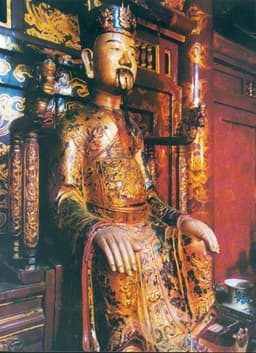
Dinh Tien Hoang
Emperor · Medieval
60.4Total
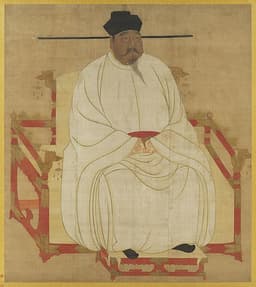
Zhao Kuangyin
Emperor · Medieval
71.5Total
Basic Information
Born
924
927
Died
979
976
Era
Medieval
Medieval
Nationality
Vietnam
China
Occupation
Emperor
Emperor
Civilization
Eastern
Eastern
Score Comparison
Military (10%)
60.0
78.0
Political (20%)
72.0
84.0
Influence (20%)
65.0
68.0
Legacy (20%)
40.0
65.0
Leadership (15%)
77.2
74.0
Strategy (15%)
58.0
68.0
TOTAL
60.4
71.5
Dinh Tien Hoang — Complete Timeline
968 AD
Defeat of the Twelve WarlordsWar
Dinh Bo Linh, later known as Dinh Tien Hoang, unified Vietnam by defeating the Twelve Warlords who had divided the country after the collapse of Chinese rule. He established the Dinh dynasty and became the first emperor of an independent Vietnam.
UnificationDinh DynastyVietnamese Independence
Impact: nationalconstructive
Establishment of the Dinh DynastyPolitical Action◆ Major
Dinh Tien Hoang founded the Dinh dynasty and declared himself Emperor. He moved the capital to Hoa Lu and implemented administrative reforms to consolidate power. This marked the beginning of a new era of Vietnamese independence after centuries of Chinese domination.
Dynasty FoundingCapital MoveAdministrative Reform
Impact: nationalconstructive
979 AD
Assassination of Dinh Tien HoangPolitical Action◆ Major
Dinh Tien Hoang and his crown prince were assassinated by a court official while sleeping. The murder plunged the Dinh dynasty into chaos, leading to a succession crisis and eventual takeover by Le Hoan. The assassination ended the short-lived Dinh dynasty.
AssassinationSuccession CrisisEnd of Dinh Dynasty
Impact: nationaltragic
Zhao Kuangyin — Complete Timeline
960 AD
Founded Song dynastyPolitical Action
Zhao Kuangyin, a general of Later Zhou, was proclaimed emperor by his troops at Chenqiao. He established the Song dynasty, ending the Five Dynasties period and beginning a new era of Chinese history.
Song dynastyFoundingChenqiao
Impact: globalconstructive
961 AD
Removed military power from generalsPolitical Action◆ Major
Zhao Kuangyin invited senior generals to a banquet and persuaded them to retire peacefully. This 'removal of military power over wine' prevented military coups and centralized control.
Song dynastyMilitary reformCentralization
Impact: nationalconstructive
963 AD
Unified southern ChinaWar◆ Major
Zhao Kuangyin launched campaigns to conquer the southern kingdoms, including Jingnan, Later Shu, and Southern Tang. By his death, most of China was reunified under Song rule.
Song unificationConquestSouthern kingdoms
Impact: national
Expert Analysis
Zhao Kuangyin vs Dinh Tien Hoang
### The Iron Cage and the Gilded Throne
On a night in 979, the first emperor of a newly independent Vietnam lay dead, stabbed in his sleep by a palace servant. A few years earlier, a thousand miles to the north, another founding emperor had retired his most dangerous generals over a cup of wine, sending them home to lives of quiet prosperity. One dynasty collapsed in blood before its first decade was done; the other would rule for three centuries. Why did two men, born within three years of each other and facing the same fundamental problem—how to hold a new realm together—meet such different fates?
### Origins
Dinh Tien Hoang, born Dinh Bo Linh in 924, grew up in the chaos of a Vietnam that had just shaken off a thousand years of Chinese rule. The great general Ngo Quyen had defeated the Chinese at the Bach Dang River in 938, but his death left a vacuum. By Dinh’s youth, the land was torn apart by twelve local warlords, each ruling a fortified village or a stretch of river. He was the son of a local governor, raised in a world where power was taken by the sword and kept by fear. His childhood nickname, the “Boy of the Whirlwind,” spoke to a nature both fierce and untamed.
Zhao Kuangyin, born in 927, emerged from the late Tang collapse and the Five Dynasties and Ten Kingdoms period—an era of nearly constant warfare in which a dozen short-lived regimes rose and fell in northern China. He was the son of a military officer, but his family had a tradition of scholarship. He grew up in a world where legitimacy mattered: even the warlords claimed the Mandate of Heaven, and a general who seized the throne still needed to look like a ruler.
### Rise to Power
Dinh’s path was raw and direct. As a young man, he gathered a band of followers and began defeating the warlords one by one. He was not a subtle strategist—his military score of 62.0 reflects a blunt, personal style of combat—but he was relentless. By 968, he had crushed all twelve rivals, unifying Vietnam under his rule. He declared himself Emperor, took the reign name Tien Hoang (“First Emperor”), and built a new capital at Hoa Lu, a fortress of limestone mountains and narrow valleys, designed for defense, not beauty.
Zhao’s rise was more theatrical. In 960, as a general of the Later Zhou dynasty, he was sent north to repel an invasion. At the Chenqiao post station, his troops gathered in the night, draped a yellow robe over his shoulders, and proclaimed him emperor. Whether he orchestrated this or not, he accepted it—and then did something unprecedented. He marched back to the capital, took control with minimal bloodshed, and promised the deposed young emperor’s family safety. He understood that legitimacy was a fragile thing, and that a usurper must act like a restorer, not a thief.
### Leadership & Governance
The difference between the two men is clearest in how they governed after victory. Dinh ruled through fear and iron discipline. He placed large bronze cauldrons and cages of tigers at the palace gates, warning that anyone who betrayed him would be boiled alive or fed to the beasts. He centralized power ruthlessly, appointed his own sons to key posts, and suppressed dissent with executions. His leadership score of 84.2 shows he was effective—for a time. But he created no institutions that outlasted him. The state was his person, and his person was vulnerable.
Zhao, by contrast, governed through persuasion and structure. In 961, at a famous banquet, he invited his most powerful generals to drink with him. As the wine flowed, he sighed that he could never sleep easy, knowing that any of them might one day be draped in a yellow robe by their own troops. The generals, terrified, begged him to tell them what to do. He suggested they retire to their estates, buy fine land, enjoy music and women, and live out their days in peace. They resigned the next morning. This “removal of military power over a cup of wine” was a masterpiece of political genius—no blood, no rebellion, just a quiet shift of authority.
Zhao then built a civilian bureaucracy, promoted scholars over soldiers, and created a central government that could function without him. He conquered the southern kingdoms methodically—Jingnan, Later Shu, Southern Tang—but always offered generous terms to defeated rulers. He was a conqueror who preferred peace.
### Triumph & Tragedy
Dinh’s greatest triumph was unification itself. In 968, he stood as the first man to rule a truly independent Vietnam, a feat that would echo through his nation’s history. But his tragedy was personal and immediate. In 979, he and his crown prince were assassinated while sleeping by a court official named Do Thich—a man who, according to legend, had been inspired by a dream. The murder threw the Dinh dynasty into chaos. Within a year, the infant emperor was dead, and a new family, the Early Le, took power. Vietnam’s first imperial experiment lasted just over a decade.
Zhao’s triumph was the Song dynasty itself. By the time he died in 976, he had unified most of China proper and created a system of civilian rule that would endure for centuries. His tragedy was a more subtle one: the same policies that brought peace also weakened the military. The Song would never fully conquer the northern steppes, and eventually fell to the Mongols. But that was a problem for later generations.
### Character & Destiny
Dinh was a man of his time and place—a warlord who became an emperor but never stopped thinking like a warlord. He trusted force because force had served him. He could not imagine a loyalty that was not enforced by tigers and cauldrons. His personality built a state, but his personality also doomed it, because he never taught anyone else to rule.
Zhao was a man who understood that the strongest cage is the one the prisoner does not see. He disarmed his generals not with iron but with wine and land. He knew that power, once consolidated, must be hidden behind ritual and law. His personality allowed him to build a system that could survive his death.
### Legacy
Dinh Tien Hoang is remembered in Vietnam as a founding father, a national unifier, and a figure of fierce pride. His reign was short, but his symbolic importance is immense: he is the first emperor of an independent Vietnam. Statues and temples honor him, and schoolchildren learn his name.
Zhao Kuangyin is remembered as one of China’s greatest emperors, the founder of the Song dynasty, and a model of humane governance. His “removal of military power” became a legend of political wisdom. Yet his legacy is also mixed: the Song’s military weakness has been blamed on his civilian-first policies.
### Conclusion
Two founders, born three years apart, faced the same challenge: how to make a new dynasty last. The warlord built a cage of iron and died in it. The general built a cage of silk and saw his dynasty flourish for three hundred years. The difference was not in strength, but in imagination—the ability to see that a throne held by fear alone is a throne made of sand. History remembers both men, but it learns from only one.
Rankings
🥇
Zhao KuangyinLeader
Mil: 78.0Pol: 84.0Inf: 68.0
71.5
🥈
Dinh Tien Hoang
Mil: 60.0Pol: 72.0Inf: 65.0
60.4
+11.1 behind
How This Comparison Works
Algorithm
Each figure is scored on 6 dimensions (0—100 scale) based on structured historical data: Military (10%), Political (20%), Influence (20%), Legacy (20%), Leadership (15%), Strategy (15%). The weighted total produces the final ranking.
Data Sources
Scores are computed from structured sub-indicators in the database. Scale factors adjust for era (Ancient ×0.85, Modern ×1.0) and civilization size (Eastern ×1.05, Other ×0.80) to account for differences in population and military scale.
Maximum 3 Figures
Comparisons are limited to 2—3 figures to ensure readability and statistical meaningfulness.
Error Margins
±5 points per dimension — Sub-scores are derived from historical records with inherent uncertainty. Two figures within 5 points on a dimension should be considered roughly equivalent in that area.
Total Score Accuracy
±3 points overall — The weighted combination of 6 dimensions produces a total score with approximately ±3 points of uncertainty. Differences of less than 3 points are not statistically significant— the figures are effectively tied.
Known Limitations
- Historical records are incomplete and uneven across civilizations
- Figures from oral-tradition societies may be underrepresented
- Occupation labels can misclassify multi-role figures
- Scores measure capability and impact, not moral character
- Quantitative scoring is a comparison tool, not absolute truth
Capability Radar
Military (10%) — Battles & Warfare
Battles
70
75
Win Rate
75
85
Expansion
65
75
Political (20%) — Governance & Reform
Reform
70
90
Diplomacy
65
85
Economy
60
80
Influence (20%) — Cultural & Global Reach
Cultural
65
70
Global
55
60
Legacy (20%) — Historical Impact
Historical
75
80
Longevity
70
75
Leadership (15%) — Power & Stability
Tenure
60
65
Stability
55
85
Strategy (15%) — Tactics & Innovation
Strategy
70
80
Tactics
65
70
Reform
60
90
Similar Comparisons
Comments & Discussion
CageBreaker6/16/2026
The difference isn’t just politics—it’s the institutional skeleton. Zhao didn’t just disarm generals; he built a civil bureaucracy that could run China without them. Dinh had no such structure—he ruled through personal charisma and terror, demanding oaths of allegiance carved into stone pillars. When you compare Zhao’s Song Examination System to Dinh’s Hoa Lu fortress, you see why one dynasty lasted and the other didn’t survive its founder’s nightmare.
铁血书生6/16/2026
说穿了就是“制度”两个字。赵匡胤杯酒释兵权,不是因为他比丁先皇仁慈,而是五代十国混战了五十多年,武夫乱政的教训太深刻了。他改科举、收财权、用文人治军,等于给帝国上了双保险。丁先皇呢?靠杀降、靠盟誓、靠十二道君王的威压,没有一套可以接力运行的体系。人一死,身边连个敢叫醒他的忠臣都没有——这就是用恐惧治国的代价。
ZeroZeroSeven6/16/2026
Let’s not romanticize the “peaceful” transition. Zhao’s soft coup only worked because he had already purged the military of independent power bases over years. The famous drinking party was a formality, not a strategy. And Dinh? Yeah, he was brutal—but he unified Vietnam in three years and forced the Song to recognize his legitimacy. The same year Zhao was sipping wine with his generals, Dinh was holding firm against Chinese invasions. Both were dictators; one just had better PR.
史海钩沉6/16/2026
有趣的是,这两个人都面临“开国即继承危机”,但答案截然不同。赵匡胤继承了后周的官僚骨架,哪怕折损军功集团,政令还能发到全国。丁先皇继承的却是十二使君留下的碎片化权力网络,每个寨子都是一个小王国。他只能靠血腥清洗和联姻来维系,这不是残暴,是资源匮乏下的必然。979年他被弑时,越南才刚刚尝到统一的味道——连第二代人还没培养出来呢。
StatWatch6/16/2026
The raw numbers tell a story Zhao fans ignore. Dinh ruled for 12 years; Zhao, 16. Neither lived to sixty. Both empires faced succession crises—the Song had to crush a rebellion by Zhao’s own brother, while Dinh’s son was a child when his father died. The difference? Luck and geography. Northern China had the population base to absorb a dynastic wobble; Vietnam didn’t. Zhao’s “three centuries” were bought with millions of deaths from Song military campaigns. Let’s call it what it is: not wisdom,