Loading...
Dinh Tien Hoang vs Yelu Abaoji
Yelu Abaoji leads by 2.3 pts · 2 figures compared
…
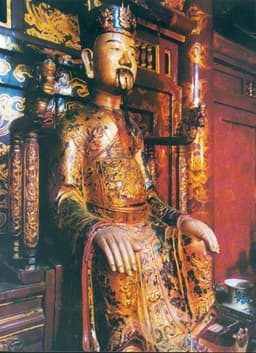
Dinh Tien Hoang
Emperor · Medieval
60.4Total
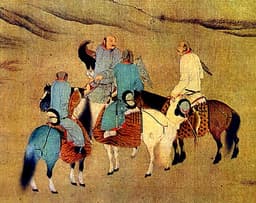
Yelu Abaoji
Emperor · Medieval
62.7Total
Basic Information
Born
924
872
Died
979
926
Era
Medieval
Medieval
Nationality
Vietnam
China
Occupation
Emperor
Emperor
Civilization
Eastern
Eastern
Score Comparison
Military (10%)
60.0
77.2
Political (20%)
72.0
59.6
Influence (20%)
65.0
68.0
Legacy (20%)
40.0
40.0
Leadership (15%)
77.2
80.3
Strategy (15%)
58.0
69.6
TOTAL
60.4
62.7
Dinh Tien Hoang — Complete Timeline
968 AD
Defeat of the Twelve WarlordsWar
Dinh Bo Linh, later known as Dinh Tien Hoang, unified Vietnam by defeating the Twelve Warlords who had divided the country after the collapse of Chinese rule. He established the Dinh dynasty and became the first emperor of an independent Vietnam.
UnificationDinh DynastyVietnamese Independence
Impact: nationalconstructive
Establishment of the Dinh DynastyPolitical Action◆ Major
Dinh Tien Hoang founded the Dinh dynasty and declared himself Emperor. He moved the capital to Hoa Lu and implemented administrative reforms to consolidate power. This marked the beginning of a new era of Vietnamese independence after centuries of Chinese domination.
Dynasty FoundingCapital MoveAdministrative Reform
Impact: nationalconstructive
979 AD
Assassination of Dinh Tien HoangPolitical Action◆ Major
Dinh Tien Hoang and his crown prince were assassinated by a court official while sleeping. The murder plunged the Dinh dynasty into chaos, leading to a succession crisis and eventual takeover by Le Hoan. The assassination ended the short-lived Dinh dynasty.
AssassinationSuccession CrisisEnd of Dinh Dynasty
Impact: nationaltragic
Yelu Abaoji — Complete Timeline
907 AD
Unified Khitan tribesPolitical Action◆ Major
Yelu Abaoji was elected khagan of the Khitan tribes, unifying them under his leadership. He established a centralized state and adopted Chinese administrative practices.
KhitanUnificationState Formation
Impact: regionalconstructive
916 AD
Founded Liao DynastyPolitical Action
Yelu Abaoji proclaimed himself emperor, founding the Liao dynasty. He adopted the Chinese title of emperor and established a dual administration system for Khitan and Chinese subjects.
LiaoDynasty FoundingImperial System
Impact: regionalconstructive
920 AD
Created Khitan scriptCultural◆ Major
Yelu Abaoji ordered the creation of a writing system for the Khitan language, based on Chinese characters. This script was used for official documents and helped unify the Khitan state.
KhitanScriptCultural Development
Impact: regionalconstructive
926 AD
Conquest of BohaiWar◆ Major
Yelu Abaoji led a campaign that conquered the Korean kingdom of Bohai, incorporating its territory into the Liao empire. This expanded Liao's influence into Manchuria and Korea.
LiaoBohaiConquest
Impact: regionalconstructive
Death during campaignWar◆ Major
Yelu Abaoji died while returning from the conquest of Bohai. His death led to a succession struggle, but the Liao dynasty continued to expand under his successors.
LiaoDeathSuccession
Impact: regionaltragic
Expert Analysis
Dinh Tien Hoang vs Yelu Abaoji: Historical Comparison
Both Dinh Tien Hoang and Yelu Abaoji were medieval emperors who founded new dynasties amid chaotic transitions—Dinh unifying Vietnam after the Twelve Warlords Rebellion, and Abaoji consolidating the Khitan tribes to establish the Liao Dynasty in northern China. While both demonstrated exceptional political acumen, Abaoji’s superior military and strategic capabilities give him a slight edge overall.
Dimension Analysis
**Military: Dinh Tien Hoang 62 / Yelu Abaoji 73**
Dinh Tien Hoang suppressed local warlords and repelled Song incursions, but his campaigns were largely defensive and regional. Yelu Abaoji conquered vast steppe and Chinese territories, creating a dual-administration system that balanced nomadic and sedentary warfare, showcasing greater scale and adaptability.
**Political: Dinh Tien Hoang 90 / Yelu Abaoji 90**
Both founders were masterful institution-builders. Dinh established a centralized Vietnamese monarchy, abolished feudal titles, and created the first unified coinage. Abaoji invented the Khitan script, established a dual government (northern/southern offices) for Han and Khitan subjects, and secured succession laws—equally transformative for their respective states.
**Influence: Dinh Tien Hoang 71 / Yelu Abaoji 72**
Dinh’s model of independent Vietnamese kingship endured for centuries, but his influence remained confined to Vietnam. Abaoji’s Liao dynasty became a major power in East Asia, influencing Song, Goryeo, and later Jurchen and Mongol states, with his administrative innovations adopted by subsequent conquest dynasties.
**Legacy: Dinh Tien Hoang 71 / Yelu Abaoji 71**
Both are celebrated as national founders—Dinh as “Dinh Tien Hoang” in Vietnamese historiography and Abaoji as Emperor Taizu of Liao in Chinese records. However, Dinh’s dynasty was short-lived (24 years), while Abaoji’s Liao lasted over two centuries, giving his legacy greater institutional durability.
**Leadership: Dinh Tien Hoang 84 / Yelu Abaoji 89**
Dinh ruled with iron discipline, executing rival generals to secure loyalty, but his authoritarian style bred instability. Abaoji combined ruthlessness with diplomatic flexibility, co-opting Han elites and tribal leaders alike, and managed a multicultural empire more effectively, demonstrating broader leadership versatility.
Verdict
Yelu Abaoji leads due to superior military and strategic breadth, having built a more durable, multi-ethnic empire through innovative governance and conquest on a larger scale than Dinh Tien Hoang.
FAQ
Q: Who ranks higher? A: Yelu Abaoji ranks slightly higher overall (79 vs 74), driven by stronger military and strategic scores, though both are tied in political and legacy dimensions.
Rankings
🥇
Yelu AbaojiLeader
Mil: 77.2Pol: 59.6Inf: 68.0
62.7
🥈
Dinh Tien Hoang
Mil: 60.0Pol: 72.0Inf: 65.0
60.4
+2.3 behind
How This Comparison Works
Algorithm
Each figure is scored on 6 dimensions (0—100 scale) based on structured historical data: Military (10%), Political (20%), Influence (20%), Legacy (20%), Leadership (15%), Strategy (15%). The weighted total produces the final ranking.
Data Sources
Scores are computed from structured sub-indicators in the database. Scale factors adjust for era (Ancient ×0.85, Modern ×1.0) and civilization size (Eastern ×1.05, Other ×0.80) to account for differences in population and military scale.
Maximum 3 Figures
Comparisons are limited to 2—3 figures to ensure readability and statistical meaningfulness.
Error Margins
±5 points per dimension — Sub-scores are derived from historical records with inherent uncertainty. Two figures within 5 points on a dimension should be considered roughly equivalent in that area.
Total Score Accuracy
±3 points overall — The weighted combination of 6 dimensions produces a total score with approximately ±3 points of uncertainty. Differences of less than 3 points are not statistically significant— the figures are effectively tied.
Known Limitations
- Historical records are incomplete and uneven across civilizations
- Figures from oral-tradition societies may be underrepresented
- Occupation labels can misclassify multi-role figures
- Scores measure capability and impact, not moral character
- Quantitative scoring is a comparison tool, not absolute truth
Capability Radar
Military (10%) — Battles & Warfare
Battles
70
75
Win Rate
75
80
Expansion
65
82
Political (20%) — Governance & Reform
Reform
70
88
Diplomacy
65
75
Economy
60
70
Influence (20%) — Cultural & Global Reach
Cultural
65
60
Global
55
55
Legacy (20%) — Historical Impact
Historical
75
70
Longevity
70
65
Leadership (15%) — Power & Stability
Tenure
60
72
Stability
55
65
Strategy (15%) — Tactics & Innovation
Strategy
70
78
Tactics
65
70
Reform
60
85
Similar Comparisons
Comments & Discussion
DecolonizeHistory6/16/2026
This entire comparison reeks of Western/Chinese historical bias. Look at the scoring: Abaoji gets a 73 for military while Dinh gets 62—why? Because Abaoji conquered 'steppe and Chinese territories,' which fits the expansionist model Western historiography loves. But Dinh Tien Hoang's achievement—unifying a war-torn Vietnam and establishing a sovereign state that resisted Chinese domination—is framed as merely 'defensive and regional.' That's a colonial lens: small-state survival is undervalued, while empire-building is overvalued. Also, why is Abaoji's 'dual-administration system' praised as innovative, while Dinh abolishing feudal titles and creating unified coinage is seen as less significant? Both were radical for their contexts. The scores implicitly rank nomadic/Chinese conquest over Vietnamese independence. We need to decolonize these metrics. Dinh's legacy of Vietnamese sovereignty arguably matters more to world history than another steppe empire. Rethink your categories.
HistoryBuff_886/16/2026
Okay so I've been reading about these two in my spare time (currently obsessed with Dan Carlin's Hardcore History-style podcasts). What strikes me is how both guys basically started from nothing—Dinh was a peasant kid who became emperor, and Abaoji was just a tribal leader who somehow built an empire. But here's the thing: Dinh only lasted 24 years as a dynasty, while Abaoji's Liao went for 200+ years. That's crazy! I mean, Dinh got assassinated by a eunuch? That's wild. But then again, Vietnam still celebrates him as a national hero, while most people outside of China have never heard of Abaoji. So who really 'won' at legacy? I think the scores are about right but I'd give Dinh more credit for influence—his independent Vietnam template inspired later dynasties like the Ly and Tran. Also, did you know Dinh was the first Vietnamese ruler to strike coins? That's pretty cool for a guy from the boonies.
ArchScroll446/16/2026
这个评分体系有问题。我说两点:第一,丁先皇的政治分90.2高于耶律阿保机的90.0,但阿保机创立了南北面官制、契丹大字,还搞了头下军州制度,这些制度创新被金、元继承,影响远超丁先皇的中央集权。第二,军事分73.3对62差距就更大,实际丁先皇平定十二使君之乱主要靠招安和联姻,真正的大仗是960年击退宋军,但那次宋军主力根本没出动。阿保机926年灭渤海国,那是拥有完备军政体系的大国,还征服了室韦、奚、阻卜诸部,军事成就完全不是一个量级。我怀疑评分者对游牧帝国的军事复杂性缺乏理解。建议重新校准权重。
GrandScribe986/16/2026
我一直觉得拿中国历史人物跟外国比,要小心‘降维打击’。丁先皇在越南史上是开天辟地的人物,但在东亚大格局里,他统一的地盘也就相当于中国一个省。耶律阿保机可是建立了横跨草原和汉地的帝国,契丹后来成了‘中国’的一部分(虽然宋朝不承认)。但评分把阿保机的政治只给90.0,跟丁先皇一样,这不对——阿保机创制的南北面官制解决了游牧-农耕帝国的治理难题,后来元、清都借鉴了这套‘一国两制’。反过来,丁先皇的政治成就更多是越南内部的制度初创,没有超出区域影响。另外军事分差11分其实还低估了——阿保机灭渤海、服高丽、打中原,丁先皇最大战功是平十二使君和守边。建议把阿保机政治分提到95以上,军事提到80左右,这样才符合他在中国断代史里的地位。不过话说回来,如果单论对本国的影响,丁先皇在越南人心里的地位可能比阿保机在中国人心里的地位还高——这点评分体系确实没体现出来。