Loading...
Deng Xiaoping vs Peter the Great
Peter the Great leads by 7.2 pts · 2 figures compared
…
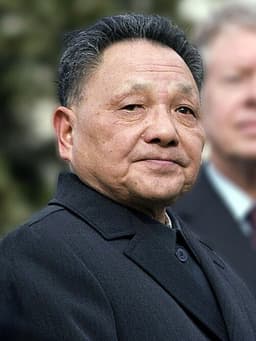
Deng Xiaoping
Politician · Modern
66.0Total
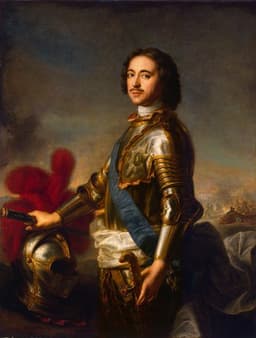
Peter the Great
Emperor · Modern
73.2Total
Basic Information
Born
1904
1672
Died
1997
1725
Era
Modern
Modern
Nationality
China
Russia
Occupation
Politician
Emperor
Civilization
Eastern
Western
Score Comparison
Military (10%)
30.0
75.0
Political (20%)
90.0
90.0
Influence (20%)
68.0
68.0
Legacy (20%)
65.0
65.0
Leadership (15%)
78.0
78.0
Strategy (15%)
45.0
72.0
TOTAL
66.0
73.2
Deng Xiaoping — Complete Timeline
1978 AD
Third Plenum of the 11th Central CommitteePolitical Action
Deng Xiaoping consolidated power and announced the policy of Reform and Opening-Up. This meeting marked the end of Maoist class struggle as the national priority and shifted focus to economic modernization, initiating market-oriented reforms.
Economic ReformOpening-UpChina Modernization
Impact: globalconstructive
1980 AD
Establishment of Special Economic ZonesReform◆ Major
Deng Xiaoping approved the creation of Special Economic Zones in Shenzhen, Zhuhai, Shantou, and Xiamen. These zones offered tax incentives and market freedoms to attract foreign investment and technology, serving as experimental laboratories for capitalist practices within a socialist framework.
Economic ZonesForeign InvestmentMarket Reforms
Impact: nationalconstructive
1984 AD
Sino-British Joint Declaration on Hong KongPolitical Action◆ Major
Deng Xiaoping negotiated with British Prime Minister Margaret Thatcher to agree on the return of Hong Kong to Chinese sovereignty in 1997. The declaration established the 'One Country, Two Systems' principle, allowing Hong Kong to maintain its capitalist system for 50 years.
Hong KongDiplomacyOne Country Two Systems
Impact: globalconstructive
1989 AD
Tiananmen Square Protests CrackdownPolitical Action
Deng Xiaoping authorized the military to suppress pro-democracy protests in Tiananmen Square. The crackdown resulted in hundreds of civilian deaths and injuries, leading to international condemnation and a tightening of political control while economic reforms continued.
TiananmenSuppressionHuman Rights
Impact: globaldestructive
1992 AD
Southern Tour (Nanxun)Political Action◆ Major
Deng Xiaoping traveled to southern China to reaffirm the course of economic reform after conservative backlash. His speeches in Shenzhen and other cities revitalized market-oriented policies, accelerating foreign investment and pushing China toward a socialist market economy.
Economic ReformNanxunMarket Economy
Impact: nationalconstructive
Peter the Great — Complete Timeline
1697 AD
Grand EmbassyPolitical Action◆ Major
Peter the Great traveled incognito to Western Europe as part of a diplomatic mission. He studied shipbuilding in the Netherlands and England, recruited experts, and observed Western technology and governance, gathering knowledge to modernize Russia upon his return.
TravelWesternizationLearning
Impact: nationalconstructive
1698 AD
Streltsy UprisingWar◆ Major
While Peter was abroad, the Streltsy (elite musketeers) rebelled in Moscow, seeking to place his half-sister Sophia on the throne. Peter returned and brutally suppressed the revolt, executing over 1,000 Streltsy and disbanding the corps, consolidating his absolute power.
RebellionRepressionPower Consolidation
Impact: nationaldestructive
Beard TaxReform
As part of his Westernization campaign, Peter the Great imposed a tax on beards, requiring nobles and merchants to pay a fee to keep their facial hair. Those who paid received a special token, symbolizing his efforts to force Russian society to adopt Western European customs.
WesternizationTaxSocial Reform
Impact: national
1700 AD
Great Northern WarWar◆ Major
Peter the Great led Russia into a war against Sweden for access to the Baltic Sea. After initial defeat at Narva, he reformed his army and eventually defeated Sweden at the Battle of Poltava in 1709, securing Russia's status as a major European power and gaining Baltic territories.
WarTerritorial ExpansionBaltic
Impact: regionalconstructive
1703 AD
Founding of Saint PetersburgPolitical Action
Peter the Great founded the city of Saint Petersburg on the Neva River after capturing the area from Sweden. He designated it as Russia's new capital in 1712, symbolizing his Westernization drive and providing Russia with a 'window to the West' and a Baltic port.
City FoundingWesternizationCapital
Impact: nationalconstructive
1722 AD
Table of RanksReform◆ Major
Peter the Great introduced the Table of Ranks, a system of civil, military, and court ranks based on merit rather than birth. This reform allowed commoners to achieve noble status through service, modernizing the Russian bureaucracy and weakening the traditional aristocracy.
BureaucracyMeritocracySocial Reform
Impact: nationalprogressive
Expert Analysis
Peter the Great vs Deng Xiaoping
# The Modernizers: Peter the Great and Deng Xiaoping
In the winter of 1697, a giant young man of twenty-five slipped incognito into the shipyards of the Dutch Republic, calling himself Peter Mikhailov. He carried an axe, wore a carpenter's apron, and asked blunt questions about hull design and rigging. Nearly three centuries later, in the spring of 1992, an eighty-seven-year-old man in a simple jacket stepped off a train in Shenzhen, a fishing village that had become a boomtown. He did not carry tools, but he carried a vision. Both men were about to reshape their nations — one through the force of a tsar's will, the other through the quiet power of a party elder's word. What drove them, and why did their paths diverge so dramatically?
Origins
Peter Alekseyevich Romanov was born in 1672 into a Russia still medieval in spirit — a land of boyars, beards, and backwardness. His father, Tsar Alexis, died when Peter was four, and the boy grew up amid the chaos of court intrigues, witnessing the violent Streltsy Uprising that placed his half-sister Sophia in power. The Kremlin was a cage of conspiracy. Peter escaped to the German Quarter of Moscow, where foreigners taught him about compasses, cannons, and the wider world. He learned to sail on a small boat he found in a shed — a discovery he later called the seed of the Russian navy.
Deng Xiaoping was born in 1904 in Guang'an, Sichuan, into a China crumbling under dynastic decay and foreign humiliation. His father, a minor landowner, sent him to study in France at age sixteen. There, Deng worked in factories, learned to weld, and joined the Communist movement. He returned to China in the 1920s, served in Mao's Long March, and survived the purges of the Cultural Revolution — twice exiled, twice rehabilitated. Where Peter's early life was shaped by the raw violence of succession struggles, Deng's was forged in the ideological furnace of revolution.
Rise to Power
Peter seized power in 1689 at age seventeen, after the Streltsy again threatened his life. He forced his half-sister Sophia into a convent and began to rule — but not yet as the Great. His true ascent came through the Grand Embassy of 1697, when he traveled to Europe not as a tsar but as a student. He studied shipbuilding in the Netherlands, visited English dockyards, and recruited hundreds of engineers and officers. When news arrived that the Streltsy had rebelled again in 1698, Peter rushed home, crushed the uprising with savage executions, and used the crisis to accelerate his reforms.
Deng's rise was slower, more circuitous. He was purged in 1966 during the Cultural Revolution, sent to work in a tractor factory. He returned in 1973 as vice premier, only to be purged again in 1976. After Mao's death, Deng outmaneuvered the Gang of Four and by 1978 consolidated control at the Third Plenum of the 11th Central Committee. There, he announced the end of class struggle as the national priority and declared that "practice is the sole criterion for truth." Unlike Peter, who seized power through blood and birthright, Deng rose through survival, patience, and bureaucratic cunning.
Leadership & Governance
Peter ruled as an autocrat who believed he could drag Russia into modernity by the hair. He imposed a beard tax in 1698, forcing nobles to shave or pay; he reformed the alphabet, introduced Western dress, and built St. Petersburg on a swamp — "a window on Europe," he called it. He created the Table of Ranks in 1722, replacing hereditary nobility with a merit-based system. His military reforms were equally drastic: after the disastrous defeat at Narva in 1700 against Sweden's Charles XII, Peter rebuilt his army from scratch, eventually winning the Great Northern War and securing Russia's Baltic coast. He was hands-on, brutal, and tireless — he once executed his own son for treason.
Deng's governance was the opposite in style but similar in ambition. He did not shave beards or build palaces; he built Special Economic Zones — Shenzhen, Zhuhai, Shantou, Xiamen — where capitalism was allowed to breathe. He told his people, "It doesn't matter whether a cat is black or white, as long as it catches mice." He decentralized agriculture, opened China to foreign investment, and quietly dismantled the communes. Where Peter used an axe, Deng used a scalpel. His 1992 Southern Tour revived reform after the conservative backlash following the 1989 Tiananmen Square crackdown — a tragedy that Deng authorized, and that remains the darkest shadow on his record.
Triumph & Tragedy
Peter's greatest triumph was the founding of Saint Petersburg in 1703, a city built on conquered Swedish marshland, which became Russia's capital and a symbol of European ambition. His greatest tragedy was the brutal cost: tens of thousands of serfs died building the city, and his wars drained the nation. He died in 1725, leaving a modernized but exhausted Russia.
Deng's triumph was lifting hundreds of millions out of poverty — the most dramatic economic transformation in human history. His tragedy was the Tiananmen crackdown, which crushed democratic hopes and left a wound that still bleeds. He died in 1997, having seen Hong Kong return to China, but never fully reconciling the tension between economic freedom and political control.
Character & Destiny
Peter was a man of furious energy — six-foot-eight, prone to rages, capable of working sixteen hours a day. He believed that progress required pain. "I am a pupil seeking teachers," he once said, "and I am ready to learn." His personality drove Russia forward but also left it scarred.
Deng was pragmatic, short in stature, and long in patience. He smoked constantly, played bridge, and avoided ideology. "Seek truth from facts," he liked to say. His character allowed China to grow rich without becoming free — a paradox he accepted.
Legacy
Peter the Great is remembered as the man who made Russia a European power. His legacy is St. Petersburg, the navy, and the idea that Russia could be reformed from above. Deng Xiaoping is remembered as the architect of modern China. His legacy is the skyscrapers of Shenzhen, the factories of the Pearl River Delta, and the quiet revolution that changed the world.
Conclusion
Both men faced a fundamental question: how does a backward nation catch up? Peter answered with force, blood, and the will of a single ruler. Deng answered with patience, markets, and the cunning of a survivor. One built a city on a swamp; the other built an economy on a slogan. Their methods could not be more different, yet their goal was the same — to drag their ancient civilizations into the modern world, whether they wanted to go or not. In the end, both succeeded, and both left scars. That is the price of transformation, paid in full by two of history's most determined modernizers.
Rankings
🥇
Peter the GreatLeader
Mil: 75.0Pol: 90.0Inf: 68.0
73.2
🥈
Deng Xiaoping
Mil: 30.0Pol: 90.0Inf: 68.0
66.0
+7.2 behind
How This Comparison Works
Algorithm
Each figure is scored on 6 dimensions (0—100 scale) based on structured historical data: Military (10%), Political (20%), Influence (20%), Legacy (20%), Leadership (15%), Strategy (15%). The weighted total produces the final ranking.
Data Sources
Scores are computed from structured sub-indicators in the database. Scale factors adjust for era (Ancient ×0.85, Modern ×1.0) and civilization size (Eastern ×1.05, Other ×0.80) to account for differences in population and military scale.
Maximum 3 Figures
Comparisons are limited to 2—3 figures to ensure readability and statistical meaningfulness.
Error Margins
±5 points per dimension — Sub-scores are derived from historical records with inherent uncertainty. Two figures within 5 points on a dimension should be considered roughly equivalent in that area.
Total Score Accuracy
±3 points overall — The weighted combination of 6 dimensions produces a total score with approximately ±3 points of uncertainty. Differences of less than 3 points are not statistically significant— the figures are effectively tied.
Known Limitations
- Historical records are incomplete and uneven across civilizations
- Figures from oral-tradition societies may be underrepresented
- Occupation labels can misclassify multi-role figures
- Scores measure capability and impact, not moral character
- Quantitative scoring is a comparison tool, not absolute truth
Capability Radar
Military (10%) — Battles & Warfare
Battles
36
85
Win Rate
37
80
Expansion
41
90
Political (20%) — Governance & Reform
Reform
95
95
Diplomacy
80
80
Economy
95
85
Influence (20%) — Cultural & Global Reach
Cultural
70
85
Global
90
85
Legacy (20%) — Historical Impact
Historical
90
90
Longevity
85
85
Leadership (15%) — Power & Stability
Tenure
85
90
Stability
75
70
Strategy (15%) — Tactics & Innovation
Strategy
47
85
Tactics
48
75
Reform
49
95
Similar Comparisons
Comments & Discussion
数据怀疑论者6/16/2026
说彼得大帝和邓小平“相似”,这种历史类比太偷懒了。俄国在1700年有1100万人,中国在1978年有9.6亿人。彼得要建的是20艘战舰,邓小平要改革的是整个计划经济体系。量级差了几个数量级,拿农业社会的君主权力和核时代的技术官僚能力做比较,根本是在比苹果和鳕鱼。
历史爱好者6/16/2026
我最佩服他们的一点:彼得大帝是亲自上战场砍人的君主,1723年抗沙俄的波斯战争他还带队冲锋;邓小平则是在南海边画了个圈,让深圳从3万人变成千万级城市。一个是拿命换领土,一个是拿政策换繁荣——都是赌博,只是赌注不同。但结果一样:俄罗斯成了欧洲强国,中国成了世界工厂。
Historian2666/16/2026
Peter swung an axe in Dutch shipyards; Deng read reports in Shenzhen. One built a navy from scratch, the other rebuilt an economy from ruin. Military modernization differs fundamentally from economic reform—Peter needed cannons to break Sweden's grip on the Baltic, while Deng needed factories to feed a billion mouths. Different tools for different wars, but both understood that survival means reinvention.
Chronicler37706/16/2026
The "Great Man" narrative here whitewashes costs. Peter conscripted 200,000 serfs to build St. Petersburg, tens of thousands died in swamps. Deng's reforms lifted 800 million from poverty but gutted state-owned industries, leaving millions without pensions or purpose. Both men's legacies are real, but we must count the bodies, not just the bronze statues. Modernization is never clean.
Chronicler69356/16/2026
Peter sought to drag Russia into Europe; Deng aimed to reclaim China's place within it. The Tsar adopted Western shipbuilding and uniforms, yet Russia remained an autocracy. Deng borrowed Western markets and technology, but China stayed communist. Both were selective borrowers—they took what served state power, not Western values. That's the true irony of "modernization" from above.