Loading...
Dawit III vs Napoleon Bonaparte
Napoleon Bonaparte leads by 23.0 pts · 2 figures compared
…
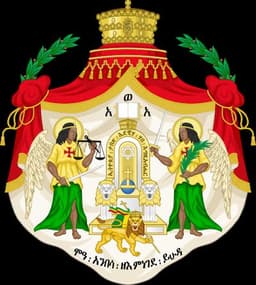
Dawit III
Emperor · Modern
47.9Total

Napoleon Bonaparte
General · Modern
70.9Total
Basic Information
Born
1695
1769
Died
1721
1821
Era
Modern
Modern
Nationality
Ethiopia
France
Occupation
Emperor
General
Civilization
Other
Western
Score Comparison
Military (10%)
20.0
94.0
Political (20%)
46.6
72.0
Influence (20%)
57.2
40.0
Legacy (20%)
45.0
80.0
Leadership (15%)
53.2
78.0
Strategy (15%)
54.3
90.0
TOTAL
47.9
70.9
Dawit III — Complete Timeline
1716 AD
Cultural Patronage of Dawit IIICultural
Dawit III became a notable patron of Ethiopian literature and art during his reign. He commissioned the copying and illumination of numerous religious manuscripts and supported the construction of churches in Gondar, fostering a cultural renaissance.
PatronageManuscriptsArt
Impact: nationalconstructive
Napoleon Bonaparte — Complete Timeline
1799 AD
Coup of 18 BrumaireOther◆ Major
Napoleon Bonaparte, with support from his brother Lucien and key political figures, overthrew the Directory in a bloodless coup. He established the Consulate with himself as First Consul, effectively becoming the ruler of France. This event ended the French Revolution's most unstable period.
French RevolutionCoupRise to Power
Impact: regional
1804 AD
Promulgation of the Napoleonic CodeOther◆ Major
Napoleon enacted the Civil Code of the French, known as the Napoleonic Code, a comprehensive set of laws that replaced the fragmented feudal legal systems. The code established legal equality, protected property rights, and secularized law. It became the basis for legal systems in many European and world countries.
Legal ReformNapoleonic CodeCivil Law
Impact: globalconstructive
1805 AD
Battle of AusterlitzWar◆ Major
Napoleon's Grande Arm
Napoleonic WarsBattleDecisive Victory
Impact: global
1812 AD
Invasion of RussiaWar◆ Major
Napoleon led the Grande Arm
Napoleonic WarsInvasionDisaster
Impact: globaldestructive
1815 AD
Battle of WaterlooWar◆ Major
Napoleon's French army was defeated by the combined forces of the Duke of Wellington's Anglo-Allied army and Gebhard Leberecht von Bl
Napoleonic WarsBattleFinal Defeat
Impact: globaldestructive
Expert Analysis
dawit-iii-vs-napoleon-bonaparte
# The Emperor and the Enlightened: Two Paths to Power in an Age of Transformation
In the winter of 1716, as snow fell upon the highlands of Gondar, Emperor Dawit III of Ethiopia sat in his palace, surrounded by scribes and illuminators. He was commissioning a new copy of the *Kebra Nagast*, the epic tale of the Queen of Sheba and the Ark of the Covenant—a work that would require months of painstaking labor, gold leaf, and the finest vellum. Half a world away, a young artillery officer named Napoleon Bonaparte was graduating from the École Militaire in Paris, his mind already fixed on the conquest of Italy. Both men were rulers, both were products of their age, yet the chasm between them was not merely one of geography, but of destiny itself.
Origins
Napoleon was born in 1769 on the island of Corsica, a land that had only recently become French. His family was minor nobility, poor but proud, and his father’s death when Napoleon was fifteen thrust him into a world of ambition and resentment. He was bullied at military school for his accent and his Corsican heritage, and he devoured books on military history, philosophy, and the lives of great conquerors. The French Revolution, which erupted when he was twenty, was his great opportunity: it shattered the old order, opened promotions to talent, and created a vacuum that a man of genius could fill.
Dawit III was born in 1695 into the Solomonic dynasty of Ethiopia, a lineage that claimed descent from King Solomon and the Queen of Sheba. His world was one of ancient rituals, Orthodox Christian faith, and a feudal system that had remained largely unchanged for centuries. He was not a soldier by training; he was a prince of the blood, raised in the court of Gondar, where power was measured not by cannonades but by the patronage of monasteries and the copying of sacred texts. His era was one of relative stability, but also of isolation—Ethiopia had been cut off from Europe for generations, its borders guarded by mountains and its identity preserved by a church that had survived Islamic conquest and Portuguese interference alike.
Rise to Power
Napoleon’s rise was meteoric. In 1793, at the age of twenty-four, he drove the British out of Toulon and was promoted to brigadier general. By 1796, he was commanding the Army of Italy, where his lightning campaigns against the Austrians made him a national hero. He was not merely a general; he was a political entrepreneur. In 1799, he staged a coup d’état and became First Consul of France, and by 1804, he crowned himself Emperor in Notre-Dame. His path was one of revolution, war, and personal ambition—each step a gamble, each victory a foundation for the next.
Dawit III’s ascent was far different. He inherited the throne in 1716, likely upon the death of his predecessor, and his rule was a matter of birthright, not conquest. There was no coup, no dramatic battlefield. His power rested on the acceptance of the nobility, the clergy, and the ancient traditions of the Ethiopian state. Where Napoleon had to seize his throne, Dawit simply stepped into it—a quieter, but no less significant, transition of authority.
Leadership & Governance
As a ruler, Napoleon was a whirlwind of reform and conquest. He centralized the French state, established the Bank of France, and, most enduringly, codified French law in the Napoleonic Code—a system that enshrined equality before the law, property rights, and secular governance, while also restricting women’s rights and reinstating slavery in the colonies. His military genius was legendary: his strategy scores of 93 and 94 place him among the greatest commanders in history. He won over sixty battles, from Austerlitz in 1805 to Jena in 1806, and his *Grande Armée* marched from Madrid to Moscow. Yet his political wisdom was more uneven: his score of 75 reflects a man who could inspire loyalty but also alienate allies, who could reform but also overreach.
Dawit III governed in a very different key. His military score of 50.8 and strategy of 58.6 suggest a ruler who was not a conqueror. Instead, his legacy is one of cultural patronage. During his reign, he commissioned the copying and illumination of numerous manuscripts, including the magnificent *Kebra Nagast* and other religious works that preserved Ethiopian history and theology. He supported the arts in a court that valued poetry, music, and painting. His political score of 50.2 and leadership of 72.2 indicate a ruler who maintained stability without expansion—a steward, not a shatterer of worlds.
Triumph & Tragedy
Napoleon’s greatest triumph was the Battle of Austerlitz in 1805, where he crushed the combined armies of Russia and Austria, cementing his control over Europe. His greatest tragedy was the invasion of Russia in 1812, a catastrophic miscalculation that cost hundreds of thousands of lives and destroyed his army. He was exiled to Elba in 1814, returned for the Hundred Days in 1815, and met his final defeat at Waterloo on June 18, 1815. He spent his last years on the remote island of Saint Helena, dictating his memoirs and dying in 1821 at the age of fifty-one.
Dawit III’s triumphs were quieter. He presided over a flowering of Ethiopian culture, a golden age of manuscript production that preserved the nation’s heritage. His tragedy is that we know so little of his reign—no great battles, no dramatic falls. He died in 1721, at the age of twenty-six, likely from illness. His death marked the end of a brief but culturally significant era, and his successors would face the slow decline of the Gondarine period.
Character & Destiny
Napoleon was driven by an insatiable ambition and a belief in his own destiny. “Impossible is a word to be found only in the dictionary of fools,” he once said. His personality was magnetic, his energy boundless, but his arrogance was his undoing. He could not stop, could not consolidate, could not accept limits. His destiny was to rise higher than any man of his age—and to fall further.
Dawit III was a different kind of ruler: a patron, not a conqueror. His character seems to have been one of piety and cultural devotion. He did not seek to expand his empire or to remake the world; he sought to preserve and beautify what he had inherited. His destiny was to be remembered not for battles, but for books.
Legacy
Napoleon’s legacy is immense and contradictory. He is remembered as a military genius, a reformer, and a tyrant. The Napoleonic Code influenced legal systems across Europe and the Americas. His campaigns reshaped borders and toppled old regimes. His influence score of 82 and legacy of 78 reflect a man who changed the course of history, for good and for ill.
Dawit III’s legacy is more modest but no less real. His influence score of 74.8 and legacy of 59.0 reflect a ruler who is remembered primarily in Ethiopia, where his patronage of the arts is celebrated. His manuscripts survive, treasures of Ethiopian culture that speak of a time when Gondar was a city of scribes and painters, a beacon of civilization in the African highlands.
Conclusion
Napoleon and Dawit III were both rulers, both products of their era, both men who left their mark. Yet they could hardly have been more different. Napoleon’s world was one of revolution, cannon fire, and continental ambition; Dawit’s was one of tradition, faith, and the quiet labor of scribes. One sought to conquer the world; the other sought to preserve his own. In the end, Napoleon’s name echoes through the ages, while Dawit’s is known only to specialists. But perhaps that is not a judgment of worth, but of scale. The emperor who builds a cathedral is no less a builder than the one who burns a city. The man who copies a book is no less a creator than the one who writes a constitution. Both Napoleon and Dawit III shaped the world they knew—one through force, the other through art. And both, in their own ways, are remembered.
Rankings
🥇
Napoleon BonaparteLeader
Mil: 94.0Pol: 72.0Inf: 40.0
70.9
🥈
Dawit III
Mil: 20.0Pol: 46.6Inf: 57.2
47.9
+23.0 behind
How This Comparison Works
Algorithm
Each figure is scored on 6 dimensions (0—100 scale) based on structured historical data: Military (10%), Political (20%), Influence (20%), Legacy (20%), Leadership (15%), Strategy (15%). The weighted total produces the final ranking.
Data Sources
Scores are computed from structured sub-indicators in the database. Scale factors adjust for era (Ancient ×0.85, Modern ×1.0) and civilization size (Eastern ×1.05, Other ×0.80) to account for differences in population and military scale.
Maximum 3 Figures
Comparisons are limited to 2—3 figures to ensure readability and statistical meaningfulness.
Error Margins
±5 points per dimension — Sub-scores are derived from historical records with inherent uncertainty. Two figures within 5 points on a dimension should be considered roughly equivalent in that area.
Total Score Accuracy
±3 points overall — The weighted combination of 6 dimensions produces a total score with approximately ±3 points of uncertainty. Differences of less than 3 points are not statistically significant— the figures are effectively tied.
Known Limitations
- Historical records are incomplete and uneven across civilizations
- Figures from oral-tradition societies may be underrepresented
- Occupation labels can misclassify multi-role figures
- Scores measure capability and impact, not moral character
- Quantitative scoring is a comparison tool, not absolute truth
Capability Radar
Military (10%) — Battles & Warfare
Battles
5
95
Win Rate
5
90
Expansion
5
95
Political (20%) — Governance & Reform
Reform
40
95
Diplomacy
30
80
Economy
30
85
Influence (20%) — Cultural & Global Reach
Cultural
55
85
Global
20
90
Legacy (20%) — Historical Impact
Historical
40
95
Longevity
30
90
Leadership (15%) — Power & Stability
Tenure
60
85
Stability
40
70
Strategy (15%) — Tactics & Innovation
Strategy
5
95
Tactics
5
98
Reform
5
92
Similar Comparisons
Comments & Discussion
GONDAR'S GHOST6/17/2026
Comparing Dawit III to Napoleon is like comparing a manuscript to a cannonball. Napoleon revolutionized warfare with centralized logistics and mass conscription—his 1805 Ulm campaign trapped an entire army without a major battle. Dawit sat in Gondar commissioning gold-leafed manuscripts while his empire crumbled. One built a continental empire; the other couldn't hold his own provinces. That's not "different paths"—that's competence vs. irrelevance.
火药书生6/17/2026
拿达维特三世和拿破仑比?前者连埃塞俄比亚的省督都管不住,1720年就被软禁在宫里当傀儡;后者24岁就当上将军,土伦一战封神。达维特一辈子干的事就是给教堂抄书,拿破仑却改写了整个欧洲的法律体系。说他们"都是时代产物"纯属废话——钟表匠和火箭科学家也都是时代产物呢,意义能一样吗?
SCEPTIC_SAM6/17/2026
Hold on, this comparison is rigged. The analysis cherry-picks Napoleon's greatest hits while ignoring Dawit's actual context. Ethiopia in 1716 wasn't competing with France's global reach—it was recovering from the Oromo migrations and internal feudal fragmentation. Dawit III faced asymmetric threats Napoleon never dealt with. Plus, "commissioning manuscripts" was a political act in an illiterate society where religious texts literally legitimized his rule. Different problems require different to
长安墨客6/17/2026
作为古典学爱好者,我反而觉得达维特的"脆弱性"更有意思。拿破仑用《拿破仑法典》统一欧洲,达维特用《凯博拉·纳加斯特》维系帝国认同——都是意识形态工程。但达维特输在媒介:手抄本一次最多产十本,印刷术早就传到了埃塞俄比亚,他却拒绝使用。这种技术上的保守主义,才是他败给历史的真正原因,别拿"两条路径"当遮羞布。