Loading...
This comparison has not been analyzed yet.
One-time AI generation (~1 minute). Scores and timeline are already available below.
David IV of Georgia vs Li Yu
David IV of Georgia leads by 14.5 pts · 2 figures compared
…

David IV of Georgia
Emperor · Medieval
66.7Total
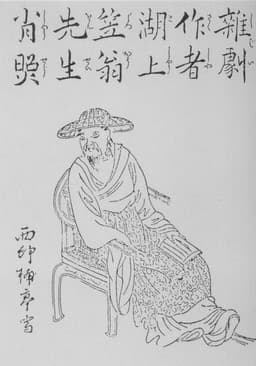
Li Yu
Emperor · Medieval
52.2Total
Basic Information
Born
1073
727
Died
1125
779
Era
Medieval
Medieval
Nationality
Georgia
China
Occupation
Emperor
Emperor
Civilization
Western
Eastern
Score Comparison
Military (10%)
76.0
20.0
Political (20%)
78.0
68.0
Influence (20%)
56.7
54.9
Legacy (20%)
55.0
50.0
Leadership (15%)
82.0
53.2
Strategy (15%)
72.0
57.5
TOTAL
66.7
52.2
David IV of Georgia — Complete Timeline
1118 AD
Military ReformsReform◆ Major
David IV created a professional army by resettling Kipchak nomads in Georgia and organizing them into a standing force. This reform strengthened the kingdom's military capabilities.
MilitaryReformGeorgia
Impact: nationalconstructive
1121 AD
Battle of DidgoriWar
David IV led Georgian forces to a decisive victory over a larger Seljuk Turk coalition at Didgori. This battle secured Georgia's independence and marked the beginning of its medieval golden age.
BattleGeorgiaSeljuk Turks
Impact: regionalconstructive
1122 AD
Unification of GeorgiaWar
David IV captured Tbilisi from the Muslim emirate, reuniting eastern and western Georgia under a single rule. This ended centuries of division and established Tbilisi as the capital.
UnificationGeorgiaTbilisi
Impact: nationalconstructive
Li Yu — Complete Timeline
763 AD
Suppression of the An Lushan RebellionWar
Under Li Yu's reign, the An Lushan Rebellion was finally crushed after eight years of war. The rebel state of Yan collapsed, and Tang authority was restored over most of the empire, though the dynasty was permanently weakened.
An Lushan RebellionCivil War EndTang Restoration
Impact: nationalconstructive
Tibetan Invasion of Chang'anWar◆ Major
The Tibetan Empire launched a surprise invasion, capturing the Tang capital Chang'an. Li Yu fled to Shanzhou. The Tibetans installed a puppet emperor before being driven out by Tang forces and Uyghur allies. This exposed Tang military weakness.
Tibetan InvasionCapital LostMilitary Weakness
Impact: nationaldestructive
Rise of the Fanzhen SystemPolitical Action◆ Major
Li Yu granted amnesty to many rebel generals and allowed them to retain control of their provinces as military governors (jiedushi). This created semi-autonomous fanzhen that weakened central authority and led to future rebellions.
FanzhenDecentralizationMilitary Governors
Impact: nationaldestructive
765 AD
Peace Treaty with TibetPolitical Action
Li Yu negotiated a peace treaty with the Tibetan Empire, establishing a border and ending hostilities for a time. The treaty stabilized the western frontier but did not prevent future conflicts.
TibetDiplomacyBorder Treaty
Impact: regionalconstructive
This comparison has not been analyzed yet.
One-time AI generation (~1 minute). Scores and timeline are already available below.
Rankings
🥇
David IV of GeorgiaLeader
Mil: 76.0Pol: 78.0Inf: 56.7
66.7
🥈
Li Yu
Mil: 20.0Pol: 68.0Inf: 54.9
52.2
+14.5 behind
How This Comparison Works
Algorithm
Each figure is scored on 6 dimensions (0—100 scale) based on structured historical data: Military (10%), Political (20%), Influence (20%), Legacy (20%), Leadership (15%), Strategy (15%). The weighted total produces the final ranking.
Data Sources
Scores are computed from structured sub-indicators in the database. Scale factors adjust for era (Ancient ×0.85, Modern ×1.0) and civilization size (Eastern ×1.05, Other ×0.80) to account for differences in population and military scale.
Maximum 3 Figures
Comparisons are limited to 2—3 figures to ensure readability and statistical meaningfulness.
Error Margins
±5 points per dimension — Sub-scores are derived from historical records with inherent uncertainty. Two figures within 5 points on a dimension should be considered roughly equivalent in that area.
Total Score Accuracy
±3 points overall — The weighted combination of 6 dimensions produces a total score with approximately ±3 points of uncertainty. Differences of less than 3 points are not statistically significant— the figures are effectively tied.
Known Limitations
- Historical records are incomplete and uneven across civilizations
- Figures from oral-tradition societies may be underrepresented
- Occupation labels can misclassify multi-role figures
- Scores measure capability and impact, not moral character
- Quantitative scoring is a comparison tool, not absolute truth
Capability Radar
Military (10%) — Battles & Warfare
Battles
75
55
Win Rate
85
50
Expansion
80
20
Political (20%) — Governance & Reform
Reform
90
55
Diplomacy
80
60
Economy
75
50
Influence (20%) — Cultural & Global Reach
Cultural
70
40
Global
55
30
Legacy (20%) — Historical Impact
Historical
75
55
Longevity
70
45
Leadership (15%) — Power & Stability
Tenure
85
65
Stability
80
55
Strategy (15%) — Tactics & Innovation
Strategy
85
60
Tactics
80
45
Reform
90
40
Similar Comparisons
Comments & Discussion
No comments yet. Be the first to share your thoughts!