Loading...
David IV of Georgia vs Qin Shi Huang
Qin Shi Huang leads by 18.5 pts · 2 figures compared
…

David IV of Georgia
Emperor · Medieval
66.7Total
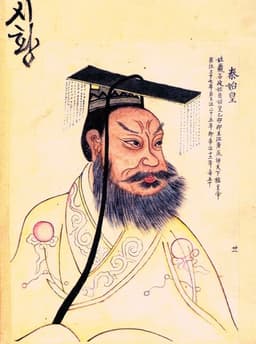
Qin Shi Huang
Emperor · Ancient
85.2Total
Basic Information
Born
1073
-259
Died
1125
-210
Era
Medieval
Ancient
Nationality
Georgia
China
Occupation
Emperor
Emperor
Civilization
Western
Eastern
Score Comparison
Military (10%)
76.0
80.0
Political (20%)
78.0
90.0
Influence (20%)
56.7
85.0
Legacy (20%)
55.0
90.0
Leadership (15%)
82.0
78.0
Strategy (15%)
72.0
82.0
TOTAL
66.7
85.2
David IV of Georgia — Complete Timeline
1118 AD
Military ReformsReform◆ Major
David IV created a professional army by resettling Kipchak nomads in Georgia and organizing them into a standing force. This reform strengthened the kingdom's military capabilities.
MilitaryReformGeorgia
Impact: nationalconstructive
1121 AD
Battle of DidgoriWar
David IV led Georgian forces to a decisive victory over a larger Seljuk Turk coalition at Didgori. This battle secured Georgia's independence and marked the beginning of its medieval golden age.
BattleGeorgiaSeljuk Turks
Impact: regionalconstructive
1122 AD
Unification of GeorgiaWar
David IV captured Tbilisi from the Muslim emirate, reuniting eastern and western Georgia under a single rule. This ended centuries of division and established Tbilisi as the capital.
UnificationGeorgiaTbilisi
Impact: nationalconstructive
Qin Shi Huang — Complete Timeline
246 BC
Construction of the Mausoleum and Terracotta ArmyOther◆ Major
Qin Shi Huang commissioned a vast mausoleum complex near Xi'an, guarded by thousands of life-sized terracotta soldiers, horses, and chariots. The project employed hundreds of thousands of workers and reflected his obsession with immortality and imperial power.
Impact: global
230 BC
Conquest of the Six Warring StatesWar
From 230 to 221 BCE, Ying Zheng led the Qin state in a series of campaigns that conquered the Han, Zhao, Wei, Chu, Yan, and Qi states. This unified China under a single ruler for the first time, ending the Warring States period.
Impact: global
221 BC
Standardization of Writing, Currency, and MeasurementsReform◆ Major
Qin Shi Huang ordered the standardization of Chinese script, currency, and weights and measures across the unified empire. This facilitated administration, trade, and cultural integration, laying a foundation for future dynasties.
Impact: globalconstructive
Proclamation of the Qin DynastyPolitical Action
After conquering the last independent state, Ying Zheng declared himself Shi Huangdi (First Emperor), founding the Qin Dynasty. He adopted a new title to signify his supreme authority and initiated centralized imperial rule.
Impact: global
214 BC
Initiation of the Great Wall ConstructionOther◆ Major
Qin Shi Huang ordered the connection and extension of existing northern fortifications to create a unified defensive wall against nomadic Xiongnu raids. This project involved massive conscripted labor and became the precursor to the later Great Wall.
Impact: regional
213 BC
Burning of Books and Burying of ScholarsPolitical Action◆ Major
On the advice of Li Si, Qin Shi Huang ordered the burning of historical records and philosophical texts not aligned with Legalist doctrine. He also had 460 Confucian scholars buried alive to suppress dissent and consolidate ideological control.
Impact: nationaldestructive
Expert Analysis
david-iv-of-georgia-vs-qin-shi-huang
# The Unifier's Mirror: Qin Shi Huang and David the Builder
On a spring morning in 221 BC, a young king in China's Wei River valley declared himself "Shi Huangdi"—the First Emperor—having crushed six rival states in a decade of relentless war. Thirteen centuries later and five thousand miles away, another king stood before the walls of Tbilisi, watching his soldiers raise the Georgian flag over a city that had been in Muslim hands for nearly four centuries. Both men sought to forge unity from fragmentation, yet their paths diverged as dramatically as the civilizations they ruled. Why did one create an empire that would define China for two millennia, while the other built a kingdom that would struggle to survive?
Origins
Ying Zheng was born in 259 BC into the most ruthless of the Warring States, a realm where legalist philosophers taught that human nature was inherently evil and that only harsh laws could maintain order. His father had been a hostage in a rival court; his mother was a former concubine. From childhood, he learned that trust was a luxury and power the only currency that mattered. The Qin state, perched on China's western frontier, was already the most militarized of the seven kingdoms, its soldiers fighting for land and glory under a system that rewarded battlefield success above all.
David IV entered the world in 1073, born into a Georgia that had been crushed by Seljuk Turk invasions for decades. His father, King George II, had been forced to pay tribute to the Muslim conquerors, and the royal court was a shadow of its former self. But David grew up in a culture steeped in Christian faith and Byzantine learning, where kings were expected to be both warriors and patrons of the Church. Where Qin Shi Huang saw chaos that needed to be crushed, David saw a kingdom that needed to be healed.
Rise to Power
Qin Shi Huang's ascent was methodical and brutal. At thirteen, he inherited a throne that was already the most powerful in China. By twenty-one, he had purged his regent and banished his mother's lover, consolidating absolute control. Then came the campaigns: from 230 to 221 BC, his armies swept through the other six states like a scythe through wheat. The Han fell first, then the Zhao, the Wei, the Chu, the Yan, and finally the Qi. Each conquest brought new territory, new subjects, and new problems—but Qin Shi Huang had no interest in negotiation. He would remake China in his image or destroy it trying.
David's path was more patient. He ascended the throne in 1089 at age sixteen, but unlike his Chinese counterpart, he could not simply conquer his way to power. Georgia's enemies were too strong, its resources too scarce. Instead, David played a long game. He paid tribute to the Seljuks while secretly rebuilding Georgia's economy. He forged alliances with the Byzantine Empire and the Crusader states. And in 1118, he undertook a radical reform: resettling thousands of Kipchak nomads from the northern steppes into Georgia, organizing them into a professional standing army loyal directly to the crown. It was a gamble that would take years to pay off.
Leadership & Governance
The contrast in their ruling styles could not be sharper. Qin Shi Huang governed through terror and standardization. He imposed a single written script across all of China, unified currency and measurements, and built a network of roads and canals that bound his empire together. But he also burned books that contradicted his ideology and buried scholars alive for criticizing his rule. His Great Wall was built with conscripted labor—hundreds of thousands of peasants died in its construction. Every reform was enforced by the sword, every dissent crushed without mercy.
David governed through inspiration and inclusion. He called himself "David the Builder," and the title was literal: he constructed churches, monasteries, and fortresses across Georgia, but also built institutions. He reformed the Georgian Orthodox Church, making it a pillar of national identity rather than a rival to royal power. He welcomed scholars, artists, and merchants from Byzantium and the Islamic world, creating a culture of tolerance that was rare in the medieval era. When he captured Tbilisi in 1122, he did not massacre the Muslim population or destroy their mosques—he issued a decree protecting their religious freedom, a gesture unthinkable for Qin Shi Huang.
Triumph & Tragedy
Qin Shi Huang's greatest moment was also his most terrible. In 210 BC, his empire stretched from the Yellow Sea to the Tibetan plateau, unified as never before. But his obsession with immortality—he consumed mercury pills in search of eternal life—led to his death at age forty-nine. Within three years of his passing, the Qin Dynasty collapsed in rebellion, its harsh laws turning the entire nation against it. The First Emperor's dream of a dynasty lasting ten thousand generations ended in fire and blood.
David's triumph came at the Battle of Didgori in 1121, where his reformed army crushed a coalition of Seljuk forces more than double its size. The victory was so complete that Georgians still call it the "Miraculous Victory." He went on to capture Tbilisi and unite eastern and western Georgia under a single crown. When he died in 1125, his kingdom was at its zenith—the dominant power in the Caucasus, respected by both Christian Europe and the Islamic world.
Character & Destiny
Qin Shi Huang was a man consumed by fear—fear of death, fear of betrayal, fear of chaos. His paranoia drove him to build an underground army of terracotta soldiers to guard his tomb, a silent legion that would serve him in the afterlife as the living had failed to do in this one. He trusted no one, and in the end, no one trusted him. His empire died with him because he had built it on sand—on force, not loyalty.
David was a man driven by vision—vision of a unified Georgia that could stand proud among nations. He trusted his generals, his clergy, and his people, and they trusted him in return. When he died, his kingdom did not collapse; his descendants would rule for another century, and Georgian culture would flourish under their patronage. David built not just walls and armies, but a nation.
Legacy
Qin Shi Huang's legacy is the most paradoxical in Chinese history. He was the tyrant who unified China, the book-burner who standardized writing, the mad emperor whose terracotta army has become a global symbol of ancient civilization. Every Chinese emperor who followed—from the Han to the Qing—ruled over a state that bore his mark. His name is both curse and blessing, a reminder that unity often comes at a terrible price.
David the Builder is remembered as Georgia's greatest king, a saint of the Georgian Orthodox Church, and the father of his nation. His face adorns currency, his name graces streets and universities, and his victory at Didgori is celebrated as a national holiday. Yet his Georgia would eventually fall to the Mongols, then the Persians, then the Russians. His legacy is one of brief glory in a land that has known more than its share of suffering.
Conclusion
Standing before the terracotta warriors in Xi'an, one feels the weight of Qin Shi Huang's ambition—a man who tried to conquer death itself. Standing before the ruins of Gelati Monastery in Georgia, one senses David's gentler dream—a king who built not for himself, but for his people. Both were unifiers, both were builders, but they built very different worlds. Qin Shi Huang forged an empire of iron; David the Builder crafted a kingdom of faith. One created a system that would outlast him; the other created a memory that would never die. In the end, the question is not which was greater, but which kind of greatness we choose to remember.
Rankings
🥇
Qin Shi HuangLeader
Mil: 80.0Pol: 90.0Inf: 85.0
85.2
🥈
David IV of Georgia
Mil: 76.0Pol: 78.0Inf: 56.7
66.7
+18.5 behind
How This Comparison Works
Algorithm
Each figure is scored on 6 dimensions (0—100 scale) based on structured historical data: Military (10%), Political (20%), Influence (20%), Legacy (20%), Leadership (15%), Strategy (15%). The weighted total produces the final ranking.
Data Sources
Scores are computed from structured sub-indicators in the database. Scale factors adjust for era (Ancient ×0.85, Modern ×1.0) and civilization size (Eastern ×1.05, Other ×0.80) to account for differences in population and military scale.
Maximum 3 Figures
Comparisons are limited to 2—3 figures to ensure readability and statistical meaningfulness.
Error Margins
±5 points per dimension — Sub-scores are derived from historical records with inherent uncertainty. Two figures within 5 points on a dimension should be considered roughly equivalent in that area.
Total Score Accuracy
±3 points overall — The weighted combination of 6 dimensions produces a total score with approximately ±3 points of uncertainty. Differences of less than 3 points are not statistically significant— the figures are effectively tied.
Known Limitations
- Historical records are incomplete and uneven across civilizations
- Figures from oral-tradition societies may be underrepresented
- Occupation labels can misclassify multi-role figures
- Scores measure capability and impact, not moral character
- Quantitative scoring is a comparison tool, not absolute truth
Capability Radar
Military (10%) — Battles & Warfare
Battles
75
85
Win Rate
85
90
Expansion
80
90
Political (20%) — Governance & Reform
Reform
90
95
Diplomacy
80
75
Economy
75
90
Influence (20%) — Cultural & Global Reach
Cultural
70
95
Global
55
85
Legacy (20%) — Historical Impact
Historical
75
95
Longevity
70
95
Leadership (15%) — Power & Stability
Tenure
85
70
Stability
80
65
Strategy (15%) — Tactics & Innovation
Strategy
85
85
Tactics
80
80
Reform
90
95
Similar Comparisons
Comments & Discussion
IronScribe6/17/2026
把秦始皇和David IV放一起比?搞错了吧!一个是铁血统一六国的法家执行者,另一个只是在十字军时代捡漏建了个小王国。David那点地盘换个省都算不上,而始皇书同文车同轨两千年影响。拿短命科级领导跟正国级比?历史自信呢?||FraktalCaesar|en|There's something poetic about comparing a man who burned books and buried scholars alive with one who built churches. But here's the problem: David the Builder's Georgia collapsed within a century of his death. Qin Shi Huang's system? It literally defined Chinese civilization for over two millennia. One created a cultural DNA, the other a temporary geopolitical arrang