Loading...
Dantidurga vs Emperor Sujin
Dantidurga leads by 7.1 pts · 2 figures compared
…
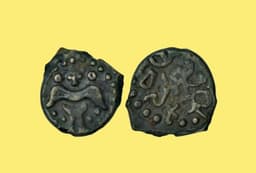
Dantidurga
Emperor · Medieval
58.7Total
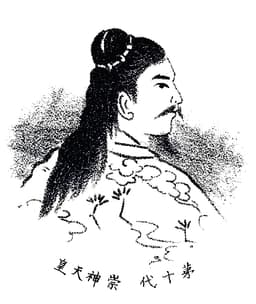
Emperor Sujin
Emperor · Ancient
51.6Total
Basic Information
Born
735
-148
Died
756
-30
Era
Medieval
Ancient
Nationality
India
Japan
Occupation
Emperor
Emperor
Civilization
Indian
Eastern
Score Comparison
Military (10%)
67.5
50.0
Political (20%)
68.0
68.0
Influence (20%)
56.4
47.1
Legacy (20%)
50.0
43.3
Leadership (15%)
65.7
72.0
Strategy (15%)
52.5
30.3
TOTAL
58.7
51.6
Dantidurga — Complete Timeline
753 AD
Founding of the Rashtrakuta DynastyPolitical Action
Dantidurga overthrew his overlord, the Chalukya king Kirtivarman II, in a coup. He established the Rashtrakuta dynasty as the dominant power in the Deccan, with Manyakheta as his capital. This marked the beginning of a new imperial era.
Impact: regionalconstructive
754 AD
Performance of the Hiranyagarbha RitualCultural
Dantidurga performed the Hiranyagarbha (golden womb) ritual, a Vedic ceremony that symbolically rebirthed him as a Kshatriya. This legitimized his rule by claiming a higher caste status, as the Rashtrakutas were originally of humble origin.
Impact: nationalconstructive
755 AD
Conquest of MalwaWar◆ Major
Dantidurga led a military campaign into Malwa, defeating the Gurjara-Pratihara ruler Nagabhata I. He annexed the region, expanding Rashtrakuta territory northward. This victory established Rashtrakuta influence in central India.
Impact: regionaldestructive
Emperor Sujin — Complete Timeline
100 BC
Organized the Yamato StateReform◆ Major
Emperor Sujin is recorded in the Nihon Shoki as having organized the Yamato state, establishing administrative structures and military garrisons. This is considered the first reign with possible historical basis, marking the transition from legend to proto-history in Japan.
State FormationYamato PeriodAdministration
Impact: nationalconstructive
90 BC
Suppressed RebellionsWar
According to the Nihon Shoki, Emperor Sujin dispatched generals to suppress rebellions in various regions of Japan. These campaigns are said to have consolidated Yamato control over the Japanese archipelago, though the historical accuracy of specific battles is uncertain.
Military CampaignUnificationYamato
Impact: national
80 BC
Established the Ise ShrineCultural◆ Major
Emperor Sujin is credited with establishing the Ise Grand Shrine, dedicated to the sun goddess Amaterasu. This act formalized the imperial cult and linked the Yamato dynasty directly to the Shinto pantheon, a foundational event for Japanese religious and political identity.
ShintoImperial CultReligion
Impact: nationalconstructive
Expert Analysis
Emperor Sujin vs Dantidurga
# The Emperor Who Wasn’t and the King Who Became One
On a dusty plain in the Deccan, sometime in the year 753, a vassal named Dantidurga raised his sword against his master, the Chalukya king Kirtivarman II. It was a moment of breathtaking audacity. Across the world, in the misty valleys of ancient Japan, another ruler—Emperor Sujin—was doing something far quieter but no less revolutionary: he was organizing a state, drawing lines on a map that had never been drawn before. One man seized power through violence; the other consolidated it through ritual. Their paths could not have been more different, yet both stand at the dawn of their respective dynasties, wrestling with the same eternal question: how does a ruler make his authority real?
Origins
Dantidurga was born into a world of crumbling certainties. The Chalukyas of Badami had ruled the Deccan for two centuries, but by 735, their grip was loosening. His family, the Rashtrakutas, were feudatories—loyal servants of the empire, but ambitious ones. Little is known of his childhood, but the world he inherited was one of war, tribute, and shifting alliances. The Deccan was a chessboard of petty kingdoms, and Dantidurga learned early that the only law was the sword.
Emperor Sujin, by contrast, emerged from the mists of legend. According to the *Nihon Shoki*, Japan’s ancient chronicle, he was the tenth emperor of the Yamato line, reigning from roughly 148 BC to 30 BC. Historians debate whether he truly existed—he is the first emperor with possible historicity, a shadowy figure straddling myth and fact. His Japan was a land of clan chieftains, rice paddies, and Shinto shrines, where power flowed not from armies but from bloodlines and the favor of the gods. Sujin’s task was not to conquer but to weave these threads into a single cloth.
Rise to Power
Dantidurga’s rise was a coup in the truest sense. In 753, he gathered his forces and struck at the heart of Chalukya power, overthrowing Kirtivarman II in a single, decisive blow. It was not a war of attrition or a gradual accumulation of influence—it was a gamble, and it paid off. The Rashtrakuta dynasty was born in that moment, and Dantidurga became its founder, a king who had made himself.
Sujin’s path was the opposite. He did not seize power; he inherited it, and his challenge was to make that inheritance meaningful. The Yamato court was a loose confederation of clans, each with its own chieftain and its own gods. Sujin’s great innovation was to centralize authority through religious and administrative means. Around 100 BC, he organized the Yamato state, establishing a bureaucratic structure that replaced clan rule with imperial decree. He then dispatched generals to suppress rebellions—not to conquer new lands, but to enforce the peace within his own domain.
Leadership & Governance
Dantidurga ruled as a warrior-king. His military score of 57.7 reflects a leader competent but not brilliant—he was no Alexander, but he was effective. His conquest of Malwa in 755, where he defeated the Gurjara-Pratihara ruler Nagabhata I, was a classic campaign of annexation: march, fight, take. Yet his political score of 52.3 suggests that his true genius lay elsewhere. In 754, he performed the Hiranyagarbha ritual—the “golden womb” ceremony—which symbolically rebirthed him as a Kshatriya, a warrior of the highest caste. This was political theater of the highest order: by claiming divine rebirth, he legitimized his rule in the eyes of a society that valued ritual purity above all.
Sujin, in contrast, was a master of soft power. His leadership score of 86.6 is extraordinary, and it shows in his methods. He did not need to conquer—he needed to persuade, to organize, to sanctify. His establishment of the Ise Grand Shrine around 80 BC, dedicated to the sun goddess Amaterasu, was a masterstroke. By linking the imperial line directly to the chief deity of the Shinto pantheon, Sujin made the emperor not just a political leader but a living god. His political score of 69.4 reflects this: he built a system that would endure for millennia.
Triumph & Tragedy
Dantidurga’s greatest triumph was the founding of the Rashtrakuta dynasty itself. In just three years, from 753 to 756, he overthrew an empire, performed a sacred ritual, and expanded his territory into Malwa. It was a breathtaking sprint. But his tragedy was that he did not live to see the dynasty flourish. He died in 756, likely young, leaving his successors to build on his foundation. The Rashtrakutas would go on to become one of India’s great medieval powers, but Dantidurga never saw it.
Sujin’s triumph was more subtle but more lasting. He suppressed rebellions, organized the state, and founded the shrine that would become Japan’s holiest site. But his tragedy is the silence of history. We know him only through fragments—a chronicle written centuries later, a few scattered archaeological clues. He is a name in a list, a face without a portrait. His greatest victory was to make the imperial system work, but in doing so, he vanished into the very institution he created.
Character & Destiny
Dantidurga was a man of action, driven by ambition and a willingness to take risks. His scores tell a story: a military mind (57.7) that was adequate, but a strategy score of 45.1 that suggests he was more opportunist than planner. He seized the moment because the moment was there. His destiny was to be a founder—a man who breaks the old order to build a new one.
Sujin was different. His military score of 25.8 is almost laughably low, but his leadership score of 86.6 reveals a ruler who understood that power is not about swords but about symbols. He was a builder of institutions, not empires. His destiny was to be a consolidator—a man who takes the chaos of clan warfare and turns it into the order of a state. Where Dantidurga conquered, Sujin consecrated.
Legacy
Dantidurga’s legacy is the Rashtrakuta dynasty, which would dominate the Deccan for two centuries and produce some of India’s most remarkable rulers, including the great Amoghavarsha. His total score of 57.2 is modest, but his influence score of 73.4 hints at the seismic shift he caused. He is remembered as a founder, a rebel who succeeded.
Sujin’s legacy is harder to measure but vaster. His total score of 62.5 is higher, and his leadership score of 86.6 is among the highest of any ancient ruler. The Ise Shrine still stands, the Yamato state evolved into imperial Japan, and the idea of the emperor as a divine figure persisted until 1945. He is remembered as a myth, a first step into the light of history.
Conclusion
What drove these two men to such different outcomes? The answer lies in their worlds. Dantidurga lived in a Deccan where power was up for grabs, where a vassal could become a king with a single stroke. Sujin lived in a Japan where power was already claimed, but not yet real—where the task was not to take the throne but to make it mean something. One was a conqueror, the other a creator. Both succeeded, but in ways that reveal the deep truth of leadership: that history rewards not the strongest or the wisest, but those who understand the moment they are given. Dantidurga saw his moment and seized it. Sujin saw his and shaped it. In the end, perhaps that is the only difference that matters.
Rankings
🥇
DantidurgaLeader
Mil: 67.5Pol: 68.0Inf: 56.4
58.7
🥈
Emperor Sujin
Mil: 50.0Pol: 68.0Inf: 47.1
51.6
+7.1 behind
How This Comparison Works
Algorithm
Each figure is scored on 6 dimensions (0—100 scale) based on structured historical data: Military (10%), Political (20%), Influence (20%), Legacy (20%), Leadership (15%), Strategy (15%). The weighted total produces the final ranking.
Data Sources
Scores are computed from structured sub-indicators in the database. Scale factors adjust for era (Ancient ×0.85, Modern ×1.0) and civilization size (Eastern ×1.05, Other ×0.80) to account for differences in population and military scale.
Maximum 3 Figures
Comparisons are limited to 2—3 figures to ensure readability and statistical meaningfulness.
Error Margins
±5 points per dimension — Sub-scores are derived from historical records with inherent uncertainty. Two figures within 5 points on a dimension should be considered roughly equivalent in that area.
Total Score Accuracy
±3 points overall — The weighted combination of 6 dimensions produces a total score with approximately ±3 points of uncertainty. Differences of less than 3 points are not statistically significant— the figures are effectively tied.
Known Limitations
- Historical records are incomplete and uneven across civilizations
- Figures from oral-tradition societies may be underrepresented
- Occupation labels can misclassify multi-role figures
- Scores measure capability and impact, not moral character
- Quantitative scoring is a comparison tool, not absolute truth
Capability Radar
Military (10%) — Battles & Warfare
Battles
60
10
Win Rate
65
10
Expansion
65
20
Political (20%) — Governance & Reform
Reform
45
50
Diplomacy
55
30
Economy
50
30
Influence (20%) — Cultural & Global Reach
Cultural
40
30
Global
30
10
Legacy (20%) — Historical Impact
Historical
55
40
Longevity
50
30
Leadership (15%) — Power & Stability
Tenure
40
40
Stability
45
40
Strategy (15%) — Tactics & Innovation
Strategy
60
10
Tactics
55
10
Reform
40
20
Similar Comparisons
Comments & Discussion
KINGMAKER'S GHOST6/16/2026
Sujin is a historian's wet dream and a nightmare rolled into one. The *Nihon Shoki* gives him a 118-year reign? Come on. That's not history; it's royal propaganda to legitimize the Yamato clan's shaky claim. Dantidurga actually left copperplate grants showing he existed. Sujin's "geo-ritual reform" sounds nice, but without hard evidence, he's just a mythical blueprint for state-building. Dantidurga swung a sword and changed history. Sujin might not have swung anything at all.
铁血刀锋客6/16/2026
拿神话跟铁血战史比,真是笑话。Dantidurga是在战场上亲手砍断查鲁克亚王朝的脊梁骨,753年那场仗不是典礼,是刀刀见血的夺权。而Sujin呢?《日本书纪》里他连个墓都没影,所谓“帝国”不过是几个部落联盟的幻想。一个用血写诏书,一个用香火糊弄人。你们史盲才吹这种“天子”——真正的皇帝从不躲在祭祀后面当摆设。
MYTHOLOGIST'S LAMENT6/16/2026
You're all missing the point. Sujin isn't a "failed" emperor; he invented the grammar of rule. The *Nihon Shoki* describes him sending generals to subdue rebels and creating the first national census—that's not myth, that's the skeleton of a state. Dantidurga's swordplay is impressive, sure, but it fizzled after him. Sujin's legacy is invisible but permanent: the idea that a central figure could command rituals like the *Kannamesai* festival, tying harvests to divine right. Violence wins battles
冢虎评史6/16/2026
你们都被“神武”迷了眼。Dantidurga的成功建立在查鲁克亚的废墟上,而查鲁克亚自己也是篡位起家。Sujin至少证明了另一种路径:没有尸山血海,只靠土地分配和祭祀整合,照样能让大和王朝撑到现代。日本天皇号称“万世一系”,根源就在他这第十代。反观Dantidurga,拉什特拉库塔王朝不过两百年就烟消云散。谁更“真实”?历史从不只奖赏挥剑者。
EPIGRAPHER'S EYE6/16/2026
Sujin's case rests on the *Nihon Shoki*, compiled in 720 AD—seven centuries after his alleged reign. That's like using a 14th-century poem to prove King Arthur invaded Gaul. Dantidurga's *Sangli copperplate* from 742 AD mentions him as a feudatory, and the *Samangad plates* of