Loading...
Daniel Ortega vs Zhang Xianzhong
Daniel Ortega leads by 7.0 pts · 2 figures compared
…
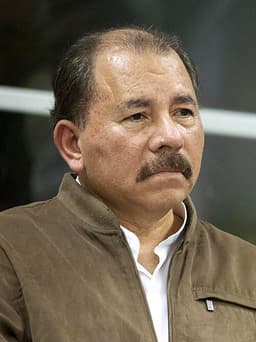
Daniel Ortega
Revolutionary · Modern
48.1Total

Zhang Xianzhong
Revolutionary · Modern
41.1Total
Basic Information
Born
1945
1606
Died
—
1647
Era
Modern
Modern
Nationality
Nicaragua
China
Occupation
Revolutionary
Revolutionary
Civilization
Western
Eastern
Score Comparison
Military (10%)
45.0
55.0
Political (20%)
42.3
35.0
Influence (20%)
51.0
44.8
Legacy (20%)
42.5
40.0
Leadership (15%)
67.0
35.4
Strategy (15%)
38.6
38.3
TOTAL
48.1
41.1
Daniel Ortega — Complete Timeline
1979 AD
Sandinista RevolutionWar
Ortega was a key commander in the Sandinista National Liberation Front (FSLN) that overthrew the Somoza dictatorship. The revolution ended decades of authoritarian rule and established a socialist-oriented government, with Ortega becoming a member of the ruling junta.
RevolutionSandinistaSomoza
Impact: nationalconstructive
1984 AD
Election as President of NicaraguaPolitical Action◆ Major
Ortega was elected president in Nicaragua's first democratic election after the revolution, winning 67% of the vote. His government faced a US-backed Contra war and implemented land reform, literacy campaigns, and social programs.
ElectionSandinistaSocial Reform
Impact: nationalconstructive
1990 AD
Electoral defeat and transition of powerPolitical Action◆ Major
Ortega lost the presidential election to Violeta Chamorro, marking the first peaceful transfer of power in Nicaragua's history. The defeat ended 11 years of Sandinista rule and was a result of war fatigue and economic crisis.
ElectionDefeatDemocracy
Impact: national
2007 AD
Return to presidencyPolitical Action◆ Major
Ortega was re-elected president after 17 years in opposition, winning 38% of the vote. His return marked a shift toward authoritarianism, as he consolidated power, controlled the judiciary, and suppressed political opposition.
ElectionReturnAuthoritarianism
Impact: national
2018 AD
2018 protests and crackdownPolitical Action◆ Major
Mass protests erupted against Ortega's government over social security reforms, which were later withdrawn. The government responded with a violent crackdown, resulting in hundreds of deaths and thousands of arrests, leading to international condemnation.
ProtestsRepressionHuman Rights
Impact: nationaldestructive
Zhang Xianzhong — Complete Timeline
1630 AD
Launched Rebellion in ShaanxiWar◆ Major
Zhang Xianzhong joined a peasant rebellion in Shaanxi province during the late Ming dynasty. He quickly rose to become a major rebel leader, gathering a large army and establishing a base of operations in the region.
Ming DynastyRebellionShaanxi
Impact: regionaldestructive
1644 AD
Captured and Sacked ChengduWar◆ Major
Zhang Xianzhong captured the city of Chengdu, the capital of Sichuan province. He then proclaimed the Daxi dynasty and made Chengdu his capital. The capture was accompanied by widespread destruction and massacres of the local population.
Ming-Qing TransitionSichuanMassacre
Impact: regionaldestructive
Proclaimed the Daxi DynastyPolitical Action◆ Major
Zhang Xianzhong proclaimed the Daxi (Great Western) dynasty in Sichuan. He established a government and minted his own coinage. His rule was characterized by extreme violence, including the systematic killing of scholars, officials, and civilians.
Daxi DynastyProclamationSichuan
Impact: regionaldestructive
1647 AD
Killed in Battle Against Qing ForcesWar◆ Major
Zhang Xianzhong was killed in battle against Qing forces in Xichong, Sichuan. His death led to the collapse of the Daxi dynasty. The Qing conquest of Sichuan was completed shortly after, but the province had been devastated by years of warfare.
Qing DynastyBattleDeath
Impact: regionaltragic
Expert Analysis
Zhang Xianzhong vs Daniel Ortega
# The Revolutionary’s Mirror: Daniel Ortega and Zhang Xianzhong
On a sweltering July morning in 1979, Daniel Ortega stood before a crowd in Managua, his beard still dusted with the grit of guerrilla warfare, as the Sandinista flag was raised over the presidential palace. The Somoza dynasty had fallen. Nearly 350 years earlier and half a world away, another revolutionary, Zhang Xianzhong, watched his own flag rise over Chengdu, proclaiming the Daxi dynasty after years of tearing through China’s Sichuan province. Both men seized power through violence, both promised liberation, and both left their lands transformed—but in radically different ways. Why did one become a lasting symbol of resistance, while the other became a byword for destruction? The answer lies not in their goals, but in the eras that shaped them.
Origins
Daniel Ortega was born in 1945 in La Libertad, a mining town in Nicaragua, into a family already steeped in opposition to the Somoza dictatorship. His father was imprisoned for anti-government activities, and young Daniel absorbed the language of rebellion early. By his teens, he was distributing leaflets for the Sandinista National Liberation Front (FSLN), a movement named after Augusto Sandino, a nationalist hero who had fought U.S. occupation in the 1930s. Ortega’s world was one of Cold War binaries: Marxist rhetoric, Cuban support, and a clear enemy in the form of a family dynasty that had ruled Nicaragua since 1936.
Zhang Xianzhong came from a different world entirely. Born in 1606 in Shaanxi province, he grew up during the twilight of the Ming dynasty, a time of famine, corruption, and collapse. He was a shepherd and a soldier before turning to banditry. Unlike Ortega, Zhang had no ideological blueprint. His rebellion was born of desperation: the Ming state had failed its people, and the only path forward was to burn it down. Where Ortega had a party and a program, Zhang had only his sword and a growing army of hungry men.
Rise to Power
Ortega’s path was long and patient. He joined the FSLN as a teenager, was imprisoned for seven years in the 1970s, and emerged to become a key commander during the Sandinista Revolution. The turning point came in 1979, when the FSLN launched a coordinated offensive that toppled Anastasio Somoza Debayle. Ortega was not the sole leader—the FSLN had a nine-member directorate—but he was its most visible face. In 1984, he won Nicaragua’s first democratic election with 67% of the vote, a moment of hope that the revolution could institutionalize itself.
Zhang’s rise was faster and bloodier. He launched his rebellion in 1630 in Shaanxi, a province already ravaged by drought and banditry. Within a decade, he had carved a path of destruction across central China, capturing cities and slaughtering officials. Unlike Ortega, who built alliances with intellectuals and priests, Zhang relied on terror. By 1644, when he captured Chengdu and proclaimed the Daxi dynasty, he had already earned the nickname “Yellow Tiger” for his ferocity. His rise was not a revolution but a collapse: the Ming dynasty was dying, and Zhang was one of several warlords fighting over its corpse.
Leadership & Governance
Ortega’s first presidency (1985–1990) was a study in contradictions. He implemented land reform, literacy campaigns, and healthcare programs that won international praise—but he also imposed censorship, conscription, and a state of emergency. The United States funded the Contras, a counterrevolutionary force, and the country bled. Ortega’s military score of 36.0 reflects his reliance on Cuban and Soviet support rather than his own generalship; his political score of 61.3 shows a man who could win elections but struggled to govern a polarized nation.
Zhang’s rule was a catastrophe. After proclaiming the Daxi dynasty, he ordered the massacre of Chengdu’s population, killing hundreds of thousands. The historical record is contested—some accounts say he killed four million people in Sichuan—but there is no doubt that his reign depopulated the province. He minted coins, set up a bureaucracy, and even tried to win over Confucian scholars, but his leadership score of 34.5 reveals a man who could destroy but not build. Where Ortega attempted reform, Zhang attempted annihilation.
Triumph & Tragedy
Ortega’s greatest moment was the 1979 revolution, a triumph that united Nicaragua’s poor and inspired leftists worldwide. His tragedy came in 1990, when he lost the election to Violeta Chamorro, a former ally. He accepted the defeat, marking the first peaceful transfer of power in Nicaraguan history. It was a moment of grace—but also a humiliation. In 2007, he returned to the presidency, but his second term has been marred by accusations of authoritarianism, corruption, and the violent crackdown on 2018 protests that left hundreds dead.
Zhang’s triumph was brief: the capture of Chengdu in 1644, when he sat on a throne for the first time. His tragedy was total. In 1647, he was killed in battle against Qing forces near Xichong. Within months, the Daxi dynasty collapsed, its leaders scattered or executed. His legacy is a cautionary tale: a man who destroyed a kingdom but could not hold it.
Character & Destiny
Ortega’s character is pragmatic, even cynical. He survived by adapting: from Marxist revolutionary to Cold War president to populist strongman. His total score of 63.4 reflects a man who endured, but at a cost. He is still alive as of this writing, still in power, still controversial. His destiny was to become a symbol of both revolution and its betrayal.
Zhang’s character was defined by rage. He killed not just enemies but anyone who crossed him. His score of 49.1 is the lowest in this comparison, a reflection of a man who left nothing but ruins. His destiny was to die in a field, forgotten by history except as a monster.
Legacy
Ortega is remembered today as a revolutionary who became a dictator—or a leader who fought imperialism. His legacy is contested, divided between those who see him as a hero of the Sandinista revolution and those who see him as a corrupt autocrat. His influence score of 70.4 is high because his story is still unfolding.
Zhang is remembered as a butcher. In Chinese history, he is the archetype of the rebel who destroys without purpose. His legacy score of 56.0 is lower, but he remains a figure of dark fascination—a warning of what happens when revolution becomes revenge.
Conclusion
Two revolutionaries, two worlds. Ortega and Zhang both rose from the margins to seize power, but they faced different eras. Ortega had a global stage, an ideology, and a chance to build—even if he later betrayed it. Zhang had only a collapsing empire and a sword. In the end, Ortega’s story is about the tragedy of power: how a liberator can become an oppressor. Zhang’s story is about the tragedy of chaos: how a rebel can become a destroyer. Both remind us that revolution is never clean—and that the line between hero and monster is often drawn by history itself.
Rankings
🥇
Daniel OrtegaLeader
Mil: 45.0Pol: 42.3Inf: 51.0
48.1
🥈
Zhang Xianzhong
Mil: 55.0Pol: 35.0Inf: 44.8
41.1
+7.0 behind
How This Comparison Works
Algorithm
Each figure is scored on 6 dimensions (0—100 scale) based on structured historical data: Military (10%), Political (20%), Influence (20%), Legacy (20%), Leadership (15%), Strategy (15%). The weighted total produces the final ranking.
Data Sources
Scores are computed from structured sub-indicators in the database. Scale factors adjust for era (Ancient ×0.85, Modern ×1.0) and civilization size (Eastern ×1.05, Other ×0.80) to account for differences in population and military scale.
Maximum 3 Figures
Comparisons are limited to 2—3 figures to ensure readability and statistical meaningfulness.
Error Margins
±5 points per dimension — Sub-scores are derived from historical records with inherent uncertainty. Two figures within 5 points on a dimension should be considered roughly equivalent in that area.
Total Score Accuracy
±3 points overall — The weighted combination of 6 dimensions produces a total score with approximately ±3 points of uncertainty. Differences of less than 3 points are not statistically significant— the figures are effectively tied.
Known Limitations
- Historical records are incomplete and uneven across civilizations
- Figures from oral-tradition societies may be underrepresented
- Occupation labels can misclassify multi-role figures
- Scores measure capability and impact, not moral character
- Quantitative scoring is a comparison tool, not absolute truth
Capability Radar
Military (10%) — Battles & Warfare
Battles
35
55
Win Rate
40
50
Expansion
20
60
Political (20%) — Governance & Reform
Reform
40
5
Diplomacy
45
10
Economy
30
5
Influence (20%) — Cultural & Global Reach
Cultural
40
20
Global
35
15
Legacy (20%) — Historical Impact
Historical
45
35
Longevity
40
25
Leadership (15%) — Power & Stability
Tenure
65
30
Stability
25
5
Strategy (15%) — Tactics & Innovation
Strategy
35
40
Tactics
30
45
Reform
25
10
Similar Comparisons
Comments & Discussion
张献忠屠夫6/16/2026
这种比较毫无意义。张献忠是明清之际的屠杀者,史料明确记载他在四川屠杀了数百万人,活生生把天府之国变成无人区。奥尔特加再不济,也没亲手杀过本国三分之一的人口。把17世纪的暴君和一个现代政客相提并论,是历史知识的缺失。张献忠只配和成吉思汗的屠杀相提并论,奥尔特加没那么恐怖。
数据侦探老张6/16/2026
分析选择性用材料。它说张献忠的暴力是“传奇”,但人口史研究表明四川的人口剧减很多是战争、清朝屠杀和饥荒的结果。奥尔特加时期的桑地诺政权也不干净,80年代内战中死了两三万人。两者都很混乱,但这篇对比故意把张做成反面教材,把奥捧成革命者。这是立场,不是史实。看数据的谁信这个?
经典学究6/16/2026
从比较政治学角度看,这种对比很粗糙。奥尔特加打的是冷战的代理战争,对手是美国支持的索摩查王朝;张献忠身处明末清初的改朝换代,完全没有超级大国干涉。两人的“革命”标签只是巧合,毫无可比性。一个要对付里根和反政府武装,另一个要对付满清入侵。这根本就不是同类事件
Historian5546/16/2026
This comparison is ridiculous. Zhang Xianzhong was a serial mass murderer who depopulated Sichuan—historical records show he killed millions, turning the province into a ghost land. Ortega is an autocrat, sure, but he hasn’t personally slaughtered a third of his country. To equate a 17th-century warlord with a modern politician is historical malpractice. Zhang belongs in the same bin as Genghis Khan, not Ortega. Scale and intent matter.
Chronicler50686/16/2026
The analysis cherry-picks evidence. It claims Zhang’s violence is “legendary” but ignores demographic research: many Sichuan depopulation estimates are inflated by war, famine, and Qing purges. Similarly, Ortega’s Sandinista era had harsh civil war casualties—20,000–30,000 dead in the 1980s alone. Both are messy, but the framing makes Zhang a monster and Ortega a revolutionary. That’s agenda, not history. Stick to cold numbers.
Chronicler69356/16/2026
From a comparative political science lens, this is lazy. Ortega fought a modern proxy war against a U.S.-backed dynasty; Zhang fought in the Ming-Qing transition, a dynastic collapse with no external superpowers. Their “revolutionary” labels are coincidental, not comparable. One faced Reagan and the Contras; the other faced Manchu invaders. Apples and orbital rockets. If you want a parallel, compare Ortega to someone like Mao or Castro, not a bandit king with a death toll.