Loading...
Daniel Ortega vs Vladimir Lenin
Vladimir Lenin leads by 23.1 pts · 2 figures compared
…
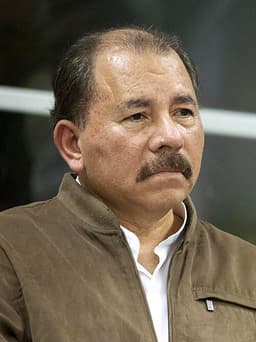
Daniel Ortega
Revolutionary · Modern
48.1Total
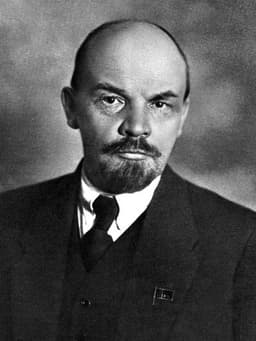
Vladimir Lenin
Revolutionary · Modern
71.2Total
Basic Information
Born
1945
1870
Died
—
1924
Era
Modern
Modern
Nationality
Nicaragua
Russia
Occupation
Revolutionary
Revolutionary
Civilization
Western
Western
Score Comparison
Military (10%)
45.0
30.0
Political (20%)
42.3
78.0
Influence (20%)
51.0
82.0
Legacy (20%)
42.5
72.0
Leadership (15%)
67.0
80.0
Strategy (15%)
38.6
60.0
TOTAL
48.1
71.2
Daniel Ortega — Complete Timeline
1979 AD
Sandinista RevolutionWar
Ortega was a key commander in the Sandinista National Liberation Front (FSLN) that overthrew the Somoza dictatorship. The revolution ended decades of authoritarian rule and established a socialist-oriented government, with Ortega becoming a member of the ruling junta.
RevolutionSandinistaSomoza
Impact: nationalconstructive
1984 AD
Election as President of NicaraguaPolitical Action◆ Major
Ortega was elected president in Nicaragua's first democratic election after the revolution, winning 67% of the vote. His government faced a US-backed Contra war and implemented land reform, literacy campaigns, and social programs.
ElectionSandinistaSocial Reform
Impact: nationalconstructive
1990 AD
Electoral defeat and transition of powerPolitical Action◆ Major
Ortega lost the presidential election to Violeta Chamorro, marking the first peaceful transfer of power in Nicaragua's history. The defeat ended 11 years of Sandinista rule and was a result of war fatigue and economic crisis.
ElectionDefeatDemocracy
Impact: national
2007 AD
Return to presidencyPolitical Action◆ Major
Ortega was re-elected president after 17 years in opposition, winning 38% of the vote. His return marked a shift toward authoritarianism, as he consolidated power, controlled the judiciary, and suppressed political opposition.
ElectionReturnAuthoritarianism
Impact: national
2018 AD
2018 protests and crackdownPolitical Action◆ Major
Mass protests erupted against Ortega's government over social security reforms, which were later withdrawn. The government responded with a violent crackdown, resulting in hundreds of deaths and thousands of arrests, leading to international condemnation.
ProtestsRepressionHuman Rights
Impact: nationaldestructive
Vladimir Lenin — Complete Timeline
1903 AD
Founding of the Bolshevik PartyPolitical Action
At the Second Congress of the Russian Social Democratic Labour Party in London, Lenin led a split that created the Bolshevik faction. The Bolsheviks advocated for a disciplined vanguard party of professional revolutionaries, a key element of Lenin's political strategy.
Political PartyRevolutionIdeology
Impact: global
1917 AD
April ThesesPolitical Action◆ Major
Lenin returned to Russia from exile and published the April Theses, calling for the overthrow of the Provisional Government, transfer of power to the soviets, and an end to World War I. This document set the Bolshevik agenda for the coming revolution.
RevolutionIdeologyPolitical Strategy
Impact: national
October RevolutionPolitical Action
Lenin led the Bolshevik seizure of power in Petrograd, capturing key government buildings and the Winter Palace. The revolution overthrew the Provisional Government and established the world's first socialist state, the Russian Soviet Federative Socialist Republic.
RevolutionCoupCommunism
Impact: global
1918 AD
Treaty of Brest-LitovskPolitical Action◆ Major
Lenin signed a separate peace treaty with the Central Powers, ceding vast territories including Ukraine, Belarus, and the Baltic states. The treaty ended Russia's involvement in World War I but caused significant territorial losses and internal opposition.
TreatyWorld War ITerritorial Loss
Impact: globaldestructive
1921 AD
New Economic Policy (NEP)Reform◆ Major
Lenin introduced the NEP, allowing limited private enterprise and market mechanisms to revive the war-torn Soviet economy. The policy replaced War Communism, permitting small-scale capitalism while the state retained control of major industries.
Economic ReformPolicyRecovery
Impact: nationalconstructive
1922 AD
Establishment of the Soviet UnionPolitical Action
Lenin oversaw the creation of the Union of Soviet Socialist Republics (USSR), a federation of Soviet republics. The new state consolidated Bolshevik control over much of the former Russian Empire and became a model for communist states worldwide.
State FormationCommunismFederation
Impact: global
Expert Analysis
Vladimir Lenin vs Daniel Ortega
# The Revolutionary’s Paradox: Lenin and Ortega, Two Paths from the Barricades
In the winter of 1917, a balding, intense man stepped off a sealed train at Petrograd’s Finland Station, greeted by a crowd of workers and soldiers who had no idea that within months, he would reshape the world. Sixty-two years later and half a world away, a young guerrilla commander in fatigues marched into Managua, his rifle slung across his back, believing he was walking the same path. Vladimir Lenin and Daniel Ortega—both revolutionaries, both builders of new orders—share a lineage of insurrection, yet their fates could not diverge more sharply. Why did one create a superpower that endured seven decades, while the other, after a brief triumph, slid into a long twilight of authoritarianism and decay? The answer lies not merely in ideology, but in the soil of their times, the steel of their characters, and the cruel arithmetic of power.
Origins
Lenin was born in 1870 into the Russian intelligentsia, a class steeped in books and rebellion. His elder brother’s execution for plotting to assassinate the Tsar seared into him a cold, implacable fury—not the heat of a mob, but the methodical fire of a theorist. He devoured Marx, studied revolutions across Europe, and spent years in Siberian exile and Swiss libraries, crafting a doctrine for a country that had no industrial proletariat to speak of. Ortega, born in 1945 in La Libertad, Nicaragua, grew up in a land of coffee plantations and dictatorships, where the Somoza family ruled as a private fiefdom. His father was a writer and anti-Somoza activist; his mother, a schoolteacher. Ortega’s revolution was not born in a library but in the streets, in prison cells where he was tortured, and in the jungles where he learned to shoot. Lenin’s Russia was an empire crumbling under the weight of war; Ortega’s Nicaragua was a banana republic ripe for a coup. The first was a philosopher of history; the second, a soldier of circumstance.
Rise to Power
Lenin’s ascent was a masterpiece of political timing and ruthless discipline. In 1903, at the Second Congress of the Russian Social Democratic Labour Party in London, he split the party by demanding a vanguard of professional revolutionaries—the Bolsheviks. For fourteen years, he waited, wrote, and plotted, while the world war bled Russia dry. When the Tsar fell in February 1917, Lenin raced home, and in his April Theses he threw down the gauntlet: no support for the Provisional Government, all power to the Soviets. By October, he stormed the Winter Palace with a force of 25,000 Red Guards. The revolution was not a spontaneous uprising; it was a coup executed by a man who understood that history does not make appointments.
Ortega’s rise was more visceral. In 1979, the Sandinista National Liberation Front (FSLN) launched a final offensive against Anastasio Somoza Debayle, a dictator whose corruption had become a national joke. Ortega, a key commander, helped coordinate the insurrection that brought down the regime in July. Unlike Lenin, who seized power in a capital city, Ortega inherited a country exhausted by civil war, with a shattered economy and a population longing for peace. He became president in 1984, winning 67% of the vote in Nicaragua’s first democratic election. But where Lenin had a decade of exile to refine his plans, Ortega had only the adrenaline of victory—and the shadow of Washington, which soon funded a counterrevolution.
Leadership & Governance
Lenin governed as a theorist in action. He nationalized banks, abolished private property, and created the Cheka—the secret police—to crush dissent. The Russian Civil War (1918–1921) was a brutal laboratory: he ordered the execution of the Romanovs, signed the Treaty of Brest-Litovsk in 1918, ceding vast territories to Germany to buy time, and introduced War Communism, which led to famine. But Lenin was also pragmatic. In 1921, he launched the New Economic Policy (NEP), allowing small-scale capitalism to revive agriculture and trade. He was a man who could sacrifice dogma for survival. His military score of 30 reflects his lack of battlefield command, but his political score of 80 and leadership of 72 show a man who ruled through ideas, not armies.
Ortega’s first term (1985–1990) was a war against the U.S.-backed Contras, a conflict that killed 30,000 Nicaraguans. He implemented land reform, literacy campaigns, and healthcare—real achievements that won him admiration across Latin America. But his leadership score of 75.1 masks a deeper flaw: he could not let go of power. After losing the 1990 election to Violeta Chamorro, he stepped down—a rare act in Latin America—but spent 17 years in opposition, plotting his return. When he won again in 2007, his governance shifted. He allied with the Sandinista old guard, then with the Catholic Church, then with big business. He changed the constitution to abolish term limits, silenced the press, and crushed the 2018 protests with a brutality that shocked even his supporters. Where Lenin’s ruthlessness was aimed at building a new world, Ortega’s became a tool for staying in it.
Triumph & Tragedy
Lenin’s greatest triumph was the creation of the Soviet Union in 1922, a federation that would become a global superpower. His tragedy was that he never saw it flourish: he died in 1924 after a series of strokes, leaving a succession crisis that delivered power to Stalin, who turned Lenin’s revolution into a bloodbath. Lenin’s legacy score of 70 is high, but it is a legacy of unintended consequences: the Gulag, the Cold War, the iron curtain.
Ortega’s triumph was the 1979 revolution itself—a moment when a small, poor nation defied the United States and inspired a generation. His tragedy is the slow decay of that dream. The 2018 protests, which began over social security reforms and exploded into a demand for his resignation, were met with paramilitary violence that left hundreds dead. Ortega, once a symbol of liberation, is now a symbol of betrayal. His influence score of 70.4 is a shadow of Lenin’s 80, but it is a darker influence: a warning of how revolutions can consume their children.
Character & Destiny
Lenin was a man of iron will and cold intellect. He believed history was on his side, and that belief gave him the courage to gamble everything. “There are decades where nothing happens,” he once wrote, “and there are weeks where decades happen.” He was dogmatic yet flexible, ruthless yet visionary. His character was forged in exile, in the certainty that he alone understood the laws of history.
Ortega is a survivor. He has been a revolutionary, a democrat, a dictator, and a pragmatist, all in one lifetime. His strategy score of 70 shows a man who can adapt, but his political score of 61.3 reveals a leader who has lost the moral authority that once made him great. He is not a theorist like Lenin; he is a tactician, and his tactics have grown cynical. Where Lenin’s destiny was to die as a prophet, Ortega’s is to live long enough to become a villain.
Legacy
Lenin’s body lies embalmed in Red Square, a mausoleum for a faith that has collapsed. His ideas still resonate in China, Cuba, and North Korea, but his empire is dust. He is remembered as a genius and a monster, depending on who tells the story. Ortega, still alive at 80, is a ghost of his younger self. The Sandinista flag still flies over Managua, but it flies over a government that jails its opponents and steals elections. His legacy is a cautionary tale: revolutions need not only the courage to seize power, but the wisdom to share it.
Conclusion
Standing at the Finland Station, Lenin saw a future of iron and fire. Standing in Managua in 1979, Ortega saw the same horizon. But history is not a straight line; it is a hall of mirrors. Lenin’s tragedy was that his revolution became a prison; Ortega’s tragedy is that he became the warden. Both men prove that the hardest task for any revolutionary is not to overthrow the old order, but to build a new one that does not resemble the old. In the end, the barricades are easier to storm than to guard.
Rankings
🥇
Vladimir LeninLeader
Mil: 30.0Pol: 78.0Inf: 82.0
71.2
🥈
Daniel Ortega
Mil: 45.0Pol: 42.3Inf: 51.0
48.1
+23.1 behind
How This Comparison Works
Algorithm
Each figure is scored on 6 dimensions (0—100 scale) based on structured historical data: Military (10%), Political (20%), Influence (20%), Legacy (20%), Leadership (15%), Strategy (15%). The weighted total produces the final ranking.
Data Sources
Scores are computed from structured sub-indicators in the database. Scale factors adjust for era (Ancient ×0.85, Modern ×1.0) and civilization size (Eastern ×1.05, Other ×0.80) to account for differences in population and military scale.
Maximum 3 Figures
Comparisons are limited to 2—3 figures to ensure readability and statistical meaningfulness.
Error Margins
±5 points per dimension — Sub-scores are derived from historical records with inherent uncertainty. Two figures within 5 points on a dimension should be considered roughly equivalent in that area.
Total Score Accuracy
±3 points overall — The weighted combination of 6 dimensions produces a total score with approximately ±3 points of uncertainty. Differences of less than 3 points are not statistically significant— the figures are effectively tied.
Known Limitations
- Historical records are incomplete and uneven across civilizations
- Figures from oral-tradition societies may be underrepresented
- Occupation labels can misclassify multi-role figures
- Scores measure capability and impact, not moral character
- Quantitative scoring is a comparison tool, not absolute truth
Capability Radar
Military (10%) — Battles & Warfare
Battles
35
20
Win Rate
40
35
Expansion
20
70
Political (20%) — Governance & Reform
Reform
40
95
Diplomacy
45
75
Economy
30
60
Influence (20%) — Cultural & Global Reach
Cultural
40
80
Global
35
90
Legacy (20%) — Historical Impact
Historical
45
95
Longevity
40
85
Leadership (15%) — Power & Stability
Tenure
65
55
Stability
25
40
Strategy (15%) — Tactics & Innovation
Strategy
35
55
Tactics
30
30
Reform
25
85
Similar Comparisons
Comments & Discussion
Barracks Bolshevik6/16/2026
Calling Ortega a "revolutionary" alongside Lenin is like comparing a bonfire to a lit match. Lenin built a state from scratch—took a peasant economy and industrialized it in a decade, defeated White Armies and foreign interventions, and created institutions that outlasted him. Ortega? He coasted on Sandino’s legend, botched the economy so badly that the Contras nearly won, then turned into a geriatric autocrat selling mining rights to the Chinese. One created a superpower; the other ran a family
冷雨理论家6/16/2026
列宁是坐在瑞士图书馆里推导出革命公式的,而奥尔特加是拿着枪当街喊口号的。前者算过俄国工人阶级比例只有1%,所以发明了先锋队理论;后者以为占领电视台就算夺权了。列宁能写出《怎么办》这样的理论巨著,奥尔特加呢?他的“思想”就是桑地诺的头像和反美口号。没有理论的革命,终究变成个人秀场。