Loading...
This comparison has not been analyzed yet.
One-time AI generation (~1 minute). Scores and timeline are already available below.
Daemusin of Goguryeo vs Zhizhi Chanyu
Daemusin of Goguryeo leads by 9.2 pts · 2 figures compared
…

Daemusin of Goguryeo
Emperor · Ancient
50.6Total
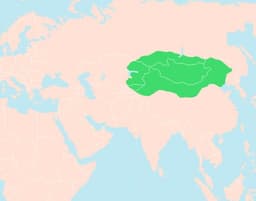
Zhizhi Chanyu
Emperor · Ancient
41.4Total
Basic Information
Born
4
-60
Died
44
-36
Era
Ancient
Ancient
Nationality
Goguryeo
Xiongnu
Occupation
Emperor
Emperor
Civilization
Eastern
Eastern
Score Comparison
Military (10%)
70.0
40.0
Political (20%)
36.5
29.3
Influence (20%)
49.4
47.9
Legacy (20%)
41.7
40.0
Leadership (15%)
62.2
45.0
Strategy (15%)
60.0
43.3
TOTAL
50.6
41.4
Daemusin of Goguryeo — Complete Timeline
22 AD
Killed the Dongbuyeo king in single combatWar
Daemusin personally killed the king of Dongbuyeo during a battle, a rare feat for a monarch. This act decisively ended the war and led to the annexation of Dongbuyeo into Goguryeo, greatly expanding its territory.
Single CombatAnnexationExpansion
Impact: regionaldestructive
Annexation of DongbuyeoWar
Following the death of its king, Daemusin incorporated Dongbuyeo into Goguryeo. This doubled Goguryeo's territory and population, transforming it from a small kingdom into a major regional power in Manchuria and northern Korea.
Territorial ExpansionConquest
Impact: regionalconstructive
26 AD
Campaign against the Okjeo tribesWar
Daemusin launched a military campaign to subjugate the Okjeo tribes along the eastern coast of the Korean peninsula. The campaign succeeded in bringing these tribes under Goguryeo's control, securing valuable coastal resources and trade routes.
SubjugationCoastal Expansion
Impact: regional
Zhizhi Chanyu — Complete Timeline
53 BC
Rivalry with Huhanye ChanyuPolitical Action◆ Major
Zhizhi and his brother Huhanye fought for control of the Xiongnu confederation. Zhizhi defeated Huhanye initially, but Huhanye submitted to the Han dynasty, gaining their support. Zhizhi then moved west, splitting the Xiongnu.
Xiongnu Civil WarSuccession
Impact: regionaldestructive
43 BC
Conflict with the Wusun and KangjuWar
After moving west, Zhizhi Chanyu attacked the Wusun people and allied with the Kangju. He established a base in the Talas River valley, raiding neighboring tribes and disrupting trade routes, which provoked Han intervention.
Xiongnu ExpansionCentral Asia
Impact: regionaldestructive
36 BC
Defeated by Han forces at the Battle of ZhizhiWar◆ Major
Zhizhi Chanyu, having moved west into Central Asia, was attacked by a Han Chinese expeditionary force led by Chen Tang and Gan Yanshou. His fortified city was stormed, and Zhizhi was killed. This battle marked the furthest westward expansion of Han military power and ended Zhizhi's threat to the Han.
Han-Xiongnu WarBattleDeath
Impact: regionaldestructive
This comparison has not been analyzed yet.
One-time AI generation (~1 minute). Scores and timeline are already available below.
Rankings
🥇
Daemusin of GoguryeoLeader
Mil: 70.0Pol: 36.5Inf: 49.4
50.6
🥈
Zhizhi Chanyu
Mil: 40.0Pol: 29.3Inf: 47.9
41.4
+9.2 behind
How This Comparison Works
Algorithm
Each figure is scored on 6 dimensions (0—100 scale) based on structured historical data: Military (10%), Political (20%), Influence (20%), Legacy (20%), Leadership (15%), Strategy (15%). The weighted total produces the final ranking.
Data Sources
Scores are computed from structured sub-indicators in the database. Scale factors adjust for era (Ancient ×0.85, Modern ×1.0) and civilization size (Eastern ×1.05, Other ×0.80) to account for differences in population and military scale.
Maximum 3 Figures
Comparisons are limited to 2—3 figures to ensure readability and statistical meaningfulness.
Error Margins
±5 points per dimension — Sub-scores are derived from historical records with inherent uncertainty. Two figures within 5 points on a dimension should be considered roughly equivalent in that area.
Total Score Accuracy
±3 points overall — The weighted combination of 6 dimensions produces a total score with approximately ±3 points of uncertainty. Differences of less than 3 points are not statistically significant— the figures are effectively tied.
Known Limitations
- Historical records are incomplete and uneven across civilizations
- Figures from oral-tradition societies may be underrepresented
- Occupation labels can misclassify multi-role figures
- Scores measure capability and impact, not moral character
- Quantitative scoring is a comparison tool, not absolute truth
Capability Radar
Military (10%) — Battles & Warfare
Battles
55
35
Win Rate
60
40
Expansion
60
50
Political (20%) — Governance & Reform
Reform
30
15
Diplomacy
35
35
Economy
30
20
Influence (20%) — Cultural & Global Reach
Cultural
35
20
Global
20
25
Legacy (20%) — Historical Impact
Historical
40
30
Longevity
30
20
Leadership (15%) — Power & Stability
Tenure
40
30
Stability
40
25
Strategy (15%) — Tactics & Innovation
Strategy
45
40
Tactics
50
45
Reform
30
20
Similar Comparisons
Comments & Discussion
No comments yet. Be the first to share your thoughts!