Loading...
Cyrus the Great vs Ferdinand I of Leon
Cyrus the Great leads by 24.7 pts · 2 figures compared
…
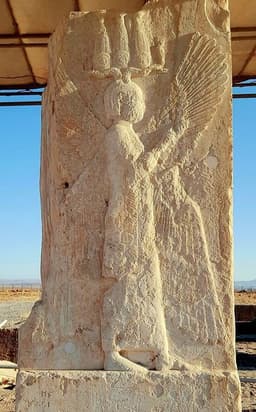
Cyrus the Great
Emperor · Ancient
83.9Total
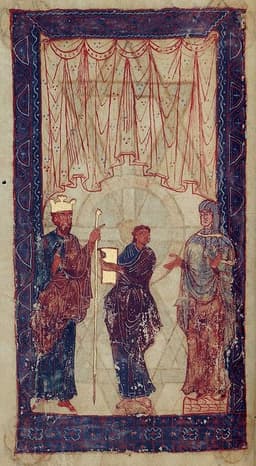
Ferdinand I of Leon
Emperor · Medieval
59.2Total
Basic Information
Born
-600
1015
Died
-530
1065
Era
Ancient
Medieval
Nationality
Persia
Leon
Occupation
Emperor
Emperor
Civilization
Middle Eastern
Western
Score Comparison
Military (10%)
82.0
70.0
Political (20%)
85.0
68.0
Influence (20%)
85.0
56.4
Legacy (20%)
90.0
49.2
Leadership (15%)
78.0
66.0
Strategy (15%)
75.0
57.5
TOTAL
83.9
59.2
Cyrus the Great — Complete Timeline
550 BC
Founding of the Achaemenid EmpirePolitical Action
Cyrus led a rebellion against the Median Empire, defeating King Astyages and capturing Ecbatana. He then united the Persian and Median tribes, establishing the Achaemenid Empire, which became the largest empire the world had yet seen.
Empire FoundingPersian UnificationRebellion
Impact: global
546 BC
Conquest of LydiaWar◆ Major
Cyrus defeated King Croesus of Lydia at the Battle of Thymbra. The Lydian capital Sardis was captured, and Croesus was taken prisoner. This conquest brought Anatolia under Persian control and secured access to the Aegean coast.
Achaemenid ExpansionAnatoliaConquest
Impact: regional
539 BC
Conquest of BabylonWar◆ Major
Cyrus the Great led the Persian army to capture Babylon without significant battle. The city's gates were opened, and Cyrus entered peacefully. This conquest added Mesopotamia to the Achaemenid Empire and marked the end of the Neo-Babylonian Empire.
Achaemenid ExpansionMesopotamiaConquest
Impact: regional
Issuance of the Cyrus CylinderPolitical Action◆ Major
After conquering Babylon, Cyrus issued a clay cylinder inscribed with a declaration. It described his policy of restoring temples, repatriating displaced peoples, and allowing religious freedom. The cylinder is often cited as an early charter of human rights.
Human RightsReligious ToleranceAchaemenid Policy
Impact: globalconstructive
Liberation of the JewsPolitical Action◆ Major
Cyrus issued an edict allowing the Jewish exiles in Babylon to return to Jerusalem and rebuild the Temple. This event is recorded in the biblical Book of Ezra and is a key moment in Jewish history, ending the Babylonian captivity.
Jewish HistoryReligious FreedomReturn from Exile
Impact: regionalconstructive
Ferdinand I of Leon — Complete Timeline
1029 AD
Inheritance of the County of CastilePolitical Action◆ Major
Ferdinand I inherited the County of Castile from his father Sancho III of Navarre. He later expanded his territory through conquest and marriage, laying the foundation for the Kingdom of Castile.
Impact: regionalconstructive
1037 AD
Conquest of LeónWar◆ Major
Ferdinand I defeated and killed King Bermudo III of Le
Impact: regional
1056 AD
First Emperor of SpainPolitical Action◆ Major
Ferdinand I was crowned 'Imperator totius Hispaniae' (Emperor of all Spain) in 1056, claiming suzerainty over all Christian and Muslim rulers in Iberia. This title reflected his military dominance and political ambition.
Impact: regional
1065 AD
Division of the kingdomPolitical Action◆ Major
Upon his death, Ferdinand I divided his kingdom among his sons: Sancho II received Castile, Alfonso VI received Le
Impact: regionaldestructive
Expert Analysis
Cyrus the Great vs Ferdinand I of Leon
# The Conqueror and the King: Cyrus the Great and Ferdinand I of León
Two men, separated by fifteen centuries and half a world, each claimed the title of emperor. One built an empire that stretched from the Indus to the Mediterranean, a multicultural mosaic held together by tolerance and law. The other carved a kingdom out of the Iberian frontier, a Christian stronghold in a Muslim land, only to shatter it with his dying breath. Why did Cyrus the Great’s creation endure for two centuries, while Ferdinand I’s empire dissolved within a generation? The answer lies not in their ambitions, which were equally grand, but in the very different worlds that shaped them and the choices they made at the height of their power.
Origins
Cyrus was born around 600 BCE into a world of rising empires. The Medes dominated Persia, but his own clan, the Achaemenids, ruled the southwestern province of Persis as vassals. According to Herodotus, his grandfather Astyages, the Median king, dreamed that Cyrus would one day overthrow him—a prophecy that set in motion a childhood of exile and survival. This was a world where power was personal, tribal, and brutal.
Ferdinand I, born in 1015, inherited a very different landscape. He was the second son of Sancho III of Navarre, the most powerful Christian king in Spain. The Reconquista was in full swing: the fractured taifa kingdoms of al-Andalus paid tribute to Christian lords, while the Church blessed campaigns as holy wars. Ferdinand grew up not in a tribal camp but in a court where primogeniture, papal authority, and feudal law were beginning to take shape. His world was one of borders, titles, and the slow consolidation of Christendom.
Rise to Power
Cyrus’s path to power began with rebellion. In 550 BCE, he led the Persians against his grandfather Astyages, defeating the Median army and capturing Ecbatana. This was not a war of conquest alone—it was a political revolution. Cyrus did not destroy the Median nobility; he integrated them, appointing Medes to high offices and respecting their customs. He understood that legitimacy came not from blood but from the consent of the conquered.
Ferdinand’s rise was more legalistic. In 1029, he inherited the County of Castile from his father, a modest territory. But in 1037, at the Battle of Tamarón, he killed King Bermudo III of León and claimed that kingdom through his wife, Sancha, Bermudo’s sister. This was a feudal marriage gambit, not a tribal uprising. Ferdinand then spent two decades fighting not just Moors but also his own brothers and cousins, slowly assembling the crowns of León, Castile, and Galicia under his rule. In 1056, he had himself crowned “Imperator totius Hispaniae”—Emperor of All Spain—a title that echoed the Roman past but rested on a fragile personal union.
Leadership & Governance
Cyrus governed through what the Cyrus Cylinder, issued in 539 BCE after the fall of Babylon, calls “justice and righteousness.” He restored temples, returned deported peoples to their homelands, and allowed local elites to retain power. His most famous act was the liberation of the Jewish exiles, recorded in the Book of Ezra: “The Lord stirred up the spirit of Cyrus king of Persia, so that he made a proclamation throughout all his kingdom.” This was not mere benevolence—it was strategy. By respecting local gods and customs, Cyrus turned conquered subjects into loyal citizens. The empire was held together by consent, not force.
Ferdinand governed by the sword and the cross. His military campaigns against the Moors were relentless: he exacted tribute from the taifa kingdoms of Toledo, Seville, and Zaragoza, and pushed the frontier southward. But his political wisdom was limited. He never created a unified administration or a legal code for his “empire.” Instead, he ruled through personal authority and the loyalty of his nobles, who were rewarded with land and plunder. When he fell ill in 1065, he made a fateful decision: he divided his kingdom among his three sons, Sancho, Alfonso, and García, following the Navarrese tradition of partible inheritance. It was an act of paternal love that ensured decades of civil war.
Triumph & Tragedy
Cyrus’s greatest moment was the conquest of Babylon in 539 BCE. The city fell without a siege—its gates were opened by disaffected priests and officials. Cyrus entered peacefully, prayed to the Babylonian god Marduk, and restored the cult. The cylinder he issued stands as one of history’s first declarations of human rights, proclaiming that all people should worship their own gods and live in peace. His tragedy was his death around 530 BCE, possibly in battle against nomadic tribes on the empire’s northeastern frontier. He died as he lived: expanding his realm, but leaving no clear succession plan. His son Cambyses inherited the throne, but the empire soon faced revolts.
Ferdinand’s triumph was his coronation as Emperor of Spain in 1056, a symbolic claim that no Christian king had made before. He had united most of the Christian north and broken the power of the Moors. But his tragedy was immediate: by dividing his kingdom, he ensured that his sons would fight one another for supremacy. Within a decade, Sancho II was assassinated, and Alfonso VI emerged as the sole ruler—but only after years of fratricidal war that weakened León and Castile just as the Almoravids were invading from North Africa.
Character & Destiny
Cyrus was a pragmatist with a vision. He understood that empires are built on trust, not terror. His personality—magnanimous, strategic, and inclusive—shaped an empire that lasted two centuries. He was remembered not as a tyrant but as a liberator, a shepherd of his people. The Greeks, the Jews, and the Babylonians all praised him.
Ferdinand was a warrior-king of the feudal age. His piety and courage were unquestioned, but his vision was narrow. He saw his kingdom as a personal inheritance to be divided among his sons, not as a state to be preserved. His personality—pious, ambitious, but ultimately parochial—doomed his empire to fragmentation. He was remembered as a great king, but a poor architect.
Legacy
Cyrus the Great left behind the Achaemenid Empire, the model for all future Persian dynasties. His cylinder influenced the American Declaration of Independence, and his liberation of the Jews is celebrated in the Bible. He is remembered as a founder, a unifier, and a champion of human dignity.
Ferdinand I left behind a divided kingdom, a legend of the Reconquista, and a title—Emperor of Spain—that would not be revived for another four centuries. His legacy is the slow, painful unification of Spain, a process that would take until the reign of the Catholic Monarchs. He is remembered as a warrior, but not as a statesman.
Conclusion
Cyrus built an empire on the principle of inclusion; Ferdinand built a kingdom on the principle of inheritance. One looked outward, to the diversity of peoples; the other looked inward, to the claims of his sons. The difference between a lasting empire and a fleeting one is not in the size of the army or the brilliance of the general. It is in the ruler’s ability to see beyond his own lifetime—to build institutions, not just victories; to create loyalty, not just fear. Cyrus saw the future and built for it. Ferdinand saw his family and built for them. History remembers both, but it learns from only one.
Rankings
🥇
Cyrus the GreatLeader
Mil: 82.0Pol: 85.0Inf: 85.0
83.9
🥈
Ferdinand I of Leon
Mil: 70.0Pol: 68.0Inf: 56.4
59.2
+24.7 behind
How This Comparison Works
Algorithm
Each figure is scored on 6 dimensions (0—100 scale) based on structured historical data: Military (10%), Political (20%), Influence (20%), Legacy (20%), Leadership (15%), Strategy (15%). The weighted total produces the final ranking.
Data Sources
Scores are computed from structured sub-indicators in the database. Scale factors adjust for era (Ancient ×0.85, Modern ×1.0) and civilization size (Eastern ×1.05, Other ×0.80) to account for differences in population and military scale.
Maximum 3 Figures
Comparisons are limited to 2—3 figures to ensure readability and statistical meaningfulness.
Error Margins
±5 points per dimension — Sub-scores are derived from historical records with inherent uncertainty. Two figures within 5 points on a dimension should be considered roughly equivalent in that area.
Total Score Accuracy
±3 points overall — The weighted combination of 6 dimensions produces a total score with approximately ±3 points of uncertainty. Differences of less than 3 points are not statistically significant— the figures are effectively tied.
Known Limitations
- Historical records are incomplete and uneven across civilizations
- Figures from oral-tradition societies may be underrepresented
- Occupation labels can misclassify multi-role figures
- Scores measure capability and impact, not moral character
- Quantitative scoring is a comparison tool, not absolute truth
Capability Radar
Military (10%) — Battles & Warfare
Battles
85
55
Win Rate
90
60
Expansion
92
60
Political (20%) — Governance & Reform
Reform
90
50
Diplomacy
95
55
Economy
80
45
Influence (20%) — Cultural & Global Reach
Cultural
90
40
Global
90
30
Legacy (20%) — Historical Impact
Historical
95
45
Longevity
95
40
Leadership (15%) — Power & Stability
Tenure
70
65
Stability
85
50
Strategy (15%) — Tactics & Innovation
Strategy
88
55
Tactics
80
50
Reform
75
40
Similar Comparisons
Comments & Discussion
CYRUS_FANBOI6/16/2026
Calling Ferdinand I an "emperor" is laughable. He was a glorified county lord who couldn't keep his three sons from ripping his kingdom apart before his body went cold. Cyrus the Great conquered Babylon in 539 BCE without even needing to fight—the gates opened to him because his reputation for mercy preceded him. Ferdinand spent decades hacking at Muslim taifas, yet his own family inheritance plan was a medieval demolition derby. Give me Cyrus's Persian tolerance over Ferdinand's family feud any
帝国考古学家6/16/2026
你们把费迪南一世和居鲁士大帝放到一起比较?这就像拿村口械斗和世界大战比!居鲁士的波斯帝国横跨三大洲,用"居鲁士圆柱"确立了史上第一个保障人权的政策——公元前539年就懂得尊重不同民族宗教,比费迪南那套分家产导致卡斯提尔和莱昂内战强一万倍。费迪南连自己儿子都管不住,还谈什么帝国?他临死前把领土分给三个孩子,直接让西班牙倒退五十年,真是教科书级的失败操作!|
STATS_GUY6/16/2026
Let's talk numbers. Cyrus ruled a 5.5 million square kilometer empire for 30 years and it survived another 190 after his death. What's Ferdinand's score? Maybe 200,000 km² at absolute peak, and his "empire" fractured within 5 years of his death in 1065. The Achaemenid dynasty used standardized coinage, satrapies, and a postal system still studied in military colleges. Ferdinand? He used bishops and noblemen who spent more time squabbling than governing. Not even close in the imperial longevity d
征服者对比党6/16/2026
拜托,费迪南一世就是个山寨版的征服者!他那些"伟大功绩"不过是趁穆斯林小王国内讧时捡便宜——1072年吞并加西亚的加利西亚,是靠兄弟相残而不是战场上的真本事。反观居鲁士,公元前547年征服吕底亚时,富甲天下的克洛伊索斯都打不过他。费迪南临死还把国土分成三份(卡斯提尔、莱昂、加利西亚),搞得兄弟互砍,这操作放在管理学教科书里就是"如何毁掉一个王国"的标准案例!|
CLASSICS_NERD6/16/2026
Herodotus tells us Cyrus died fighting the Massagetae, which is a badass end for a badass king—he went out in battle, not in bed like Ferdinand in 1065. But here's the kicker: Cyrus's "tolerance" wasn't just PR. When he conquered Babylon, he restored temples and let exiled peoples go home, including the Jews. That's not just good governance; it's genius nation-building. Ferdinand