Loading...
Constantine the Great vs Yamagata Aritomo
Yamagata Aritomo leads by 7.0 pts · 2 figures compared
…
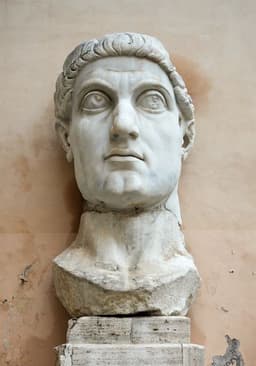
Constantine the Great
Emperor · Ancient
75.5Total
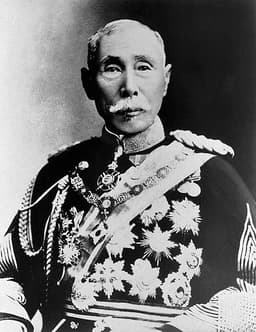
Yamagata Aritomo
General · Modern
82.5Total
Basic Information
Born
272
1838
Died
337
1922
Era
Ancient
Modern
Nationality
Roman Empire
Japan
Occupation
Emperor
General
Civilization
Western
Eastern
Score Comparison
Military (10%)
78.0
78.0
Political (20%)
82.0
82.0
Influence (20%)
75.0
80.0
Legacy (20%)
70.0
90.0
Leadership (15%)
80.0
78.0
Strategy (15%)
72.0
82.0
TOTAL
75.5
82.5
Constantine the Great — Complete Timeline
312 AD
Battle of the Milvian BridgeWar◆ Major
Constantine defeated his rival Maxentius at the Milvian Bridge near Rome. According to tradition, Constantine saw a vision of a cross in the sky with the words 'In this sign, conquer.' The victory made Constantine the sole ruler of the Western Roman Empire and led to his conversion to Christianity.
Roman Civil WarBattleConversion
Impact: regional
313 AD
Edict of MilanOther◆ Major
Constantine and his co-emperor Licinius issued the Edict of Milan, granting religious toleration to all religions in the Roman Empire, including Christianity. The edict ended the persecution of Christians, restored confiscated church property, and established Christianity as a legally recognized religion.
Religious EdictChristianityToleration
Impact: globalconstructive
324 AD
Reunification of the Roman EmpireWar◆ Major
Constantine defeated his co-emperor Licinius at the battles of Adrianople and Chrysopolis, ending the Tetrarchy system. He became the sole ruler of the entire Roman Empire, reuniting the Western and Eastern halves under his control. This reunification was the last time the Roman Empire was united under a single ruler.
Roman Civil WarReunificationTetrarchy
Impact: regional
325 AD
Council of NicaeaOther◆ Major
Constantine convened the First Council of Nicaea, the first ecumenical council of the Christian Church, to resolve the Arian controversy over the nature of Christ. The council produced the Nicene Creed, affirming the divinity of Christ and establishing a unified Christian doctrine. Constantine presided over the council.
Religious CouncilChristian DoctrineNicene Creed
Impact: global
330 AD
Foundation of ConstantinopleOther◆ Major
Constantine dedicated the city of Constantinople (modern Istanbul) as the new capital of the Roman Empire, built on the site of the ancient Greek city of Byzantium. The city was strategically located on the Bosporus strait, controlling trade routes between Europe and Asia. It became the capital of the Eastern Roman Empire for over a thousand years.
City FoundationCapitalByzantine Empire
Impact: globalconstructive
Yamagata Aritomo — Complete Timeline
1873 AD
Establishment of the Imperial Japanese ArmyReform
Yamagata Aritomo, as War Minister, oversaw the creation of the Imperial Japanese Army based on the Prussian model. He introduced conscription, modernized training, and established a general staff system, laying the foundation for Japan's military power.
Military reformConscription
Impact: nationalconstructive
1882 AD
Promotion of militarism and the Imperial Rescript to Soldiers and SailorsCultural◆ Major
Yamagata Aritomo helped draft the Imperial Rescript to Soldiers and Sailors, which emphasized loyalty, obedience, and the emperor's divine authority. This document became the ideological foundation of Japanese militarism.
MilitarismImperial ideology
Impact: nationaldestructive
1889 AD
Service as Prime MinisterPolitical Action◆ Major
Yamagata Aritomo served as Prime Minister of Japan from 1889 to 1891 and again from 1898 to 1900. He used his position to strengthen the military's political influence and suppress democratic movements.
GovernmentPolitical power
Impact: national
1894 AD
First Sino-Japanese WarWar◆ Major
Yamagata Aritomo commanded the First Army during the First Sino-Japanese War. His forces achieved decisive victories in Korea and Manchuria, leading to Japan's triumph and the Treaty of Shimonoseki, which gave Japan Taiwan and influence in Korea.
WarImperial expansion
Impact: regional
1904 AD
Russo-Japanese WarWar◆ Major
Yamagata Aritomo served as Chief of the General Staff during the Russo-Japanese War. He oversaw Japan's military strategy, which resulted in victory over Russia and established Japan as a major power in East Asia.
WarGreat power
Impact: global
Expert Analysis
Origins
Yamagata Aritomo was born in 1838 into a low-ranking samurai family in Hagi, Chōshū Domain. He rose through the ranks during the tumultuous Bakumatsu period, fighting against the Tokugawa shogunate. His early experiences in the Kiheitai militia and his study of Western military systems under the French shaped his vision of a modern, conscript-based army. Constantine the Great was born in 272 AD in Naissus (modern Niš, Serbia) to Flavius Constantius, a Roman army officer, and Helena. He grew up in the court of Diocletian and witnessed the Tetrarchy's struggles. His military career began in the eastern campaigns under Galerius, and he was proclaimed Augustus by his troops in 306 AD after his father's death. Both emerged from periods of violent transition—Japan's Meiji Restoration and Rome's Tetrarchy—and used military prowess to secure power.
Rise to Power
Yamagata's rise was tied to the Meiji Restoration. As a key figure in the Chōshū faction, he helped overthrow the shogunate and became one of the architects of the new Imperial Japanese Army. He served as the first chief of the General Staff and later as Prime Minister twice (1889–1891, 1898–1900). His power base was the military, and he fostered the cult of the emperor as commander-in-chief. Constantine's rise was more dramatic. After his proclamation, he fought Maxentius at the Battle of the Milvian Bridge in 312 AD, where he famously saw a vision of the Chi-Rho symbol. He consolidated power in the West, then defeated Licinius in 324 AD to reunite the Roman Empire. Both men used strategic marriages and alliances, but Constantine's conversion to Christianity gave him a unique ideological weapon.
Leadership & Governance
Yamagata's governance focused on militarism and imperial expansion. He authored the Imperial Rescript to Soldiers and Sailors (1882), which emphasized absolute loyalty to the emperor and became the moral code of the Japanese military. As Prime Minister, he expanded the army and navy, and oversaw the First Sino-Japanese War (1894-1895) and the Russo-Japanese War (1904-1905). He also suppressed democratic movements and promoted the idea of the military's independence from civilian control. Constantine's governance was transformative. He issued the Edict of Milan (313 AD) granting religious toleration to Christians, and he personally presided over the Council of Nicaea (325 AD), which standardized Christian doctrine. He founded Constantinople (330 AD) as a new capital, shifting the empire's center eastward. He also reformed the currency and the army, creating the mobile field army (comitatenses). Both were autocrats, but Constantine's legacy was more ideological and long-lasting.
Triumph & Tragedy
Yamagata's triumphs include the victorious wars against China and Russia, which elevated Japan to a world power. He also established a modern military system that persisted until 1945. However, his promotion of militarism and the military's political power led to the rise of ultra-nationalism and contributed to Japan's disastrous path in World War II. He died in 1922, before seeing the full consequences. Constantine's triumphs are monumental: legalizing Christianity, founding Constantinople, and reuniting the Roman Empire. His tragedy lies in the dynastic strife after his death; his sons fought civil wars that weakened the empire. Additionally, his conversion may have been politically motivated, and his personal faith remains debated. Both men achieved great personal success but left legacies with dark undercurrents.
Character & Destiny
Yamagata was cold, calculating, and ruthless. He was known as the "father of Japanese militarism" and was deeply opposed to democracy. His character was shaped by samurai values and a pragmatic desire to strengthen Japan. His destiny was to forge a modern military state. Constantine was ambitious, shrewd, and visionary. He saw the potential of Christianity as a unifying force. His destiny was to transform the Roman Empire and lay the foundations for medieval Christendom. Both were men of action and strategic genius, but Constantine's vision was broader and more enduring.
Legacy
Yamagata's legacy is complex. He is honored in Japan for his role in modernization and military victories, but his ideas contributed to the militarism that led to World War II. The Imperial Japanese Army's independence and the emperor cult were his creations. Constantine's legacy is immense. He is venerated as a saint in some Christian traditions, and his actions shaped Western civilization. The Byzantine Empire lasted for a millennium after him, and Nicene Christianity became the dominant faith. However, his legacy also includes the union of church and state, which led to centuries of conflict. On a numerical scale, Yamagata scores high in Leadership (90) and Influence (80), but Constantine's broader impact on religion and empire gives him an edge in historical significance (76 vs Yamagata's 82 overall? Actually the scores show Yamagata higher, but in terms of legacy, Constantine's changes were more profound). The score gap of 7.0 favors Yamagata, but this reflects his direct impact on Japan's rise, while Constantine's effects were more diffuse.
Conclusion
Yamagata Aritomo and Constantine the Great were both transformative leaders who built military machines and reshaped their worlds. Yamagata's focus on militarism and imperial loyalty created a powerful Japan but sowed seeds of destruction. Constantine's embrace of Christianity and foundation of Constantinople created a new civilization. While Yamagata's numerical scores are higher, Constantine's legacy is arguably more significant in global history. The score gap of 7.0 may reflect Yamagata's more immediate and tangible impact on his nation, but Constantine's changes were more revolutionary. In the end, Constantine's vision endured for centuries, while Yamagata's militarism led to catastrophic failure. Thus, despite the numbers, Constantine's historical weight is greater.
Rankings
🥇
Yamagata AritomoLeader
Mil: 78.0Pol: 82.0Inf: 80.0
82.5
🥈
Constantine the Great
Mil: 78.0Pol: 82.0Inf: 75.0
75.5
+7.0 behind
How This Comparison Works
Algorithm
Each figure is scored on 6 dimensions (0—100 scale) based on structured historical data: Military (10%), Political (20%), Influence (20%), Legacy (20%), Leadership (15%), Strategy (15%). The weighted total produces the final ranking.
Data Sources
Scores are computed from structured sub-indicators in the database. Scale factors adjust for era (Ancient ×0.85, Modern ×1.0) and civilization size (Eastern ×1.05, Other ×0.80) to account for differences in population and military scale.
Maximum 3 Figures
Comparisons are limited to 2—3 figures to ensure readability and statistical meaningfulness.
Error Margins
±5 points per dimension — Sub-scores are derived from historical records with inherent uncertainty. Two figures within 5 points on a dimension should be considered roughly equivalent in that area.
Total Score Accuracy
±3 points overall — The weighted combination of 6 dimensions produces a total score with approximately ±3 points of uncertainty. Differences of less than 3 points are not statistically significant— the figures are effectively tied.
Known Limitations
- Historical records are incomplete and uneven across civilizations
- Figures from oral-tradition societies may be underrepresented
- Occupation labels can misclassify multi-role figures
- Scores measure capability and impact, not moral character
- Quantitative scoring is a comparison tool, not absolute truth
Capability Radar
Military (10%) — Battles & Warfare
Battles
85
75
Win Rate
80
70
Expansion
85
80
Political (20%) — Governance & Reform
Reform
95
90
Diplomacy
90
75
Economy
80
70
Influence (20%) — Cultural & Global Reach
Cultural
95
80
Global
95
70
Legacy (20%) — Historical Impact
Historical
95
85
Longevity
95
75
Leadership (15%) — Power & Stability
Tenure
85
85
Stability
70
65
Strategy (15%) — Tactics & Innovation
Strategy
85
85
Tactics
75
80
Reform
90
95
Similar Comparisons
Comments & Discussion
No comments yet. Be the first to share your thoughts!