Loading...
Constantine the Great vs Eannatum
Constantine the Great leads by 15.8 pts · 2 figures compared
…
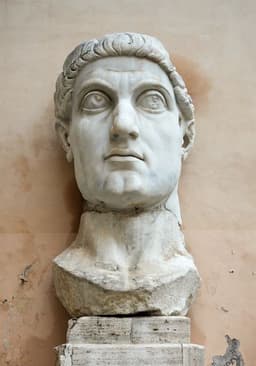
Constantine the Great
Emperor · Ancient
75.5Total
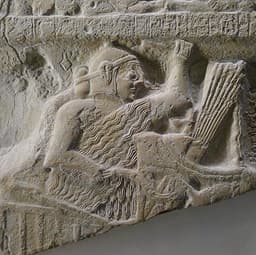
Eannatum
Emperor · Ancient
59.7Total
Basic Information
Born
272
-2450
Died
337
-2400
Era
Ancient
Ancient
Nationality
Roman Empire
Lagash
Occupation
Emperor
Emperor
Civilization
Western
Middle Eastern
Score Comparison
Military (10%)
78.0
61.7
Political (20%)
82.0
68.0
Influence (20%)
75.0
56.4
Legacy (20%)
70.0
56.0
Leadership (15%)
80.0
68.0
Strategy (15%)
72.0
50.0
TOTAL
75.5
59.7
Constantine the Great — Complete Timeline
312 AD
Battle of the Milvian BridgeWar◆ Major
Constantine defeated his rival Maxentius at the Milvian Bridge near Rome. According to tradition, Constantine saw a vision of a cross in the sky with the words 'In this sign, conquer.' The victory made Constantine the sole ruler of the Western Roman Empire and led to his conversion to Christianity.
Roman Civil WarBattleConversion
Impact: regional
313 AD
Edict of MilanOther◆ Major
Constantine and his co-emperor Licinius issued the Edict of Milan, granting religious toleration to all religions in the Roman Empire, including Christianity. The edict ended the persecution of Christians, restored confiscated church property, and established Christianity as a legally recognized religion.
Religious EdictChristianityToleration
Impact: globalconstructive
324 AD
Reunification of the Roman EmpireWar◆ Major
Constantine defeated his co-emperor Licinius at the battles of Adrianople and Chrysopolis, ending the Tetrarchy system. He became the sole ruler of the entire Roman Empire, reuniting the Western and Eastern halves under his control. This reunification was the last time the Roman Empire was united under a single ruler.
Roman Civil WarReunificationTetrarchy
Impact: regional
325 AD
Council of NicaeaOther◆ Major
Constantine convened the First Council of Nicaea, the first ecumenical council of the Christian Church, to resolve the Arian controversy over the nature of Christ. The council produced the Nicene Creed, affirming the divinity of Christ and establishing a unified Christian doctrine. Constantine presided over the council.
Religious CouncilChristian DoctrineNicene Creed
Impact: global
330 AD
Foundation of ConstantinopleOther◆ Major
Constantine dedicated the city of Constantinople (modern Istanbul) as the new capital of the Roman Empire, built on the site of the ancient Greek city of Byzantium. The city was strategically located on the Bosporus strait, controlling trade routes between Europe and Asia. It became the capital of the Eastern Roman Empire for over a thousand years.
City FoundationCapitalByzantine Empire
Impact: globalconstructive
Eannatum — Complete Timeline
2450 BC
Victory over Umma at the Boundary CanalWar◆ Major
Eannatum defeated the forces of Umma in a battle near the boundary canal between Lagash and Umma. The victory was commemorated on the Stele of the Vultures, which shows vultures carrying away the heads of the defeated. This established Lagash's dominance over Umma.
BattleUmmaLagash
Creation of the Stele of the VulturesCultural
Eannatum, king of Lagash, commissioned the Stele of the Vultures, the first known historical document. The stele depicts his victory over Umma and records the boundary treaty between the two city-states. It is a key source for early Sumerian warfare and diplomacy.
Historical DocumentSteleSumerian Art
Impact: global
2440 BC
Subjugation of Elam and SubartuWar
Eannatum campaigned against Elam and Subartu, extending Lagash's influence beyond Sumer. Inscriptions record his victories and the tribute he exacted from these regions. This expansion made Lagash a major power in Mesopotamia during his reign.
Military CampaignElamSubartu
Impact: regional
Expert Analysis
Origins
Constantine the Great was born in 272 CE in Naissus (modern Niš, Serbia) to Flavius Constantius, a Roman army officer, and Helena, a woman of low birth. His father became a Caesar under the Tetrarchy, and Constantine grew up in the imperial court of Diocletian, receiving a military education. He served under Diocletian and Galerius, fighting in campaigns against the Persians and Sarmatians. Eannatum, by contrast, lived around 2450 BCE in the Sumerian city-state of Lagash (modern Tell al-Hiba, Iraq). He was a king of the First Dynasty of Lagash, likely the son of Akurgal. Little is known of his early life, but he inherited a kingdom embroiled in a long-standing border dispute with the neighboring city-state of Umma over the fertile Gu-Edin plain. His reign is documented primarily through inscriptions on the Stele of the Vultures and other artifacts.
Rise to Power
Constantine rose to power after his father's death in 306 CE, when his troops proclaimed him Augustus in York. He spent the next 18 years consolidating control, defeating rival emperors in a series of civil wars. His decisive victory at the Battle of the Milvian Bridge in 312 CE over Maxentius secured the western empire. According to Eusebius, Constantine saw a vision of a cross with the words "in this sign, conquer" before the battle. In 324 CE, he defeated Licinius at the Battles of Adrianople and Chrysopolis, reunifying the Roman Empire under his sole rule. Eannatum's rise is less documented but occurred through military conquest. He inherited the conflict with Umma and decisively defeated their forces at the Boundary Canal, as recorded on the Stele of the Vultures. This victory allowed him to impose a boundary treaty favorable to Lagash. He then extended his influence through campaigns against Elam and Subartu, making Lagash the dominant power in Sumer for a time.
Leadership & Governance
Constantine's leadership transformed the Roman Empire administratively and culturally. He continued Diocletian's reforms but centralized power, creating a mobile field army and a separate frontier force. He introduced the solidus, a gold coin that became the standard for centuries. His most significant act was the Edict of Milan (313 CE), granting religious toleration to Christians and restoring confiscated property. He also personally intervened in church affairs, convening the First Council of Nicaea in 325 CE to resolve the Arian controversy. By founding Constantinople in 330 CE on the site of Byzantium, he created a new eastern capital with a senate, bureaucracy, and Christian identity. Eannatum's governance is known from inscriptions. He established a boundary canal with Umma and enforced a treaty that included tribute payments. He also built temples and irrigation projects. His rule was autocratic, typical of Sumerian city-state kings, but he lacked the administrative innovations of Constantine. Eannatum's political score of 68.0 reflects his local impact, while Constantine's 82.0 reflects empire-wide reforms.
Triumph & Tragedy
Constantine's greatest triumph was reunifying the Roman Empire and establishing a stable dynasty. The foundation of Constantinople created a lasting eastern capital that endured for a millennium. His support for Christianity transformed the religion from a persecuted sect to the state religion. However, his reign also saw the execution of his eldest son Crispus and his wife Fausta in 326 CE, a family tragedy that remains controversial. His tax policies and heavy military spending strained the economy. Eannatum's triumph was his victory over Umma and the creation of the Stele of the Vultures, the first historical document, which recorded his conquests and established a precedent for historical recording. His subjugation of Elam extended Lagash's influence. However, his successes were short-lived; after his death, Umma resumed hostilities, and Lagash's power declined. The stele itself was later broken and reused as building material, reflecting the fragility of his legacy.
Character & Destiny
Constantine was pragmatic and ambitious, willing to use both military force and religious policy to achieve unity. His vision at the Milvian Bridge suggests a strategic use of religion to legitimize his rule. He was a capable administrator but also ruthless, as seen in the executions of his relatives. His personality shaped the Christianization of Rome and the shift of the empire's center eastward. Eannatum's character is inferred from his inscriptions, which portray him as a pious and victorious king favored by the gods. He was aggressive in expanding Lagash's territory but also recorded his deeds for posterity, showing a concern for legacy. However, his reliance on personal leadership meant his achievements did not outlast his reign.
Legacy
Constantine's legacy is immense. He changed the course of Western civilization by legalizing Christianity, which became the dominant religion in Europe. Constantinople remained the capital of the Byzantine Empire until 1453. The solidus stabilized the economy, and the Council of Nicaea defined Christian orthodoxy. He scores 75.0 in influence and 70.0 in legacy. Eannatum's legacy is more limited but significant as a pioneer of historical documentation. The Stele of the Vultures is the earliest known historical narrative, influencing later Mesopotamian recording. However, his political and military achievements were ephemeral. His legacy score of 56.0 reflects this.
Conclusion
Constantine the Great had a far greater impact on world history than Eannatum. While Eannatum created the first historical document and temporarily expanded Lagash, his influence was confined to Sumer and did not endure. Constantine, with a total score of 75.5 compared to Eannatum's 59.7, reshaped the Roman Empire and Christianity, affecting billions of people over centuries. His military (78.0 vs 61.7), political (82.0 vs 68.0), and leadership (80.0 vs 68.0) scores all significantly exceed Eannatum's. The foundation of Constantinople and the Edict of Milan are transformative events that still resonate. Eannatum's stele is a historical curiosity, but Constantine's actions defined an era.
Rankings
🥇
Constantine the GreatLeader
Mil: 78.0Pol: 82.0Inf: 75.0
75.5
🥈
Eannatum
Mil: 61.7Pol: 68.0Inf: 56.4
59.7
+15.8 behind
How This Comparison Works
Algorithm
Each figure is scored on 6 dimensions (0—100 scale) based on structured historical data: Military (10%), Political (20%), Influence (20%), Legacy (20%), Leadership (15%), Strategy (15%). The weighted total produces the final ranking.
Data Sources
Scores are computed from structured sub-indicators in the database. Scale factors adjust for era (Ancient ×0.85, Modern ×1.0) and civilization size (Eastern ×1.05, Other ×0.80) to account for differences in population and military scale.
Maximum 3 Figures
Comparisons are limited to 2—3 figures to ensure readability and statistical meaningfulness.
Error Margins
±5 points per dimension — Sub-scores are derived from historical records with inherent uncertainty. Two figures within 5 points on a dimension should be considered roughly equivalent in that area.
Total Score Accuracy
±3 points overall — The weighted combination of 6 dimensions produces a total score with approximately ±3 points of uncertainty. Differences of less than 3 points are not statistically significant— the figures are effectively tied.
Known Limitations
- Historical records are incomplete and uneven across civilizations
- Figures from oral-tradition societies may be underrepresented
- Occupation labels can misclassify multi-role figures
- Scores measure capability and impact, not moral character
- Quantitative scoring is a comparison tool, not absolute truth
Capability Radar
Military (10%) — Battles & Warfare
Battles
85
65
Win Rate
80
70
Expansion
85
60
Political (20%) — Governance & Reform
Reform
95
45
Diplomacy
90
50
Economy
80
40
Influence (20%) — Cultural & Global Reach
Cultural
95
55
Global
95
45
Legacy (20%) — Historical Impact
Historical
95
70
Longevity
95
60
Leadership (15%) — Power & Stability
Tenure
85
55
Stability
70
50
Strategy (15%) — Tactics & Innovation
Strategy
85
65
Tactics
75
60
Reform
90
40
Similar Comparisons
Comments & Discussion
No comments yet. Be the first to share your thoughts!