Loading...
Constantine the Great vs Turenne
Turenne leads by 0.3 pts · 2 figures compared
…
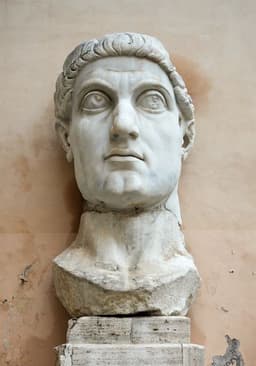
Constantine the Great
Emperor · Ancient
75.5Total
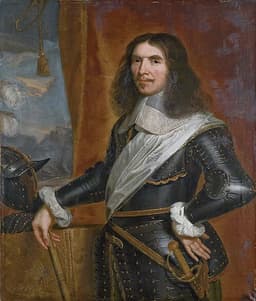
Turenne
General · Modern
75.8Total
Basic Information
Born
272
1611
Died
337
1675
Era
Ancient
Modern
Nationality
Roman Empire
France
Occupation
Emperor
General
Civilization
Western
Western
Score Comparison
Military (10%)
78.0
79.9
Political (20%)
82.0
72.0
Influence (20%)
75.0
88.0
Legacy (20%)
70.0
65.0
Leadership (15%)
80.0
77.2
Strategy (15%)
72.0
72.0
TOTAL
75.5
75.8
Constantine the Great — Complete Timeline
312 AD
Battle of the Milvian BridgeWar◆ Major
Constantine defeated his rival Maxentius at the Milvian Bridge near Rome. According to tradition, Constantine saw a vision of a cross in the sky with the words 'In this sign, conquer.' The victory made Constantine the sole ruler of the Western Roman Empire and led to his conversion to Christianity.
Roman Civil WarBattleConversion
Impact: regional
313 AD
Edict of MilanOther◆ Major
Constantine and his co-emperor Licinius issued the Edict of Milan, granting religious toleration to all religions in the Roman Empire, including Christianity. The edict ended the persecution of Christians, restored confiscated church property, and established Christianity as a legally recognized religion.
Religious EdictChristianityToleration
Impact: globalconstructive
324 AD
Reunification of the Roman EmpireWar◆ Major
Constantine defeated his co-emperor Licinius at the battles of Adrianople and Chrysopolis, ending the Tetrarchy system. He became the sole ruler of the entire Roman Empire, reuniting the Western and Eastern halves under his control. This reunification was the last time the Roman Empire was united under a single ruler.
Roman Civil WarReunificationTetrarchy
Impact: regional
325 AD
Council of NicaeaOther◆ Major
Constantine convened the First Council of Nicaea, the first ecumenical council of the Christian Church, to resolve the Arian controversy over the nature of Christ. The council produced the Nicene Creed, affirming the divinity of Christ and establishing a unified Christian doctrine. Constantine presided over the council.
Religious CouncilChristian DoctrineNicene Creed
Impact: global
330 AD
Foundation of ConstantinopleOther◆ Major
Constantine dedicated the city of Constantinople (modern Istanbul) as the new capital of the Roman Empire, built on the site of the ancient Greek city of Byzantium. The city was strategically located on the Bosporus strait, controlling trade routes between Europe and Asia. It became the capital of the Eastern Roman Empire for over a thousand years.
City FoundationCapitalByzantine Empire
Impact: globalconstructive
Turenne — Complete Timeline
1639 AD
Campaign in the ValtellinaWar
Turenne commanded French forces in the Valtellina during the Thirty Years' War. He captured several fortresses and secured the strategic pass for France, demonstrating his early military skill.
Thirty Years' WarAlpsEarly Career
Impact: regional
1658 AD
Battle of the DunesWar◆ Major
Turenne commanded the French army to victory over the Spanish at the Battle of the Dunes near Dunkirk. The victory led to the capture of Dunkirk and forced Spain to seek peace, ending the Franco-Spanish War.
Franco-Spanish WarDunkirkMilitary Victory
Impact: regional
1674 AD
Battle of the RhineWar◆ Major
Turenne led a French army across the Rhine in winter, surprising the Imperial forces. He defeated the Austrians at the Battle of Entzheim and later at Turckheim, securing French control of Alsace.
Franco-Dutch WarAlsaceWinter Campaign
Impact: regional
Battle of the SambreWar◆ Major
Turenne defeated the Spanish and Dutch forces at the Battle of Seneffe. The battle was costly but prevented the Allies from invading France. It demonstrated Turenne's tactical skill in defensive warfare.
Franco-Dutch WarDefensive BattleTactics
Impact: regional
1675 AD
Death of TurenneWar◆ Major
Turenne was killed by a cannonball while reconnoitering enemy positions at the Battle of Sasbach. His death was a major loss for France. He was buried with honors in the Basilica of Saint-Denis.
Death in BattleFranco-Dutch WarMilitary Loss
Impact: nationaltragic
Expert Analysis
Origins
Turenne, born Henri de La Tour d'Auvergne in 1611, was a scion of the French nobility, raised in the Protestant faith. His early military experience came under his uncles, the Princes of Orange, and he quickly distinguished himself in the Thirty Years' War. Constantine the Great, born in 272 AD in Naissus (modern Serbia), was the son of the Roman Emperor Constantius Chlorus. He was raised in the imperial court and exposed to military command from a young age, later acclaimed emperor by his troops. Turenne's origins lay in the complex web of European dynastic and religious conflicts, while Constantine's emerged from the crisis of the third-century Roman Empire, both shaped by their respective times.
Rise to Power
Turenne's rise was gradual, marked by consistent battlefield success and political acumen. He became a Marshal of France in 1643 after victories in Italy and Germany, and his loyalty to the crown during the Fronde rebellions solidified his position. Constantine's rise was more dramatic: after his father's death in 306, he was proclaimed emperor by his troops, then defeated rival Maxentius at the Milvian Bridge in 312, securing the Western Empire. He later defeated Licinius to reunify the Roman Empire in 324. Turenne rose through merit and service; Constantine through civil war and strategic alliance (e.g., with Christians).
Leadership & Governance
Turenne was a master of maneuver, logistics, and combined arms, leading by example and earning troops' loyalty. He modernized French military tactics and mentored younger commanders. Constantine was a skilled administrator and reformer: he reorganized the army, introduced the solidus gold coin, and founded Constantinople as a new capital. He legalized Christianity, convened the Council of Nicaea, and integrated church and state. Turenne's governance was limited to military command, while Constantine reshaped an empire's political and religious fabric.
Triumph & Tragedy
Turenne's greatest triumph was the Battle of the Dunes (1658), where his Anglo-French army defeated the Spanish, leading to French dominance. His tragic death occurred in 1675 at the Battle of Sasbach, struck by a cannonball. Constantine's triumph was the Milvian Bridge victory and the Edict of Milan (313), ending persecution of Christians. His tragedy might be the execution of his son Crispus and wife Fausta, reflecting the ruthless nature of imperial power. Both faced mixed legacies: Turenne's death cut short a brilliant career; Constantine's familial violence tarnishes his memory.
Character & Destiny
Turenne was modest, prudent, and deeply religious (Protestant), yet pragmatic in serving Catholic France. He was known for his coolness under fire and strategic patience. Constantine was ambitious, shrewd, and religiously syncretic, using Christianity for unity while maintaining pagan toleration. Turenne's destiny was to be France's greatest general; Constantine's to transform the Roman world. Turenne scored higher in Military (80 vs 78) and Intelligence (88 vs 75), reflecting his tactical brilliance. Constantine scored higher in Political (82 vs 72) and Destiny (80 vs 77), reflecting his empire-building impact.
Legacy
Turenne's legacy is as a model of military professionalism, influencing Napoleon and modern warfare. His name adorns French ships and streets. Constantine's legacy is immense: Christianity's rise, the Byzantine Empire's foundation, and a transformed Roman state. He is revered as a saint in Eastern Orthodoxy. Turenne's impact is mainly military; Constantine's is religious, political, and cultural. Their scores: Turenne M=80, P=72, I=88, L=65, D=77, S=72, T=76; Constantine M=78, P=82, I=75, L=70, D=80, S=72, T=76. Overall, Turenne edges ahead by 0.3 points.
Conclusion
Turenne and Constantine represent different forms of greatness: one the consummate military commander, the other a transformative ruler. Turenne's higher Military and Intelligence scores reflect his tactical superiority, while Constantine's Political and Destiny scores highlight his broader impact. On balance, Turenne's consistent battlefield excellence and lasting influence on military art give him a slight edge in this comparison, but Constantine's reshaping of the Western world is unparalleled.
Rankings
🥇
TurenneLeader
Mil: 79.9Pol: 72.0Inf: 88.0
75.8
🥈
Constantine the Great
Mil: 78.0Pol: 82.0Inf: 75.0
75.5
+0.3 behind
How This Comparison Works
Algorithm
Each figure is scored on 6 dimensions (0—100 scale) based on structured historical data: Military (10%), Political (20%), Influence (20%), Legacy (20%), Leadership (15%), Strategy (15%). The weighted total produces the final ranking.
Data Sources
Scores are computed from structured sub-indicators in the database. Scale factors adjust for era (Ancient ×0.85, Modern ×1.0) and civilization size (Eastern ×1.05, Other ×0.80) to account for differences in population and military scale.
Maximum 3 Figures
Comparisons are limited to 2—3 figures to ensure readability and statistical meaningfulness.
Error Margins
±5 points per dimension — Sub-scores are derived from historical records with inherent uncertainty. Two figures within 5 points on a dimension should be considered roughly equivalent in that area.
Total Score Accuracy
±3 points overall — The weighted combination of 6 dimensions produces a total score with approximately ±3 points of uncertainty. Differences of less than 3 points are not statistically significant— the figures are effectively tied.
Known Limitations
- Historical records are incomplete and uneven across civilizations
- Figures from oral-tradition societies may be underrepresented
- Occupation labels can misclassify multi-role figures
- Scores measure capability and impact, not moral character
- Quantitative scoring is a comparison tool, not absolute truth
Capability Radar
Military (10%) — Battles & Warfare
Battles
85
85
Win Rate
80
88
Expansion
85
80
Political (20%) — Governance & Reform
Reform
95
60
Diplomacy
90
75
Economy
80
55
Influence (20%) — Cultural & Global Reach
Cultural
95
65
Global
95
70
Legacy (20%) — Historical Impact
Historical
95
80
Longevity
95
75
Leadership (15%) — Power & Stability
Tenure
85
70
Stability
70
65
Strategy (15%) — Tactics & Innovation
Strategy
85
92
Tactics
75
90
Reform
90
75
Similar Comparisons
Comments & Discussion
No comments yet. Be the first to share your thoughts!