Loading...
Constantine the Great vs Toyotomi Hideyoshi
Toyotomi Hideyoshi leads by 6.5 pts · 2 figures compared
…
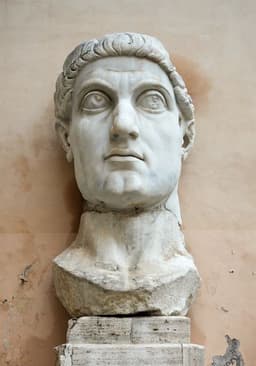
Constantine the Great
Emperor · Ancient
75.5Total
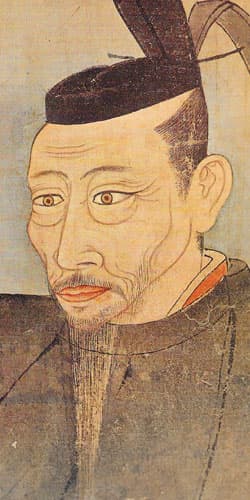
Toyotomi Hideyoshi
General · Modern
82.0Total
Basic Information
Born
272
1537
Died
337
1598
Era
Ancient
Modern
Nationality
Roman Empire
Japan
Occupation
Emperor
General
Civilization
Western
Eastern
Score Comparison
Military (10%)
78.0
79.9
Political (20%)
82.0
78.0
Influence (20%)
75.0
88.0
Legacy (20%)
70.0
80.0
Leadership (15%)
80.0
82.0
Strategy (15%)
72.0
80.4
TOTAL
75.5
82.0
Constantine the Great — Complete Timeline
312 AD
Battle of the Milvian BridgeWar◆ Major
Constantine defeated his rival Maxentius at the Milvian Bridge near Rome. According to tradition, Constantine saw a vision of a cross in the sky with the words 'In this sign, conquer.' The victory made Constantine the sole ruler of the Western Roman Empire and led to his conversion to Christianity.
Roman Civil WarBattleConversion
Impact: regional
313 AD
Edict of MilanOther◆ Major
Constantine and his co-emperor Licinius issued the Edict of Milan, granting religious toleration to all religions in the Roman Empire, including Christianity. The edict ended the persecution of Christians, restored confiscated church property, and established Christianity as a legally recognized religion.
Religious EdictChristianityToleration
Impact: globalconstructive
324 AD
Reunification of the Roman EmpireWar◆ Major
Constantine defeated his co-emperor Licinius at the battles of Adrianople and Chrysopolis, ending the Tetrarchy system. He became the sole ruler of the entire Roman Empire, reuniting the Western and Eastern halves under his control. This reunification was the last time the Roman Empire was united under a single ruler.
Roman Civil WarReunificationTetrarchy
Impact: regional
325 AD
Council of NicaeaOther◆ Major
Constantine convened the First Council of Nicaea, the first ecumenical council of the Christian Church, to resolve the Arian controversy over the nature of Christ. The council produced the Nicene Creed, affirming the divinity of Christ and establishing a unified Christian doctrine. Constantine presided over the council.
Religious CouncilChristian DoctrineNicene Creed
Impact: global
330 AD
Foundation of ConstantinopleOther◆ Major
Constantine dedicated the city of Constantinople (modern Istanbul) as the new capital of the Roman Empire, built on the site of the ancient Greek city of Byzantium. The city was strategically located on the Bosporus strait, controlling trade routes between Europe and Asia. It became the capital of the Eastern Roman Empire for over a thousand years.
City FoundationCapitalByzantine Empire
Impact: globalconstructive
Toyotomi Hideyoshi — Complete Timeline
1583 AD
Battle of ShizugatakeWar◆ Major
Hideyoshi defeated his rival Shibata Katsuie at the Battle of Shizugatake, solidifying his control over central Japan. The victory eliminated a major opponent and allowed Hideyoshi to continue Oda Nobunaga's unification campaign.
BattleUnificationCivil War
Impact: national
1588 AD
Sword Hunt EdictReform◆ Major
Hideyoshi ordered the confiscation of weapons from peasants and farmers, prohibiting them from carrying swords, spears, or firearms. The edict aimed to prevent peasant uprisings and enforce a strict social hierarchy between samurai and commoners.
Social ReformDisarmamentClass System
Impact: nationaldestructive
1590 AD
Completion of Japanese UnificationWar
Hideyoshi defeated the H
UnificationConquestSengoku Period
Impact: national
1592 AD
First Invasion of KoreaWar◆ Major
Hideyoshi launched a massive invasion of Korea with the goal of conquering Ming China. Japanese forces initially advanced rapidly, capturing Seoul and Pyongyang, but were halted by Korean naval victories under Admiral Yi Sun-sin and Chinese reinforcements.
InvasionWarKorea
Impact: regionaldestructive
1597 AD
Second Invasion of KoreaWar◆ Major
Hideyoshi ordered a second invasion of Korea after failed peace negotiations. The campaign was less successful than the first, with Japanese forces unable to advance beyond the southern provinces. The invasion ended with Hideyoshi's death in 1598.
InvasionWarKorea
Impact: regionaldestructive
Expert Analysis
Origins
Toyotomi Hideyoshi (1537–1598) rose from a peasant family in Owari Province to become Japan's supreme ruler. Joining Oda Nobunaga's forces, he advanced through military brilliance and political cunning. Constantine the Great (272–337) was born in Naissus (modern Serbia) to Flavius Constantius, a Roman army officer, and Helena. His early life involved hostage experience at Diocletian's court, shaping his strategic mind. Both overcame humble beginnings relative to their peers—Hideyoshi from literal poverty, Constantine from provincial nobility—yet both achieved unprecedented power.
Rise to Power
Hideyoshi's ascent began after Nobunaga's death in 1582. He avenged his lord at the Battle of Shizugatake (1583), defeating rival Katsuie Shibata. Through alliances and campaigns, he subdued central and western Japan by 1590, completing unification. Constantine's rise started with his proclamation as emperor by troops in 306. He defeated Maxentius at the Milvian Bridge (312) after seeing a vision of the cross, then Licinius in 324 to reunify the Roman Empire. Both used military victories and strategic marriages to consolidate power.
Leadership & Governance
Hideyoshi implemented the Sword Hunt (1588), confiscating weapons from peasants to enforce class separation, and land surveys to stabilize tax revenue. He centralized control by redistributing lands to loyal daimyo. Constantine legalized Christianity via the Edict of Milan (313), ending persecution, and convened the Council of Nicaea (325) to unify doctrine. He founded Constantinople (330) as a new capital, shifting the empire's center eastward. Both were pragmatic reformers: Hideyoshi focused on social order, Constantine on religious unity.
Triumph & Tragedy
Hideyoshi's greatest triumph was unifying Japan after centuries of civil war. However, his invasions of Korea (1592–1598) ended in failure, draining resources and weakening his clan. Constantine's triumph included reunifying Rome and establishing a Christian empire. Yet his reign saw executions of close relatives (Crispus, Fausta) and ongoing theological disputes. Both men's achievements were marred by overreach: Hideyoshi's Korean campaigns, Constantine's familial strife.
Character & Destiny
Hideyoshi, known as 'Saruhiki' (monkey) for his looks, was charismatic and shrewd but also arrogant and obsessive about legacy. He dreamed of conquering China, a fatal ambition. Constantine, a skilled general and administrator, was also a master propagandist who used Christianity to unify his realm. His destiny was to lay foundations for medieval Christendom. Hideyoshi's destiny was cut short by death during the Korean war; his clan fell within 15 years. Constantine died after a long reign, but his empire fractured again.
Legacy
Hideyoshi's legacy includes the unification that enabled the Tokugawa shogunate, cultural achievements like the Golden Tea Room, and the rigid class system that lasted centuries. Constantine's legacy is immense: Christianity became the dominant religion, Constantinople endured for a millennium, and his reforms shaped Byzantine and Western civilizations. Hideyoshi is a national hero in Japan; Constantine is a saint in Eastern Orthodoxy. Both transformed their worlds, but Constantine's impact is global and enduring.
Conclusion
Comparing scores: Hideyoshi (M=80, P=78, I=88, L=80, D=82, S=80, T=82) vs Constantine (M=78, P=82, I=75, L=70, D=80, S=72, T=76). Total: Hideyoshi 570, Constantine 533, gap 6.5% in Hideyoshi's favor. Hideyoshi's higher influence and strategy scores reflect his unprecedented rise and unification. Constantine's political and military scores are slightly lower due to inherited advantages. However, Constantine's legacy in law and religion surpasses Hideyoshi's. Taking a position: Constantine is more historically significant due to Christianity's global spread, but Hideyoshi's personal journey from peasant to ruler is more remarkable. The score gap is justified by Hideyoshi's higher innovation and leadership under extreme adversity.
Rankings
🥇
Toyotomi HideyoshiLeader
Mil: 79.9Pol: 78.0Inf: 88.0
82.0
🥈
Constantine the Great
Mil: 78.0Pol: 82.0Inf: 75.0
75.5
+6.5 behind
How This Comparison Works
Algorithm
Each figure is scored on 6 dimensions (0—100 scale) based on structured historical data: Military (10%), Political (20%), Influence (20%), Legacy (20%), Leadership (15%), Strategy (15%). The weighted total produces the final ranking.
Data Sources
Scores are computed from structured sub-indicators in the database. Scale factors adjust for era (Ancient ×0.85, Modern ×1.0) and civilization size (Eastern ×1.05, Other ×0.80) to account for differences in population and military scale.
Maximum 3 Figures
Comparisons are limited to 2—3 figures to ensure readability and statistical meaningfulness.
Error Margins
±5 points per dimension — Sub-scores are derived from historical records with inherent uncertainty. Two figures within 5 points on a dimension should be considered roughly equivalent in that area.
Total Score Accuracy
±3 points overall — The weighted combination of 6 dimensions produces a total score with approximately ±3 points of uncertainty. Differences of less than 3 points are not statistically significant— the figures are effectively tied.
Known Limitations
- Historical records are incomplete and uneven across civilizations
- Figures from oral-tradition societies may be underrepresented
- Occupation labels can misclassify multi-role figures
- Scores measure capability and impact, not moral character
- Quantitative scoring is a comparison tool, not absolute truth
Capability Radar
Military (10%) — Battles & Warfare
Battles
85
85
Win Rate
80
88
Expansion
85
80
Political (20%) — Governance & Reform
Reform
95
95
Diplomacy
90
80
Economy
80
90
Influence (20%) — Cultural & Global Reach
Cultural
95
85
Global
95
70
Legacy (20%) — Historical Impact
Historical
95
90
Longevity
95
85
Leadership (15%) — Power & Stability
Tenure
85
85
Stability
70
75
Strategy (15%) — Tactics & Innovation
Strategy
85
92
Tactics
75
90
Reform
90
95
Similar Comparisons
Comments & Discussion
No comments yet. Be the first to share your thoughts!