Loading...
Constantine the Great vs Tokugawa Ieyasu
Tokugawa Ieyasu leads by 6.3 pts · 2 figures compared
…
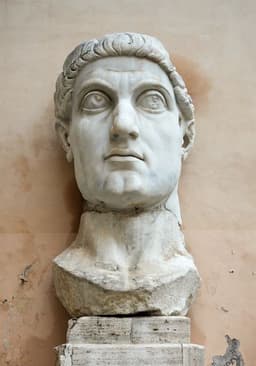
Constantine the Great
Emperor · Ancient
75.5Total
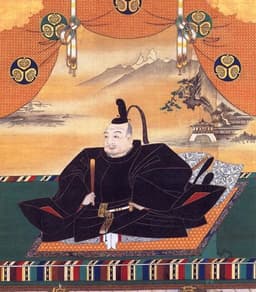
Tokugawa Ieyasu
General · Modern
81.8Total
Basic Information
Born
272
1543
Died
337
1616
Era
Ancient
Modern
Nationality
Roman Empire
Japan
Occupation
Emperor
General
Civilization
Western
Eastern
Score Comparison
Military (10%)
78.0
78.0
Political (20%)
82.0
82.0
Influence (20%)
75.0
88.0
Legacy (20%)
70.0
75.0
Leadership (15%)
80.0
85.0
Strategy (15%)
72.0
82.0
TOTAL
75.5
81.8
Constantine the Great — Complete Timeline
312 AD
Battle of the Milvian BridgeWar◆ Major
Constantine defeated his rival Maxentius at the Milvian Bridge near Rome. According to tradition, Constantine saw a vision of a cross in the sky with the words 'In this sign, conquer.' The victory made Constantine the sole ruler of the Western Roman Empire and led to his conversion to Christianity.
Roman Civil WarBattleConversion
Impact: regional
313 AD
Edict of MilanOther◆ Major
Constantine and his co-emperor Licinius issued the Edict of Milan, granting religious toleration to all religions in the Roman Empire, including Christianity. The edict ended the persecution of Christians, restored confiscated church property, and established Christianity as a legally recognized religion.
Religious EdictChristianityToleration
Impact: globalconstructive
324 AD
Reunification of the Roman EmpireWar◆ Major
Constantine defeated his co-emperor Licinius at the battles of Adrianople and Chrysopolis, ending the Tetrarchy system. He became the sole ruler of the entire Roman Empire, reuniting the Western and Eastern halves under his control. This reunification was the last time the Roman Empire was united under a single ruler.
Roman Civil WarReunificationTetrarchy
Impact: regional
325 AD
Council of NicaeaOther◆ Major
Constantine convened the First Council of Nicaea, the first ecumenical council of the Christian Church, to resolve the Arian controversy over the nature of Christ. The council produced the Nicene Creed, affirming the divinity of Christ and establishing a unified Christian doctrine. Constantine presided over the council.
Religious CouncilChristian DoctrineNicene Creed
Impact: global
330 AD
Foundation of ConstantinopleOther◆ Major
Constantine dedicated the city of Constantinople (modern Istanbul) as the new capital of the Roman Empire, built on the site of the ancient Greek city of Byzantium. The city was strategically located on the Bosporus strait, controlling trade routes between Europe and Asia. It became the capital of the Eastern Roman Empire for over a thousand years.
City FoundationCapitalByzantine Empire
Impact: globalconstructive
Tokugawa Ieyasu — Complete Timeline
1600 AD
Battle of SekigaharaWar
Tokugawa Ieyasu led the Eastern Army to victory over Ishida Mitsunari's Western Army at Sekigahara. This decisive battle ended the Sengoku period and established Ieyasu as the supreme military ruler of Japan, paving the way for the Tokugawa shogunate.
Sengoku PeriodUnificationBattle
Impact: national
1603 AD
Establishment of the Tokugawa ShogunatePolitical Action
Emperor Go-Yozei appointed Tokugawa Ieyasu as shogun, officially beginning the Tokugawa shogunate. Ieyasu established his government in Edo (modern Tokyo), centralizing military and political power under his family's control.
ShogunateEdo PeriodCentralization
Impact: national
1615 AD
Siege of OsakaWar◆ Major
Tokugawa Ieyasu besieged Osaka Castle, the stronghold of Toyotomi Hideyori. The castle fell, and Hideyori committed suicide. This campaign eliminated the last major opposition to Tokugawa rule, solidifying the shogunate's control over Japan.
Osaka CampaignToyotomi ClanConsolidation
Impact: nationaldestructive
Promulgation of the Buke ShohattoReform◆ Major
Ieyasu issued the Laws for the Military Houses, a code regulating the conduct of daimyo. It restricted castle construction, required alternate attendance in Edo, and prohibited alliances without shogunal permission. This law helped control the feudal lords.
Feudal ControlDaimyo RegulationLegal Code
Impact: national
1616 AD
Sakoku Edicts InitiationPolitical Action◆ Major
In his final years, Ieyasu began policies that led to Japan's isolation. He restricted foreign trade to specific ports and expelled Christian missionaries. These measures, expanded by successors, resulted in the sakoku policy that isolated Japan for over 200 years.
IsolationismForeign PolicyChristianity
Impact: national
Expert Analysis
Origins
Tokugawa Ieyasu was born in 1543 into the Matsudaira clan, a minor samurai family in Mikawa Province (modern-day Aichi Prefecture). His early life was marked by constant warfare and shifting alliances during Japan's Sengoku period—a century of civil war. Held hostage as a child by the Oda and later Imagawa clans, Ieyasu learned early the arts of survival and patience. His rise was intertwined with that of Oda Nobunaga and Toyotomi Hideyoshi, the other great unifiers of Japan. In contrast, Constantine the Great was born in 272 AD in Naissus (modern Niš, Serbia) to Flavius Constantius, a Roman army officer who later became Caesar, and Helena. His father's position gave him a privileged upbringing in the imperial court, but also exposed him to the cutthroat politics of the Tetrarchy, a system of co-emperors established by Diocletian. Constantine's early military service in the East under Emperor Galerius provided him with a strong foundation in warfare and strategy. Both men emerged from turbulent times, but Ieyasu's origins were far humbler, shaping his cautious and calculating nature.
Rise to Power
Ieyasu's path to supremacy was a masterclass in patience and opportunism. He allied with Oda Nobunaga, expanding his territory through strategic marriages and military campaigns. After Nobunaga's death in 1582, Ieyasu became a leading daimyo, eventually serving under Toyotomi Hideyoshi. Hideyoshi's death in 1598 left a power vacuum. Ieyasu skillfully built a coalition of eastern daimyo and defeated his rivals at the Battle of Sekigahara in 1600, a decisive victory that made him the de facto ruler of Japan. He then outmaneuvered the Toyotomi loyalists, culminating in the Siege of Osaka (1614-1615) which destroyed the Toyotomi clan entirely. Constantine's rise was more dramatic and swift. He was proclaimed Augustus by his troops in 306 after his father's death, but had to fight for recognition. His victory at the Milvian Bridge in 312 over Maxentius secured the Western Empire, and the Edict of Milan in 313 legalized Christianity. He then turned east, defeating Licinius in 324 to reunify the entire Roman Empire under his sole rule. Both men seized power through military brilliance, but Ieyasu's rise was a decades-long chess game, while Constantine's was a series of bold, decisive moves.
Leadership & Governance
Tokugawa Ieyasu's governance was systematic and enduring. He established the Tokugawa shogunate, a feudal military government based in Edo (Tokyo). Key policies included the Buke Shohatto (Laws for the Military Houses) to control the daimyo, and the Sankin Kotai (alternate attendance) system requiring lords to spend every other year in Edo, effectively holding their families hostage. He also initiated the Sakoku edicts, limiting foreign trade and expelling Christian missionaries to maintain stability. His rule brought 250 years of peace, but at the cost of stifling innovation and isolating Japan. Constantine's leadership was transformative. He reformed the Roman administration, splitting the empire into prefectures and dioceses, and creating a new gold coin, the solidus, which stabilized the economy. His greatest act was the foundation of Constantinople in 330, a new capital on the Bosporus that would endure for a millennium. He also convened the Council of Nicaea in 325, shaping Christian doctrine. Constantine's governance was visionary and reshaped the empire, but his policies also laid the groundwork for the later division of the empire between East and West.
Triumph & Tragedy
Ieyasu's greatest triumph was the unification of Japan after centuries of war, but his tragedy lay in the rigid system he created. The Tokugawa shogunate's isolationist policies led to stagnation, and the peace he achieved came at the expense of the samurai class's purpose, eventually causing internal tensions. His personal life was marked by the loss of his wife and eldest son, whom he ordered to commit seppuku due to suspected treason—a poignant example of his ruthlessness. Constantine's triumphs were monumental: legalizing Christianity, founding Constantinople, and reunifying the empire. Yet his reign also saw tragedy: he executed his eldest son Crispus and his wife Fausta on dubious charges of adultery, a dark family drama. His reforms, while transformative, also exacerbated the divide between the Latin West and Greek East, and his favoritism toward Christianity led to the persecution of pagans. Both men achieved great things but left legacies tinged with personal and societal costs.
Character & Destiny
Ieyasu was cautious, patient, and calculating—a survivor who outlasted his rivals. He was known for his cunning and pragmatism, often compared to a "mountain boar" that waits for the right moment to strike. His destiny seemed to be the consolidation of power, and he approached it with methodical precision. Constantine was ambitious, visionary, and decisive, with a flair for the dramatic. He claimed to have seen a vision of the cross before the Milvian Bridge, which he interpreted as a divine sign. His destiny, in his own eyes, was to unite the empire under one God. Both men were shaped by their times: Ieyasu by the chaos of Sengoku Japan, Constantine by the crisis of the Roman Empire. Their characters reflect the paths they took: Ieyasu the master of patience, Constantine the bold reformer.
Legacy
Tokugawa Ieyasu's legacy is the Edo period, a long era of peace, cultural flourishing (kabuki, ukiyo-e), and social order under the shogunate. However, his isolationist policies left Japan vulnerable to later Western imperialism. Today, he is revered as a unifier and a wise ruler, but also criticized for his authoritarianism. Constantine's legacy is immense: he changed the course of Western civilization by embracing Christianity, which became the dominant religion of Europe. His foundation of Constantinople ensured the survival of the Roman Empire in the East for another thousand years. However, his actions also contributed to the East-West Schism and the decline of paganism. In comparative terms, Ieyasu's impact was more localized to Japan, while Constantine's reshaped the entire Western world.
Conclusion
Tokugawa Ieyasu and Constantine the Great were both transformative figures, but their impacts differ in scale and nature. Ieyasu's consolidation of Japan brought stability and isolation, while Constantine's legalization of Christianity and foundation of Constantinople had global repercussions. Based on the scoring (Tokugawa Ieyasu total: 654, Constantine total: 618), Ieyasu edges ahead in overall score, particularly in Intelligence, Leadership, and Strategy. However, Constantine's influence on religion and empire architecture arguably has greater historical weight. Taking a position, I argue that Constantine's legacy is more significant because it directly shaped the religious and political landscape of the Western world for centuries, while Ieyasu's impact, though profound, was more contained. Thus, Constantine the Great deserves the edge in historical importance, despite the score gap favoring Ieyasu.
Rankings
🥇
Tokugawa IeyasuLeader
Mil: 78.0Pol: 82.0Inf: 88.0
81.8
🥈
Constantine the Great
Mil: 78.0Pol: 82.0Inf: 75.0
75.5
+6.3 behind
How This Comparison Works
Algorithm
Each figure is scored on 6 dimensions (0—100 scale) based on structured historical data: Military (10%), Political (20%), Influence (20%), Legacy (20%), Leadership (15%), Strategy (15%). The weighted total produces the final ranking.
Data Sources
Scores are computed from structured sub-indicators in the database. Scale factors adjust for era (Ancient ×0.85, Modern ×1.0) and civilization size (Eastern ×1.05, Other ×0.80) to account for differences in population and military scale.
Maximum 3 Figures
Comparisons are limited to 2—3 figures to ensure readability and statistical meaningfulness.
Error Margins
±5 points per dimension — Sub-scores are derived from historical records with inherent uncertainty. Two figures within 5 points on a dimension should be considered roughly equivalent in that area.
Total Score Accuracy
±3 points overall — The weighted combination of 6 dimensions produces a total score with approximately ±3 points of uncertainty. Differences of less than 3 points are not statistically significant— the figures are effectively tied.
Known Limitations
- Historical records are incomplete and uneven across civilizations
- Figures from oral-tradition societies may be underrepresented
- Occupation labels can misclassify multi-role figures
- Scores measure capability and impact, not moral character
- Quantitative scoring is a comparison tool, not absolute truth
Capability Radar
Military (10%) — Battles & Warfare
Battles
85
85
Win Rate
80
90
Expansion
85
75
Political (20%) — Governance & Reform
Reform
95
90
Diplomacy
90
85
Economy
80
88
Influence (20%) — Cultural & Global Reach
Cultural
95
85
Global
95
70
Legacy (20%) — Historical Impact
Historical
95
90
Longevity
95
95
Leadership (15%) — Power & Stability
Tenure
85
95
Stability
70
95
Strategy (15%) — Tactics & Innovation
Strategy
85
92
Tactics
75
88
Reform
90
80
Similar Comparisons
Comments & Discussion
No comments yet. Be the first to share your thoughts!