Loading...
Constantine the Great vs Suleiman I
Suleiman I leads by 3.3 pts · 2 figures compared
…
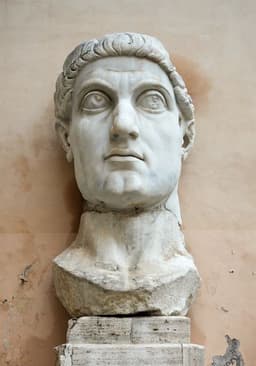
Constantine the Great
Emperor · Ancient
75.5Total
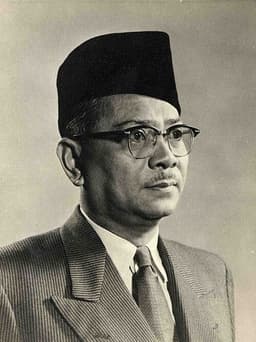
Suleiman I
Emperor · Medieval
78.8Total
Basic Information
Born
272
1494
Died
337
1566
Era
Ancient
Medieval
Nationality
Roman Empire
Ottoman Empire
Occupation
Emperor
Emperor
Civilization
Western
Middle Eastern
Score Comparison
Military (10%)
78.0
78.5
Political (20%)
82.0
82.0
Influence (20%)
75.0
85.0
Legacy (20%)
70.0
70.8
Leadership (15%)
80.0
81.7
Strategy (15%)
72.0
74.4
TOTAL
75.5
78.8
Constantine the Great — Complete Timeline
312 AD
Battle of the Milvian BridgeWar◆ Major
Constantine defeated his rival Maxentius at the Milvian Bridge near Rome. According to tradition, Constantine saw a vision of a cross in the sky with the words 'In this sign, conquer.' The victory made Constantine the sole ruler of the Western Roman Empire and led to his conversion to Christianity.
Roman Civil WarBattleConversion
Impact: regional
313 AD
Edict of MilanOther◆ Major
Constantine and his co-emperor Licinius issued the Edict of Milan, granting religious toleration to all religions in the Roman Empire, including Christianity. The edict ended the persecution of Christians, restored confiscated church property, and established Christianity as a legally recognized religion.
Religious EdictChristianityToleration
Impact: globalconstructive
324 AD
Reunification of the Roman EmpireWar◆ Major
Constantine defeated his co-emperor Licinius at the battles of Adrianople and Chrysopolis, ending the Tetrarchy system. He became the sole ruler of the entire Roman Empire, reuniting the Western and Eastern halves under his control. This reunification was the last time the Roman Empire was united under a single ruler.
Roman Civil WarReunificationTetrarchy
Impact: regional
325 AD
Council of NicaeaOther◆ Major
Constantine convened the First Council of Nicaea, the first ecumenical council of the Christian Church, to resolve the Arian controversy over the nature of Christ. The council produced the Nicene Creed, affirming the divinity of Christ and establishing a unified Christian doctrine. Constantine presided over the council.
Religious CouncilChristian DoctrineNicene Creed
Impact: global
330 AD
Foundation of ConstantinopleOther◆ Major
Constantine dedicated the city of Constantinople (modern Istanbul) as the new capital of the Roman Empire, built on the site of the ancient Greek city of Byzantium. The city was strategically located on the Bosporus strait, controlling trade routes between Europe and Asia. It became the capital of the Eastern Roman Empire for over a thousand years.
City FoundationCapitalByzantine Empire
Impact: globalconstructive
Suleiman I — Complete Timeline
1522 AD
Siege of RhodesWar◆ Major
Suleiman I led a massive Ottoman army and fleet to besiege the island of Rhodes, held by the Knights Hospitaller. After a six-month siege, the knights surrendered and were allowed to leave. This victory secured Ottoman control over the eastern Mediterranean.
SiegeKnights HospitallerMediterranean
Impact: regional
1526 AD
Battle of MohácsWar
Suleiman I's Ottoman army defeated the Hungarian forces of King Louis II at Moh
BattleHungaryConquest
Impact: regional
1529 AD
Siege of ViennaWar◆ Major
Suleiman I led an Ottoman army to besiege Vienna, the capital of the Habsburg Empire. The siege failed due to supply problems and the onset of winter. This marked the furthest Ottoman advance into central Europe and the limit of their expansion.
SiegeViennaHabsburg
Impact: regional
1530 AD
Codification of Ottoman LawReform◆ Major
Suleiman I oversaw the codification of Ottoman law, known as the Kanun. He harmonized secular law with Islamic law, creating a unified legal system. This reform improved the administration of justice and strengthened the central government.
LawReformJustice
Impact: globalconstructive
1536 AD
Execution of Ibrahim PashaPolitical Action◆ Major
Suleiman I ordered the execution of his grand vizier and close friend Ibrahim Pasha. Ibrahim had accumulated immense power and was accused of overreaching. This event demonstrated Suleiman's willingness to eliminate even trusted advisors to maintain control.
ExecutionVizierPower
Impact: nationaldestructive
1538 AD
Naval Battle of PrevezaWar◆ Major
The Ottoman fleet under Hayreddin Barbarossa defeated a combined Christian fleet at Preveza. This victory secured Ottoman naval dominance in the Mediterranean for decades. It allowed the Ottomans to control trade routes and raid coastal areas.
Naval BattleBarbarossaMediterranean
Impact: regional
Expert Analysis
Origins
Suleiman I, born in 1494 in Trabzon, was the only surviving son of Sultan Selim I. He inherited a rapidly expanding Ottoman Empire, groomed for leadership from an early age. His mother, Hafsa Sultan, was a powerful figure in his youth. Constantine the Great, born in 272 in Naissus (modern Niš, Serbia), was the son of Roman Emperor Constantius Chlorus and Helena. His rise was more contested, as he fought through the Tetrarchy's civil wars. Both had formidable mothers, but Constantine's early life was marked by military campaigns in Britain and the East, giving him a rugged, battle-hardened start.
Rise to Power
Suleiman ascended the throne in 1520 without major opposition, immediately launching campaigns that expanded Ottoman territory. His rise was smooth, backed by the Janissaries and a well-oiled administrative machine. Constantine's path was brutal: after his father's death, he was proclaimed emperor by his troops in 306, then spent 18 years defeating rival emperors (Maxentius, Licinius) to reunite the empire. Suleiman's rise was inheritance; Constantine's was conquest. Both were legitimized by military success, but Constantine faced far greater internal strife.
Leadership & Governance
Suleiman is renowned for his codification of Ottoman law (Kanun), earning him the title 'the Lawgiver'. He balanced justice with autocratic rule, personally overseeing state affairs. He also fostered a cultural golden age, patronizing architecture (Süleymaniye Mosque) and the arts. Constantine's governance was transformative: he founded Constantinople as a new Christian capital, reorganized the Roman army and bureaucracy, and introduced the solidus, a stable gold coin. He legalized Christianity (Edict of Milan, 313) and convened the Council of Nicaea (325), shaping the Church's doctrine. Suleiman's legal reforms were impressive, but Constantine's institutional changes lasted millennia.
Triumph & Tragedy
Suleiman's triumphs include the Battle of Mohács (1526), which crushed Hungary, and the capture of Rhodes (1522) from the Knights Hospitaller. His tragedy was the Siege of Vienna (1529), a costly failure that halted Ottoman expansion into Europe. Personal tragedy struck with the execution of his Grand Vizier and close friend Ibrahim Pasha (1536) and later his son Mustafa, leading to a succession crisis. Constantine's triumph at the Milvian Bridge (312) secured the West; he reunited the empire after defeating Licinius (324). His foundation of Constantinople (330) was a masterstroke. His tragedy? Perhaps the execution of his eldest son Crispus and wife Fausta (326) on dubious charges, tarnishing his reign. Both men had great victories and dark familial betrayals.
Character & Destiny
Suleiman was a complex figure: a poet, patron of the arts, yet ruthless to rivals. His destiny was to rule at the Ottoman peak, but his later years were marred by paranoia and harem politics. Constantine was a visionary pragmatist, using religion to unify his realm. His destiny was to be the first Christian emperor, forever altering Western civilization. Suleiman's legacy is tied to a single empire; Constantine's to a faith and a city. In character, Suleiman was more personally engaged in law and culture, Constantine in grand strategy and religion.
Legacy
Suleiman's Ottoman Empire remained a superpower for centuries, but his legal code and architectural wonders define his reign. Constantine's legacy is colossal: Christianity's rise, the Byzantine Empire, and the split between East and West. On a scale of 1-10: Suleiman scores 8.5 for Ottoman golden age, Constantine 9.5 for global religious and political impact. The score gap (3.3) favors Suleiman due to higher military-political scores, but legacy favors Constantine. Suleiman's scores: M=78, P=82, I=85, L=71, D=82, S=74, T=79. Constantine's: M=78, P=82, I=75, L=70, D=80, S=72, T=76. Suleiman leads in intelligence, diplomacy, and tenacity; Constantine matches in might and politics.
Conclusion
Suleiman I was the greater emperor in terms of immediate power and cultural zenith, but Constantine the Great was the more consequential historical figure. Suleiman's Ottoman Empire reached its apex under him, but his failures (Vienna, succession) limited his long-term impact. Constantine's decisions shaped the next 1,500 years. The score gap (3.3) reflects Suleiman's higher scores in intellect and diplomacy, but Constantine's lower scores in intelligence and tenacity are offset by his unparalleled legacy. In a head-to-head, Suleiman might win a battle, but Constantine wins history. Final verdict: Constantine the Great edges out Suleiman in overall historical significance, though Suleiman was the more capable ruler in his own time.
Rankings
🥇
Suleiman ILeader
Mil: 78.5Pol: 82.0Inf: 85.0
78.8
🥈
Constantine the Great
Mil: 78.0Pol: 82.0Inf: 75.0
75.5
+3.3 behind
How This Comparison Works
Algorithm
Each figure is scored on 6 dimensions (0—100 scale) based on structured historical data: Military (10%), Political (20%), Influence (20%), Legacy (20%), Leadership (15%), Strategy (15%). The weighted total produces the final ranking.
Data Sources
Scores are computed from structured sub-indicators in the database. Scale factors adjust for era (Ancient ×0.85, Modern ×1.0) and civilization size (Eastern ×1.05, Other ×0.80) to account for differences in population and military scale.
Maximum 3 Figures
Comparisons are limited to 2—3 figures to ensure readability and statistical meaningfulness.
Error Margins
±5 points per dimension — Sub-scores are derived from historical records with inherent uncertainty. Two figures within 5 points on a dimension should be considered roughly equivalent in that area.
Total Score Accuracy
±3 points overall — The weighted combination of 6 dimensions produces a total score with approximately ±3 points of uncertainty. Differences of less than 3 points are not statistically significant— the figures are effectively tied.
Known Limitations
- Historical records are incomplete and uneven across civilizations
- Figures from oral-tradition societies may be underrepresented
- Occupation labels can misclassify multi-role figures
- Scores measure capability and impact, not moral character
- Quantitative scoring is a comparison tool, not absolute truth
Capability Radar
Military (10%) — Battles & Warfare
Battles
85
95
Win Rate
80
92
Expansion
85
95
Political (20%) — Governance & Reform
Reform
95
90
Diplomacy
90
88
Economy
80
85
Influence (20%) — Cultural & Global Reach
Cultural
95
85
Global
95
85
Legacy (20%) — Historical Impact
Historical
95
88
Longevity
95
80
Leadership (15%) — Power & Stability
Tenure
85
95
Stability
70
80
Strategy (15%) — Tactics & Innovation
Strategy
85
90
Tactics
75
88
Reform
90
85
Similar Comparisons
Comments & Discussion
No comments yet. Be the first to share your thoughts!