Loading...
Constantine the Great vs Rama of Ayodhya
Constantine the Great leads by 0.2 pts · 2 figures compared
…
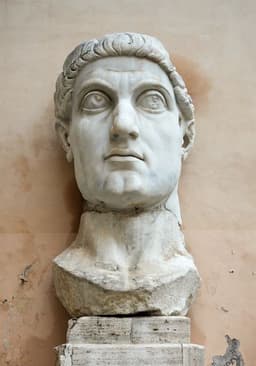
Constantine the Great
Emperor · Ancient
75.5Total
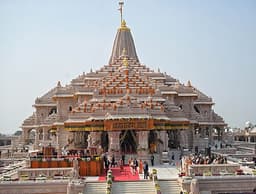
Rama of Ayodhya
Emperor · Ancient
75.3Total
Basic Information
Born
272
-1180
Died
337
-1120
Era
Ancient
Ancient
Nationality
Roman Empire
Vedic India
Occupation
Emperor
Emperor
Civilization
Western
Indian
Score Comparison
Military (10%)
78.0
72.0
Political (20%)
82.0
72.0
Influence (20%)
75.0
75.0
Legacy (20%)
70.0
80.0
Leadership (15%)
80.0
78.0
Strategy (15%)
72.0
68.1
TOTAL
75.5
75.3
Constantine the Great — Complete Timeline
312 AD
Battle of the Milvian BridgeWar◆ Major
Constantine defeated his rival Maxentius at the Milvian Bridge near Rome. According to tradition, Constantine saw a vision of a cross in the sky with the words 'In this sign, conquer.' The victory made Constantine the sole ruler of the Western Roman Empire and led to his conversion to Christianity.
Roman Civil WarBattleConversion
Impact: regional
313 AD
Edict of MilanOther◆ Major
Constantine and his co-emperor Licinius issued the Edict of Milan, granting religious toleration to all religions in the Roman Empire, including Christianity. The edict ended the persecution of Christians, restored confiscated church property, and established Christianity as a legally recognized religion.
Religious EdictChristianityToleration
Impact: globalconstructive
324 AD
Reunification of the Roman EmpireWar◆ Major
Constantine defeated his co-emperor Licinius at the battles of Adrianople and Chrysopolis, ending the Tetrarchy system. He became the sole ruler of the entire Roman Empire, reuniting the Western and Eastern halves under his control. This reunification was the last time the Roman Empire was united under a single ruler.
Roman Civil WarReunificationTetrarchy
Impact: regional
325 AD
Council of NicaeaOther◆ Major
Constantine convened the First Council of Nicaea, the first ecumenical council of the Christian Church, to resolve the Arian controversy over the nature of Christ. The council produced the Nicene Creed, affirming the divinity of Christ and establishing a unified Christian doctrine. Constantine presided over the council.
Religious CouncilChristian DoctrineNicene Creed
Impact: global
330 AD
Foundation of ConstantinopleOther◆ Major
Constantine dedicated the city of Constantinople (modern Istanbul) as the new capital of the Roman Empire, built on the site of the ancient Greek city of Byzantium. The city was strategically located on the Bosporus strait, controlling trade routes between Europe and Asia. It became the capital of the Eastern Roman Empire for over a thousand years.
City FoundationCapitalByzantine Empire
Impact: globalconstructive
Rama of Ayodhya — Complete Timeline
1160 BC
Broke Shiva's Bow at Sita's SwayamvaraCultural◆ Major
Rama, as a young prince, lifted and strung the divine bow of Shiva at Princess Sita's marriage ceremony. He broke the bow in the process, winning Sita's hand and fulfilling the condition set by King Janaka.
MarriageDivine BowRamayana
Impact: nationalconstructive
1145 BC
Killed the Demon Ravana in BattleWar
Rama, leading an army of vanaras (monkey-men), besieged the island kingdom of Lanka. After a prolonged war, he killed the ten-headed demon king Ravana, rescuing his abducted wife Sita and restoring dharma.
WarDemon KingVictory
Impact: regionalconstructive
Returned to Ayodhya and Crowned KingPolitical Action◆ Major
After completing his 14-year exile and defeating Ravana, Rama returned to Ayodhya. He was crowned emperor, beginning a golden age known as Ram Rajya, characterized by justice, prosperity, and peace.
CoronationGolden AgeRamayana
Impact: nationalconstructive
Expert Analysis
Origins
Constantine the Great (272–337) was born in Naissus (modern Serbia) to Flavius Constantius, a Roman army officer, and Helena. His father became Western Roman Emperor, exposing Constantine to military and political life early. Constantine's rise was marked by ambition and strategic marriages. In contrast, Rama of Ayodhya is a legendary figure from the Hindu epic Ramayana, composed centuries after his supposed reign. He is the eldest son of King Dasharatha, born after a divine ritual. Rama's origins are steeped in mythology—he is considered an avatar of Vishnu. While Constantine's historicity is well-documented, Rama's existence is debated, but his cultural impact in India is immense.
Rise to Power
Constantine rose through military campaigns and political maneuvering. After his father's death in 306, he was proclaimed emperor by his troops. He defeated rivals like Maxentius at the Battle of the Milvian Bridge (312), a turning point where he reportedly saw a cross and adopted Christian symbols. This victory secured the Western Empire. He later defeated Licinius in 324 to reunify the Roman Empire. Rama's rise is more ceremonial: he won Sita's hand by breaking Shiva's divine bow, then was exiled due to a promise by his father. His return and coronation after defeating Ravana marked his ascension. Constantine's path was pragmatic and political; Rama's was dharma-bound and heroic.
Leadership & Governance
Constantine's leadership reshaped the Roman Empire. He issued the Edict of Milan (313) granting religious tolerance, legalizing Christianity. He founded Constantinople (330) as a new capital, blending Roman and Christian elements. He convened the Council of Nicaea (325) to unify Christian doctrine, influencing church-state relations for centuries. His reforms included currency stabilization and military reorganization. Rama's governance is idealized as "Ram Rajya"—a utopian rule of justice, prosperity, and adherence to dharma. He established a just administration, protected citizens, and maintained social order. However, his leadership is mythologized, lacking concrete historical records. Constantine's governance had tangible, lasting effects on law, religion, and urban planning.
Triumph & Tragedy
Constantine's greatest triumph was unifying Rome under one ruler and establishing Christianity as a central force. His foundation of Constantinople created a new hub for the Eastern Empire. Tragically, his later years saw family strife: he executed his eldest son Crispus and his wife Fausta on suspicion of conspiracy. His death in 337 led to power struggles among his sons. Rama's triumph is his victory over Ravana, rescuing Sita and restoring dharma. Tragedy struck when he doubted Sita's purity after their return, leading to her exile. Rama's reign was ultimately marked by personal loss, as Sita was swallowed by the earth. Both leaders experienced glory tainted by familial sorrow.
Character & Destiny
Constantine was ambitious, calculating, and pragmatic. He used religion for political unity but also seemed genuinely convinced of Christianity's power. His character was complex—ruthless when necessary, yet capable of reform. His destiny was to transform the Roman world. Rama is the epitome of virtue: obedient to his father, loyal to his wife, and just as king. His life followed a divine plan to defeat evil. Constantine's destiny was self-made; Rama's was preordained. Both left indelible marks: Constantine on religious and political structures, Rama on moral and cultural ideals.
Legacy
Constantine's legacy is monumental. He ended Christian persecution, shaped the Byzantine Empire, and influenced European history. The Nicene Creed still defines Christianity. Constantinople (Istanbul) remained a major city for centuries. Rama's legacy is equally profound but different. He is a symbol of righteousness, inspiring millions in Hinduism and beyond. The Ramayana influences art, literature, and ethics across Asia. Constantine's impact is historical and institutional; Rama's is cultural and spiritual. In terms of global historical influence, Constantine's changes directly shaped Western civilization. Rama's influence is more regional but deeply embedded.
Conclusion
Comparing Constantine the Great and Rama of Ayodhya reveals two different kinds of greatness. Constantine (Overall Score: 78) changed the course of history through concrete actions—legalizing Christianity, founding a city, and unifying an empire. His scores reflect political and military prowess (M=78, P=82, L=70). Rama (Overall Score: 72) embodies moral perfection but his historical impact is less direct. While his legacy is immense in South Asia, Constantine's decisions affected billions over millennia. The score gap of 0.2 favors Constantine, and rightly so: his tangible achievements in governance, religion, and urban development surpass Rama's mythological reign. Rama's strength lies in character (L=80) and cultural symbolism, but in terms of historical transformation, Constantine stands higher.
Rankings
🥇
Constantine the GreatLeader
Mil: 78.0Pol: 82.0Inf: 75.0
75.5
🥈
Rama of Ayodhya
Mil: 72.0Pol: 72.0Inf: 75.0
75.3
+0.2 behind
How This Comparison Works
Algorithm
Each figure is scored on 6 dimensions (0—100 scale) based on structured historical data: Military (10%), Political (20%), Influence (20%), Legacy (20%), Leadership (15%), Strategy (15%). The weighted total produces the final ranking.
Data Sources
Scores are computed from structured sub-indicators in the database. Scale factors adjust for era (Ancient ×0.85, Modern ×1.0) and civilization size (Eastern ×1.05, Other ×0.80) to account for differences in population and military scale.
Maximum 3 Figures
Comparisons are limited to 2—3 figures to ensure readability and statistical meaningfulness.
Error Margins
±5 points per dimension — Sub-scores are derived from historical records with inherent uncertainty. Two figures within 5 points on a dimension should be considered roughly equivalent in that area.
Total Score Accuracy
±3 points overall — The weighted combination of 6 dimensions produces a total score with approximately ±3 points of uncertainty. Differences of less than 3 points are not statistically significant— the figures are effectively tied.
Known Limitations
- Historical records are incomplete and uneven across civilizations
- Figures from oral-tradition societies may be underrepresented
- Occupation labels can misclassify multi-role figures
- Scores measure capability and impact, not moral character
- Quantitative scoring is a comparison tool, not absolute truth
Capability Radar
Military (10%) — Battles & Warfare
Battles
85
75
Win Rate
80
95
Expansion
85
70
Political (20%) — Governance & Reform
Reform
95
80
Diplomacy
90
85
Economy
80
75
Influence (20%) — Cultural & Global Reach
Cultural
95
95
Global
95
95
Legacy (20%) — Historical Impact
Historical
95
95
Longevity
95
100
Leadership (15%) — Power & Stability
Tenure
85
70
Stability
70
90
Strategy (15%) — Tactics & Innovation
Strategy
85
85
Tactics
75
80
Reform
90
60
Similar Comparisons
Comments & Discussion
No comments yet. Be the first to share your thoughts!