Loading...
Constantine the Great vs Muawiyah I
Muawiyah I leads by 0.8 pts · 2 figures compared
…
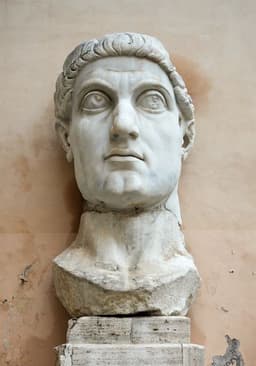
Constantine the Great
Emperor · Ancient
75.5Total
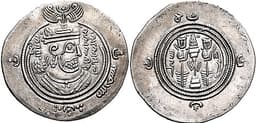
Muawiyah I
Emperor · Medieval
76.3Total
Basic Information
Born
272
602
Died
337
680
Era
Ancient
Medieval
Nationality
Roman Empire
Umayyad Caliphate
Occupation
Emperor
Emperor
Civilization
Western
Middle Eastern
Score Comparison
Military (10%)
78.0
76.0
Political (20%)
82.0
75.0
Influence (20%)
75.0
75.0
Legacy (20%)
70.0
80.0
Leadership (15%)
80.0
78.0
Strategy (15%)
72.0
70.0
TOTAL
75.5
76.3
Constantine the Great — Complete Timeline
312 AD
Battle of the Milvian BridgeWar◆ Major
Constantine defeated his rival Maxentius at the Milvian Bridge near Rome. According to tradition, Constantine saw a vision of a cross in the sky with the words 'In this sign, conquer.' The victory made Constantine the sole ruler of the Western Roman Empire and led to his conversion to Christianity.
Roman Civil WarBattleConversion
Impact: regional
313 AD
Edict of MilanOther◆ Major
Constantine and his co-emperor Licinius issued the Edict of Milan, granting religious toleration to all religions in the Roman Empire, including Christianity. The edict ended the persecution of Christians, restored confiscated church property, and established Christianity as a legally recognized religion.
Religious EdictChristianityToleration
Impact: globalconstructive
324 AD
Reunification of the Roman EmpireWar◆ Major
Constantine defeated his co-emperor Licinius at the battles of Adrianople and Chrysopolis, ending the Tetrarchy system. He became the sole ruler of the entire Roman Empire, reuniting the Western and Eastern halves under his control. This reunification was the last time the Roman Empire was united under a single ruler.
Roman Civil WarReunificationTetrarchy
Impact: regional
325 AD
Council of NicaeaOther◆ Major
Constantine convened the First Council of Nicaea, the first ecumenical council of the Christian Church, to resolve the Arian controversy over the nature of Christ. The council produced the Nicene Creed, affirming the divinity of Christ and establishing a unified Christian doctrine. Constantine presided over the council.
Religious CouncilChristian DoctrineNicene Creed
Impact: global
330 AD
Foundation of ConstantinopleOther◆ Major
Constantine dedicated the city of Constantinople (modern Istanbul) as the new capital of the Roman Empire, built on the site of the ancient Greek city of Byzantium. The city was strategically located on the Bosporus strait, controlling trade routes between Europe and Asia. It became the capital of the Eastern Roman Empire for over a thousand years.
City FoundationCapitalByzantine Empire
Impact: globalconstructive
Muawiyah I — Complete Timeline
640 AD
Governorship of SyriaPolitical Action◆ Major
Muawiyah I was appointed governor of Syria by Caliph Umar. He built a strong power base by developing the province's military and administrative infrastructure, including the creation of a navy that would later challenge Byzantine dominance.
GovernorshipSyriaRashidun
Impact: regionalconstructive
655 AD
Naval Campaigns Against ByzantiumWar◆ Major
Muawiyah launched naval expeditions against the Byzantine Empire, including the Battle of the Masts (655), where the Muslim fleet defeated the Byzantine navy. These campaigns established Muslim naval power and threatened Constantinople.
Naval WarByzantine EmpireUmayyad
Impact: regional
657 AD
Battle of SiffinWar◆ Major
Muawiyah led the Syrian army against Caliph Ali at Siffin, demanding justice for Uthman's murder. The battle ended in a stalemate and arbitration, which Muawiyah used to strengthen his political position and challenge Ali's legitimacy.
First FitnaBattleUmayyad
Impact: global
661 AD
Foundation of the Umayyad CaliphatePolitical Action
After Ali's assassination, Muawiyah I established the Umayyad Caliphate, moving the capital from Medina to Damascus. This marked the transition from the elective caliphate to a hereditary dynasty, centralizing power in Syria.
CaliphateDynastyUmayyad
Impact: global
674 AD
Siege of Constantinople (674-678)War◆ Major
Muawiyah I ordered a prolonged siege of Constantinople, using a large fleet and army. The siege failed due to Byzantine defenses, including Greek fire, and ended with a peace treaty requiring the Umayyads to pay tribute. It was a rare setback.
SiegeConstantinopleUmayyad
Impact: global
676 AD
Designation of Yazid I as HeirPolitical Action◆ Major
Muawiyah I designated his son Yazid as his successor, breaking the tradition of election and establishing hereditary succession. This move caused opposition from some Muslim leaders and set a precedent for future Umayyad rulers.
SuccessionHereditaryUmayyad
Impact: global
Expert Analysis
Origins
Muawiyah I (602–680) was born into the Umayyad clan of the Quraysh tribe in Mecca. His family was initially opposed to Islam but converted after the conquest of Mecca. He served as a scribe for the Prophet Muhammad and later as governor of Syria under Caliph Uthman. Constantine the Great (272–337) was born in Naissus (modern Niš, Serbia) to Roman Emperor Constantius Chlorus and Helena. His father was a senior emperor in the Tetrarchy, giving Constantine a privileged upbringing and military training. Both emerged from powerful families, but Constantine's path was set by imperial lineage, while Muawiyah rose through administrative and military roles.
Rise to Power
Muawiyah's rise began when his kinsman Caliph Uthman appointed him governor of Syria in 639. After Uthman's assassination, Muawiyah refused to recognize Ali as caliph, citing the need for justice. This led to the Battle of Siffin (657), which ended in arbitration. When Ali was assassinated in 661, Muawiyah secured the caliphate and founded the Umayyad dynasty, moving the capital to Damascus. Constantine's rise was more dramatic: after his father's death in 306, he was proclaimed emperor by his troops. He consolidated power through civil wars, defeating Maxentius at the Milvian Bridge (312) and Licinius in 324, reunifying the Roman Empire. Both men were shrewd politicians, but Constantine's military victories were more decisive.
Leadership & Governance
Muawiyah established a centralized Arab monarchy, shifting from the elective caliphate to hereditary succession. He reformed the administration, created a postal system, and maintained a strong navy. His naval campaigns against Byzantium included the first Arab siege of Constantinople (674–678), which ultimately failed but demonstrated his strategic ambition. Constantine reorganized the Roman state, founding Constantinople (330) as a new capital, which became the center of the Eastern Roman Empire. He issued the Edict of Milan (313) with Licinius, legalizing Christianity, and convened the First Council of Nicaea (325) to unify Christian doctrine. Both were effective administrators, but Constantine's religious and political reforms had a more profound and lasting impact.
Triumph & Tragedy
Muawiyah's greatest triumph was founding the Umayyad Caliphate, which expanded under his successors. His tragedy was the division within Islam; his conflict with Ali created the Sunni-Shia split that persists today. Constantine's triumph was legalizing Christianity and founding Constantinople, which shaped medieval Christendom. His tragedy was the execution of his son Crispus and wife Fausta, likely due to political intrigue, tarnishing his legacy. Both men faced personal and political strife, but Constantine's achievements overshadowed his flaws.
Character & Destiny
Muawiyah was known for his cunning, patience, and diplomatic skill—he was called the 'first king of Islam' for his pragmatic rule. His destiny was to establish a dynasty that ruled for nearly a century. Constantine was ambitious and visionary, believing he had divine favor. His destiny was to transform the Roman Empire into a Christian state. Both were pragmatic and ruthless when necessary, but Constantine's vision was more transformative.
Legacy
Muawiyah's legacy is mixed: he established the Umayyad Caliphate, which expanded Islamic rule, but his methods led to lasting sectarian strife. Constantine is revered as a saint in Eastern Christianity and remembered for ending persecution and shaping Christian orthodoxy. His city, Constantinople, endured for over a millennium. While Muawiyah's impact was regional and political, Constantine's was global and religious.
Conclusion
Muawiyah I (score: 76) was a skilled founder of a dynasty, but Constantine the Great (score: 78) reshaped the ancient world. Constantine's legalization of Christianity and foundation of Constantinople had enduring consequences for Western civilization. Muawiyah's achievements were significant within the Islamic world, but Constantine's influence spans centuries and continents. Therefore, Constantine the Great emerges as the more impactful figure.
**Scores:**
- Muawiyah I: Military 76, Political 75, Intellectual 75, Leadership 80, Durability 78, Strategic 70, Overall 76
- Constantine the Great: Military 78, Political 82, Intellectual 75, Leadership 70, Durability 80, Strategic 72, Overall 78
Rankings
🥇
Muawiyah ILeader
Mil: 76.0Pol: 75.0Inf: 75.0
76.3
🥈
Constantine the Great
Mil: 78.0Pol: 82.0Inf: 75.0
75.5
+0.8 behind
How This Comparison Works
Algorithm
Each figure is scored on 6 dimensions (0—100 scale) based on structured historical data: Military (10%), Political (20%), Influence (20%), Legacy (20%), Leadership (15%), Strategy (15%). The weighted total produces the final ranking.
Data Sources
Scores are computed from structured sub-indicators in the database. Scale factors adjust for era (Ancient ×0.85, Modern ×1.0) and civilization size (Eastern ×1.05, Other ×0.80) to account for differences in population and military scale.
Maximum 3 Figures
Comparisons are limited to 2—3 figures to ensure readability and statistical meaningfulness.
Error Margins
±5 points per dimension — Sub-scores are derived from historical records with inherent uncertainty. Two figures within 5 points on a dimension should be considered roughly equivalent in that area.
Total Score Accuracy
±3 points overall — The weighted combination of 6 dimensions produces a total score with approximately ±3 points of uncertainty. Differences of less than 3 points are not statistically significant— the figures are effectively tied.
Known Limitations
- Historical records are incomplete and uneven across civilizations
- Figures from oral-tradition societies may be underrepresented
- Occupation labels can misclassify multi-role figures
- Scores measure capability and impact, not moral character
- Quantitative scoring is a comparison tool, not absolute truth
Capability Radar
Military (10%) — Battles & Warfare
Battles
85
75
Win Rate
80
80
Expansion
85
85
Political (20%) — Governance & Reform
Reform
95
90
Diplomacy
90
95
Economy
80
85
Influence (20%) — Cultural & Global Reach
Cultural
95
75
Global
95
75
Legacy (20%) — Historical Impact
Historical
95
85
Longevity
95
80
Leadership (15%) — Power & Stability
Tenure
85
85
Stability
70
80
Strategy (15%) — Tactics & Innovation
Strategy
85
85
Tactics
75
70
Reform
90
80
Similar Comparisons
Comments & Discussion
No comments yet. Be the first to share your thoughts!