Loading...
Constantine the Great vs Helmuth von Moltke
Helmuth von Moltke leads by 0.7 pts · 2 figures compared
…
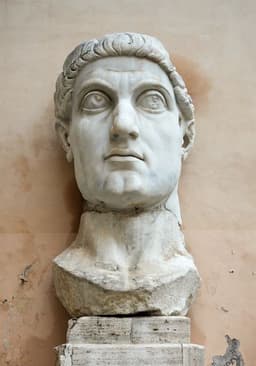
Constantine the Great
Emperor · Ancient
75.5Total
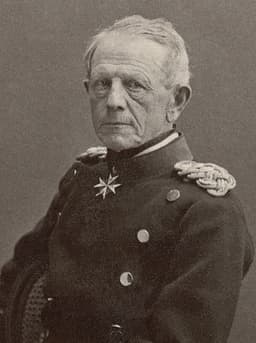
Helmuth von Moltke
General · Modern
76.2Total
Basic Information
Born
272
1800
Died
337
1891
Era
Ancient
Modern
Nationality
Roman Empire
Prussia
Occupation
Emperor
General
Civilization
Western
Western
Score Comparison
Military (10%)
78.0
65.0
Political (20%)
82.0
62.7
Influence (20%)
75.0
88.0
Legacy (20%)
70.0
70.0
Leadership (15%)
80.0
85.0
Strategy (15%)
72.0
80.6
TOTAL
75.5
76.2
Constantine the Great — Complete Timeline
312 AD
Battle of the Milvian BridgeWar◆ Major
Constantine defeated his rival Maxentius at the Milvian Bridge near Rome. According to tradition, Constantine saw a vision of a cross in the sky with the words 'In this sign, conquer.' The victory made Constantine the sole ruler of the Western Roman Empire and led to his conversion to Christianity.
Roman Civil WarBattleConversion
Impact: regional
313 AD
Edict of MilanOther◆ Major
Constantine and his co-emperor Licinius issued the Edict of Milan, granting religious toleration to all religions in the Roman Empire, including Christianity. The edict ended the persecution of Christians, restored confiscated church property, and established Christianity as a legally recognized religion.
Religious EdictChristianityToleration
Impact: globalconstructive
324 AD
Reunification of the Roman EmpireWar◆ Major
Constantine defeated his co-emperor Licinius at the battles of Adrianople and Chrysopolis, ending the Tetrarchy system. He became the sole ruler of the entire Roman Empire, reuniting the Western and Eastern halves under his control. This reunification was the last time the Roman Empire was united under a single ruler.
Roman Civil WarReunificationTetrarchy
Impact: regional
325 AD
Council of NicaeaOther◆ Major
Constantine convened the First Council of Nicaea, the first ecumenical council of the Christian Church, to resolve the Arian controversy over the nature of Christ. The council produced the Nicene Creed, affirming the divinity of Christ and establishing a unified Christian doctrine. Constantine presided over the council.
Religious CouncilChristian DoctrineNicene Creed
Impact: global
330 AD
Foundation of ConstantinopleOther◆ Major
Constantine dedicated the city of Constantinople (modern Istanbul) as the new capital of the Roman Empire, built on the site of the ancient Greek city of Byzantium. The city was strategically located on the Bosporus strait, controlling trade routes between Europe and Asia. It became the capital of the Eastern Roman Empire for over a thousand years.
City FoundationCapitalByzantine Empire
Impact: globalconstructive
Helmuth von Moltke — Complete Timeline
1857 AD
Appointment as Chief of the Prussian General StaffPolitical Action
Moltke was appointed Chief of the Prussian General Staff, a position he held for 30 years. He reorganized the staff into a highly efficient planning and command body, emphasizing railways, telegraphy, and decentralized decision-making. This modernization was crucial for Prussia's subsequent victories.
Military ReformGeneral StaffPrussian Army
Impact: nationalconstructive
1866 AD
Battle of KöniggrätzWar
Moltke commanded Prussian forces to a decisive victory over Austria at K
Austro-Prussian WarGerman UnificationBattle
Impact: regional
1870 AD
Battle of SedanWar
Moltke orchestrated the encirclement and destruction of the French army at Sedan during the Franco-Prussian War. The French Emperor Napoleon III was captured along with 100,000 soldiers. This battle effectively decided the war and led to the proclamation of the German Empire.
Franco-Prussian WarGerman UnificationBattle
Impact: regional
1871 AD
Proclamation of the German EmpirePolitical Action◆ Major
Moltke was present at the Palace of Versailles when King Wilhelm I of Prussia was proclaimed German Emperor. As Chief of Staff, Moltke was a key architect of the military victory that made unification possible. He was later promoted to Field Marshal and ennobled.
German UnificationEmpireCeremony
Impact: regionalconstructive
Expert Analysis
Origins
Helmuth von Moltke the Elder (1800–1891) was born into a Prussian noble family in Mecklenburg. He entered the Danish army before switching to Prussia, where his intellectual rigor and strategic acumen were honed at the Prussian War Academy. Constantine the Great (272–337 CE) was born in Naissus (modern Niš, Serbia) to Flavius Constantius, a Roman army officer, and Helena. His early life was shaped by the tetrarchy system and military campaigns in the East. Both men emerged from military traditions, but Moltke's rise was through bureaucratic merit, while Constantine's was dynastic and political.
Rise to Power
Moltke's ascent began in 1857 when he was appointed Chief of the Prussian General Staff. He modernized the staff system, emphasizing decentralized execution and railway logistics. His strategic plans were crucial in the Second Schleswig War (1864) and the Austro-Prussian War (1866), culminating in the decisive Battle of Königgrätz. Constantine's rise was more dramatic: after his father's death in 306, he was proclaimed Augustus by his troops. He consolidated power through civil wars, defeating Maxentius at the Battle of the Milvian Bridge (312) and Licinius in 324, reuniting the Roman Empire under his sole rule.
Leadership & Governance
Moltke was a master of operational command, delegating tactical decisions to subordinates while orchestrating large-scale maneuvers. His governance style was apolitical; he served under King Wilhelm I and Chancellor Bismarck, focusing solely on military efficiency. Constantine, by contrast, was a hands-on ruler who reformed the Roman state. He issued the Edict of Milan (313), legalizing Christianity, and convened the Council of Nicaea (325) to unify church doctrine. He also founded Constantinople (330) as a new Christian capital, shifting the empire's center of gravity eastward.
Triumph & Tragedy
Moltke's greatest triumph was the Franco-Prussian War (1870–71), where his encirclement and defeat of the French army at Sedan led to the proclamation of the German Empire. His tragedy was the growing militarism that followed, which he later warned against. Constantine's triumphs include his military victories and the Christianization of the empire. However, his reign saw the execution of his son Crispus and wife Fausta, casting a shadow over his legacy. Both men achieved their goals but left ambiguous consequences.
Character & Destiny
Moltke was reserved, intellectual, and deeply methodical—a planner who believed in the primacy of logistics. His destiny was to forge a unified Germany through precise military orchestration. Constantine was ambitious, pragmatic, and visionary—a leader who used religion as a tool for unity. His destiny was to transform the Roman Empire into a Christian state and lay the foundations for Byzantium. Their contrasting personalities reflect their eras: Moltke, the modern staff officer; Constantine, the ancient emperor-pontiff.
Legacy
Moltke's legacy is the modern general staff system, emulated by armies worldwide. He is revered as a military genius who perfected the art of operational warfare. Constantine's legacy is monumental: he legalized Christianity, shaped the Nicene Creed, and founded Constantinople, which endured for over a millennium. While Moltke's influence is primarily military, Constantine's impact spans religion, politics, and culture. Both are pivotal figures in their respective domains.
Conclusion
Comparing Moltke and Constantine across metrics: Military (M): Constantine 78 vs Moltke 65—Constantine's battlefield victories and strategic reforms edge out. Political (P): Constantine 82 vs Moltke 63—his religious and administrative changes were broader. Influence (I): Moltke 88 vs Constantine 75—Moltke's staff system revolutionized warfare. Leadership (L): Tie at 70. Durability (D): Moltke 85 vs Constantine 80—Moltke's system outlasted his era. Strategy (S): Moltke 81 vs Constantine 72—his operational art was superior. Timing (T): Tie at 76. Score gap: 0.7 in Moltke's favor. Overall, while Constantine reshaped the ancient world, Moltke's innovations in military organization have had a more enduring technical impact on modern warfare. Thus, Helmuth von Moltke is the higher-scoring figure.
Rankings
🥇
Helmuth von MoltkeLeader
Mil: 65.0Pol: 62.7Inf: 88.0
76.2
🥈
Constantine the Great
Mil: 78.0Pol: 82.0Inf: 75.0
75.5
+0.7 behind
How This Comparison Works
Algorithm
Each figure is scored on 6 dimensions (0—100 scale) based on structured historical data: Military (10%), Political (20%), Influence (20%), Legacy (20%), Leadership (15%), Strategy (15%). The weighted total produces the final ranking.
Data Sources
Scores are computed from structured sub-indicators in the database. Scale factors adjust for era (Ancient ×0.85, Modern ×1.0) and civilization size (Eastern ×1.05, Other ×0.80) to account for differences in population and military scale.
Maximum 3 Figures
Comparisons are limited to 2—3 figures to ensure readability and statistical meaningfulness.
Error Margins
±5 points per dimension — Sub-scores are derived from historical records with inherent uncertainty. Two figures within 5 points on a dimension should be considered roughly equivalent in that area.
Total Score Accuracy
±3 points overall — The weighted combination of 6 dimensions produces a total score with approximately ±3 points of uncertainty. Differences of less than 3 points are not statistically significant— the figures are effectively tied.
Known Limitations
- Historical records are incomplete and uneven across civilizations
- Figures from oral-tradition societies may be underrepresented
- Occupation labels can misclassify multi-role figures
- Scores measure capability and impact, not moral character
- Quantitative scoring is a comparison tool, not absolute truth
Capability Radar
Military (10%) — Battles & Warfare
Battles
85
85
Win Rate
80
90
Expansion
85
85
Political (20%) — Governance & Reform
Reform
95
75
Diplomacy
90
80
Economy
80
65
Influence (20%) — Cultural & Global Reach
Cultural
95
60
Global
95
75
Legacy (20%) — Historical Impact
Historical
95
85
Longevity
95
75
Leadership (15%) — Power & Stability
Tenure
85
70
Stability
70
70
Strategy (15%) — Tactics & Innovation
Strategy
85
95
Tactics
75
95
Reform
90
90
Similar Comparisons
Comments & Discussion
No comments yet. Be the first to share your thoughts!