Loading...
This comparison has not been analyzed yet.
One-time AI generation (~1 minute). Scores and timeline are already available below.
Conrad I of Germany vs Soumaoro Kante of Sosso
Soumaoro Kante of Sosso leads by 9.2 pts · 2 figures compared
…
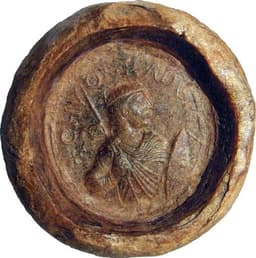
Conrad I of Germany
Emperor · Medieval
37.7Total
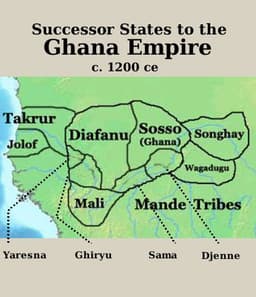
Soumaoro Kante of Sosso
Emperor · Medieval
46.9Total
Basic Information
Born
881
1190
Died
918
1235
Era
Medieval
Medieval
Nationality
East Francia
Sosso
Occupation
Emperor
Emperor
Civilization
Western
Other
Score Comparison
Military (10%)
21.2
50.0
Political (20%)
26.4
35.1
Influence (20%)
47.1
51.0
Legacy (20%)
40.8
42.5
Leadership (15%)
38.1
48.4
Strategy (15%)
39.6
60.0
TOTAL
37.7
46.9
Conrad I of Germany — Complete Timeline
911 AD
Election as King of East FranciaPolitical Action
Following the death of Louis the Child, the East Frankish nobility elected Conrad, Duke of Franconia, as king. This was the first non-Carolingian election, establishing the principle of elective monarchy in East Francia.
ElectionElective Monarchy
Impact: nationalconstructive
915 AD
Conflict with Henry of SaxonyWar◆ Major
Conrad I fought a prolonged war against Henry, Duke of Saxony (later Henry the Fowler). The conflict weakened royal authority and ended with Conrad recognizing Henry's autonomy in Saxony.
Civil WarDucal Rebellion
Impact: nationaldestructive
918 AD
Deathbed Designation of Henry of SaxonyPolitical Action
On his deathbed, Conrad I advised his brother Eberhard to offer the crown to Henry of Saxony, his former rival. This act ensured a peaceful succession and strengthened the monarchy under the Ottonian dynasty.
SuccessionOttonian Dynasty
Impact: nationalconstructive
Soumaoro Kante of Sosso — Complete Timeline
1200 AD
Ruled as sorcerer-smith kingPolitical Action
Soumaoro Kante ruled as a sorcerer-smith king, wielding magical powers associated with blacksmithing. He was feared for his supernatural abilities, which included shape-shifting and invulnerability. His rule combined political authority with spiritual terror.
RuleLegendSorcery
Impact: regional
1203 AD
Conquest of Ghana EmpireWar◆ Major
Soumaoro Kante of Sosso conquered the dying Ghana Empire, capturing its capital Koumbi Saleh. He absorbed Ghana's territory and trade networks into the Sosso Kingdom, establishing himself as the dominant ruler in the western Sudan region.
ConquestEmpire building
Impact: regionaldestructive
1235 AD
Defeated by Sundiata Keita at KirinaWar
Soumaoro Kante was defeated and killed at the Battle of Kirina by Sundiata Keita's forces. His death ended Sosso dominance and allowed the formation of the Mali Empire. The battle is a central event in the Epic of Sundiata.
BattleDefeatEpic
Impact: regionaltragic
This comparison has not been analyzed yet.
One-time AI generation (~1 minute). Scores and timeline are already available below.
Rankings
🥇
Soumaoro Kante of SossoLeader
Mil: 50.0Pol: 35.1Inf: 51.0
46.9
🥈
Conrad I of Germany
Mil: 21.2Pol: 26.4Inf: 47.1
37.7
+9.2 behind
How This Comparison Works
Algorithm
Each figure is scored on 6 dimensions (0—100 scale) based on structured historical data: Military (10%), Political (20%), Influence (20%), Legacy (20%), Leadership (15%), Strategy (15%). The weighted total produces the final ranking.
Data Sources
Scores are computed from structured sub-indicators in the database. Scale factors adjust for era (Ancient ×0.85, Modern ×1.0) and civilization size (Eastern ×1.05, Other ×0.80) to account for differences in population and military scale.
Maximum 3 Figures
Comparisons are limited to 2—3 figures to ensure readability and statistical meaningfulness.
Error Margins
±5 points per dimension — Sub-scores are derived from historical records with inherent uncertainty. Two figures within 5 points on a dimension should be considered roughly equivalent in that area.
Total Score Accuracy
±3 points overall — The weighted combination of 6 dimensions produces a total score with approximately ±3 points of uncertainty. Differences of less than 3 points are not statistically significant— the figures are effectively tied.
Known Limitations
- Historical records are incomplete and uneven across civilizations
- Figures from oral-tradition societies may be underrepresented
- Occupation labels can misclassify multi-role figures
- Scores measure capability and impact, not moral character
- Quantitative scoring is a comparison tool, not absolute truth
Capability Radar
Military (10%) — Battles & Warfare
Battles
15
45
Win Rate
10
40
Expansion
5
55
Political (20%) — Governance & Reform
Reform
20
30
Diplomacy
25
25
Economy
15
35
Influence (20%) — Cultural & Global Reach
Cultural
10
30
Global
10
15
Legacy (20%) — Historical Impact
Historical
25
35
Longevity
20
20
Leadership (15%) — Power & Stability
Tenure
30
40
Stability
15
20
Strategy (15%) — Tactics & Innovation
Strategy
10
40
Tactics
10
50
Reform
5
30
Similar Comparisons
Comments & Discussion
No comments yet. Be the first to share your thoughts!