Loading...
Al-Muntasir vs Conrad I of Germany
Al-Muntasir leads by 1.9 pts · 2 figures compared
…

Al-Muntasir
Emperor · Medieval
39.6Total
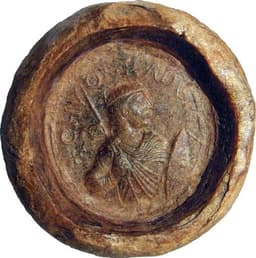
Conrad I of Germany
Emperor · Medieval
37.7Total
Basic Information
Born
837
881
Died
862
918
Era
Medieval
Medieval
Nationality
Abbasid Caliphate
East Francia
Occupation
Emperor
Emperor
Civilization
Middle Eastern
Western
Score Comparison
Military (10%)
20.0
21.2
Political (20%)
35.0
26.4
Influence (20%)
45.5
47.1
Legacy (20%)
35.8
40.8
Leadership (15%)
49.9
38.1
Strategy (15%)
45.0
39.6
TOTAL
39.6
37.7
Al-Muntasir — Complete Timeline
861 AD
Assassination of Al-MutawakkilPolitical Action◆ Major
Al-Muntasir participated in the assassination of his father, Caliph al-Mutawakkil, by the Turkish guard. He then ascended to the caliphate, becoming the first Abbasid caliph to be installed by Turkish military power.
AssassinationSuccession
Impact: regionaldestructive
862 AD
Brief Reign and DeathPolitical Action◆ Major
Al-Muntasir's reign lasted only about six months. He died in 862, possibly poisoned by the Turkish guard, after failing to assert his authority. His death deepened the instability of the caliphate.
DeathInstability
Impact: nationaltragic
Conrad I of Germany — Complete Timeline
911 AD
Election as King of East FranciaPolitical Action
Following the death of Louis the Child, the East Frankish nobility elected Conrad, Duke of Franconia, as king. This was the first non-Carolingian election, establishing the principle of elective monarchy in East Francia.
ElectionElective Monarchy
Impact: nationalconstructive
915 AD
Conflict with Henry of SaxonyWar◆ Major
Conrad I fought a prolonged war against Henry, Duke of Saxony (later Henry the Fowler). The conflict weakened royal authority and ended with Conrad recognizing Henry's autonomy in Saxony.
Civil WarDucal Rebellion
Impact: nationaldestructive
918 AD
Deathbed Designation of Henry of SaxonyPolitical Action
On his deathbed, Conrad I advised his brother Eberhard to offer the crown to Henry of Saxony, his former rival. This act ensured a peaceful succession and strengthened the monarchy under the Ottonian dynasty.
SuccessionOttonian Dynasty
Impact: nationalconstructive
Expert Analysis
Origins
Al-Muntasir was born around 837 as the son of Caliph al-Mutawakkil, who ruled the Abbasid Caliphate from 847 to 861. His early life was shaped by the palace politics of Samarra, where the Turkish guard held increasing power. Little is known of his education, but he likely received training in governance and military arts typical for an Abbasid prince. His father's favoritism toward his younger brother al-Mu'tazz created tension, pushing al-Muntasir into the orbit of the Turkish military elite.
Conrad I was born around 890 into the Conradine dynasty, a powerful Frankish noble family. His father, Conrad the Elder, was Duke of Thuringia and later of Franconia. The Conradines were rivals with the Babenbergs, and Conrad I grew up amid feuds that shaped his military and political skills. He inherited the Duchy of Franconia and became one of the most influential nobles in East Francia, the eastern part of the Carolingian Empire.
Rise to Power
Al-Muntasir's ascent came through parricide. In December 861, the Turkish guard, discontent with al-Mutawakkil's policies, assassinated the caliph. Al-Muntasir was complicit in the plot, and immediately after his father's murder, he was proclaimed caliph. The Turks thus secured a ruler who would be dependent on them. His rise was swift but illegitimate, setting the stage for a weakened caliphate.
Conrad I rose through election. After the death of the last Carolingian king, Louis the Child, in 911, the East Frankish nobility convened at Forchheim and elected Conrad as king. This was the first non-Carolingian election in East Francia, marking a shift toward elective monarchy. Conrad's main rival was Henry, Duke of Saxony, who refused to recognize his kingship, leading to a protracted conflict.
Leadership & Governance
Al-Muntasir's reign lasted only six months (861–862). He attempted to secure his position by removing his brothers al-Mu'tazz and al-Mu'ayyad from the succession, but he failed to assert independence from the Turkish guard. His governance was minimal; he issued few decrees and relied on Turkish commanders for administration. His political score of 35.0 reflects his inability to consolidate power.
Conrad I ruled for seven years (911–918). He faced constant rebellion from the Saxon duke Henry and other nobles. His leadership style was military and pragmatic, but he lacked the resources to impose royal authority. He did, however, maintain the integrity of East Francia against external threats like the Magyars. His political score of 26.4 indicates his struggles, but he laid groundwork for later kings.
Triumph & Tragedy
Al-Muntasir's triumph was his brief ascension to the caliphate, but his tragedy was his complete dependence on the Turkish guard. He died in June 862, possibly poisoned by the same guards who had made him caliph. His reign marked the beginning of the 'Anarchy at Samarra,' a period of decline for the Abbasid Caliphate. His legacy score of 35.8 reflects his negative impact.
Conrad I's greatest triumph was his deathbed decision to recommend Henry of Saxony as his successor. This ensured a peaceful transition and allowed Henry to found the Ottonian dynasty. His tragedy was his inability to unite the German stem duchies during his reign; his wars against Henry weakened the crown. His legacy score of 40.8 is higher due to this strategic foresight.
Character & Destiny
Al-Muntasir is portrayed as a pawn of the Turkish guard. His participation in his father's murder suggests ambition, but his brief rule shows indecisiveness. He scored 49.9 in leadership, but his actions betray a lack of autonomy. His destiny was sealed by the very forces that elevated him.
Conrad I is seen as a capable but unlucky ruler. He accepted the limitations of his power and prioritized the realm's stability over dynastic ambition. His character is marked by pragmatism and a sense of duty. His decision to pass the crown to his rival shows political maturity. His leadership score of 38.1 reflects his modest but effective governance.
Legacy
Al-Muntasir's legacy is primarily negative: his reign accelerated the decline of the Abbasid Caliphate. The Turkish guard's dominance led to a series of weak caliphs, and the caliphate never recovered its former authority. His influence score of 45.5 is partly due to the historical significance of his short reign as a turning point.
Conrad I's legacy is more positive. By choosing Henry of Saxony as successor, he enabled the Ottonian dynasty to consolidate Germany. His reign demonstrated the viability of non-Carolingian kingship. He is remembered as the first king of East Francia after the Carolingians, a crucial transitional figure. His influence score of 47.1 reflects his role in shaping German history.
Conclusion
While Al-Muntasir scored slightly higher overall (39.6 vs 37.7), Conrad I's impact on history is more significant. Al-Muntasir's reign was a symptom of decline, whereas Conrad I's actions helped stabilize East Francia and set the stage for the Holy Roman Empire. Conrad's deathbed decision alone outweighs al-Muntasir's entire rule. In terms of lasting influence, Conrad I is the more consequential figure.
Rankings
🥇
Al-MuntasirLeader
Mil: 20.0Pol: 35.0Inf: 45.5
39.6
🥈
Conrad I of Germany
Mil: 21.2Pol: 26.4Inf: 47.1
37.7
+1.9 behind
How This Comparison Works
Algorithm
Each figure is scored on 6 dimensions (0—100 scale) based on structured historical data: Military (10%), Political (20%), Influence (20%), Legacy (20%), Leadership (15%), Strategy (15%). The weighted total produces the final ranking.
Data Sources
Scores are computed from structured sub-indicators in the database. Scale factors adjust for era (Ancient ×0.85, Modern ×1.0) and civilization size (Eastern ×1.05, Other ×0.80) to account for differences in population and military scale.
Maximum 3 Figures
Comparisons are limited to 2—3 figures to ensure readability and statistical meaningfulness.
Error Margins
±5 points per dimension — Sub-scores are derived from historical records with inherent uncertainty. Two figures within 5 points on a dimension should be considered roughly equivalent in that area.
Total Score Accuracy
±3 points overall — The weighted combination of 6 dimensions produces a total score with approximately ±3 points of uncertainty. Differences of less than 3 points are not statistically significant— the figures are effectively tied.
Known Limitations
- Historical records are incomplete and uneven across civilizations
- Figures from oral-tradition societies may be underrepresented
- Occupation labels can misclassify multi-role figures
- Scores measure capability and impact, not moral character
- Quantitative scoring is a comparison tool, not absolute truth
Capability Radar
Military (10%) — Battles & Warfare
Battles
5
15
Win Rate
5
10
Expansion
5
5
Political (20%) — Governance & Reform
Reform
5
20
Diplomacy
5
25
Economy
5
15
Influence (20%) — Cultural & Global Reach
Cultural
5
10
Global
5
10
Legacy (20%) — Historical Impact
Historical
10
25
Longevity
5
20
Leadership (15%) — Power & Stability
Tenure
10
30
Stability
5
15
Strategy (15%) — Tactics & Innovation
Strategy
5
10
Tactics
5
10
Reform
5
5
Similar Comparisons
Comments & Discussion
No comments yet. Be the first to share your thoughts!