Loading...
Al-Muti vs Soumaoro Kante of Sosso
Soumaoro Kante of Sosso leads by 4.4 pts · 2 figures compared
…
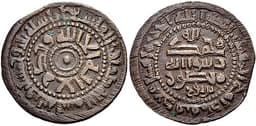
Al-Muti
Emperor · Medieval
42.5Total
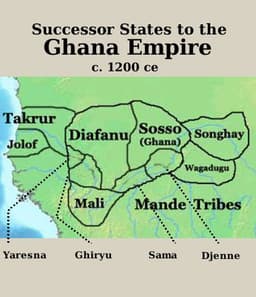
Soumaoro Kante of Sosso
Emperor · Medieval
46.9Total
Basic Information
Born
914
1190
Died
974
1235
Era
Medieval
Medieval
Nationality
Abbasid Caliphate
Sosso
Occupation
Emperor
Emperor
Civilization
Middle Eastern
Other
Score Comparison
Military (10%)
34.8
50.0
Political (20%)
35.0
35.1
Influence (20%)
45.5
51.0
Legacy (20%)
35.8
42.5
Leadership (15%)
49.9
48.4
Strategy (15%)
60.0
60.0
TOTAL
42.5
46.9
Al-Muti — Complete Timeline
946 AD
Accession of Al-MutiPolitical Action◆ Major
Al-Muti became caliph after the deposition of Al-Mustakfi. He was the first Abbasid caliph to reign entirely under Buyid control, with no real political or military power.
AccessionBuyid ControlFigurehead
Impact: national
Reign under Buyid ControlPolitical Action◆ Major
Al-Muti's entire 28-year reign was spent as a puppet of the Buyid emirs. He performed ceremonial duties but had no authority over state affairs, marking the nadir of Abbasid power.
Buyid ControlPuppetDecline
Impact: national
974 AD
Abdication of Al-MutiPolitical Action◆ Major
Al-Muti abdicated the caliphate in favor of his son Al-Tai, possibly due to illness or pressure from the Buyids. His abdication was a peaceful transfer of power, but it did not change the caliph's powerless status.
AbdicationSuccessionBuyid
Impact: national
Soumaoro Kante of Sosso — Complete Timeline
1200 AD
Ruled as sorcerer-smith kingPolitical Action
Soumaoro Kante ruled as a sorcerer-smith king, wielding magical powers associated with blacksmithing. He was feared for his supernatural abilities, which included shape-shifting and invulnerability. His rule combined political authority with spiritual terror.
RuleLegendSorcery
Impact: regional
1203 AD
Conquest of Ghana EmpireWar◆ Major
Soumaoro Kante of Sosso conquered the dying Ghana Empire, capturing its capital Koumbi Saleh. He absorbed Ghana's territory and trade networks into the Sosso Kingdom, establishing himself as the dominant ruler in the western Sudan region.
ConquestEmpire building
Impact: regionaldestructive
1235 AD
Defeated by Sundiata Keita at KirinaWar
Soumaoro Kante was defeated and killed at the Battle of Kirina by Sundiata Keita's forces. His death ended Sosso dominance and allowed the formation of the Mali Empire. The battle is a central event in the Epic of Sundiata.
BattleDefeatEpic
Impact: regionaltragic
Expert Analysis
Origins
Al-Muti (born 914 CE) was an Abbasid prince, son of Caliph al-Muqtadir. He grew up in the imperial palace of Baghdad amid political intrigue and the decline of caliphal authority. His early life was marked by the rise of military strongmen and the fragmentation of the caliphate. In contrast, Soumaoro Kante (dates uncertain, fl. early 13th century) hailed from the Kante clan of the Sosso people, a subgroup of the Soninke. He was a blacksmith-king, inheriting both temporal power and mystical knowledge. The Sosso were vassals of the Ghana Empire, and Soumaoro learned the arts of war and sorcery. His origins are shrouded in legend, but he is remembered as a cruel and powerful ruler.
Rise to Power
Al-Muti became caliph in 946 CE after the deposition of al-Mustakfi by the Buyid emir Mu'izz al-Dawla. The Buyids, a Shia Persian dynasty, had conquered Baghdad and reduced the caliph to a figurehead. Al-Muti's accession was entirely at Buyid pleasure, marking the first time an Abbasid caliph reigned with no real political power. His 28-year reign was characterized by ceremonial duties and acquiescence to Buyid commands. Soumaoro Kante rose by conquering the crumbling Ghana Empire around 1203 CE. He captured Koumbi Saleh, the capital, and absorbed its trade networks. Using his reputation as a sorcerer, he intimidated rivals and expanded Sosso hegemony over the Sahel. His power peaked when he defeated several smaller kingdoms, only to face the rising star of Sundiata Keita.
Leadership & Governance
Al-Muti's leadership was passive and ceremonial. He performed religious duties, such as leading Friday prayers and confirming Buyid appointments, but had no say in taxation, military, or foreign policy. The Buyid emirs ruled through viziers and amirs, leaving the caliph as a symbolic figure. For example, when the Hamdanids challenged Buyid authority, al-Muti could only watch. Soumaoro Kante ruled as an autocrat, relying on his feared magic and a core of loyal warriors. He imposed heavy tributes on conquered peoples and used forced labor for building projects. His governance was extractive and brutal, earning him many enemies. Unlike al-Muti, he had real power but lacked administrative sophistication, leading to rebellion.
Triumph & Tragedy
Al-Muti's triumph was surviving 28 years as a puppet without being murdered, a feat given the violent turnover of caliphs. He abdicated peacefully in 974 CE in favor of his son al-Tai. His tragedy was total irrelevance; he scored 34.8 in military and 35.0 in political, reflecting his impotence. Soumaoro's triumph was conquering Ghana and dominating the region for about 20 years. His tragedy was his defeat at the Battle of Kirina (c. 1235 CE) by Sundiata Keita, where he was killed. His empire collapsed immediately, and he is remembered as a tyrant. His military score of 50.0 is higher than al-Muti's 34.8, but his political score (35.1) is similar, showing weak governance.
Character & Destiny
Al-Muti was cautious and compliant, accepting his role as a figurehead. His character ensured his survival but condemned him to obscurity. He made no attempt to regain power, perhaps recognizing the futility. Soumaoro was arrogant and cruel, relying on sorcery and fear. His character led to his downfall, as his brutality united enemies like Sundiata. Historical assessments paint him as a villain, while al-Muti is barely mentioned. Their scores reflect this: Soumaoro's influence (51.0) and legacy (42.5) surpass al-Muti's 45.5 and 35.8, but both are low compared to great rulers.
Legacy
Al-Muti's legacy is as a symbol of Abbasid decline. His reign set the pattern for later puppet caliphs under Buyid and Seljuk control. He left no institutions or reforms. His son al-Tai continued the same role. Soumaoro Kante's legacy is more significant: his defeat allowed the Mali Empire to rise, which became a major power in West Africa. He is remembered in the Epic of Sundiata as the archetypal evil sorcerer-king. His scores in legacy (42.5) and influence (51.0) reflect his role in shaping the region's history, albeit negatively.
Conclusion
Soumaoro Kante had greater impact than Al-Muti. Despite both being authoritarian rulers with limited governance skills, Soumaoro's actions directly led to the rise of the Mali Empire, a major historical entity. Al-Muti's reign was a footnote in the Abbasid decline. Soumaoro's total score of 46.9 vs al-Muti's 42.5 supports this, though the gap is narrow. However, Soumaoro's influence (51.0) and legacy (42.5) are clearly higher. Al-Muti's leadership score (49.9) is slightly above Soumaoro's (48.4), but this reflects his survival, not effective rule. In sum, Soumaoro Kante, for better or worse, changed history, while Al-Muti was a passive observer.
Rankings
🥇
Soumaoro Kante of SossoLeader
Mil: 50.0Pol: 35.1Inf: 51.0
46.9
🥈
Al-Muti
Mil: 34.8Pol: 35.0Inf: 45.5
42.5
+4.4 behind
How This Comparison Works
Algorithm
Each figure is scored on 6 dimensions (0—100 scale) based on structured historical data: Military (10%), Political (20%), Influence (20%), Legacy (20%), Leadership (15%), Strategy (15%). The weighted total produces the final ranking.
Data Sources
Scores are computed from structured sub-indicators in the database. Scale factors adjust for era (Ancient ×0.85, Modern ×1.0) and civilization size (Eastern ×1.05, Other ×0.80) to account for differences in population and military scale.
Maximum 3 Figures
Comparisons are limited to 2—3 figures to ensure readability and statistical meaningfulness.
Error Margins
±5 points per dimension — Sub-scores are derived from historical records with inherent uncertainty. Two figures within 5 points on a dimension should be considered roughly equivalent in that area.
Total Score Accuracy
±3 points overall — The weighted combination of 6 dimensions produces a total score with approximately ±3 points of uncertainty. Differences of less than 3 points are not statistically significant— the figures are effectively tied.
Known Limitations
- Historical records are incomplete and uneven across civilizations
- Figures from oral-tradition societies may be underrepresented
- Occupation labels can misclassify multi-role figures
- Scores measure capability and impact, not moral character
- Quantitative scoring is a comparison tool, not absolute truth
Capability Radar
Military (10%) — Battles & Warfare
Battles
33
45
Win Rate
31
40
Expansion
38
55
Political (20%) — Governance & Reform
Reform
5
30
Diplomacy
10
25
Economy
5
35
Influence (20%) — Cultural & Global Reach
Cultural
5
30
Global
5
15
Legacy (20%) — Historical Impact
Historical
10
35
Longevity
5
20
Leadership (15%) — Power & Stability
Tenure
10
40
Stability
5
20
Strategy (15%) — Tactics & Innovation
Strategy
43
40
Tactics
43
50
Reform
49
30
Similar Comparisons
Comments & Discussion
No comments yet. Be the first to share your thoughts!