Loading...
Conrad I of Germany vs Julius Caesar
Julius Caesar leads by 45.1 pts · 2 figures compared
…
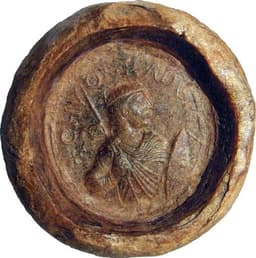
Conrad I of Germany
Emperor · Medieval
37.7Total

Julius Caesar
General · Ancient
82.8Total
Basic Information
Born
881
-100
Died
918
-44
Era
Medieval
Ancient
Nationality
East Francia
Roman Republic
Occupation
Emperor
General
Civilization
Western
Western
Score Comparison
Military (10%)
21.2
88.0
Political (20%)
26.4
78.0
Influence (20%)
47.1
85.0
Legacy (20%)
40.8
82.0
Leadership (15%)
38.1
80.0
Strategy (15%)
39.6
85.0
TOTAL
37.7
82.8
Conrad I of Germany — Complete Timeline
911 AD
Election as King of East FranciaPolitical Action
Following the death of Louis the Child, the East Frankish nobility elected Conrad, Duke of Franconia, as king. This was the first non-Carolingian election, establishing the principle of elective monarchy in East Francia.
ElectionElective Monarchy
Impact: nationalconstructive
915 AD
Conflict with Henry of SaxonyWar◆ Major
Conrad I fought a prolonged war against Henry, Duke of Saxony (later Henry the Fowler). The conflict weakened royal authority and ended with Conrad recognizing Henry's autonomy in Saxony.
Civil WarDucal Rebellion
Impact: nationaldestructive
918 AD
Deathbed Designation of Henry of SaxonyPolitical Action
On his deathbed, Conrad I advised his brother Eberhard to offer the crown to Henry of Saxony, his former rival. This act ensured a peaceful succession and strengthened the monarchy under the Ottonian dynasty.
SuccessionOttonian Dynasty
Impact: nationalconstructive
Julius Caesar — Complete Timeline
58 BC
Gallic WarsWar◆ Major
Caesar, as proconsul of Gaul, launched a series of campaigns that conquered all of Gaul (modern France, Belgium, and parts of Switzerland). He fought numerous battles, including against the Helvetii, the Belgae, and the Gallic chieftain Vercingetorix. The wars brought immense wealth and a loyal army to Caesar.
Gallic WarsConquestRoman Expansion
Impact: regional
49 BC
Crossing the RubiconPolitical Action◆ Major
Caesar led Legio XIII across the Rubicon River into Italy, defying the Roman Senate's order to disband his army. This act triggered a civil war against Pompey and the Optimates, ultimately leading to Caesar's dictatorship and the end of the Roman Republic.
Roman Civil WarEnd of RepublicPower Struggle
Impact: global
48 BC
Battle of PharsalusWar◆ Major
Caesar's outnumbered army defeated the larger forces of Pompey the Great at Pharsalus in Greece. Caesar's tactical use of a reserve line to counter Pompey's cavalry charge proved decisive. Pompey fled to Egypt, where he was assassinated, leaving Caesar as the undisputed master of the Roman world.
Roman Civil WarBattleDecisive Victory
Impact: regional
44 BC
Appointment as Dictator for LifePolitical Action◆ Major
The Roman Senate appointed Caesar dictator perpetuo (dictator for life), granting him unprecedented personal power. This move concentrated military, legislative, and judicial authority in one person, effectively ending the Roman Republic's traditional system of checks and balances and alarming many senators.
DictatorshipEnd of RepublicPower Consolidation
Impact: regionaldestructive
Assassination on the Ides of MarchPolitical Action◆ Major
A group of Roman senators, led by Marcus Junius Brutus and Gaius Cassius Longinus, stabbed Caesar to death at a meeting of the Senate in the Theatre of Pompey. The assassination was intended to restore the Republic, but instead triggered another civil war that led to the rise of the Roman Empire.
AssassinationRoman PoliticsEnd of Republic
Impact: globaldestructive
Expert Analysis
conrad-i-of-germany-vs-julius-caesar
# The Ides of March and the Crown of Thorns: Why Caesar Changed the World and Conrad Was Forgotten
On a March morning in 44 BCE, Julius Caesar walked into the Senate chamber in Rome, brushing aside a warning to beware the day. Within an hour, he lay bleeding on the marble floor, stabbed twenty-three times by men he had pardoned. Across a thousand years and a thousand miles, in the year 918 CE, another king—Conrad I of East Francia—lay on his deathbed in a wooden hall, not from an assassin’s blade but from exhaustion and illness. His last act was not a cry for vengeance but a whispered instruction to hand his crown to his greatest enemy. One death shattered an age and launched an empire. The other closed a chapter so quietly that most history books skip it entirely. What made the difference between a man who became a legend and a man who became a footnote?
Origins
Julius Caesar was born into the chaos of the late Roman Republic, a world of civil wars, crumbling aristocratic norms, and ambition without limits. His family, the Julii, claimed descent from the goddess Venus, but they were politically marginal. Young Caesar grew up in a Rome where the old rules of the Senate were bending under the weight of massive armies and richer men. He learned early that in such a world, audacity was the only currency that mattered.
Conrad I was born in 881 CE into a different kind of chaos. East Francia—what would become Germany—was a patchwork of duchies ruled by proud nobles who had no real king. The Carolingian dynasty, once mighty under Charlemagne, had crumbled into irrelevance. Conrad’s father was the Duke of Franconia, a region of forests and fortified hills. There was no goddess in Conrad’s lineage, only hard land and hard men who respected strength above all. Where Caesar breathed the air of a thousand-year-old city, Conrad breathed the air of a frontier where survival was the only tradition.
Rise to Power
Caesar’s rise was a masterclass in calculated risk. He borrowed fortunes to throw banquets and games, buying popularity. He married strategically, allied with the rich Crassus and the powerful Pompey, and then spent eight brutal years conquering Gaul. Every battle—from the Rhine to the British coast—was a gamble that paid off. When the Senate ordered him to disband his army, he crossed the Rubicon River into Italy with a single legion, knowing that this act meant civil war or death. He chose war, and he won.
Conrad I’s rise was simpler and sadder. In 911 CE, the last Carolingian king of East Francia, Louis the Child, died at eighteen. The German nobles gathered and elected Conrad king—not because he was brilliant, but because he was the least threatening choice. He was a duke like them, not a man of overwhelming ambition. Where Caesar seized power with a sword, Conrad accepted it as a burden. The nobles who elected him did so expecting him to fail.
Leadership & Governance
Caesar governed as he conquered: with speed, ruthlessness, and a vision of a new world. He reformed the calendar, gave land to veterans, extended citizenship to provincials, and centralized authority in his own hands. He pardoned his enemies—a dangerous generosity—and packed the Senate with his supporters. His military genius was undeniable: at Alesia, he built a double ring of fortifications to trap the Gallic army and then turned to defeat a massive relief force, all while starving his own men. He was a politician who could fight and a general who could govern.
Conrad I inherited a kingdom that was falling apart. The Magyars, horsemen from the east, raided with impunity. The dukes of Saxony, Bavaria, and Swabia ignored his commands. Conrad spent his seven-year reign fighting one losing battle after another. In 915 CE, he warred against Henry, Duke of Saxony—a conflict that drained royal resources and achieved nothing. Conrad was brave but not brilliant, stubborn but not strategic. His military score of 30.0 reflects a man who could lead men into battle but could not win the war.
Triumph & Tragedy
Caesar’s greatest triumph was his conquest of Gaul, which added a vast, wealthy province to Rome and made him the richest man in the Republic. His greatest tragedy was his assassination—not because he died, but because he died believing he had solved the Republic’s problems. He had centralized power, but he had not built institutions to replace the broken Senate. The Ides of March was a tragedy of overconfidence.
Conrad I’s only real triumph came on his deathbed. After years of conflict with Henry of Saxony, Conrad realized that Henry was stronger and more capable. In 918 CE, he told his brother Eberhard to offer Henry the crown. “Henry is the only man who can save the kingdom,” Conrad is said to have whispered. This act of selfless realism was his one moment of true leadership. His tragedy was that he had spent his entire reign fighting the very man who should have been his ally.
Character & Destiny
Caesar was driven by an insatiable need for glory. He wrote his own war commentaries, shaped his own image, and believed that fate favored the bold. His personality was magnetic, generous, and utterly ruthless. He pardoned Brutus and Cassius—and they killed him. His destiny was to destroy the Republic and create the Empire, whether he intended to or not.
Conrad I was driven by duty, not ambition. He was a loyal Carolingian in a post-Carolingian world, a man who tried to hold together something that was already broken. His personality was stubborn, honorable, and ultimately humble. He lacked the vision to see that the old order was dead, but he had the grace to admit it at the end. His destiny was to be a bridge—a forgotten king who handed power to the man who would build Germany.
Legacy
Caesar’s legacy is everywhere. The month of July bears his name. His military tactics are still studied. His assassination launched the Roman Empire, which shaped Western law, language, and religion for two millennia. He is remembered as a genius, a tyrant, and a martyr—all at once.
Conrad I is remembered by specialists. He was the first non-Carolingian king of East Francia, but he ruled so weakly that his successor, Henry the Fowler, had to start from scratch. Henry went on to found the Ottonian dynasty, which became the Holy Roman Empire. Conrad’s legacy was his deathbed choice—a moment of wisdom that saved Germany from civil war. But wisdom without power is easily forgotten.
Conclusion
Caesar and Conrad stand at opposite ends of the same question: what does it take to change history? Caesar shows us that ambition, talent, and ruthlessness can reshape the world—but also that such power invites destruction. Conrad shows us that humility and self-awareness can preserve a kingdom—but that such virtue rarely earns fame. One man crossed a river and changed everything. The other stepped aside and let a better man take the throne. Both made the right choice for their moment, but only one moment still echoes in our ears. The Ides of March and the deathbed of Conrad remind us that history does not reward goodness equally—it rewards greatness, even when that greatness is terrifying.
Rankings
🥇
Julius CaesarLeader
Mil: 88.0Pol: 78.0Inf: 85.0
82.8
🥈
Conrad I of Germany
Mil: 21.2Pol: 26.4Inf: 47.1
37.7
+45.1 behind
How This Comparison Works
Algorithm
Each figure is scored on 6 dimensions (0—100 scale) based on structured historical data: Military (10%), Political (20%), Influence (20%), Legacy (20%), Leadership (15%), Strategy (15%). The weighted total produces the final ranking.
Data Sources
Scores are computed from structured sub-indicators in the database. Scale factors adjust for era (Ancient ×0.85, Modern ×1.0) and civilization size (Eastern ×1.05, Other ×0.80) to account for differences in population and military scale.
Maximum 3 Figures
Comparisons are limited to 2—3 figures to ensure readability and statistical meaningfulness.
Error Margins
±5 points per dimension — Sub-scores are derived from historical records with inherent uncertainty. Two figures within 5 points on a dimension should be considered roughly equivalent in that area.
Total Score Accuracy
±3 points overall — The weighted combination of 6 dimensions produces a total score with approximately ±3 points of uncertainty. Differences of less than 3 points are not statistically significant— the figures are effectively tied.
Known Limitations
- Historical records are incomplete and uneven across civilizations
- Figures from oral-tradition societies may be underrepresented
- Occupation labels can misclassify multi-role figures
- Scores measure capability and impact, not moral character
- Quantitative scoring is a comparison tool, not absolute truth
Capability Radar
Military (10%) — Battles & Warfare
Battles
15
95
Win Rate
10
92
Expansion
5
97
Political (20%) — Governance & Reform
Reform
20
90
Diplomacy
25
85
Economy
15
82
Influence (20%) — Cultural & Global Reach
Cultural
10
88
Global
10
94
Legacy (20%) — Historical Impact
Historical
25
95
Longevity
20
96
Leadership (15%) — Power & Stability
Tenure
30
75
Stability
15
60
Strategy (15%) — Tactics & Innovation
Strategy
10
94
Tactics
10
96
Reform
5
88
Similar Comparisons
Comments & Discussion
The Ides of March6/17/2026
Caesar didn't just die—he became the blueprint. Conrad died, and Germany got the Ottonians instead. Look, if Conrad had even half of Caesar's strategic panache, he wouldn't have been bleeding out on a battlefield just to beg a Saxon duke for peace. Caesar changed the calendar, the constitution, and the very concept of autocracy. Conrad couldn't even control his own dukes. One shaped civilization; the other got a paragraph in a medieval appendix.
征服者之眼6/17/2026
作为军事史爱好者,我必须说凯撒的高卢战记至今仍是军校教材,而康拉德一世连一场像样的围城战都没打赢。凯撒在阿莱西亚用双层工事困住八万高卢人,这种战术天才千年难遇。康拉德呢?他在911年面对马扎尔人入侵时连有效的防线都凑不齐。不是偏袒,事实就是:一个重塑了战争艺术,一个根本没能阻挡蛮族。
Data Sceptic Shrug6/17/2026
Numbers don't lie, but they do get boring. Caesar's civil war took maybe 50,000 casualties over four years. Conrad's reign saw chronic low-level conflict—hundreds of skirmishes, no big battles. But the death rate per capita in 10th-century East Francia was probably higher than in Caesar's Rome, just less dramatic. We fetishize famous deaths. That's narrative bias, not historical significance. Conrad's crown-passing actually kept his kingdom stable for a century. Caesar's murder plunged Rome into
德语史苦行僧6/17/2026
康拉德一世被低估了,但别搞错:他主动传位给萨克森公爵亨利一世,这直接催生了后来的神圣罗马帝国。凯撒的继承人屋大维花了十四年血战才稳固权力,而康拉德用一句遗言就完成了权力交接。这不是懦弱,是政治智慧。中世纪史专家都知道,919年选王制的胜利改变了欧洲,只不过这个故事不如刺杀戏码吸引眼球。历史不是只有戏剧性事件才有分量。
Reality Over Romance6/17/2026
Be honest: Conrad's story is a historian's parlor trick, not a real comparison. Caesar's death triggered the end of the Republic—that's tectonic. Conrad's death just meant his enemy got the job. The real reason Conrad is forgotten isn't lack of merit, it's lack of consequence. His kingdom still existed, his system still ran, his rivals still ruled. Caesar's murder literally changed the language we use (ides, dictator, crossing the Rubicon). Conrad's death gave us… a footnote about a crown transf