Loading...
Conrad I of Germany vs Napoleon Bonaparte
Napoleon Bonaparte leads by 33.2 pts · 2 figures compared
…
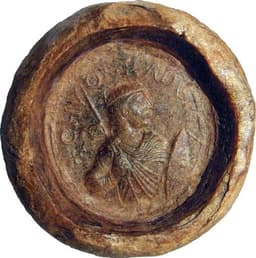
Conrad I of Germany
Emperor · Medieval
37.7Total

Napoleon Bonaparte
General · Modern
70.9Total
Basic Information
Born
881
1769
Died
918
1821
Era
Medieval
Modern
Nationality
East Francia
France
Occupation
Emperor
General
Civilization
Western
Western
Score Comparison
Military (10%)
21.2
94.0
Political (20%)
26.4
72.0
Influence (20%)
47.1
40.0
Legacy (20%)
40.8
80.0
Leadership (15%)
38.1
78.0
Strategy (15%)
39.6
90.0
TOTAL
37.7
70.9
Conrad I of Germany — Complete Timeline
911 AD
Election as King of East FranciaPolitical Action
Following the death of Louis the Child, the East Frankish nobility elected Conrad, Duke of Franconia, as king. This was the first non-Carolingian election, establishing the principle of elective monarchy in East Francia.
ElectionElective Monarchy
Impact: nationalconstructive
915 AD
Conflict with Henry of SaxonyWar◆ Major
Conrad I fought a prolonged war against Henry, Duke of Saxony (later Henry the Fowler). The conflict weakened royal authority and ended with Conrad recognizing Henry's autonomy in Saxony.
Civil WarDucal Rebellion
Impact: nationaldestructive
918 AD
Deathbed Designation of Henry of SaxonyPolitical Action
On his deathbed, Conrad I advised his brother Eberhard to offer the crown to Henry of Saxony, his former rival. This act ensured a peaceful succession and strengthened the monarchy under the Ottonian dynasty.
SuccessionOttonian Dynasty
Impact: nationalconstructive
Napoleon Bonaparte — Complete Timeline
1799 AD
Coup of 18 BrumaireOther◆ Major
Napoleon Bonaparte, with support from his brother Lucien and key political figures, overthrew the Directory in a bloodless coup. He established the Consulate with himself as First Consul, effectively becoming the ruler of France. This event ended the French Revolution's most unstable period.
French RevolutionCoupRise to Power
Impact: regional
1804 AD
Promulgation of the Napoleonic CodeOther◆ Major
Napoleon enacted the Civil Code of the French, known as the Napoleonic Code, a comprehensive set of laws that replaced the fragmented feudal legal systems. The code established legal equality, protected property rights, and secularized law. It became the basis for legal systems in many European and world countries.
Legal ReformNapoleonic CodeCivil Law
Impact: globalconstructive
1805 AD
Battle of AusterlitzWar◆ Major
Napoleon's Grande Arm
Napoleonic WarsBattleDecisive Victory
Impact: global
1812 AD
Invasion of RussiaWar◆ Major
Napoleon led the Grande Arm
Napoleonic WarsInvasionDisaster
Impact: globaldestructive
1815 AD
Battle of WaterlooWar◆ Major
Napoleon's French army was defeated by the combined forces of the Duke of Wellington's Anglo-Allied army and Gebhard Leberecht von Bl
Napoleonic WarsBattleFinal Defeat
Impact: globaldestructive
Expert Analysis
conrad-i-of-germany-vs-napoleon-bonaparte
# The Conqueror and the Conciliator
On a June morning in 1815, Napoleon Bonaparte stood on a ridge near Waterloo, watching the sun burn through the mist. He had conquered Europe, crowned himself emperor, and rewritten the laws of a continent. On a winter night in 918, Conrad I lay dying in a castle in Franconia, a king who had spent his reign losing wars and fighting his own nobles. One man changed the world; the other could barely hold his kingdom together. Yet both were elected rulers of fractured realms, both faced enemies from within and without, and both made choices that echo through history. Why did one ascend to legend while the other faded into a footnote?
Origins
Napoleon was born in 1769 on Corsica, an island that had become French only months before his birth. His family was minor nobility, poor enough to feel the sting of want but connected enough to send him to military school in mainland France. There, the awkward, accented boy was mocked by his aristocratic classmates. He devoured books on military history and artillery, emerging with a cold, calculating mind and a burning hunger for recognition. The French Revolution shattered the old order, and Napoleon—brilliant, ambitious, ruthless—was perfectly shaped to ride the chaos.
Conrad I was born in 881 into the heart of Carolingian power, the duke of Franconia when Charlemagne’s empire was rotting from within. His world was one of oaths and bloodlines, where kings were chosen by dukes who owed them nothing. The Magyars raided from the east, Vikings from the north, and every nobleman held a sword and a grudge. Conrad inherited a crown, but he inherited a kingdom that was barely a kingdom at all—a patchwork of proud, independent duchies held together by memory and fear.
Rise to Power
Napoleon’s ascent was a rocket. In 1793, at age twenty-four, he drove the British out of Toulon with a brilliant use of artillery. By 1796, he commanded the Army of Italy and turned a starving, mutinous force into a conquering army that smashed the Austrians in a series of lightning campaigns. He was not born to power; he seized it. His coup in 1799 made him First Consul, and by 1804, he crowned himself Emperor in Notre Dame, taking the crown from the Pope’s hands and placing it on his own head. The message was unmistakable: power came from him, not from God or tradition.
Conrad’s rise was the opposite—a reluctant acceptance of a poisoned chalice. In 911, when Louis the Child died without an heir, the Carolingian line in East Francia ended. The dukes could have chosen anyone. They chose Conrad, Duke of Franconia, a respected nobleman but hardly a towering figure. Why him? Because he was acceptable to all, and threatening to none. He was elected not for his ambition, but for his mediocrity. The crown was a burden, not a prize.
Leadership & Governance
Napoleon governed as he fought: with speed, precision, and total control. He centralized the French state, created the Bank of France, and most enduringly, codified the Napoleonic Code—a legal system that enshrined equality before the law, protected property rights, and swept away feudal privileges. It was a revolutionary document, and he carried it across Europe on the points of his bayonets. His military genius was overwhelming: he won sixty battles, from Austerlitz in 1805 to Wagram in 1809, using speed, deception, and devastating artillery to shatter coalition after coalition. His leadership score of 80 and strategy of 93 reflect a man who could inspire armies and outthink enemies.
Conrad governed as he fought: cautiously, reactively, and unsuccessfully. His military score of 30 tells the story. He spent his reign fighting Henry of Saxony, a rival duke who refused to recognize royal authority. The war dragged on from 915, bleeding the kingdom dry. Against the Magyars, Conrad suffered humiliating defeats. He had no Napoleonic Code, no grand reforms, no vision beyond survival. His political score of 40.9 shows a man who could not turn his nominal authority into real power. Where Napoleon commanded, Conrad pleaded. Where Napoleon inspired, Conrad struggled.
Triumph & Tragedy
Napoleon’s greatest moment was Austerlitz, December 2, 1805, where he destroyed the combined armies of Russia and Austria. It was a masterpiece of deception and timing—he deliberately weakened his right flank to lure the allies into a trap, then crushed their center. The victory was so complete that the Austrian emperor sued for peace that night. His tragedy was the invasion of Russia in 1812. He marched 600,000 men into the frozen vastness and returned with fewer than 100,000. The Grand Army died in the snow, and with it, his empire. Exiled to Elba, he escaped, returned, and met his final defeat at Waterloo in 1815. He died in 1821 on Saint Helena, a prisoner of the British.
Conrad’s triumph was not a battle—it was a deathbed decision. In 918, knowing he was dying, he called his brother Eberhard and told him to offer the crown to Henry of Saxony, the very man he had fought for years. It was an act of stunning selflessness. Conrad realized that he had failed, that his line could not hold the kingdom, and that only his enemy could unite the German duchies. His tragedy was everything that came before: a reign of lost wars, broken alliances, and wasted potential. He died knowing he had been a failure.
Character & Destiny
Napoleon was driven by an insatiable hunger for glory. “I live only for posterity,” he once said, and he meant it. He was brilliant, charismatic, and utterly ruthless—he could weep at a soldier’s death and then order a thousand more to die. His personality shaped every decision: the arrogance that led him to invade Russia, the strategic genius that conquered Italy, the political cunning that crowned himself emperor. He believed he was destiny’s chosen instrument, and for a decade, he was right.
Conrad was driven by duty, not ambition. He was a man who accepted a crown he did not want and spent his reign trying to hold together what he could not control. His defining quality was not brilliance but humility—the humility to admit failure and to put the kingdom above his own family. Where Napoleon’s pride destroyed him, Conrad’s humility saved Germany. Henry the Fowler, Conrad’s rival and successor, became the founder of the Ottonian dynasty, which would unite Germany and revive the Holy Roman Empire. Conrad made that possible.
Legacy
Napoleon’s legacy is immense and contradictory. He is remembered as a tyrant who drowned Europe in blood and a reformer who spread the ideals of the French Revolution. The Napoleonic Code still underpins legal systems from France to Louisiana to Japan. His name is carved into Paris: the Arc de Triomphe, the Rue de Rivoli, the Vendôme Column. His influence score of 82 and legacy of 78 reflect a man who reshaped the modern world, for better and worse.
Conrad’s legacy is quiet but profound. He is remembered as the first non-Carolingian king of East Francia, a transitional figure who failed in his own time but succeeded for the future. His legacy score of 53.9 is modest, but it misses the point. Conrad was the hinge on which German history turned. By yielding the crown to Henry of Saxony, he ended the Carolingian era and began the medieval German kingdom. Without his selfless act, the Ottonian Empire—and perhaps a unified Germany—might never have existed.
Conclusion
Napoleon conquered the world and lost it. Conrad lost everything and gave his kingdom away. One died in exile, the other in his bed. Yet both were, in their own ways, founders. Napoleon founded a legal order that outlasted his empire. Conrad founded a dynasty that outlasted his failure. The difference between them is not talent or ambition—it is the willingness to let go. Napoleon could never release his grip on power, and it destroyed him. Conrad released his grip on his deathbed, and it saved his people. History remembers the conqueror, but perhaps it should also remember the conciliator.
Rankings
🥇
Napoleon BonaparteLeader
Mil: 94.0Pol: 72.0Inf: 40.0
70.9
🥈
Conrad I of Germany
Mil: 21.2Pol: 26.4Inf: 47.1
37.7
+33.2 behind
How This Comparison Works
Algorithm
Each figure is scored on 6 dimensions (0—100 scale) based on structured historical data: Military (10%), Political (20%), Influence (20%), Legacy (20%), Leadership (15%), Strategy (15%). The weighted total produces the final ranking.
Data Sources
Scores are computed from structured sub-indicators in the database. Scale factors adjust for era (Ancient ×0.85, Modern ×1.0) and civilization size (Eastern ×1.05, Other ×0.80) to account for differences in population and military scale.
Maximum 3 Figures
Comparisons are limited to 2—3 figures to ensure readability and statistical meaningfulness.
Error Margins
±5 points per dimension — Sub-scores are derived from historical records with inherent uncertainty. Two figures within 5 points on a dimension should be considered roughly equivalent in that area.
Total Score Accuracy
±3 points overall — The weighted combination of 6 dimensions produces a total score with approximately ±3 points of uncertainty. Differences of less than 3 points are not statistically significant— the figures are effectively tied.
Known Limitations
- Historical records are incomplete and uneven across civilizations
- Figures from oral-tradition societies may be underrepresented
- Occupation labels can misclassify multi-role figures
- Scores measure capability and impact, not moral character
- Quantitative scoring is a comparison tool, not absolute truth
Capability Radar
Military (10%) — Battles & Warfare
Battles
15
95
Win Rate
10
90
Expansion
5
95
Political (20%) — Governance & Reform
Reform
20
95
Diplomacy
25
80
Economy
15
85
Influence (20%) — Cultural & Global Reach
Cultural
10
85
Global
10
90
Legacy (20%) — Historical Impact
Historical
25
95
Longevity
20
90
Leadership (15%) — Power & Stability
Tenure
30
85
Stability
15
70
Strategy (15%) — Tactics & Innovation
Strategy
10
95
Tactics
10
98
Reform
5
92
Similar Comparisons
Comments & Discussion
ConradTheConquer6/17/2026
Napoleon won battles; Conrad lost them. That's the difference between legend and footnote. Waterloo wasn't Napoleon's first defeat—he'd bounced back before—but Conrad never had a Austerlitz. He spent three years fighting the Saxons and Swabians, losing every major engagement. Historians call him a "transitional figure." I call him the worst king Germany ever elected before 1918. At least Napoleon died in exile; Conrad died knowing his dynasty was extinct.
数据侦察兵6/17/2026
你们都在吹拿破仑的数据:60场战役、500万伤亡、法典、银行体系。但仔细看——他入侵俄国时丢失了57万士兵中的55万,滑铁卢的伤亡比是1:1.3。管理效率?法兰西第一帝国只持续了10年。康拉德一世确实输了每一场战争,但他用三年时间维持了东法兰克王国的完整,死后自愿把王位给萨克森公爵——这种政治智慧,拿破仑一辈子都没学会。
LegacyHawk6/17/2026
Napoleon's legacy is France's Civil Code. Conrad's legacy is... what, exactly? The Salian Franks being slightly less rebellious? Napoleon reshaped European law, created the metric system, influenced military strategy for 200 years. Conrad presided over a feudal mess where dukes ignored him. Sure, he voluntarily gave up power to Henry the Fowler—but that's like applauding a student for dropping out of a race he was already losing. Give me the Corsican any day.
法兰克铁粉6/17/2026
别急着给拿破仑封神。康拉德一世在918年放弃王位时,主动指定政敌萨克森公爵亨利为继承人——这种为了王国稳定而自断血脉的胸怀,拿破仑有吗?拿破仑在1814年退位时还在幻想东山再起,1815年滑铁卢后又想逃往美国。康拉德用死亡终结了内战,拿破仑用野心重启了战争。谁更配得上“conciliator”这个头衔?历史数据不会说谎:东法兰克王国在康拉德死后统一了,法兰西帝国在拿破仑死后分裂了。