Loading...
This comparison has not been analyzed yet.
One-time AI generation (~1 minute). Scores and timeline are already available below.
Cleopatra VII Philopator vs Eannatum
Eannatum leads by 5.5 pts · 2 figures compared
…

Cleopatra VII Philopator
Emperor · Ancient
54.2Total
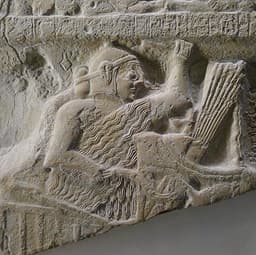
Eannatum
Emperor · Ancient
59.7Total
Basic Information
Born
-69
-2450
Died
-30
-2400
Era
Ancient
Ancient
Nationality
Ptolemaic Egypt
Lagash
Occupation
Emperor
Emperor
Civilization
Middle Eastern
Middle Eastern
Score Comparison
Military (10%)
25.9
61.7
Political (20%)
68.0
68.0
Influence (20%)
68.0
56.4
Legacy (20%)
40.0
56.0
Leadership (15%)
67.0
68.0
Strategy (15%)
43.7
50.0
TOTAL
54.2
59.7
Cleopatra VII Philopator — Complete Timeline
51 BC
Accession to the thronePolitical Action◆ Major
Cleopatra VII became co-ruler of Ptolemaic Egypt alongside her younger brother Ptolemy XIII after the death of their father Ptolemy XII Auletes. She was 18 years old and faced immediate challenges from court factions.
Ptolemaic DynastySuccession
Impact: regional
48 BC
Alliance with Julius CaesarPolitical Action◆ Major
Cleopatra VII formed a political and personal alliance with Julius Caesar during the Alexandrian War. She was smuggled into the palace to meet Caesar, leading to her restoration as queen and the defeat of Ptolemy XIII.
Roman AllianceAlexandrian War
Impact: regionalconstructive
47 BC
Birth of CaesarionPolitical Action◆ Major
Cleopatra VII gave birth to Ptolemy XV Caesar (Caesarion), claiming he was the son of Julius Caesar. This birth created a potential heir to both Egypt and Rome, though Caesar never publicly acknowledged the child.
Ptolemaic DynastyHeir
Impact: regional
46 BC
Visit to RomePolitical Action◆ Major
Cleopatra VII traveled to Rome as a client queen and lived in Caesar's villa across the Tiber. Her presence in Rome caused political scandal and resentment among Roman senators, contributing to tensions that led to Caesar's assassination.
Roman PoliticsDiplomacy
Impact: regional
41 BC
Alliance with Mark AntonyPolitical Action◆ Major
Cleopatra VII formed a political and romantic alliance with Mark Antony, one of the triumvirs ruling Rome. She provided financial and military support for Antony's campaigns in exchange for territorial concessions and protection of Egypt.
Roman AllianceTriumvirate
Impact: regionalconstructive
31 BC
Battle of ActiumWar◆ Major
The combined naval forces of Cleopatra VII and Mark Antony were decisively defeated by Octavian's fleet under Agrippa at the Battle of Actium in Greece. Cleopatra's ships fled the battle, leading to the collapse of Antony's position.
Roman Civil WarNaval Battle
Impact: globaltragic
30 BC
Death by suicidePolitical Action◆ Major
After Octavian's forces captured Alexandria, Cleopatra VII died by suicide, traditionally said to be from the bite of an asp. Her death ended the Ptolemaic dynasty and led to Egypt's annexation as a Roman province.
SuicideEnd of DynastyRoman Annexation
Impact: globaltragic
Eannatum — Complete Timeline
2450 BC
Victory over Umma at the Boundary CanalWar◆ Major
Eannatum defeated the forces of Umma in a battle near the boundary canal between Lagash and Umma. The victory was commemorated on the Stele of the Vultures, which shows vultures carrying away the heads of the defeated. This established Lagash's dominance over Umma.
BattleUmmaLagash
Creation of the Stele of the VulturesCultural
Eannatum, king of Lagash, commissioned the Stele of the Vultures, the first known historical document. The stele depicts his victory over Umma and records the boundary treaty between the two city-states. It is a key source for early Sumerian warfare and diplomacy.
Historical DocumentSteleSumerian Art
Impact: global
2440 BC
Subjugation of Elam and SubartuWar
Eannatum campaigned against Elam and Subartu, extending Lagash's influence beyond Sumer. Inscriptions record his victories and the tribute he exacted from these regions. This expansion made Lagash a major power in Mesopotamia during his reign.
Military CampaignElamSubartu
Impact: regional
This comparison has not been analyzed yet.
One-time AI generation (~1 minute). Scores and timeline are already available below.
Rankings
🥇
EannatumLeader
Mil: 61.7Pol: 68.0Inf: 56.4
59.7
🥈
Cleopatra VII Philopator
Mil: 25.9Pol: 68.0Inf: 68.0
54.2
+5.5 behind
How This Comparison Works
Algorithm
Each figure is scored on 6 dimensions (0—100 scale) based on structured historical data: Military (10%), Political (20%), Influence (20%), Legacy (20%), Leadership (15%), Strategy (15%). The weighted total produces the final ranking.
Data Sources
Scores are computed from structured sub-indicators in the database. Scale factors adjust for era (Ancient ×0.85, Modern ×1.0) and civilization size (Eastern ×1.05, Other ×0.80) to account for differences in population and military scale.
Maximum 3 Figures
Comparisons are limited to 2—3 figures to ensure readability and statistical meaningfulness.
Error Margins
±5 points per dimension — Sub-scores are derived from historical records with inherent uncertainty. Two figures within 5 points on a dimension should be considered roughly equivalent in that area.
Total Score Accuracy
±3 points overall — The weighted combination of 6 dimensions produces a total score with approximately ±3 points of uncertainty. Differences of less than 3 points are not statistically significant— the figures are effectively tied.
Known Limitations
- Historical records are incomplete and uneven across civilizations
- Figures from oral-tradition societies may be underrepresented
- Occupation labels can misclassify multi-role figures
- Scores measure capability and impact, not moral character
- Quantitative scoring is a comparison tool, not absolute truth
Capability Radar
Military (10%) — Battles & Warfare
Battles
15
65
Win Rate
10
70
Expansion
5
60
Political (20%) — Governance & Reform
Reform
40
45
Diplomacy
75
50
Economy
55
40
Influence (20%) — Cultural & Global Reach
Cultural
80
55
Global
85
45
Legacy (20%) — Historical Impact
Historical
85
70
Longevity
90
60
Leadership (15%) — Power & Stability
Tenure
60
55
Stability
30
50
Strategy (15%) — Tactics & Innovation
Strategy
25
65
Tactics
20
60
Reform
10
40
Similar Comparisons
Comments & Discussion
No comments yet. Be the first to share your thoughts!