Loading...
This comparison has not been analyzed yet.
One-time AI generation (~1 minute). Scores and timeline are already available below.
Eannatum vs King Jangsu of Goguryeo
King Jangsu of Goguryeo leads by 4.7 pts · 2 figures compared
…
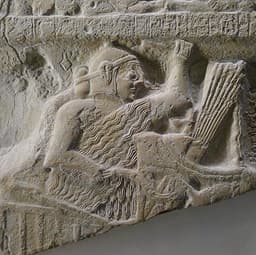
Eannatum
Emperor · Ancient
59.7Total
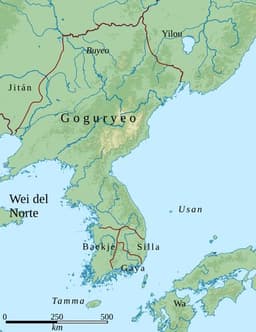
King Jangsu of Goguryeo
Emperor · Ancient
64.4Total
Basic Information
Born
-2450
394
Died
-2400
491
Era
Ancient
Ancient
Nationality
Lagash
Korea
Occupation
Emperor
Emperor
Civilization
Middle Eastern
Eastern
Score Comparison
Military (10%)
61.7
72.0
Political (20%)
68.0
70.0
Influence (20%)
56.4
60.0
Legacy (20%)
56.0
52.0
Leadership (15%)
68.0
80.0
Strategy (15%)
50.0
67.2
TOTAL
59.7
64.4
Eannatum — Complete Timeline
2450 BC
Victory over Umma at the Boundary CanalWar◆ Major
Eannatum defeated the forces of Umma in a battle near the boundary canal between Lagash and Umma. The victory was commemorated on the Stele of the Vultures, which shows vultures carrying away the heads of the defeated. This established Lagash's dominance over Umma.
BattleUmmaLagash
Creation of the Stele of the VulturesCultural
Eannatum, king of Lagash, commissioned the Stele of the Vultures, the first known historical document. The stele depicts his victory over Umma and records the boundary treaty between the two city-states. It is a key source for early Sumerian warfare and diplomacy.
Historical DocumentSteleSumerian Art
Impact: global
2440 BC
Subjugation of Elam and SubartuWar
Eannatum campaigned against Elam and Subartu, extending Lagash's influence beyond Sumer. Inscriptions record his victories and the tribute he exacted from these regions. This expansion made Lagash a major power in Mesopotamia during his reign.
Military CampaignElamSubartu
Impact: regional
King Jangsu of Goguryeo — Complete Timeline
427 AD
Construction of the Gungnae FortressOther◆ Major
King Jangsu moved the Goguryeo capital from Gungnae to Pyongyang, constructing a new fortress city. This relocation strengthened control over the southern territories and facilitated expansion into the Korean peninsula.
Capital RelocationFortificationUrban Development
Impact: nationalconstructive
475 AD
Conquest of the Han River BasinWar
King Jangsu led a military campaign that captured the Han River basin from the Baekje kingdom, including the capital Hanseong. This victory gave Goguryeo control over a strategic waterway and rich agricultural lands, significantly expanding its territory.
Territorial ExpansionBaekje WarHan River
Impact: regional
479 AD
Diplomatic Relations with Northern WeiPolitical Action
King Jangsu established diplomatic relations with the Northern Wei dynasty of China, exchanging envoys and tribute. This alliance balanced against the Southern Dynasties and secured Goguryeo's northern borders.
DiplomacyChina RelationsAlliance
Impact: regionalconstructive
481 AD
Submission of Silla as a VassalPolitical Action◆ Major
King Jangsu forced the Silla kingdom to become a vassal state of Goguryeo after a series of military campaigns. Silla paid tribute and accepted Goguryeo's suzerainty, establishing Goguryeo as the dominant power in the Korean peninsula.
VassalageSillaHegemony
Impact: regional
491 AD
Longest Reign in Korean HistoryOther◆ Major
King Jangsu died after a reign of 79 years, the longest of any Korean monarch. His rule saw Goguryeo reach its maximum territorial extent and peak power, controlling much of Manchuria and the Korean peninsula.
LongevityLegacyPeak Power
Impact: regional
This comparison has not been analyzed yet.
One-time AI generation (~1 minute). Scores and timeline are already available below.
Rankings
🥇
King Jangsu of GoguryeoLeader
Mil: 72.0Pol: 70.0Inf: 60.0
64.4
🥈
Eannatum
Mil: 61.7Pol: 68.0Inf: 56.4
59.7
+4.7 behind
How This Comparison Works
Algorithm
Each figure is scored on 6 dimensions (0—100 scale) based on structured historical data: Military (10%), Political (20%), Influence (20%), Legacy (20%), Leadership (15%), Strategy (15%). The weighted total produces the final ranking.
Data Sources
Scores are computed from structured sub-indicators in the database. Scale factors adjust for era (Ancient ×0.85, Modern ×1.0) and civilization size (Eastern ×1.05, Other ×0.80) to account for differences in population and military scale.
Maximum 3 Figures
Comparisons are limited to 2—3 figures to ensure readability and statistical meaningfulness.
Error Margins
±5 points per dimension — Sub-scores are derived from historical records with inherent uncertainty. Two figures within 5 points on a dimension should be considered roughly equivalent in that area.
Total Score Accuracy
±3 points overall — The weighted combination of 6 dimensions produces a total score with approximately ±3 points of uncertainty. Differences of less than 3 points are not statistically significant— the figures are effectively tied.
Known Limitations
- Historical records are incomplete and uneven across civilizations
- Figures from oral-tradition societies may be underrepresented
- Occupation labels can misclassify multi-role figures
- Scores measure capability and impact, not moral character
- Quantitative scoring is a comparison tool, not absolute truth
Capability Radar
Military (10%) — Battles & Warfare
Battles
65
75
Win Rate
70
80
Expansion
60
85
Political (20%) — Governance & Reform
Reform
45
70
Diplomacy
50
85
Economy
40
75
Influence (20%) — Cultural & Global Reach
Cultural
55
65
Global
45
55
Legacy (20%) — Historical Impact
Historical
70
70
Longevity
60
60
Leadership (15%) — Power & Stability
Tenure
55
95
Stability
50
80
Strategy (15%) — Tactics & Innovation
Strategy
65
85
Tactics
60
70
Reform
40
65
Similar Comparisons
Comments & Discussion
No comments yet. Be the first to share your thoughts!