Loading...
This comparison has not been analyzed yet.
One-time AI generation (~1 minute). Scores and timeline are already available below.
Demetrius I Poliorcetes vs Eannatum
Eannatum leads by 2.8 pts · 2 figures compared
…
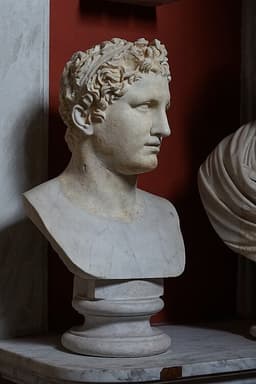
Demetrius I Poliorcetes
Emperor · Ancient
56.9Total
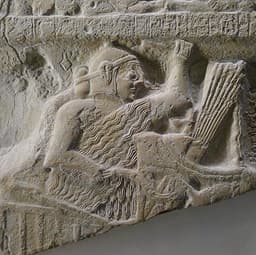
Eannatum
Emperor · Ancient
59.7Total
Basic Information
Born
-337
-2450
Died
-283
-2400
Era
Ancient
Ancient
Nationality
Macedon
Lagash
Occupation
Emperor
Emperor
Civilization
Western
Middle Eastern
Score Comparison
Military (10%)
67.3
61.7
Political (20%)
48.0
68.0
Influence (20%)
58.0
56.4
Legacy (20%)
50.0
56.0
Leadership (15%)
65.7
68.0
Strategy (15%)
61.2
50.0
TOTAL
56.9
59.7
Demetrius I Poliorcetes — Complete Timeline
306 BC
Battle of Salamis in Cyprus (306 BC)War◆ Major
Demetrius commanded the Macedonian fleet to a decisive victory over Ptolemy I's navy off Salamis, Cyprus. He destroyed or captured much of the Ptolemaic fleet, allowing him to conquer Cyprus and establish a base for his father Antigonus I Monophthalmus.
Naval BattleCyprusAntigonid
Impact: regional
305 BC
Siege of Rhodes (305-304 BC)War◆ Major
Demetrius Poliorcetes besieged the city of Rhodes with massive siege engines, including the Helepolis, a 130-foot siege tower. After a year-long siege, he failed to capture the city and was forced to withdraw, but his innovative siege techniques earned him the epithet 'Poliorcetes' (Besieger of Cities).
SiegeMilitary EngineeringRhodes
Impact: regional
294 BC
Proclaimed King of Macedon (294 BC)Political Action◆ Major
After a period of chaos in Macedon, Demetrius seized the throne and was proclaimed king. He ruled Macedon for seven years, attempting to restore Antigonid power and launch campaigns to reclaim his father's empire in Asia.
KingshipMacedonAntigonid
Impact: regional
285 BC
Capture and Death in Seleucid Captivity (285 BC)Other◆ Major
After being defeated by Lysimachus and Pyrrhus, Demetrius fled to Asia Minor but was captured by Seleucus I. He was held in honorable captivity in Apamea, where he died three years later from illness and excessive drinking, ending his turbulent career.
CaptivityDeathSeleucid
Impact: regionaltragic
Eannatum — Complete Timeline
2450 BC
Victory over Umma at the Boundary CanalWar◆ Major
Eannatum defeated the forces of Umma in a battle near the boundary canal between Lagash and Umma. The victory was commemorated on the Stele of the Vultures, which shows vultures carrying away the heads of the defeated. This established Lagash's dominance over Umma.
BattleUmmaLagash
Creation of the Stele of the VulturesCultural
Eannatum, king of Lagash, commissioned the Stele of the Vultures, the first known historical document. The stele depicts his victory over Umma and records the boundary treaty between the two city-states. It is a key source for early Sumerian warfare and diplomacy.
Historical DocumentSteleSumerian Art
Impact: global
2440 BC
Subjugation of Elam and SubartuWar
Eannatum campaigned against Elam and Subartu, extending Lagash's influence beyond Sumer. Inscriptions record his victories and the tribute he exacted from these regions. This expansion made Lagash a major power in Mesopotamia during his reign.
Military CampaignElamSubartu
Impact: regional
This comparison has not been analyzed yet.
One-time AI generation (~1 minute). Scores and timeline are already available below.
Rankings
🥇
EannatumLeader
Mil: 61.7Pol: 68.0Inf: 56.4
59.7
🥈
Demetrius I Poliorcetes
Mil: 67.3Pol: 48.0Inf: 58.0
56.9
+2.8 behind
How This Comparison Works
Algorithm
Each figure is scored on 6 dimensions (0—100 scale) based on structured historical data: Military (10%), Political (20%), Influence (20%), Legacy (20%), Leadership (15%), Strategy (15%). The weighted total produces the final ranking.
Data Sources
Scores are computed from structured sub-indicators in the database. Scale factors adjust for era (Ancient ×0.85, Modern ×1.0) and civilization size (Eastern ×1.05, Other ×0.80) to account for differences in population and military scale.
Maximum 3 Figures
Comparisons are limited to 2—3 figures to ensure readability and statistical meaningfulness.
Error Margins
±5 points per dimension — Sub-scores are derived from historical records with inherent uncertainty. Two figures within 5 points on a dimension should be considered roughly equivalent in that area.
Total Score Accuracy
±3 points overall — The weighted combination of 6 dimensions produces a total score with approximately ±3 points of uncertainty. Differences of less than 3 points are not statistically significant— the figures are effectively tied.
Known Limitations
- Historical records are incomplete and uneven across civilizations
- Figures from oral-tradition societies may be underrepresented
- Occupation labels can misclassify multi-role figures
- Scores measure capability and impact, not moral character
- Quantitative scoring is a comparison tool, not absolute truth
Capability Radar
Military (10%) — Battles & Warfare
Battles
75
65
Win Rate
60
70
Expansion
70
60
Political (20%) — Governance & Reform
Reform
40
45
Diplomacy
50
50
Economy
45
40
Influence (20%) — Cultural & Global Reach
Cultural
55
55
Global
55
45
Legacy (20%) — Historical Impact
Historical
60
70
Longevity
50
60
Leadership (15%) — Power & Stability
Tenure
55
55
Stability
30
50
Strategy (15%) — Tactics & Innovation
Strategy
70
65
Tactics
85
60
Reform
50
40
Similar Comparisons
Comments & Discussion
No comments yet. Be the first to share your thoughts!