Loading...
Cleisthenes of Athens vs Ito Hirobumi
Ito Hirobumi leads by 5.3 pts · 2 figures compared
…
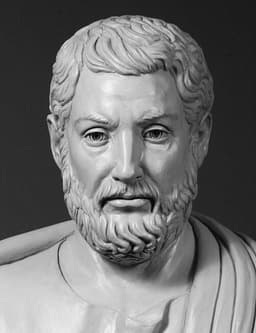
Cleisthenes of Athens
Politician · Ancient
68.5Total
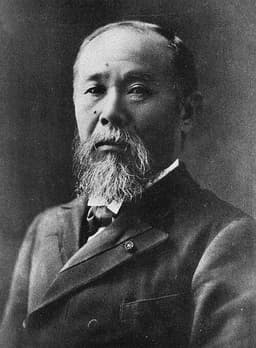
Ito Hirobumi
Politician · Modern
73.8Total
Basic Information
Born
-570
1841
Died
-508
1909
Era
Ancient
Modern
Nationality
Athens
Japan
Occupation
Politician
Politician
Civilization
Western
Eastern
Score Comparison
Military (10%)
50.0
50.0
Political (20%)
62.7
86.0
Influence (20%)
80.0
71.0
Legacy (20%)
82.0
80.0
Leadership (15%)
62.0
80.9
Strategy (15%)
42.7
60.0
TOTAL
68.5
73.8
Cleisthenes of Athens — Complete Timeline
508 BC
Reform of the Athenian Tribes (Cleisthenes' Reforms)Reform
Cleisthenes reorganized the Athenian citizen body into ten new tribes based on demes (local districts), replacing the old four Ionian tribes. This broke the power of aristocratic clans and created a new political structure that formed the basis of Athenian democracy.
DemocracyPolitical ReformAthens
Impact: globalprogressive
Introduction of OstracismReform◆ Major
Cleisthenes introduced the practice of ostracism, allowing citizens to vote annually to exile a prominent figure for ten years. This mechanism was designed to prevent tyranny and remove threats to democracy. The first ostracism occurred in 487 BC.
DemocracyPolitical ReformExile
Impact: globalprogressive
Creation of the Council of 500 (Boule)Reform◆ Major
Cleisthenes established the Boule, a council of 500 citizens (50 from each tribe) chosen by lot. This body prepared legislation for the Assembly and oversaw daily administration. It replaced the aristocratic Areopagus as the main governing body, expanding citizen participation.
DemocracyPolitical ReformGovernment
Impact: globalprogressive
Exile of Isagoras and Spartan InterventionPolitical Action◆ Major
Cleisthenes' rival Isagoras called on Spartan king Cleomenes I to intervene in Athens. The Spartans expelled Cleisthenes and attempted to dissolve the Boule, but the Athenian people revolted, besieging the Acropolis and forcing the Spartans to withdraw. Cleisthenes was recalled.
Spartan InterventionDemocracyAthens
Impact: nationalconstructive
Ito Hirobumi — Complete Timeline
1882 AD
Establishment of the Bank of JapanReform◆ Major
Under Ito Hirobumi's leadership, the Bank of Japan was established as the nation's central bank. It was modeled after European central banks and aimed to stabilize the currency and control inflation. This institution was crucial for Japan's economic modernization and industrial growth.
Central BankEconomic ReformModernization
Impact: nationalconstructive
1885 AD
First Prime Minister of JapanPolitical Action◆ Major
Ito Hirobumi became the first Prime Minister of Japan under the new cabinet system. He served four non-consecutive terms and was instrumental in shaping the modern Japanese state. His tenure focused on centralizing power, modernizing the economy, and strengthening the military.
Prime MinisterCabinet SystemMeiji Period
Impact: nationalconstructive
1889 AD
Drafting of the Meiji ConstitutionReform
Ito Hirobumi led the drafting of the Meiji Constitution, which established a constitutional monarchy with a bicameral parliament (the Diet). The constitution granted the emperor sovereign power but also provided for elected representatives. It was promulgated in 1889 and remained in effect until 1947.
ConstitutionMeiji PeriodGovernment Reform
Impact: nationalconstructive
1909 AD
Assassination at Harbin StationPolitical Action◆ Major
Ito Hirobumi was assassinated by Korean nationalist An Jung-geun at Harbin railway station in Manchuria. Ito was on a mission to negotiate with Russian officials regarding Korea. His death shocked Japan and was used to justify the formal annexation of Korea in 1910.
AssassinationKoreaAnnexation
Impact: globaltragic
Expert Analysis
Ito Hirobumi vs Cleisthenes of Athens
# The Architects of Order and Freedom
On a cold October morning in 1909, Ito Hirobumi stepped off his train at Harbin station in Manchuria, unaware that within minutes a Korean nationalist would fire a pistol into his chest. Half a world and two and a half millennia away, another reformer—Cleisthenes of Athens—had once fled his own city in the dead of night, chased by Spartan soldiers sent to crush his vision of a new political order. Both men were architects of systems that would reshape their civilizations. Yet one built a constitution designed to concentrate power under an emperor, while the other scattered authority into the hands of ordinary citizens. Why did these two reformers, both driven by the chaos of their times, arrive at such opposite solutions?
Origins
Ito Hirobumi was born in 1841 into a low-ranking samurai family in Hagi, a provincial town on Japan’s western coast. The Japan of his youth was a closed feudal society, ruled by the Tokugawa shogunate, where birth determined fate and foreigners were forbidden entry. But the arrival of American warships under Commodore Perry in 1853 shattered that isolation. The young Ito watched his country tremble on the edge of colonization—China had already been humiliated, India devoured. This existential terror would never leave him. He studied Western technology, traveled to England and the United States, and absorbed the lesson that survival demanded strength, not liberty.
Cleisthenes, by contrast, was born around 570 BC into the aristocratic Alcmaeonid family of Athens—a clan that had already been cursed, exiled, and restored to power multiple times. Athens in his era was a small city-state torn between noble factions and restless farmers. Unlike Ito, who felt the pressure of foreign empires, Cleisthenes faced an internal crisis: the old tribal system, based on bloodlines and clan loyalties, had become a weapon for the rich to exploit the poor. His world was not threatened by outsiders but by the poison of privilege.
Rise to Power
Ito’s path was forged in revolution. As a young samurai, he joined the movement to overthrow the shogunate—the very system that had given his class its status. After the Meiji Restoration of 1868, he rose rapidly through the new bureaucracy, not through popular support but through talent and proximity to power. He became a trusted advisor to Emperor Meiji, traveled to Europe to study constitutions, and returned convinced that Germany’s model—strong monarchy, weak parliament—was Japan’s only hope. In 1885, at age forty-four, he became Japan’s first Prime Minister, a position he would hold four times.
Cleisthenes’ rise was messier. As an Alcmaeonid, he was already a political player, but his moment came in 508 BC when Athens’ weak democracy under the reformer Solon had collapsed into factional war. His rival Isagoras, backed by the Spartan king Cleomenes I, seized power and exiled Cleisthenes. But the Athenian people—artisans, farmers, sailors—rose in rebellion, besieging the Spartans on the Acropolis and forcing them to retreat. They summoned Cleisthenes back from exile. He did not return as a conqueror; he returned as a man who understood that the people had saved him, and that he now owed them everything.
Leadership & Governance
Ito governed through control. The Meiji Constitution of 1889, which he personally drafted, created a parliament, but the emperor held supreme command over the military, could veto laws, and appointed the cabinet. The prime minister answered to the throne, not the people. Ito also established the Bank of Japan in 1882, modeled after European central banks, to stabilize the currency and finance industrialization. His reforms were brilliant—they transformed a feudal backwater into a world power in forty years—but they were designed from the top down. He once wrote that “the people are like children; they need guidance, not freedom.”
Cleisthenes governed through distribution. In 508 BC, he reorganized Athens into ten new tribes based not on family but on local neighborhoods called demes. Every citizen—rich or poor—belonged to a deme, and from these demes, 500 citizens were chosen by lottery to serve on the Council of 500, which prepared laws for the assembly. He introduced ostracism, allowing citizens to vote annually to exile any dangerously powerful figure for ten years. Power was not concentrated; it was scattered like seeds across the city. Where Ito built a pyramid, Cleisthenes built a circle.
Triumph & Tragedy
Ito’s greatest triumph was the Meiji Constitution itself—a document that gave Japan legitimacy on the world stage and allowed it to defeat Russia in 1905. His tragedy came in 1909, when he was assassinated by An Jung-geun, a Korean nationalist who saw Ito as the architect of Japan’s colonial oppression of Korea. The bullet that killed Ito also exposed the fatal flaw in his system: a constitution that concentrated power could not restrain imperialism.
Cleisthenes’ triumph was the birth of Athenian democracy, which would flourish for nearly two centuries and inspire generations. His tragedy was more personal: after his reforms, he largely vanished from history. Unlike Ito, who dominated Japan’s political stage until his death, Cleisthenes faded into the background, his name preserved only by later writers like Herodotus and Aristotle. He was not murdered—he simply disappeared, his work complete.
Character & Destiny
Ito was a pragmatist who believed in order above all. He had seen Japan’s weakness and feared chaos more than tyranny. His personality was cold, calculating, and relentless—traits that served him well in building a state but left no room for the messy, unpredictable freedom of democracy. He once said, “The constitution is not a gift to the people; it is a tool for the nation.”
Cleisthenes was a gambler who trusted the people. When the Spartans expelled him, he did not raise an army of mercenaries; he waited for the Athenians to rise on their own. His personality was that of a reformer who understood that power shared is power multiplied. He did not need to be remembered—his system would remember him.
Legacy
Ito Hirobumi is remembered today as the father of modern Japan, but his legacy is ambiguous. The Meiji Constitution he crafted lasted until 1947, when it was replaced by a pacifist, democratic charter imposed by the United States after World War II. The centralized, emperor-worshiping state Ito built ultimately led Japan into militarism and disaster. Yet without him, Japan might have become a colony. He is a monument to the tragedy of necessity.
Cleisthenes is remembered as the “Father of Athenian Democracy,” a title he earned not by seizing power but by giving it away. His reforms lasted only until Athens fell to Macedon in 322 BC, but the idea of democracy—citizens ruling themselves through lot, debate, and exile—survived to shape the modern world. He is a monument to the triumph of possibility.
Conclusion
Two reformers, two civilizations, two answers to the same question: how do you build a state that survives? Ito chose strength through hierarchy; Cleisthenes chose resilience through participation. One built a machine that could conquer; the other built a garden that could grow. Perhaps the deepest difference lies not in their systems but in their faith: Ito trusted the few, Cleisthenes trusted the many. And in that trust, or its absence, lies the fate of nations.
Rankings
🥇
Ito HirobumiLeader
Mil: 50.0Pol: 86.0Inf: 71.0
73.8
🥈
Cleisthenes of Athens
Mil: 50.0Pol: 62.7Inf: 80.0
68.5
+5.3 behind
How This Comparison Works
Algorithm
Each figure is scored on 6 dimensions (0—100 scale) based on structured historical data: Military (10%), Political (20%), Influence (20%), Legacy (20%), Leadership (15%), Strategy (15%). The weighted total produces the final ranking.
Data Sources
Scores are computed from structured sub-indicators in the database. Scale factors adjust for era (Ancient ×0.85, Modern ×1.0) and civilization size (Eastern ×1.05, Other ×0.80) to account for differences in population and military scale.
Maximum 3 Figures
Comparisons are limited to 2—3 figures to ensure readability and statistical meaningfulness.
Error Margins
±5 points per dimension — Sub-scores are derived from historical records with inherent uncertainty. Two figures within 5 points on a dimension should be considered roughly equivalent in that area.
Total Score Accuracy
±3 points overall — The weighted combination of 6 dimensions produces a total score with approximately ±3 points of uncertainty. Differences of less than 3 points are not statistically significant— the figures are effectively tied.
Known Limitations
- Historical records are incomplete and uneven across civilizations
- Figures from oral-tradition societies may be underrepresented
- Occupation labels can misclassify multi-role figures
- Scores measure capability and impact, not moral character
- Quantitative scoring is a comparison tool, not absolute truth
Capability Radar
Military (10%) — Battles & Warfare
Battles
22
0
Win Rate
27
0
Expansion
28
70
Political (20%) — Governance & Reform
Reform
95
95
Diplomacy
70
90
Economy
40
80
Influence (20%) — Cultural & Global Reach
Cultural
85
75
Global
80
80
Legacy (20%) — Historical Impact
Historical
90
85
Longevity
95
80
Leadership (15%) — Power & Stability
Tenure
30
85
Stability
60
85
Strategy (15%) — Tactics & Innovation
Strategy
35
0
Tactics
34
0
Reform
40
85
Similar Comparisons
Comments & Discussion
AtheStandardsSkeptic6/16/2026
The real story here isn't two visionaries; it's two power grabs dressed as reform. Cleisthenes didn't invent democracy out of altruism; he rallied the demos after losing a factional war against Isagoras. The Spartan king Cleomenes literally had to be bought off with bribes and Athenian hostages. Meanwhile, Ito's Meiji Constitution was written in secret by Ito himself, without any public debate. By 1890, he'd stacked the Privy Council with hand-picked oligarchs. Both men were political survivors
铁幕史评6/16/2026
把伊藤博文和克里斯提尼放在一起比较,本身就是在误导。克里斯提尼的改革摧毁了贵族血统政治,让普通公民真正拥有了话语权,哪怕只是男性公民。伊藤博文呢?他设计的天皇制宪法,本质上是用神圣化皇权来压制民权运动。看看1887年的《保安条例》——伊藤亲手签署的,用来镇压自由民权运动的法律。这不是什么“秩序与自由的平衡”,这是用锁链伪装成秩序。别把暴君和民主之父相提并论。
ArchivalAutocrat6/16/2026
One overlooked detail: Cleisthenes' demes system actually dissolved the traditional clan loyalties. Young Athenians now identified by their local deme, not their genos. It was radical social engineering—almost Orwellian in scope. Ito's peerage system under the 1884 peerage law did the opposite: it created 500 new nobles overnight, all loyal to the throne. One scattered power to the villages; the other hoarded it at court. Both understood that control of identity is control of the state.
灯笼学者6/16/2026
说伊藤博文是“东方俾斯麦”的人,恐怕忘了他还镇压过“大逆事件”。克里斯提尼的陶片放逐法虽然粗糙,但赋予了平民对抗暴政的制度性武器。伊藤博文在《大日本帝国宪法》里留下了什么?天皇有统率军队的权力,而且这个权力不属于议会监督——这条漏洞后来被军部利用,直接导致了昭和时期的军国主义。设计师的疏忽,代价是全亚洲的灾难。这不是讨论平衡,这是讨论责任。