Loading...
Cimon vs Mark Antony
Cimon leads by 0.0 pts · 2 figures compared
…

Cimon
General · Ancient
55.6Total
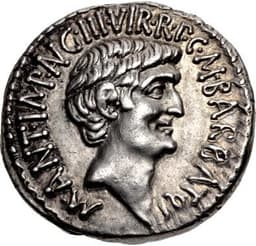
Mark Antony
General · Ancient
55.6Total
Basic Information
Born
-510
-83
Died
-450
-30
Era
Ancient
Ancient
Nationality
Greece
Roman Republic
Occupation
General
General
Civilization
Western
Western
Score Comparison
Military (10%)
76.0
85.0
Political (20%)
40.8
36.5
Influence (20%)
56.4
55.0
Legacy (20%)
48.3
58.0
Leadership (15%)
68.0
50.7
Strategy (15%)
55.0
58.0
TOTAL
55.6
55.6
Cimon — Complete Timeline
476 BC
Siege of EionWar
Cimon captured the Persian-held fortress of Eion on the Strymon River in Thrace. The victory secured Athenian control over the region and opened up trade routes. It was one of the first major successes of the Delian League under Cimon's command.
Delian LeagueThracePersian Garrison
Impact: regionalconstructive
466 BC
Battle of the EurymedonWar◆ Major
Cimon led the Delian League fleet to a double victory over the Persians at the Eurymedon River in Pamphylia. He destroyed a Persian fleet and then defeated a land army on the same day, securing Greek control over the eastern Mediterranean.
Delian LeagueGreco-Persian WarsNaval Victory
Impact: regional
461 BC
Ostracism from AthensPolitical Action◆ Major
Cimon was ostracized from Athens for ten years due to political opposition from the democratic faction led by Ephialtes and Pericles. His pro-Spartan policies and the failure of his expedition to help Sparta during the helot revolt contributed to his exile.
OstracismAthenian PoliticsExile
Impact: nationaldestructive
450 BC
Battle of Salamis in CyprusWar◆ Major
Cimon was recalled from exile and led a Delian League expedition to Cyprus. He won a naval and land victory at Salamis in Cyprus against the Persians. However, he died during the siege of Citium, ending the campaign.
Delian LeagueCyprus CampaignDeath
Impact: regional
Mark Antony — Complete Timeline
42 BC
Battle of PhilippiWar◆ Major
Antony, as part of the Second Triumvirate, defeated the assassins of Caesar, Brutus and Cassius, at Philippi in Macedonia. The victory consolidated the Triumvirs' control over the Roman world.
Civil WarTriumvirateCaesar's Assassins
Impact: global
41 BC
Alliance with CleopatraPolitical Action◆ Major
Antony summoned Cleopatra to Tarsus and became her lover, forming a political and personal alliance. He used Egyptian resources for his Parthian campaign and later married her, alienating Octavian.
AllianceEgyptCleopatra
Impact: regional
34 BC
Donations of AlexandriaPolitical Action◆ Major
Antony granted Roman territories to Cleopatra and her children, including Caesarion, in a ceremony in Alexandria. This act was used by Octavian to portray Antony as a traitor to Rome.
Territorial GrantPropagandaEgypt
Impact: regionaldestructive
31 BC
Battle of ActiumWar
Antony and Cleopatra's fleet was decisively defeated by Octavian's navy under Agrippa at Actium in Greece. The defeat forced Antony to flee to Egypt, leading to his downfall.
Civil WarNaval BattleOctavian
Impact: globaltragic
30 BC
Suicide of Mark AntonyOther◆ Major
After Octavian's forces captured Alexandria, Antony attempted suicide by stabbing himself. He died in Cleopatra's arms, ending the civil war and paving the way for Octavian's sole rule.
DeathCivil WarEnd of Republic
Impact: globaltragic
Expert Analysis
Origins
Cimon was born around 510 BCE into the aristocratic Philaid clan of Athens. His father, Miltiades, was the hero of Marathon, but died in disgrace after a failed expedition to Paros. Cimon inherited his father's debts and political burdens. He served in the Athenian military during the Persian Wars, fighting at Salamis in 480 BCE. His early life was shaped by the need to restore his family's honor and his exposure to the aristocratic ideals of the time.
Mark Antony was born on January 14, 83 BCE into a prominent plebeian family in Rome. His father, Marcus Antonius Creticus, was a praetor who died in 71 BCE after a failed campaign against Cretan pirates. Antony's mother, Julia Antonia, was a distant relative of Julius Caesar. Antony received a typical Roman education but was known for his wild youth, accumulating debts and associating with the popular politician Publius Clodius Pulcher. His early military service in Syria and Egypt provided him with crucial experience.
Rise to Power
Cimon's rise began after the Persian Wars. He joined the Delian League as a strategos and quickly distinguished himself. In 476 BCE, he captured the Persian fortress of Eion on the Strymon River, securing Athenian control over Thrace. His greatest victory came in 466 BCE at the Battle of the Eurymedon River, where he led the Delian League fleet to a double victory, destroying a Persian fleet and then defeating its army on land. This battle crippled Persian naval power in the Aegean. Cimon's success made him the most influential Athenian statesman of the 470s and 460s BCE.
Mark Antony's rise was accelerated by his association with Julius Caesar. He served as a cavalry commander in Gaul and became a tribune in 49 BCE, vetoing actions against Caesar. During the Civil War, he commanded Caesar's left wing at Pharsalus in 48 BCE. After Caesar's assassination in 44 BCE, Antony seized the initiative, delivering a famous funeral oration that turned public opinion against the conspirators. He formed the Second Triumvirate with Octavian and Lepidus in 43 BCE, and at the Battle of Philippi in 42 BCE, he defeated Brutus and Cassius, cementing his control over the eastern provinces.
Leadership & Governance
Cimon's leadership style was aristocratic and pro-Spartan. He advocated for cooperation between Athens and Sparta against Persia, and his foreign policy focused on expanding the Delian League's power through military campaigns. Domestically, he used his wealth to fund public works, such as planting trees in the Agora and building the southern wall of the Acropolis. However, his opposition to democratic reforms led to conflict with Ephialtes and Pericles. In 461 BCE, Cimon was ostracized for ten years after a failed expedition to help Sparta suppress a helot revolt, as the Spartans sent him home, distrusting Athenian intentions.
Antony's governance was characterized by his reliance on personal relationships and military might. As ruler of the East, he administered provinces through client kings and alliances. His most controversial act was the Donations of Alexandria in 34 BCE, where he granted Roman territories to Cleopatra and her children, including Caesarion. This alienated Roman public opinion and provided Octavian with a casus belli. Antony's leadership was often impulsive; he neglected administrative duties in favor of a luxurious lifestyle with Cleopatra. His military decisions, such as the failed Parthian campaign in 36 BCE, revealed strategic weaknesses.
Triumph & Tragedy
Cimon's greatest triumph was the Battle of the Eurymedon, where he scored 76.0 in military score. His victories expanded Athenian influence and secured the Aegean for the Delian League. He also negotiated the Five Years' Truce with Sparta in 451 BCE, temporarily easing tensions. His tragedy was his ostracism in 461 BCE, which removed him from power during a critical period. He died in 450 BCE during the Siege of Salamis in Cyprus, but his final campaign was a success, winning a naval and land battle.
Mark Antony's military score of 85.0 reflects his successes at Philippi and his early campaigns. His tragedy was the Battle of Actium in 31 BCE, where his fleet was decisively defeated by Agrippa. The defeat led to his flight to Egypt and eventual suicide in 30 BCE. His alliance with Cleopatra, while providing resources, also became his political undoing. Antony's personal life, including his divorce from Octavia and his treatment of Roman allies, alienated key supporters.
Character & Destiny
Cimon was known for his generosity, courage, and adherence to aristocratic values. He was a skilled diplomat but inflexible in his pro-Spartan stance, which ultimately led to his downfall. His character shaped his destiny: his success in war made him popular, but his political rigidity made him vulnerable to democratic opponents.
Antony was charismatic, brave in battle, but prone to excess and poor judgment. His loyalty to Caesar and later Cleopatra drove his actions. His character led him to prioritize personal relationships over political calculation, culminating in his defeat. Ancient historians like Plutarch emphasize his generosity and impulsiveness.
Legacy
Cimon's legacy is mixed. He is remembered as a capable general who expanded Athenian power, but his political vision of a Spartan-Athenian alliance failed. His military achievements set the stage for the Athenian Golden Age under Pericles. His scores: Leadership 68.0, Strategy 55.0, Influence 56.4, Legacy 48.3.
Mark Antony's legacy is dominated by his role in the end of the Roman Republic. His actions helped Octavian consolidate power, leading to the Empire. He is remembered as a tragic figure, immortalized by Shakespeare. His scores: Leadership 50.7, Strategy 58.0, Influence 55.0, Legacy 58.0.
Conclusion
While both men achieved military success, Mark Antony had a greater impact on history. His defeat at Actium directly enabled the rise of the Roman Empire, shaping Western civilization for centuries. Cimon's victories, though significant, were confined to the Aegean and did not fundamentally alter the political structure of Greece. Antony's total score of 55.6 ties with Cimon's, but his influence on the transition from Republic to Empire gives him the edge. Therefore, Mark Antony is the more consequential figure.
Rankings
🥇
CimonLeader
Mil: 76.0Pol: 40.8Inf: 56.4
55.6
🥈
Mark Antony
Mil: 85.0Pol: 36.5Inf: 55.0
55.6
How This Comparison Works
Algorithm
Each figure is scored on 6 dimensions (0—100 scale) based on structured historical data: Military (10%), Political (20%), Influence (20%), Legacy (20%), Leadership (15%), Strategy (15%). The weighted total produces the final ranking.
Data Sources
Scores are computed from structured sub-indicators in the database. Scale factors adjust for era (Ancient ×0.85, Modern ×1.0) and civilization size (Eastern ×1.05, Other ×0.80) to account for differences in population and military scale.
Maximum 3 Figures
Comparisons are limited to 2—3 figures to ensure readability and statistical meaningfulness.
Error Margins
±5 points per dimension — Sub-scores are derived from historical records with inherent uncertainty. Two figures within 5 points on a dimension should be considered roughly equivalent in that area.
Total Score Accuracy
±3 points overall — The weighted combination of 6 dimensions produces a total score with approximately ±3 points of uncertainty. Differences of less than 3 points are not statistically significant— the figures are effectively tied.
Known Limitations
- Historical records are incomplete and uneven across civilizations
- Figures from oral-tradition societies may be underrepresented
- Occupation labels can misclassify multi-role figures
- Scores measure capability and impact, not moral character
- Quantitative scoring is a comparison tool, not absolute truth
Capability Radar
Military (10%) — Battles & Warfare
Battles
65
75
Win Rate
70
60
Expansion
55
70
Political (20%) — Governance & Reform
Reform
40
30
Diplomacy
65
70
Economy
50
40
Influence (20%) — Cultural & Global Reach
Cultural
45
65
Global
35
60
Legacy (20%) — Historical Impact
Historical
50
70
Longevity
40
65
Leadership (15%) — Power & Stability
Tenure
60
60
Stability
55
30
Strategy (15%) — Tactics & Innovation
Strategy
65
65
Tactics
60
70
Reform
30
30
Similar Comparisons
Comments & Discussion
No comments yet. Be the first to share your thoughts!