Loading...
Choummaly Sayasone vs Henning von Tresckow
Henning von Tresckow leads by 2.3 pts · 2 figures compared
…
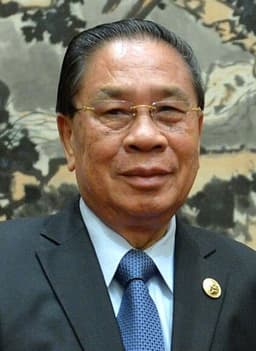
Choummaly Sayasone
General · Modern
50.6Total
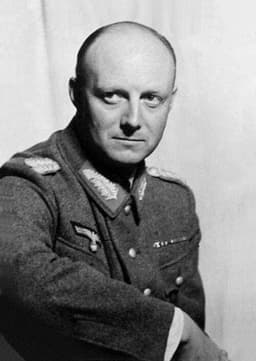
Henning von Tresckow
General · Modern
52.9Total
Basic Information
Born
1936
1901
Died
—
1944
Era
Modern
Modern
Nationality
Laos
Germany
Occupation
General
General
Civilization
Eastern
Western
Score Comparison
Military (10%)
66.7
45.0
Political (20%)
46.6
68.0
Influence (20%)
50.2
56.7
Legacy (20%)
38.3
52.0
Leadership (15%)
53.2
33.5
Strategy (15%)
68.4
60.0
TOTAL
50.6
52.9
Choummaly Sayasone — Complete Timeline
2006 AD
Became President of LaosPolitical Action◆ Major
Choummaly Sayasone was elected President of Laos by the National Assembly. He also served as General Secretary of the Lao People's Revolutionary Party, making him the most powerful figure in the country's one-party system.
LeadershipLaosCommunist Party
Impact: national
Oversaw Economic GrowthPolitical Action◆ Major
During Choummaly's presidency, Laos experienced significant economic growth, driven by foreign investment in hydropower, mining, and agriculture. The country achieved its goal of graduating from Least Developed Country status by 2024, though inequality and environmental concerns persisted.
Economic GrowthLaosDevelopment
Impact: nationalconstructive
2009 AD
Strengthened Ties with ChinaPolitical Action◆ Major
Choummaly's government deepened relations with China, securing Chinese investment for infrastructure projects, including the Laos-China railway. This alignment increased Laos' dependence on China but also brought economic benefits and political support.
Foreign PolicyLaosChina
Impact: regional
2016 AD
Stepped Down as PresidentPolitical Action◆ Major
Choummaly stepped down as President and General Secretary, handing over power to Bounnhang Vorachith. His retirement marked a peaceful leadership transition within the Lao People's Revolutionary Party, maintaining the country's political stability.
TransitionLaosLeadership
Impact: national
Henning von Tresckow — Complete Timeline
1943 AD
Organized the Smolensk ConspiracyPolitical Action◆ Major
Tresckow organized a failed assassination attempt on Hitler on March 13, 1943, by placing a bomb on Hitler's plane during a visit to Army Group Centre headquarters at Smolensk. The bomb failed to detonate.
Assassination AttemptSmolenskGerman Resistance
Impact: national
1944 AD
Planned the July 20 Assassination AttemptPolitical Action◆ Major
Tresckow was a key planner of the July 20 plot to assassinate Hitler. He recruited Stauffenberg to carry out the bombing and coordinated the coup plans from the Eastern Front. He was the moral driving force behind the conspiracy.
July 20 PlotAssassination PlanGerman Resistance
Impact: national
Committed Suicide at the FrontOther◆ Major
Upon learning of the failure of the July 20 plot, Tresckow faked a partisan attack and committed suicide on July 21, 1944, near Kr
July 20 PlotSuicideEastern Front
Impact: nationaltragic
Expert Analysis
Origins
**Choummaly Sayasone** was born on March 6, 1936, in Attapeu Province, French Laos. He joined the Lao People's Revolutionary Party in the 1950s and received military training in Vietnam. His early career was shaped by the Laotian Civil War, where he fought alongside the Pathet Lao.
**Henning von Tresckow** was born on January 10, 1901, in Magdeburg, German Empire, into a Prussian military family. He served in World War I and later joined the Reichswehr. His aristocratic background and early exposure to military ethics influenced his moral compass.
Rise to Power
Choummaly rose through the ranks of the Lao People's Army, becoming a general and member of the Politburo by 1991. He served as Minister of Defense from 2001 to 2006, then became Vice President. In 2006, he was elected President and General Secretary of the party, succeeding Khamtai Siphandone.
Von Tresckow's rise was unconventional: he initially supported Hitler but turned against the regime after the 1938 Blomberg-Fritsch affair and Kristallnacht. He became a key figure in the military resistance, using his position as a staff officer in Army Group Centre to plot against Hitler.
Leadership & Governance
Choummaly's leadership focused on economic development and political stability. He oversaw Laos's transition from a centrally planned economy to a more market-oriented one, attracting foreign investment in hydropower and mining. His government deepened ties with China, securing the Laos-China railway project. Politically, he maintained one-party rule and limited dissent.
Von Tresckow never held political power; his leadership was moral and conspiratorial. He organized the Smolensk Conspiracy in March 1943, placing a bomb on Hitler's plane, which failed to detonate. He later recruited Claus von Stauffenberg for the July 20 plot, coordinating the coup plan. His leadership style was based on ethical conviction rather than authority.
Triumph & Tragedy
Choummaly's triumphs include presiding over a period of economic growth: Laos's GDP grew at an average of 7-8% annually during his tenure (2006-2016). He also strengthened infrastructure through Chinese investment. His tragedy lies in the lack of political reform and persistent poverty; Laos remained one of the world's least developed countries, with high corruption and limited freedoms.
Von Tresckow's triumph was his moral stand: he risked everything to oppose Hitler, and his actions inspired later resistance. His tragedy is the failure of both assassination attempts and his suicide on July 21, 1944, after learning the July 20 plot failed. He faked a partisan attack to avoid capture.
Character & Destiny
Choummaly was a pragmatic communist, focused on survival and gradual development. He avoided radical reforms and maintained party unity. His destiny was to lead Laos through a period of stability and growth, but his legacy is tied to a repressive system.
Von Tresckow was driven by a sense of duty and morality. He once said, "The assassination must be attempted at any cost." His character led him to resist evil, but his destiny was death and initial obscurity. Historians view him as the moral center of the German resistance.
Legacy
Choummaly's legacy is mixed: he modernized Laos's economy but entrenched one-party rule. His policies set the stage for Laos's current dependence on China. His total score of 50.6 reflects moderate impact.
Von Tresckow's legacy grew after the war; he is now honored as a hero of the German resistance. His score of 52.9 is slightly higher, but his influence is moral rather than political. He proved that some Germans opposed Hitler, shaping post-war Germany's identity.
Conclusion
Henning von Tresckow had greater impact despite a lower military score (45.0 vs 66.7). His moral courage and role in the resistance shaped historical memory of Nazi Germany. Choummaly's economic achievements are notable but limited by authoritarianism. Tresckow's legacy of ethical resistance resonates globally, while Choummaly's is confined to Laos's development. Therefore, von Tresckow's total score of 52.9 reflects a more profound historical significance.
Rankings
🥇
Henning von TresckowLeader
Mil: 45.0Pol: 68.0Inf: 56.7
52.9
🥈
Choummaly Sayasone
Mil: 66.7Pol: 46.6Inf: 50.2
50.6
+2.3 behind
How This Comparison Works
Algorithm
Each figure is scored on 6 dimensions (0—100 scale) based on structured historical data: Military (10%), Political (20%), Influence (20%), Legacy (20%), Leadership (15%), Strategy (15%). The weighted total produces the final ranking.
Data Sources
Scores are computed from structured sub-indicators in the database. Scale factors adjust for era (Ancient ×0.85, Modern ×1.0) and civilization size (Eastern ×1.05, Other ×0.80) to account for differences in population and military scale.
Maximum 3 Figures
Comparisons are limited to 2—3 figures to ensure readability and statistical meaningfulness.
Error Margins
±5 points per dimension — Sub-scores are derived from historical records with inherent uncertainty. Two figures within 5 points on a dimension should be considered roughly equivalent in that area.
Total Score Accuracy
±3 points overall — The weighted combination of 6 dimensions produces a total score with approximately ±3 points of uncertainty. Differences of less than 3 points are not statistically significant— the figures are effectively tied.
Known Limitations
- Historical records are incomplete and uneven across civilizations
- Figures from oral-tradition societies may be underrepresented
- Occupation labels can misclassify multi-role figures
- Scores measure capability and impact, not moral character
- Quantitative scoring is a comparison tool, not absolute truth
Capability Radar
Military (10%) — Battles & Warfare
Battles
65
35
Win Rate
69
30
Expansion
71
10
Political (20%) — Governance & Reform
Reform
30
70
Diplomacy
40
60
Economy
30
10
Influence (20%) — Cultural & Global Reach
Cultural
20
45
Global
10
50
Legacy (20%) — Historical Impact
Historical
20
65
Longevity
10
55
Leadership (15%) — Power & Stability
Tenure
60
15
Stability
40
10
Strategy (15%) — Tactics & Innovation
Strategy
72
55
Tactics
76
40
Reform
79
20
Similar Comparisons
Comments & Discussion
No comments yet. Be the first to share your thoughts!