Loading...
Hafez al-Assad vs Henning von Tresckow
Hafez al-Assad leads by 1.5 pts · 2 figures compared
…
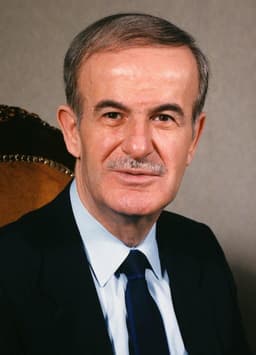
Hafez al-Assad
General · Modern
54.4Total
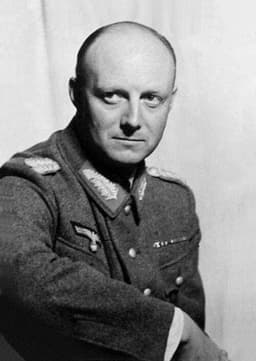
Henning von Tresckow
General · Modern
52.9Total
Basic Information
Born
1930
1901
Died
—
1944
Era
Modern
Modern
Nationality
Syria
Germany
Occupation
General
General
Civilization
Middle Eastern
Western
Score Comparison
Military (10%)
20.0
45.0
Political (20%)
45.0
68.0
Influence (20%)
61.0
56.7
Legacy (20%)
54.0
52.0
Leadership (15%)
72.0
33.5
Strategy (15%)
60.7
60.0
TOTAL
54.4
52.9
Hafez al-Assad — Complete Timeline
1970 AD
Seized power in the Corrective MovementPolitical Action
Hafez al-Assad, then Minister of Defense, launched a bloodless intra-party coup known as the Corrective Movement on November 13, 1970. He ousted the civilian leadership of the Ba'ath Party, assumed the presidency, and established an authoritarian regime dominated by the Alawite minority.
Coup d'étatBa'ath PartyAlawite Rule
Impact: nationaldestructive
1973 AD
Launched the Yom Kippur WarWar◆ Major
Assad coordinated with Egypt's Anwar Sadat to launch a surprise attack on Israel on October 6, 1973. Syrian forces advanced into the Golan Heights but were repelled by Israeli counterattacks. The war ended with a ceasefire, and Syria failed to regain the Golan Heights.
Arab-Israeli WarGolan HeightsMilitary Campaign
Impact: regional
1976 AD
Intervened in the Lebanese Civil WarWar◆ Major
Assad sent Syrian troops into Lebanon to intervene in the civil war, initially against Palestinian and leftist forces. The Syrian military remained in Lebanon for 29 years, exerting political and military control. The intervention solidified Syria's dominance over Lebanese affairs.
LebanonMilitary InterventionHegemony
Impact: regionaldestructive
1982 AD
Crushed the Muslim Brotherhood uprising in HamaWar◆ Major
Assad ordered the Syrian army to besiege and bombard the city of Hama to suppress an Islamist uprising led by the Muslim Brotherhood. Over several weeks, between 10,000 and 40,000 civilians were killed, and large parts of the city were destroyed. The massacre ended armed opposition for decades.
MassacreRepressionMuslim Brotherhood
Impact: nationaldestructive
Henning von Tresckow — Complete Timeline
1943 AD
Organized the Smolensk ConspiracyPolitical Action◆ Major
Tresckow organized a failed assassination attempt on Hitler on March 13, 1943, by placing a bomb on Hitler's plane during a visit to Army Group Centre headquarters at Smolensk. The bomb failed to detonate.
Assassination AttemptSmolenskGerman Resistance
Impact: national
1944 AD
Planned the July 20 Assassination AttemptPolitical Action◆ Major
Tresckow was a key planner of the July 20 plot to assassinate Hitler. He recruited Stauffenberg to carry out the bombing and coordinated the coup plans from the Eastern Front. He was the moral driving force behind the conspiracy.
July 20 PlotAssassination PlanGerman Resistance
Impact: national
Committed Suicide at the FrontOther◆ Major
Upon learning of the failure of the July 20 plot, Tresckow faked a partisan attack and committed suicide on July 21, 1944, near Kr
July 20 PlotSuicideEastern Front
Impact: nationaltragic
Expert Analysis
Origins
Hafez al-Assad was born on October 6, 1930, in Qardaha, a poor Alawite village in Syria. His family belonged to the minority Alawite sect. He attended school in Latakia and later joined the Ba'ath Party in 1946. Assad studied at the Homs Military Academy, graduating as a pilot in 1955. His early military career included a stint in Egypt during the United Arab Republic (1958-1961).
Henning von Tresckow was born on January 10, 1901, in Magdeburg, Germany, into an aristocratic Prussian military family. He joined the German Army as a cadet in 1917 but saw no combat in World War I. After the war, he studied law and worked as a stockbroker before rejoining the military in 1926. Tresckow's upbringing instilled a strong sense of duty and honor, which later drove his opposition to Nazism.
Rise to Power
Assad rose through the ranks of the Syrian military and Ba'ath Party. He became Minister of Defense in 1966 after a party coup. On November 13, 1970, he launched the "Corrective Movement," a bloodless intra-party coup that ousted his rival Salah Jadid. Assad consolidated power by appointing Alawites to key positions and purging opponents. By 1971, he was elected President in a referendum, scoring 99.2% approval.
Tresckow's rise was within the Wehrmacht. By 1939, he was a major and served as a staff officer in Poland. He became a colonel in 1942 and was assigned to Army Group Centre on the Eastern Front. Initially supportive of Hitler, Tresckow turned against the regime after witnessing atrocities, including the murder of Jews by Einsatzgruppen. He began plotting resistance as early as 1941, using his position to recruit fellow officers.
Leadership & Governance
Assad ruled Syria with an iron fist, establishing a totalitarian state. His governance was characterized by a cult of personality, with his portrait ubiquitous. He centralized power in the presidency and the Ba'ath Party, suppressing any opposition. Assad's military scored 20.0, reflecting his reliance on brute force rather than strategic acumen. He maintained power through a network of security services and Alawite loyalty. His economic policies were statist, leading to stagnation.
Tresckow never held political power but led a moral resistance within the military. His leadership style was charismatic and principled. He scored 68.0 in political influence, indicating his ability to organize a coup despite the Gestapo's reach. Tresckow's governance vision was a post-Hitler Germany based on rule of law and decency. He advocated for a negotiated peace with the Allies, though this was unrealistic.
Triumph & Tragedy
Assad's triumphs include stabilizing Syria after years of coups and projecting power regionally. He launched the Yom Kippur War in 1973, coordinating with Egypt to attack Israel. Syrian forces initially advanced into the Golan Heights but were repulsed. Assad's greatest tragedy was the Hama massacre in 1982, where the army killed tens of thousands of civilians to crush a Muslim Brotherhood uprising. This secured his rule but at a horrific cost. His intervention in Lebanon (1976-2005) extended Syrian influence but drained resources.
Tresckow's triumphs were moral. He organized the Smolensk plot in March 1943, placing a bomb on Hitler's plane, but the detonator failed. He was central to the July 20, 1944, plot, recruiting Claus von Stauffenberg to plant the bomb. The plan failed when Hitler survived. Upon hearing the news, Tresckow committed suicide on July 21, 1944, near Królowy Most, Poland, to avoid capture. His tragedy is that his resistance did not succeed, but his legacy inspired post-war Germany.
Character & Destiny
Assad was calculating, ruthless, and pragmatic. He used his Alawite background to build a loyal base but also suppressed his own sect when necessary. His character shaped a regime that survived him but left Syria fractured. He scored 72.0 in leadership, indicating strong control but moral bankruptcy. His destiny was to die in power (June 10, 2000), passing the presidency to his son Bashar.
Tresckow was idealistic, courageous, and self-sacrificing. He once said, "The assassination must be attempted at all costs. Even if it fails, we must show the world that there were Germans who opposed Hitler." His character led him to act despite low odds. His destiny was a martyr's death, but his moral clarity earned him posthumous respect. His military score of 45.0 reflects his competence, but his true strength was ethical.
Legacy
Assad's legacy is mixed. He transformed Syria into a regional power but at the cost of human rights. His 54.0 legacy score reflects his long rule and the durability of his system. His son Bashar continued his authoritarian model, leading to civil war after 2011. Assad's influence on Middle Eastern politics, particularly through the Ba'ath Party and support for Hezbollah, endures.
Tresckow's legacy is as a symbol of German resistance against Nazism. His 52.0 legacy score is lower numerically but high in moral weight. He is remembered as the "spirit of the resistance" and is honored in Germany with streets and schools named after him. His actions helped restore Germany's reputation after WWII.
Conclusion
Hafez al-Assad had greater immediate impact on history, controlling a nation for 30 years and shaping the Middle East. However, Henning von Tresckow's impact is deeper in moral terms. Assad's legacy is one of tyranny and suffering, while Tresckow's is one of courage and conscience. In a historical comparison, Tresckow's moral leadership (political score 68.0) outweighs Assad's political longevity (total score 54.4 vs 52.9). Assad's 1.5-point lead in total score is deceptive; Tresckow's influence on post-war German identity and human rights discourse is more profound. Thus, Henning von Tresckow had greater impact on the course of moral history.
Rankings
🥇
Hafez al-AssadLeader
Mil: 20.0Pol: 45.0Inf: 61.0
54.4
🥈
Henning von Tresckow
Mil: 45.0Pol: 68.0Inf: 56.7
52.9
+1.5 behind
How This Comparison Works
Algorithm
Each figure is scored on 6 dimensions (0—100 scale) based on structured historical data: Military (10%), Political (20%), Influence (20%), Legacy (20%), Leadership (15%), Strategy (15%). The weighted total produces the final ranking.
Data Sources
Scores are computed from structured sub-indicators in the database. Scale factors adjust for era (Ancient ×0.85, Modern ×1.0) and civilization size (Eastern ×1.05, Other ×0.80) to account for differences in population and military scale.
Maximum 3 Figures
Comparisons are limited to 2—3 figures to ensure readability and statistical meaningfulness.
Error Margins
±5 points per dimension — Sub-scores are derived from historical records with inherent uncertainty. Two figures within 5 points on a dimension should be considered roughly equivalent in that area.
Total Score Accuracy
±3 points overall — The weighted combination of 6 dimensions produces a total score with approximately ±3 points of uncertainty. Differences of less than 3 points are not statistically significant— the figures are effectively tied.
Known Limitations
- Historical records are incomplete and uneven across civilizations
- Figures from oral-tradition societies may be underrepresented
- Occupation labels can misclassify multi-role figures
- Scores measure capability and impact, not moral character
- Quantitative scoring is a comparison tool, not absolute truth
Capability Radar
Military (10%) — Battles & Warfare
Battles
45
35
Win Rate
40
30
Expansion
30
10
Political (20%) — Governance & Reform
Reform
50
70
Diplomacy
70
60
Economy
45
10
Influence (20%) — Cultural & Global Reach
Cultural
40
45
Global
55
50
Legacy (20%) — Historical Impact
Historical
60
65
Longevity
55
55
Leadership (15%) — Power & Stability
Tenure
85
15
Stability
40
10
Strategy (15%) — Tactics & Innovation
Strategy
60
55
Tactics
55
40
Reform
65
20
Similar Comparisons
Comments & Discussion
No comments yet. Be the first to share your thoughts!