Loading...
Choummaly Sayasone vs Garegin Nzhdeh
Choummaly Sayasone leads by 2.9 pts · 2 figures compared
…
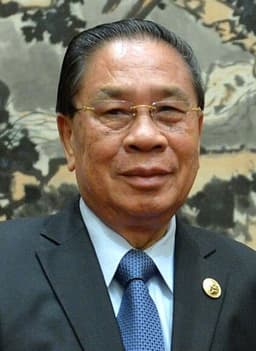
Choummaly Sayasone
General · Modern
50.6Total
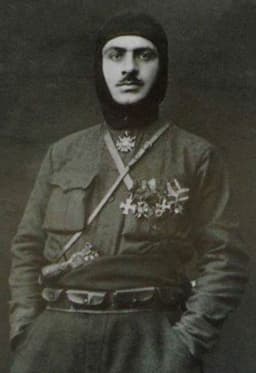
Garegin Nzhdeh
General · Modern
47.7Total
Basic Information
Born
1936
1886
Died
—
1955
Era
Modern
Modern
Nationality
Laos
Armenia
Occupation
General
General
Civilization
Eastern
Western
Score Comparison
Military (10%)
66.7
25.0
Political (20%)
46.6
40.8
Influence (20%)
50.2
55.7
Legacy (20%)
38.3
48.3
Leadership (15%)
53.2
47.3
Strategy (15%)
68.4
60.0
TOTAL
50.6
47.7
Choummaly Sayasone — Complete Timeline
2006 AD
Became President of LaosPolitical Action◆ Major
Choummaly Sayasone was elected President of Laos by the National Assembly. He also served as General Secretary of the Lao People's Revolutionary Party, making him the most powerful figure in the country's one-party system.
LeadershipLaosCommunist Party
Impact: national
Oversaw Economic GrowthPolitical Action◆ Major
During Choummaly's presidency, Laos experienced significant economic growth, driven by foreign investment in hydropower, mining, and agriculture. The country achieved its goal of graduating from Least Developed Country status by 2024, though inequality and environmental concerns persisted.
Economic GrowthLaosDevelopment
Impact: nationalconstructive
2009 AD
Strengthened Ties with ChinaPolitical Action◆ Major
Choummaly's government deepened relations with China, securing Chinese investment for infrastructure projects, including the Laos-China railway. This alignment increased Laos' dependence on China but also brought economic benefits and political support.
Foreign PolicyLaosChina
Impact: regional
2016 AD
Stepped Down as PresidentPolitical Action◆ Major
Choummaly stepped down as President and General Secretary, handing over power to Bounnhang Vorachith. His retirement marked a peaceful leadership transition within the Lao People's Revolutionary Party, maintaining the country's political stability.
TransitionLaosLeadership
Impact: national
Garegin Nzhdeh — Complete Timeline
1918 AD
Leadership of the Armenian Revolutionary Federation in ZangezurPolitical Action◆ Major
Garegin Nzhdeh took command of Armenian forces in the Zangezur region, organizing resistance against Ottoman and Azerbaijani claims. He established a de facto Armenian administration and military command, successfully defending the area from external control.
ZangezurResistanceARF
Impact: regionalconstructive
1921 AD
Proclamation of the Republic of Mountainous ArmeniaPolitical Action◆ Major
Nzhdeh proclaimed the Republic of Mountainous Armenia in Zangezur, rejecting Soviet rule. This short-lived state lasted until July 1921, when Nzhdeh and his forces were forced to flee to Iran after Soviet military pressure.
RepublicAnti-SovietIndependence
Impact: regionalconstructive
1930 AD
Development of the Tseghakron IdeologyCultural◆ Major
In exile, Nzhdeh formulated the Tseghakron ideology, which emphasized Armenian racial unity, national discipline, and territorial claims. This ideology influenced later Armenian nationalist movements and remains controversial for its ethno-centric and authoritarian elements.
IdeologyNationalismTseghakron
Impact: national
1947 AD
Imprisonment and Death in Soviet ArmeniaPolitical Action◆ Major
After World War II, Nzhdeh was arrested by Soviet authorities in Bulgaria and deported to Soviet Armenia. He was sentenced to 25 years in prison for anti-Soviet activities and died in a Vladimir Central Prison in 1955.
ImprisonmentSoviet RepressionDeath
Impact: nationaltragic
Expert Analysis
Origins
**Choummaly Sayasone** was born on March 6, 1936, in Attapeu Province, Laos. He came from a peasant family and joined the Lao People's Revolutionary Party (LPRP) in 1954, during the First Indochina War. He received military training in Vietnam and rose through the party ranks, serving in various political and military roles.
**Garegin Nzhdeh** was born on January 1, 1886, in Nakhichevan, then part of the Russian Empire. He studied at the Gevorgian Seminary in Etchmiadzin and later at the University of St. Petersburg. He joined the Armenian Revolutionary Federation (ARF) in 1902 and participated in the Armenian national movement against Ottoman rule.
Rise to Power
Choummaly's rise was gradual and institutional. He became a member of the LPRP Central Committee in 1972, and during the 1980s he served as Minister of Defense and Deputy Prime Minister. In 1996, he became Vice President of Laos. His ascent culminated in 2006 when he was elected General Secretary of the LPRP and President of Laos, following the retirement of Khamtai Siphandone.
Nzhdeh's rise was marked by military action. He fought in the Balkan Wars (1912-1913) as a volunteer with the Armenian battalion. During World War I, he commanded Armenian units in the Caucasus. In 1918, he led the defense of Zangezur against Ottoman forces, and by 1920 he was the key military leader in the region. In 1921, he proclaimed the Republic of Mountainous Armenia, a short-lived state that resisted both Soviet and Azerbaijani forces.
Leadership & Governance
Choummaly led a one-party state with a focus on economic development. Under his presidency (2006-2016), Laos saw annual GDP growth averaging 7-8%, driven by foreign investment in hydropower, mining, and agriculture. He strengthened ties with China, securing funding for the Laos-China railway (completed in 2021). His governance style was bureaucratic and consensus-based, typical of the LPRP politburo.
Nzhdeh's leadership was military and ideological. In Zangezur, he organized a guerrilla campaign and established a de facto state. His Tseghakron ideology, developed in exile in the 1930s, called for Armenian racial purity and territorial expansion. It influenced later Armenian nationalist movements but was never implemented in government. His governance score of 40.8 reflects his limited administrative experience.
Triumph & Tragedy
Choummaly's triumphs include overseeing economic growth and a peaceful leadership transition. Laos graduated from least developed country status during his tenure. However, his legacy is marred by human rights concerns: press freedom remains restricted, and the government suppresses dissent. The economic growth also increased inequality and environmental degradation from hydropower projects.
Nzhdeh's triumph was his successful defense of Zangezur, which ensured it remained part of Armenia. His Republic of Mountainous Armenia, though short-lived, was a symbol of resistance. His tragedy came after exile: he was arrested by Soviet authorities in 1947 and died in prison in 1955. His ideology, while influential, is criticized for its ethnic nationalism.
Character & Destiny
Choummaly was a cautious, pragmatic leader who prioritized stability. His career followed the party line, avoiding personal cults. He stepped down voluntarily in 2016, a rare peaceful transition in communist states. His destiny was to be a caretaker during Laos' economic transformation.
Nzhdeh was a fervent nationalist and military commander, willing to fight against overwhelming odds. His character was uncompromising, which led to his exile and imprisonment. He scored 47.3 in leadership, reflecting his ability to inspire but not to build lasting institutions.
Legacy
Choummaly's legacy is tied to Laos' economic development and its increasing dependence on China. The Laos-China railway is a lasting symbol of his foreign policy. His scores: Military 66.7, Political 46.6, Influence 50.2, Legacy 38.3, Leadership 53.2, Strategy 68.4, Total 50.6.
Nzhdeh's legacy is more ideological. Tseghakron has been adopted by some Armenian nationalist groups, and he is revered as a hero in Armenia. His military achievements are commemorated. His scores: Military 25.0, Political 40.8, Influence 55.7, Legacy 48.3, Leadership 47.3, Strategy 60.0, Total 47.7.
Conclusion
Choummaly Sayasone had greater total impact (score 50.6 vs 47.7) due to his role in Laos' economic transformation and peaceful leadership transition. While Nzhdeh's military resistance was notable, his influence remained limited to ideology and a short-lived state. Choummaly's governance affected millions of lives through infrastructure and growth, whereas Nzhdeh's legacy is more symbolic. The data supports Choummaly as the more impactful figure.
Rankings
🥇
Choummaly SayasoneLeader
Mil: 66.7Pol: 46.6Inf: 50.2
50.6
🥈
Garegin Nzhdeh
Mil: 25.0Pol: 40.8Inf: 55.7
47.7
+2.9 behind
How This Comparison Works
Algorithm
Each figure is scored on 6 dimensions (0—100 scale) based on structured historical data: Military (10%), Political (20%), Influence (20%), Legacy (20%), Leadership (15%), Strategy (15%). The weighted total produces the final ranking.
Data Sources
Scores are computed from structured sub-indicators in the database. Scale factors adjust for era (Ancient ×0.85, Modern ×1.0) and civilization size (Eastern ×1.05, Other ×0.80) to account for differences in population and military scale.
Maximum 3 Figures
Comparisons are limited to 2—3 figures to ensure readability and statistical meaningfulness.
Error Margins
±5 points per dimension — Sub-scores are derived from historical records with inherent uncertainty. Two figures within 5 points on a dimension should be considered roughly equivalent in that area.
Total Score Accuracy
±3 points overall — The weighted combination of 6 dimensions produces a total score with approximately ±3 points of uncertainty. Differences of less than 3 points are not statistically significant— the figures are effectively tied.
Known Limitations
- Historical records are incomplete and uneven across civilizations
- Figures from oral-tradition societies may be underrepresented
- Occupation labels can misclassify multi-role figures
- Scores measure capability and impact, not moral character
- Quantitative scoring is a comparison tool, not absolute truth
Capability Radar
Military (10%) — Battles & Warfare
Battles
65
45
Win Rate
69
40
Expansion
71
20
Political (20%) — Governance & Reform
Reform
30
35
Diplomacy
40
30
Economy
30
15
Influence (20%) — Cultural & Global Reach
Cultural
20
40
Global
10
25
Legacy (20%) — Historical Impact
Historical
20
45
Longevity
10
35
Leadership (15%) — Power & Stability
Tenure
60
25
Stability
40
20
Strategy (15%) — Tactics & Innovation
Strategy
72
45
Tactics
76
50
Reform
79
30
Similar Comparisons
Comments & Discussion
No comments yet. Be the first to share your thoughts!